We are moving stories

  • 3500+ films
  • Alphabetical
  • Black Lives Matter (1)
  • Black Lives Matter (2)
  • Black Women's Voices (1)
  • Black Women's Voices (2)
  • LGBTQIA+
  • Lesbian (1)
  • Lesbian (2)
  • Gay (1)
  • Gay (2)
  • Queer (1)
  • Queer (2)
  • Queer (3)
  • Bisexual
  • Intersex & Asexual
  • Love Sex
  • Trans (1)
  • Trans (2)
  • LatinX (1)
  • LatinX (2)
  • LatinX (3)
  • FilipinX
  • Asian American
  • First Nations
  • Kids
  • Mothers
  • Daughters
  • Fathers
  • Teens
  • Coming of Age
  • Gen Z
  • Gen Z / Millennials
  • Millennials
  • Romance
  • RomCom
  • Comedy
  • Thriller
  • Action
  • Western
  • Zombies!
  • Horror (1)
  • Horror (2)
  • Other Worlds
  • Supernatural
  • Fantasy
  • Scifi
  • Technology
  • VR
  • Social Media
  • Women & Animation (1)
  • Women & Animation (2)
  • Artists
  • Musicians
  • Dancers
  • Fashion
  • Mental Health (1)
  • Mental Health (2)
  • Disability (1)
  • Disability (2)
  • COVID-19
  • Migration
  • Refugees Welcome
  • Holocaust
  • Democracy
  • Gun Violence
  • Climate Crisis Solutions
  • Food
  • Cities
  • Home/less
  • Faith and Spirituality
  • #metoo
  • Rape Culture
  • Right to Choose
  • Award-winning
  • Sundance
  • Hollywood
  • Actors
  • Canada
  • Quebec
  • Pasifika
  • French Cinema
  • New Italian Cinema
  • Germany
  • Russia
  • UK
  • Australia
  • New Zealand
  • China
  • South Asia
  • India
  • MENA - Middle East/North Africa
  • Surfing
  • Sport
  • Adventure
  • Drugs
  • Addiction
  • Hip Hop
  • Subcultures
  • Cats and Dogs
  • Animals
  • Environmental
  • AFI Conservatory
  • Filmmakers to Watch (1)
  • Filmmakers to watch (2)
  • Members FAQ
  • why now
  • New Projects
  • Film Finder
  • Database
  • TOS

Rewilding

July 08, 2022 by Carmela Baranowska

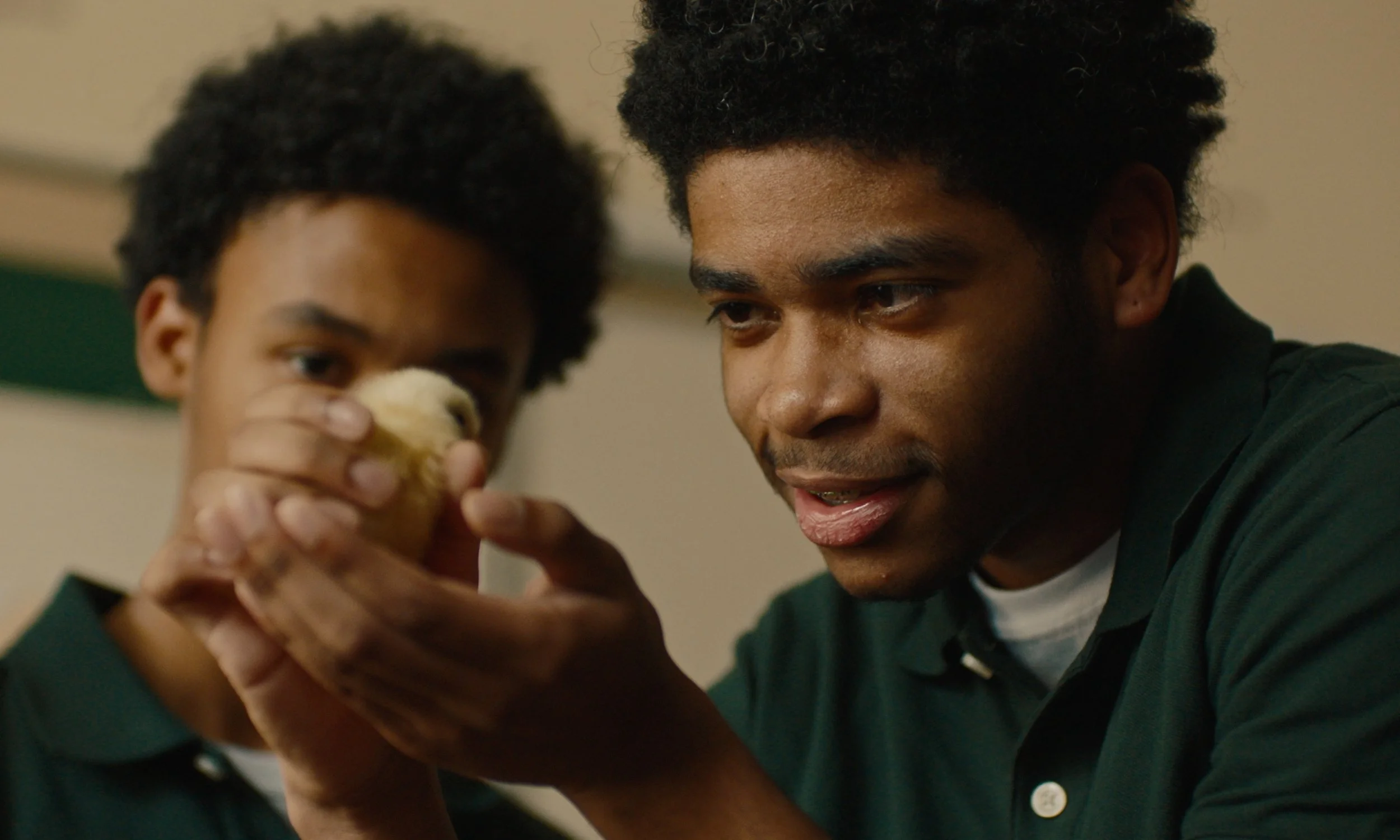
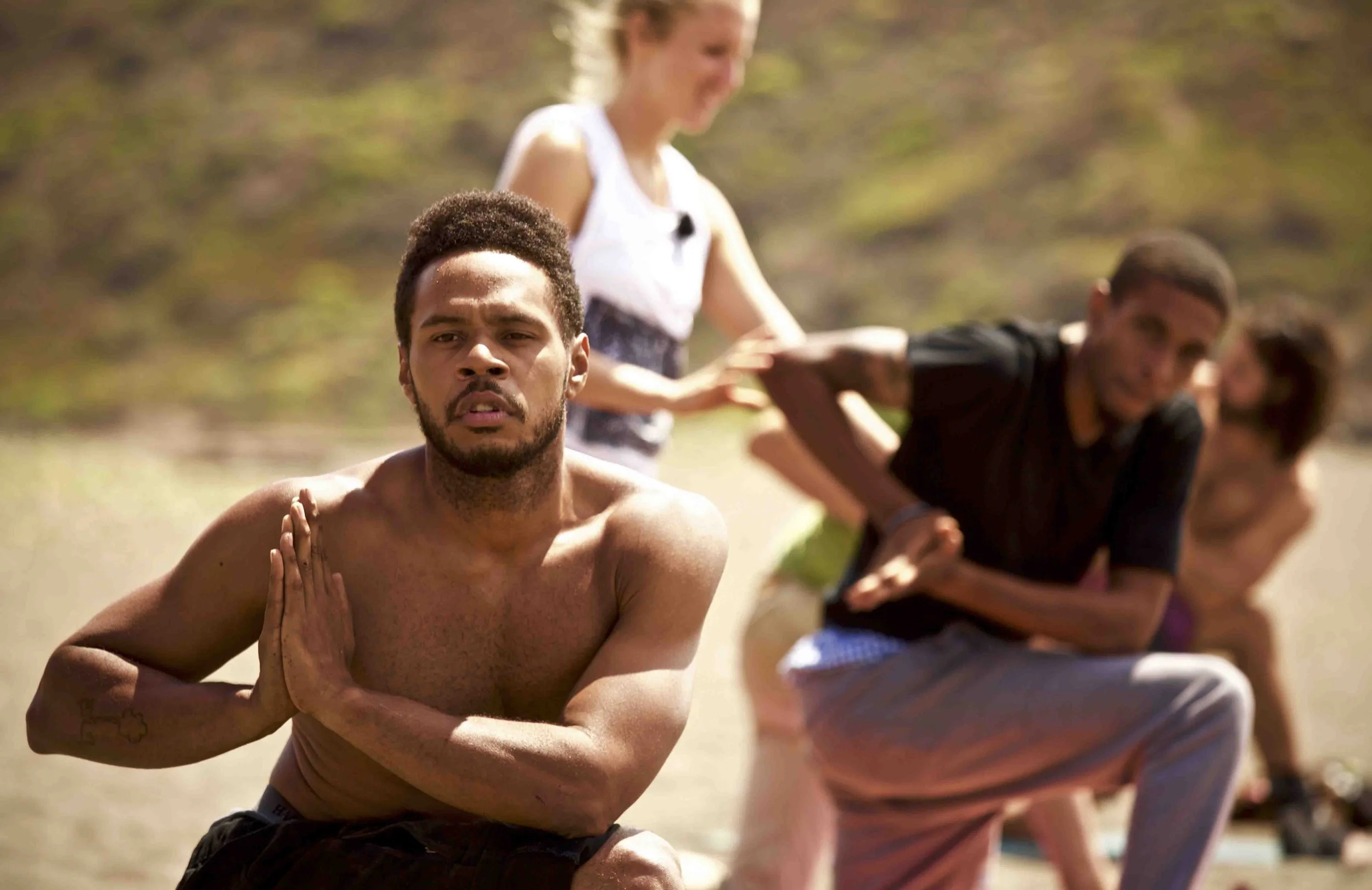
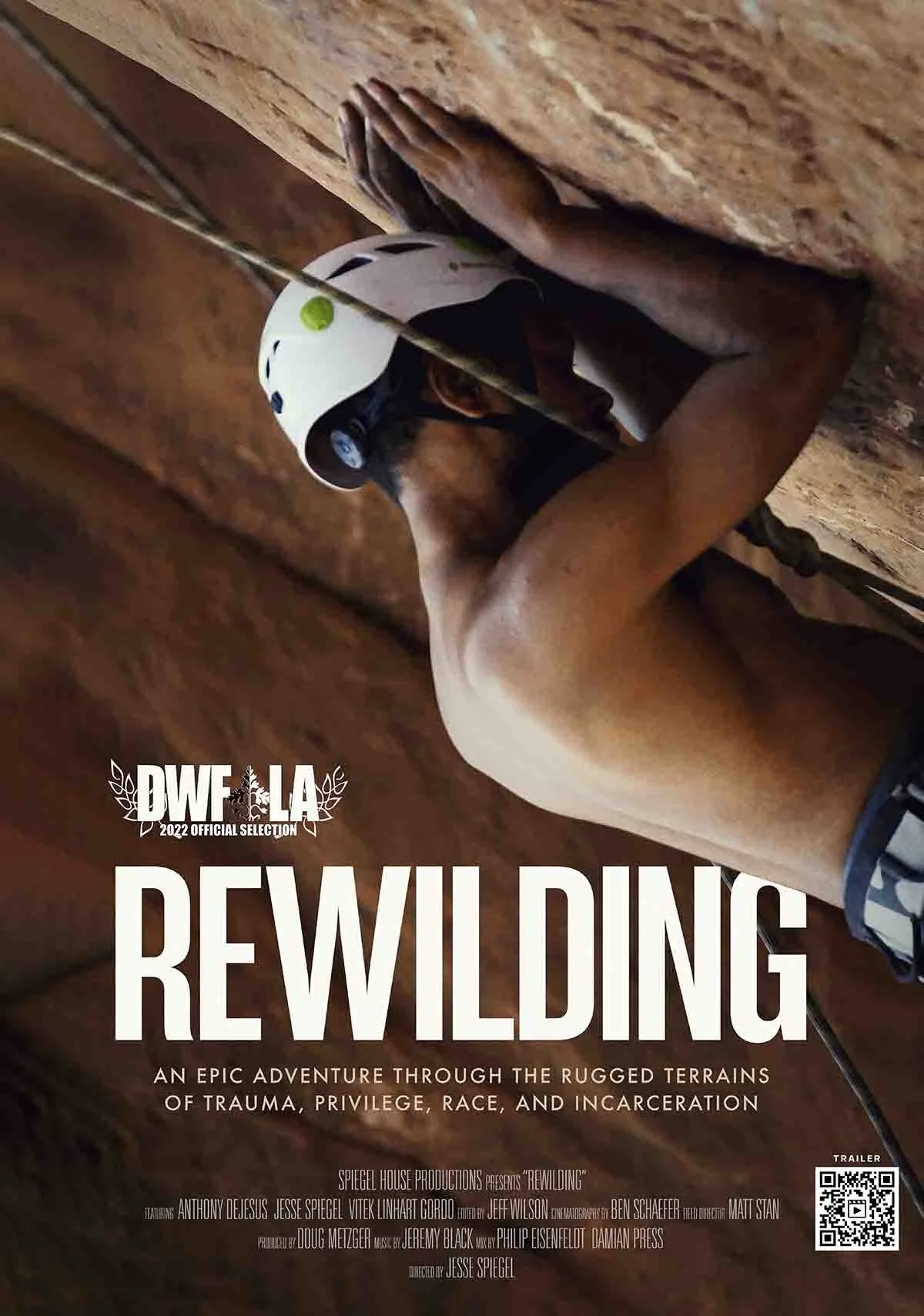
REWILDING follows Anthony Dejesus, a 27-year-old budding artist and former inmate of Rikers Island, as he leaves New York City for the first time with Jesse Spiegel and Vitek Linhart, two avid rock climbers determined to create a program to take formerly incarcerated men into the wild. Little did they know, their adventure would become a dramatic illustration of the conflicts surrounding race and privilege gripping our nation today.

Interview with Actor/Director/Producer Jesse Spiegel

Congratulations! Why did you make your film?

The path that led me to the Rewilding program and the creation of this film began with my own troubled youth. My first of many arrests was at the age of 15. The experiences I had in those court rooms had a deep impact on me. I saw firsthand how obvious conscious bias and unequal legal representation led to Black men and boys being treated and sentenced more severely than their white counterparts for similar charges. For me, even as a teenager, this was deeply disturbing and a call to action.

During this period in my life, I was privileged enough to begin attending a yearly climbing camp in Colorado and I fell in love with exploration and adventure. I knew then that climbing was my calling; it helped me believe in myself and find a new path. While adventures in nature are a powerful tool for self-transformation, unfortunately, not everyone has access to their immense benefits. This led me, along with my Czech best friend and fellow outdoorsman, Vitek Linhart, to found a peer-to-peer program called Rewilding Adventures. Rewilding offers individuals who have been impacted by the criminal justice system opportunities to access nature and participate in transformational wilderness adventures.

This was the inspiration for the creation of the film Rewilding. I wanted to shine a light on the power of adventures in the wild alongside the blatant racial inequity of our criminal justice system, forcing viewers to look beyond their own worldview and see the reality of this broken system through the eyes of real people.

Imagine I’m a member of the audience. Why should I watch this film?

Rewilding offers something novel to the conversation about criminal injustice, race and privilege. We see characters change from within, through coming together across racial and socioeconomic lines, not with the goal to change each other into one's idea of who they think the other should be, but to share experiences and to actually see each other, regardless of the world each party comes from. It inspires the viewer to see the person behind the statistic and witness the transformative power of sharing experiences in the outdoors.
Rewilding

How do personal and universal themes work in your film?

The characters in the film are on a journey of self-discovery, whether they realize it in the beginning or not. As a whole, the film explores the concept of shared humanity and coming together past differences. It suggests that we all have something wild within us, something that remains untouched and untainted by societal influences that allows us to connect and come to a place of greater understanding.

How have the script and film evolved over the course of their development?

At the onset of this project, we didn’t fully realize the film would become a real life conversation about race and privilege. The fact is, when you work with people impacted by the criminal justice system, you will inevitably be working with people of color because the criminal justice system in the US is so racially slanted. We ended up with a film with far more depth than we had originally foreseen because our characters go through genuine transformation landing in a place of greater connection and understanding.

What type of feedback have you received so far?

The feedback we’ve received has been wholly positive. We most often hear from viewers that they found the film to be very emotional and found themselves teary at various points in the film. Our viewers have also said that the film takes on tough subjects with a willingness to be imperfect, to stumble through honestly and openly, and, in doing so, is a compelling and intriguing display of vulnerability.

Has the feedback surprised or challenged your point of view?

We have been working on this film for a long time and through that process have received a lot of feedback about the film, its themes and messages. The result of this process is that we have not been surprised by the response.

Rewilding

What are you looking to achieve by having your film more visible on www.wearemovingstories.com?

We are looking to get our film in front of film festival directors, distributors and buyers as well as parties interested in supporting our efforts in the production of a spin-off series of the film and We Are Moving Stories seems like an excellent place to do so.

Who do you need to come on board (producers, sales agents, buyers, distributors, film festival directors, journalists) to amplify this film’s message?

Sales agents, buyers, distributors, film festival directors, and journalists.

What type of impact and/or reception would you like this film to have?

Our hope is that this film will be a veritable contribution to the conversation around race and privilege. We want to encourage viewers to explore these concepts within the context of their lives.
Rewilding

What’s a key question that will help spark a debate or begin a conversation about this film?

Should two white mountain climbers lead outdoor adventures for people of color?

What other projects are the key creatives developing or working on now?

Jesse Spiegel & Doug Metzger started with this film and will continue with a spin-off series in which men from diverse backgrounds join us on epic adventures that are simultaneously playful and piercing. At a time when a light is being shone on toxic masculinity and our culture's habit of teaching men to suppress emotions, we use the rugged, masculine backdrop of adventure to turn the masculine stereotype on its head, infusing it with what it lacks: vulnerability, authenticity, and open, honest communication.


Interview: July 2022


We Are Moving Stories embraces new voices in drama, documentary, animation, TV, web series, music video, women's films, LGBTQIA+, POC, First Nations, scifi, supernatural, horror, world cinema. If you have just made a film - we'd love to hear from you. Or if you know a filmmaker - can you recommend us? More info: Carmela


Rewilding

Length:

Director

Jesse Spiegel is a filmmaker, adventurer and entrepreneur. He is focused on producing nonfiction content where epic adventures act as the backdrop for telling stories about people, trauma, bonding and vulnerability.

Producer

Doug Metzger has been involved in the production of feature films and television for 37 years and was honored with the Outstanding Directorial Achievement Award from the Directors Guild of America for his work as 1st AD on DANCES WITH WOLVES. Some of the other films he has worked on include: THE ITALIAN JOB; WONDER BOYS; ASPEN EXTREME; WITHOUT A PADDLE; LEAP OF FAITH; CITY SLICKERS; UNDER SIEGE II; and WHITE FANG.

Key cast:

Anthony DeJesus (Lead Subject), Jesse Spiegel (Subject), Vitek Linhart (Subject)

Looking for:

sales agents, distributors, film festival directors, journalists, buyers

Facebook:

https://www.facebook.com/rewildingthefilm

Instagram:

https://www.instagram.com/rewildingedu/

Hashtags used:

#rewildingthefilm

More info:
www.rewildingthefilm.com


July 08, 2022 /Carmela Baranowska
Comment

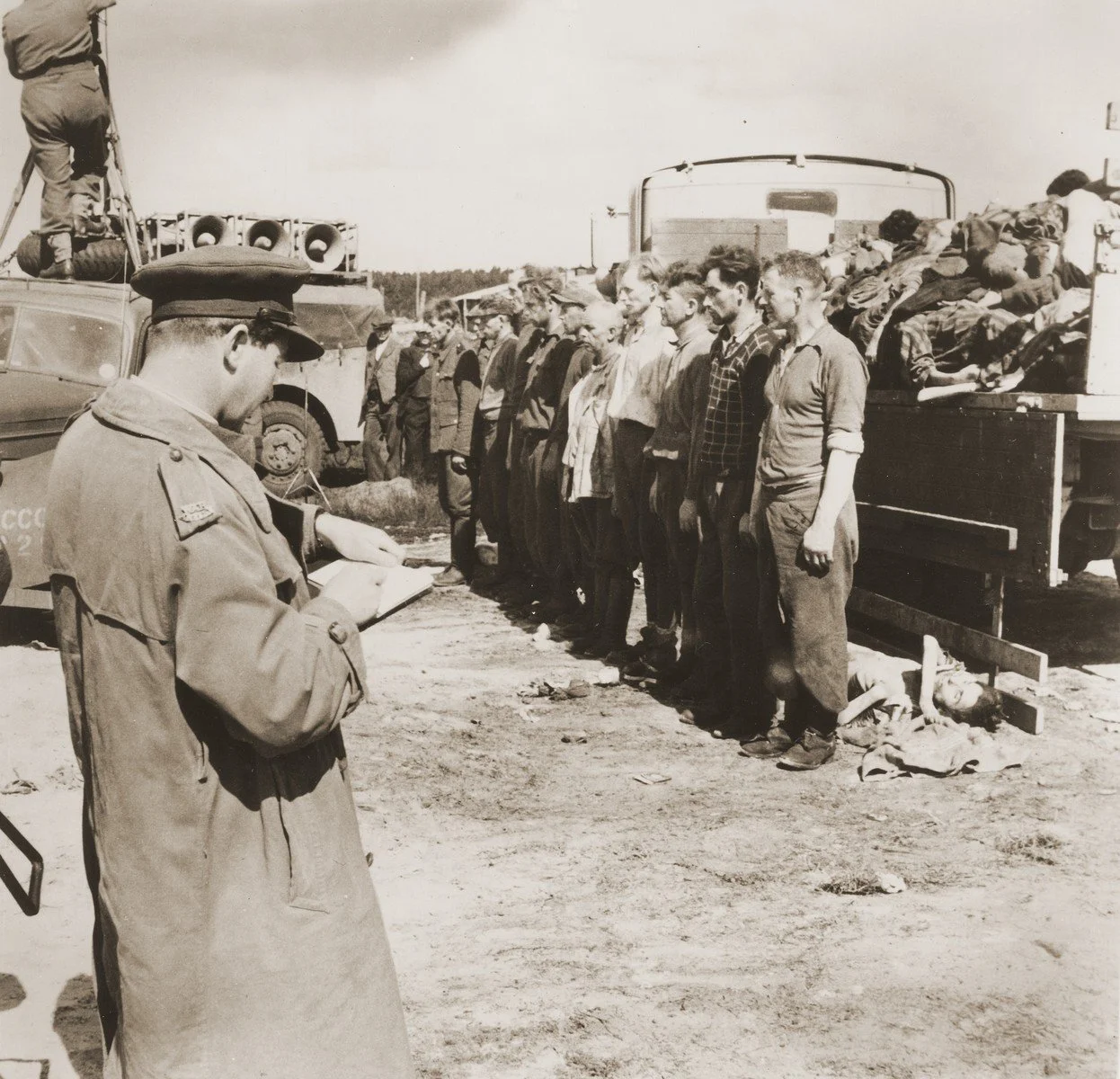
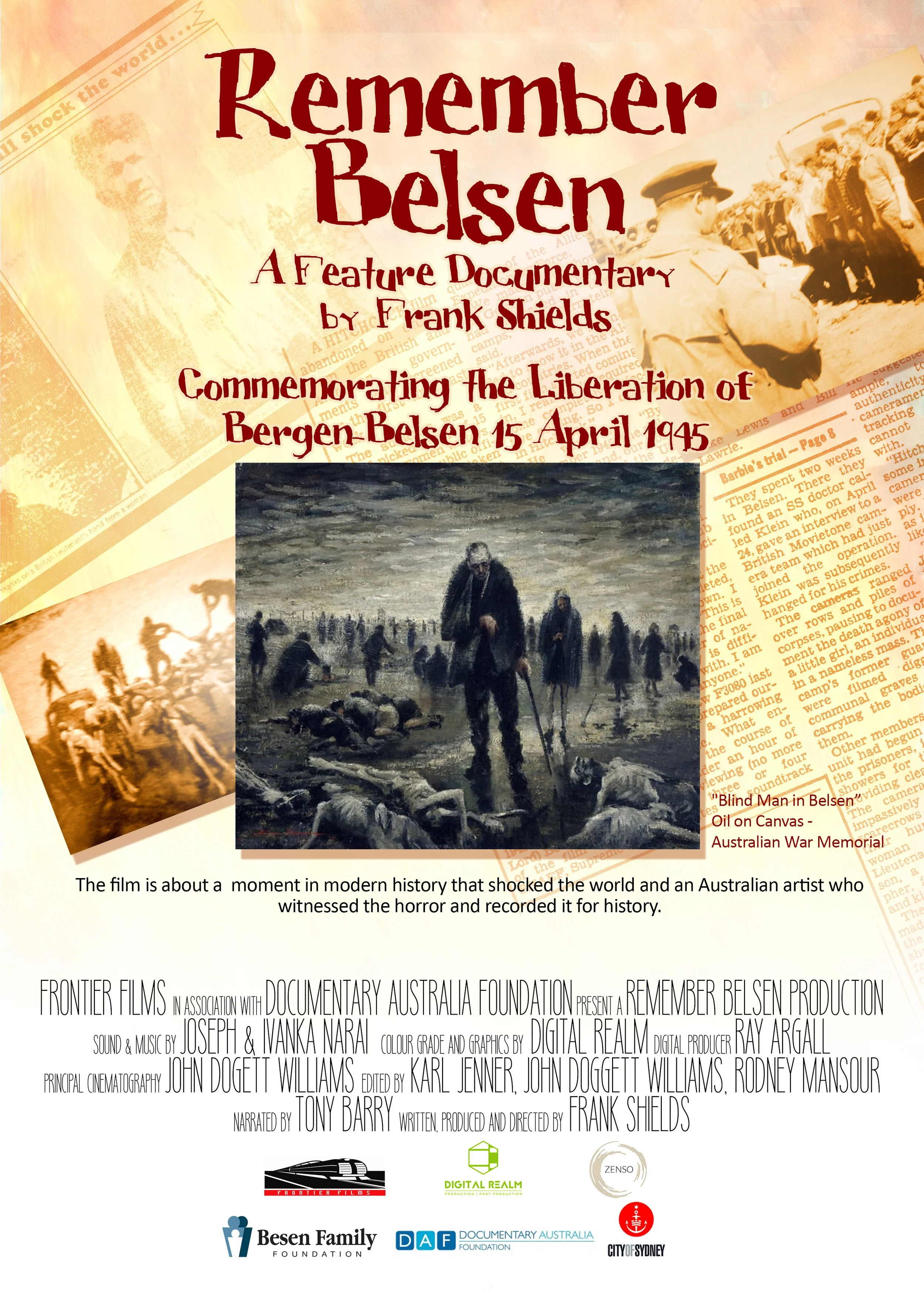
Remember Belsen

July 07, 2022 by Carmela Baranowska

A window into the Holocaust

Interview with Writer/Director/Producer Frank Shields


Congratulations! Why did you make your film?

To reach out to world audiences a message, that the criminal behaviour as portrayed in "REMEMBER BELSEN" should never be allowed to happen again.

Imagine I’m a member of the audience. Why should I watch this film?

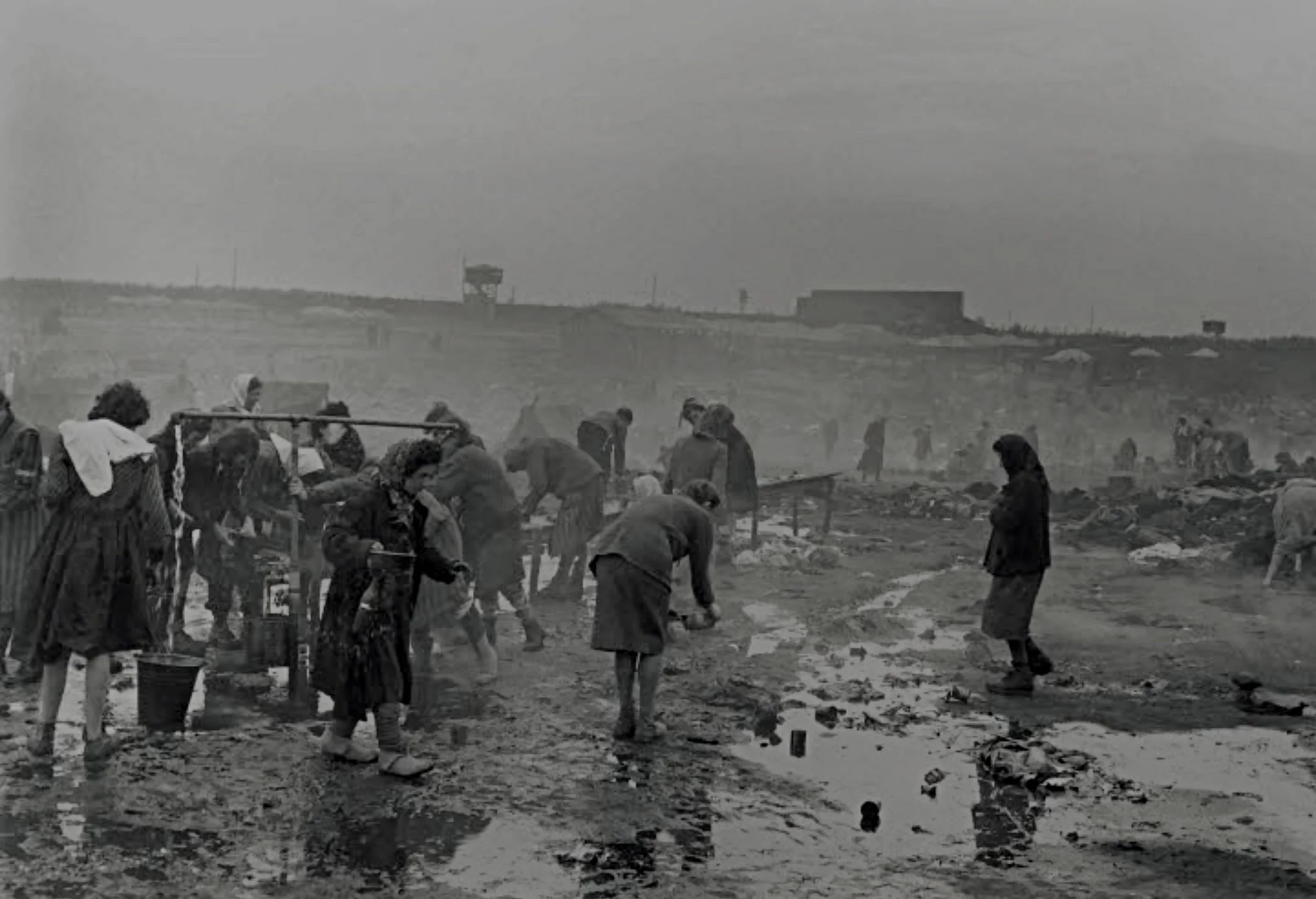
To remind them they are looking at a window into the Holocaust, an event in modern history that the pure scope of its horrors is almost impossible to grasp.

How do personal and universal themes work in your film?

How humans react and survive in times of extreme adversity, while trying to understand their jailers and how their liberators and saviours rise to the occasion.

How have the script and film evolved over the course of their development?

The starting point was securing possibly the most powerful film images of the 20th Century taken at the liberation of the Bergen-Belsen concentration camp at the end of WW2. Then add the stories of the victims that were affiliated with those images together with the artists that recorded them for posterity. But even against such a mind-numbing landscape how friendships were forged.

Remember Belsen

What type of feedback have you received so far?

Extremely positive from the first to see the film, from "It is one of the best works about the Holocaust I have ever seen" to "We are all still reeling, but in awe of the great work you have done" to "I really like the way the film started and the fact that while emotional it had a calm presence. The interviewees were amazing in their concise recollections."

Has the feedback surprised or challenged your point of view?

Though surprised by the level of emotion shown by the first audience to see the preview screening of the film, I was most heartened by the response of those not connected in any way with the material.

What are you looking to achieve by having your film more visible on www.wearemovingstories.com?

To offer a challenging and important film that will take most outside of their comfort zone.

Who do you need to come on board (producers, sales agents, buyers, distributors, film festival directors, journalists) to amplify this film’s message?

film festival directors, journalists. distributors

What type of impact and/or reception would you like this film to have?

The same impact/reception that was shown by its first audience. Then hopefully word of mouth will be an important factor in achieving this.

Remember Belsen - Alan Moore sketching at Belsen

What’s a key question that will help spark a debate or begin a conversation about this film?

What should we remember? Or, What does Remember Belsen mean? On viewing there will be no doubt about the answer to either question. Will the viewer compare Belsen with Rwanda, Cambodia or even Ukraine. This film will spark debate.

Would you like to add anything else?

All of the characters in this film who witnessed, survived, saved or recorded this darkest of human events in modern history, will soon be gone. Making this film, REMEMBER BELSEN a timeless document.

What other projects are the key creatives developing or working on now?

"Eco-warrior: The story of Bob Endean". A cautionary tale about how we lost the Great Barrier Reef. Also looking for a distributor or network to make a four-part TV series about BELSEN using "REMEMBER BELSEN" as a template or pilot.


Interview: July 2022


We Are Moving Stories embraces new voices in drama, documentary, animation, TV, web series, music video, women's films, LGBTQIA+, POC, First Nations, scifi, supernatural, horror, world cinema. If you have just made a film - we'd love to hear from you. Or if you know a filmmaker - can you recommend us? More info: Carmela


Remember Belsen

Length:

1:45

Writer

FRANK SHIELDS has written for both drama and documentary film. In documentary he wrote the script for his first film "The Breaker" and followed up by co-writing a book on same subject, wrote treatment and script for his latest, "Remember Belsen". In drama he wrote first draft of his first feature "Hostage" and treatment for his second "The Surfer". He has also written a number of other screenplays.

Director

FRANK SHIELDS won best documentary award at Sydney Film Festival in 1975 for his first film, "The Breaker". He has directed documentaries and five features since. His first feature "Hostage" was shot in multiple countries and the second, "The Surfer" was selected for the prestigious Directors Fortnight in Cannes. A highlight was a retrospective of his films shown at the Le Cinematheque in Paris where two features were invited to the Edinburgh and Berlin Film Festivals.

Producer

FRANK SHIELDS has produced a number of documentaries including a TV series and several feature films. His first documentary, "The Breaker" won best documentary at the Sydney Film Festival and his first two features, "Hostage" and "The Surfer" were invited to a number of International film festivals including Cannes, Edinburgh, Berlin and Buenos Aires. His second feature "The Surfer" being invited to Directors Fortnight in Cannes.

Key cast:

Alan Moore, Olga Horak, Eddy Boas, Hetty V. Verolme, George Stein, Helen Schon, Harry Chojna, Mike Lewis, Nadia Wheatley, Thornton McCamish

Narrated by Tony Barry

Looking for:

distributors, journalists, film festival directors

Facebook:
http://facebook.com/rememberbelsen

More info:
rememberbelsen.com

Where can I watch it now?

Melbourne Documentary Film Festival (MDFF) in Melbourne. From 1st July to 31 July watch.eventive.org/mdff Go to Australian Documentary Line and scroll to "Remember Belsen".

July 07, 2022 /Carmela Baranowska
Comment

A Little House In Aberdeen

July 06, 2022 by Carmela Baranowska

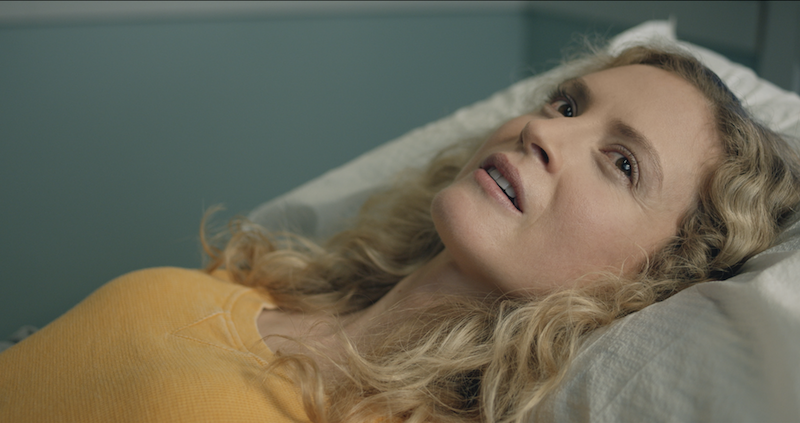
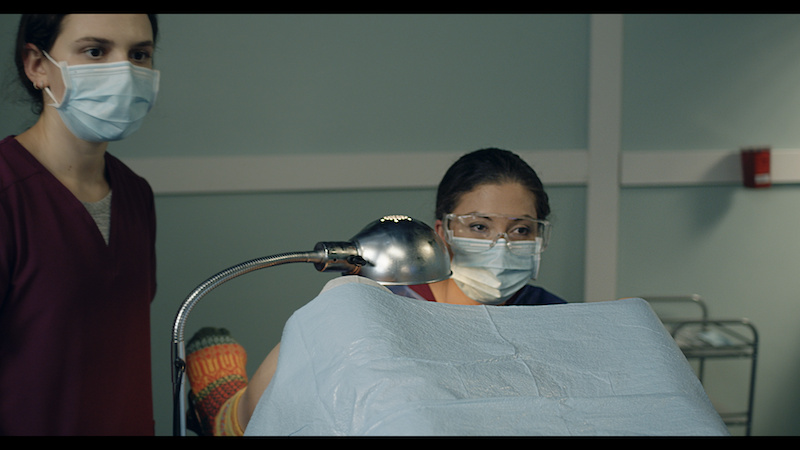
A woman reflects on her past and wonders about her future - while she happens to be having an abortion.

Interview with Writer/Director/Producer/Actor Emily Goss

WATCH HERE:

Congratulations! Why did you make your film?

Thank you! It was the coming together of a few things actually. I've been an actor here in LA for the last 10 years, but I always wanted to write and direct. During the pandemic I realized that I couldn't wait for the opportunity to come to me, I had to just make something. In 2020 I had written a one-minute monologue for a competition (it was roughly the first minute of this film). The monologue was one of 40 finalists out of 8,000 entries. So when I decided to make a film, I knew there was something to this story, this situation. Nuanced, authentic abortion representation in film and TV is really important to me - because there's so little of it. 1 in 4 women will have an abortion in addition to the trans and nonbinary people who will have them. But that is absolutely not what we see onscreen. So in addition to feeling that the monologue was strong, I knew I wanted to tell an abortion story, one where the drama does not come from the abortion, to fill that gap in the narrative.

Imagine I’m a member of the audience. Why should I watch this film?

"A Little House In Aberdeen" was meant to normalize abortion and humanize the people who have them. And show that abortions are safe, straightforward medical procedures. To me, any film that does that is worth watching. I thought I could bring everyone to the table around the human experiences we all share. But now, after the Dobbs decision, people need to watch "Aberdeen" to see what millions of people in this country have lost: the right to determine the course of their own lives and the right to the healthcare they need.

A Little House In Aberdeen

How do personal and universal themes work in your film?

I believe that the more specific a story is, the more universal it is. As the writer setting out to create an empathetic character, the best way I knew to do that was to give her my specific thoughts and specific experiences. The best way to get universal is to get really personal. Many of the things Britney says are things I believe or think about it. And almost all of the anecdotes are autobiographical - my grandfather ran the concessions at the race track, my mom is an oldest sibling, sold the concessions on the weekends, and she couldn't get an epidural when she gave birth to me because she got to the hospital too late because she was moving a table... But the difference is that we have a great relationship and talk all the time.

Getting personal was also important to me because it hammers home the point I hope to make in this film: that everything, so easily could have been different. For all of us. Where we were born, our political beliefs, our religious beliefs, the courses of our lives are so arbitrary. I could be in this situation and hey, so could you. So let people get the healthcare they need.

How have the script and film evolved over the course of their development?

Good question. Originally I did not have the abortion provider say anything. But after talking to representatives from Planned Parenthood and Whole Womans Health, including a few Planned Parenthood physicians, I learned that wasn't accurate. Laur Allen's dialogue is taken directly from an interview I had with a physician. I asked him to talk me through the procedure. But I think this piece is rare in that what I ultimately wrote and storyboarded is what we ended up with. We shot this in one day so we didn't have a lot of time to experiment with the script or the camera movements. We were able to do 5 takes. The whole day was a whirlwind.

What type of feedback have you received so far?

The feedback has been incredible. I'm very moved and humbled that people respond to this film. Our screening at Dances With Films was packed and the audience response was overwhelming. I'm overjoyed that people - men and women - relate to this character.

A Little House In Aberdeen

Has the feedback surprised or challenged your point of view?

No, I don't think so. I say that this film is radically casual in its approach to abortion. It's an abortion film that's not about abortion which is the more pro-abortion part of the whole thing. But in the last week the world has changed. Now I wonder if there isn't a place for this film - maybe we only need stories that are radically radical. We are beyond a Code Red. But then I remind myself that we just need more abortion stories. There are as many different abortion stories as there are abortions. We just need more and more.

What are you looking to achieve by having your film more visible on www.wearemovingstories.com?

I hope more people find the film and start to think about onscreen abortion representation.

Who do you need to come on board (producers, sales agents, buyers, distributors, film festival directors, journalists) to amplify this film’s message?

I'd really love to talk to journalists. This film is unique and is resonating with audiences at a crucial moment in history.

What type of impact and/or reception would you like this film to have?

I want people to feel like they now know someone who has had an abortion (because 100% they already do). I hope this film is received warmly by the people who actually work in abortion care and for organizations that fight for abortion rights.

A Little House In Aberdeen

What’s a key question that will help spark a debate or begin a conversation about this film?

Do you know how long an abortion takes? What do you really know about abortion? Where do your beliefs about abortion come from?

What other projects are the key creatives developing or working on now?

I am in post on my first feature as a producer, a queer psychological thriller with a social justice theme. Thank you for your time and questions!

Interview: July 2022


We Are Moving Stories embraces new voices in drama, documentary, animation, TV, web series, music video, women's films, LGBTQIA+, POC, First Nations, scifi, supernatural, horror, world cinema. If you have just made a film - we'd love to hear from you. Or if you know a filmmaker - can you recommend us? More info: Carmela


A Little House In Aberdeen

Length:

6:54

Writer/Director

Emily Goss

"A Little House In Aberdeen" is Emily Goss's first narrative short as a writer and director.

Emily received her BA in Theatre from USC's School of Dramatic Art and MA in Classical Acting from LAMDA. Her feature film credits include "Shook," "Jane and Emma," "Season of Love," "The House on Pine Street" (3 Best Actress awards), and "Snapshots" (4 Best Actress awards). Her television credits include guest stars on "Criminal Minds," "L.A.'s Finest," "Castle," and "Future Man." She is currently producing a queer psychological thriller feature with a social justice message.

Producer

Emily Goss, Shayan Ebrahim

Shayan is an Iranian-American writer, director, and editor. While attending UCLA, Shayan edited the documentary "The Drop Box" which went on to win the Grand Jury Prize at SAICFF and was later released theatrically, becoming one of the highest grossing movies in Fathom Events history. Since then, he has edited another theatrical documentary called "The Dating Project," as well as nationally-broadcast commercials for Google, iHeart Radio, and Volkswagen. He is the writer/director of shorts "Foreign," "Life Support," and "Always Azizam."

Key cast:

Emily Goss (Britney), Laur Allen (Dr. Jane Randall); Madelyn Levine (Medical Assistant)

Looking for:

distributors, journalists, film festival directors, buyers

Twitter:

https://twitter.com/emilygoss650

Facebook:

https://www.facebook.com/emily.goss.7

Instagram:

https://www.instagram.com/emilygoss650/

Hashtags used:

#shortfilm #abortionrights #abortionishealthcare #directedbywomen #femalefilmmakers #filmmaking


July 06, 2022 /Carmela Baranowska
Comment

Young Dario

July 05, 2022 by Carmela Baranowska

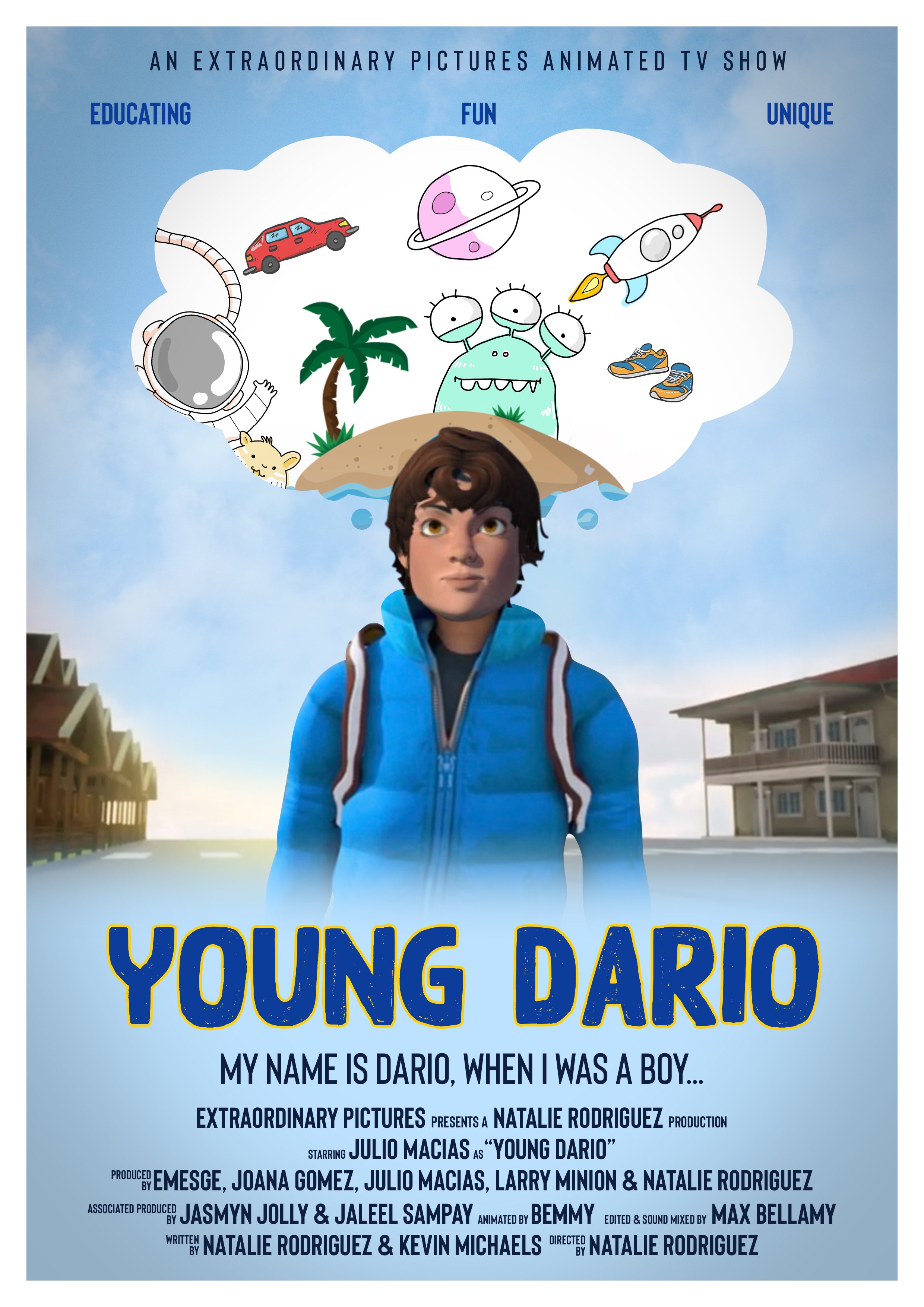
In this twelve-episode Groundhound Day style story, a young Hispanic boy, named Dario, encounters various life situations. He turns to his Grandmother ('Abuelita'), who guides him through the travails of childhood.

Interview with Writer/Director/Natalie Rodriguez


Congratulations! Why did you make your film?

Thank you! We are very EXCITED to showcase this series to the public.

The idea of Young Dario came to my co-writer/creator and I last summer during the earlier days of the pandemic. Both of us were experiencing high anxiety than usual, missing the creativeness and overall, being on production. We used to crack jokes, often about one of our colleagues and co-collaborators. These jokes turned into "Young Dario" does this or that. After weeks of jokes and discussion, we finally sat down and wrote the first drafts of what became the series.

I suppose you can say the series was created from those frustrations of the world and everything that was going on. A lot of those frustrations were challenged in growth, an ongoing theme that DARIO goes through in "Young Dario".

As of Hispanic descent myself, like DARIO, my cousins and I were close with our grandmother (Abuelita in the series). Like DARIO, many of us turned to our grandmother for advice or to simply talk about her upbringing and stories. Those were some of my cherished childhood memories. It definitely inspired the drive to bring DARIO's story to life.

Imagine I’m a member of the audience. Why should I watch this film?

When was the last time you felt loved? Who was your first crush? Do you remember your most embarrassing moment?

These are the questions I like to ask, so you can reflect on them while watching the 12 episodes of "Young Dario". You should watch this series because we have all been in DARIO's shoes of experiencing, both, hilarious and embarrassing moments in our life. But, in the end, we realize that everything will be okay.

At some point, we have all been DARIO.

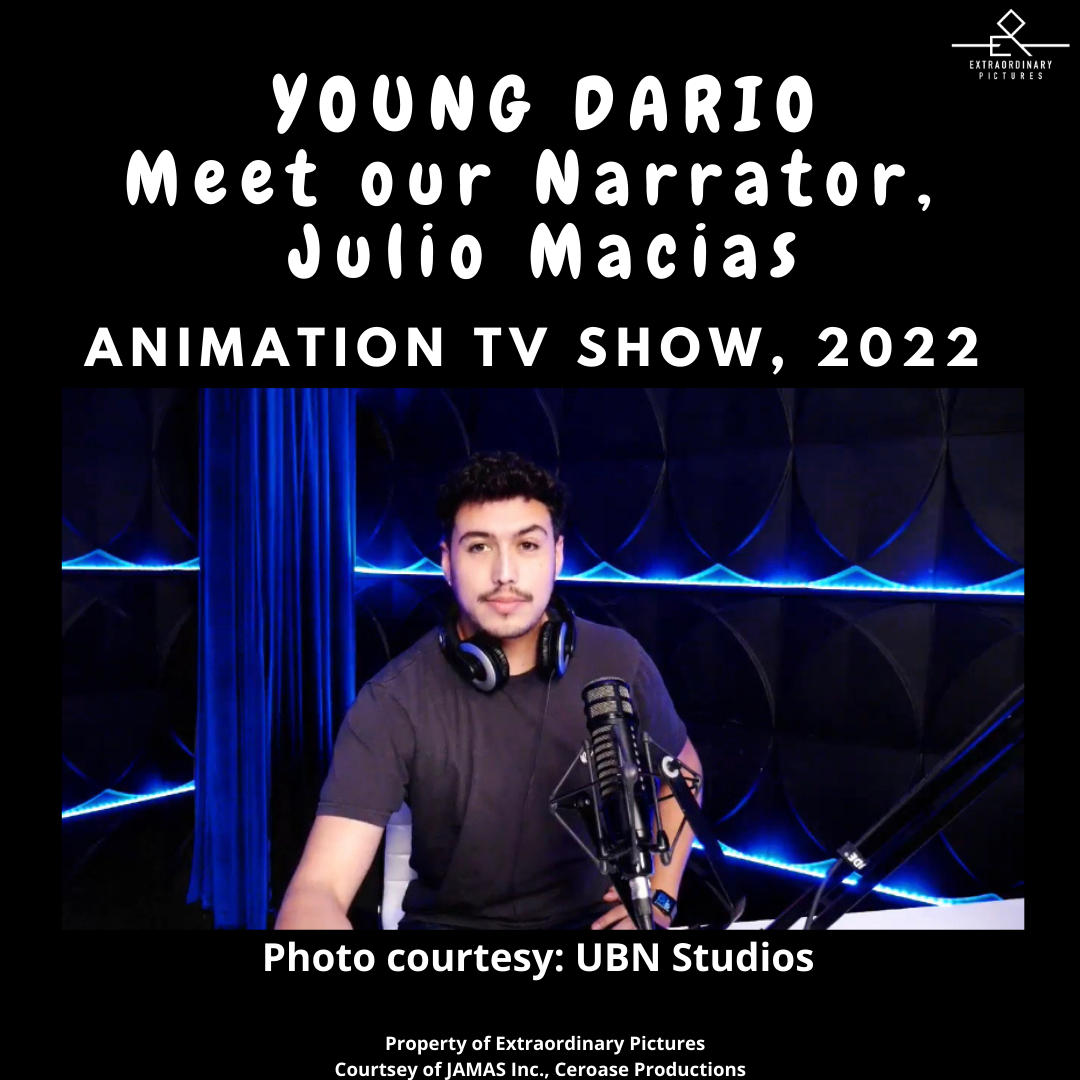
Young Dario BTS: Julio Macias hard at work, in-between takes of narrating an episode"

How do personal and universal themes work in your film?

"Young Dario" is a mix of, both, family and slight adult humor because all of us adults can think of the good and bad while reflecting on our youth years. Especially creating and then, filming and editing this project during a pandemic, so many emotions come to bay, both in a personal and professional matter. Whether that be the anxiety to get back to work, like being on set, or stressing over scheduling and micro-managing the art and working a day job, ironically the making of "Young Dario" is a learning experience. Like the character DARIO, I continue to takeaway a lot with my own personal growth.

How have the script and film evolved over the course of their development?

I would say so much has evolved since penning down those first few sentences of "Young Dario". While my co-writer/creator and I wrote down the earlier drafts, of course like many writers, we had questions and worried if the project would ever see daylight. Yet, somehow, everything came together after we asked a close mutual colleague and friend to provide feedback on all 12 episodes of the show. That was step one in getting the appropriate feedback and overall, support and words of encouragement from someone like our mutual colleague and friend.

The rest sort of fell into place once we launched a crowdfunding campaign for the series, regardless of the ups and downs of pre-production and overall, making a project. Definitely, a perk was finding the voice and face of Dario when Julio Macias jumped on board. It was surreal and liberating to have Julio involved because he was our first choice for Dario.

As cliche as it is, Julio IS Dario.

That is key when it comes to art - you just need to put it out there, regardless of the budget and so forth. I believe if one is passionate about the story, others will see and believe in that passion too like our funders and Julio did :)

What type of feedback have you received so far?

Prior to finalizing everything in post-production, I shared the pilot episodes with some close friends and colleagues. I usually like to do this, so I can see what is working and not working and, of course, what is best for the project. I also feel like many of us creators and filmmakers get so emotionally burned out in post-production. So, it is key to turn to those you trust for their honest feedback.

Has the feedback surprised or challenged your point of view?

Oh, it definitely has! I am human, and like everyone else, I battle with my self-doubts and insecurities about something being 'dumb' and so forth. I think feedback shuts down those self-doubts for once and all.

What are you looking to achieve by having your film more visible on www.wearemovingstories.com?

I hope We Are Moving Stories helps bring Young Dario to life, where an audience can follow us on social media and stay up-to-date on forthcoming screeners. In the meantime, an audience can also view our trailer and some behind-the-scenes videos and images IF this project strikes their interest.

Young Dario

Who do you need to come on board (producers, sales agents, buyers, distributors, film festival directors, journalists) to amplify this film’s message?

It would be a dream to have a sales agency/buyers or a distributor come on board. That is the ideal goal of potentially getting to screen "Young Dario" at something like a film festival. I work off my gut instinct and so far, it continues to tell me to spread the word on this project. I have no doubt this series will screen within the next few months.

What type of impact and/or reception would you like this film to have?

I truly HOPE that an audience can fall in love with DARIO and the various situations he experiences. Like all the characters I write, DARIO is someone I feel like a Mother-Hen to. I want to see DARIO succeed all of his dreams and if others desire that to, then that is a bigger dream itself.

What’s a key question that will help spark a debate or begin a conversation about this film?

I certainly think this project can spark a debate on Hispanic / Latino storytelling, where often we see too many stereotypes of the Latino and Latina characters. Over time, I think we continue to see those walls get torn down where Hispanic characters are not seen as the stereotyped 'villain' or 'lower-class worker'. I hope viewers can see that the Hispanic characters are no different than other cultures.

Would you like to add anything else?

Be sure to give our Facebook page a like and Instagram page a follow. Stay tuned for future updates!

What other projects are the key creatives developing or working on now?

Like all artists, the "Young Dario" team is working and preparing for other projects. Most of us also work a nine-to-five job, so there is always micro-managing and finding ways to balance everything in a healthy matter.


Interview: July 2022


We Are Moving Stories embraces new voices in drama, documentary, animation, TV, web series, music video, women's films, LGBTQIA+, POC, First Nations, scifi, supernatural, horror, world cinema. If you have just made a film - we'd love to hear from you. Or if you know a filmmaker - can you recommend us? More info: Carmela


Young Dario

Length:

48:21

Writer

NATALIE RODRIGUEZ is an award-winning director, screenwriter, and author in Los Angeles, CA. Her films have been screened, both, in the USA and internationally. In 2017, she founded her production company, Extraordinary Pictures, which has produced multiple films and books, including features, shorts, and sizzles. Some of her articles and blogs have been featured on HuffPost Blog, Thrive Global, The Mighty, and more. For upcoming and previous projects, be sure to visit her website https://linktr.ee/extraordpictures

KEVIN MICHAELS is a New-York native award-winning documentary filmmaker. He got his start in the entertainment industry as a graphic designer at Troma Entertainment, founded by Lloyd Kaufman and Michael Herz in 1974. In his downtime, he has served as a post-production coordinator for various television shows, including Star Trek: Strange New Worlds and more. He splits his time between New York and California.

Director

NATALIE RODRIGUEZ is an award-winning Hispanic director, screenwriter, and author in Los Angeles, CA. Her films have been screened, both, in the USA and internationally. In 2017, she founded her production company, Extraordinary Pictures, which has produced multiple films and books, including features, shorts, and sizzles. Some of her articles and blogs have been featured on HuffPost Blog, Thrive Global, The Mighty, and more. For upcoming and previous projects, be sure to visit her website https://linktr.ee/extraordpictures

Producer

EMESGE, Joana Gomez, Julio Macias, Larry Minion, and Natalie Rodriguez

NATALIE RODRIGUEZ is an award-winning Hispanic director, screenwriter, and author in Los Angeles, CA. Her films have been screened, both, in the USA and internationally. In 2017, she founded her production company, Extraordinary Pictures, which has produced multiple films and books, including features, shorts, and sizzles. Some of her articles and blogs have been featured on HuffPost Blog, Thrive Global, The Mighty, and more. For upcoming and previous projects, be sure to visit her website https://linktr.ee/extraordpictures

JULIO MACIAS is a multi-talented actor and singer. He is best known for his award-nominee acting role as "Oscar "Spooky" Diaz" on Netflix's "On My Block". Most recently, he co-starred in "Selena the TV Show". In his downtime, he spends time writing and recording music and spending time with his loved ones.

EMESGE was born on September 23, 1984, in Melbourne Australia as Ngoc Tuan (Dave) Hoang. He is a comedic singer/songwriter and producer and is known for songs such as Chubby Love, Butter Chicken, and Asian Eyes. Formerly known as "Dave?", EMESGE continues to explore the realms of comedy as he gradually spreads his music across the globe.

LARRY MINION is an award-winning playwright and filmmaker. Over the years, many of his plays have been presented on the New York theater circuit. Later, he started working Off and Off-Off-Broadway as a stage manager and prop master. Larry also took an interest in working with organizations that were refurbishing the New York theatres. He is also a practitioner of Chinese Medicine and acupuncture.

JOANA GOMEZ is a Hispanic, Los Angeles-based filmmaker who has worked in, both, low-budget and high-budget productions. Most recently, she interned on Disney's "Cheaper By the Dozen" remake, "Chip 'n Dale: Rescue Rangers", and the anticipated "Avatar: The Way of Water".

Key cast:

Julio Macas

Looking for:

distributors, sales agents, journalists, buyers, film festival directors

Facebook:

https://www.facebook.com/youngdarioshow/

Instagram:

https://www.instagram.com/youngdarioshow/


July 05, 2022 /Carmela Baranowska
Comment

Dieseln'Dub - A Music Documentary

July 02, 2022 by Carmela Baranowska

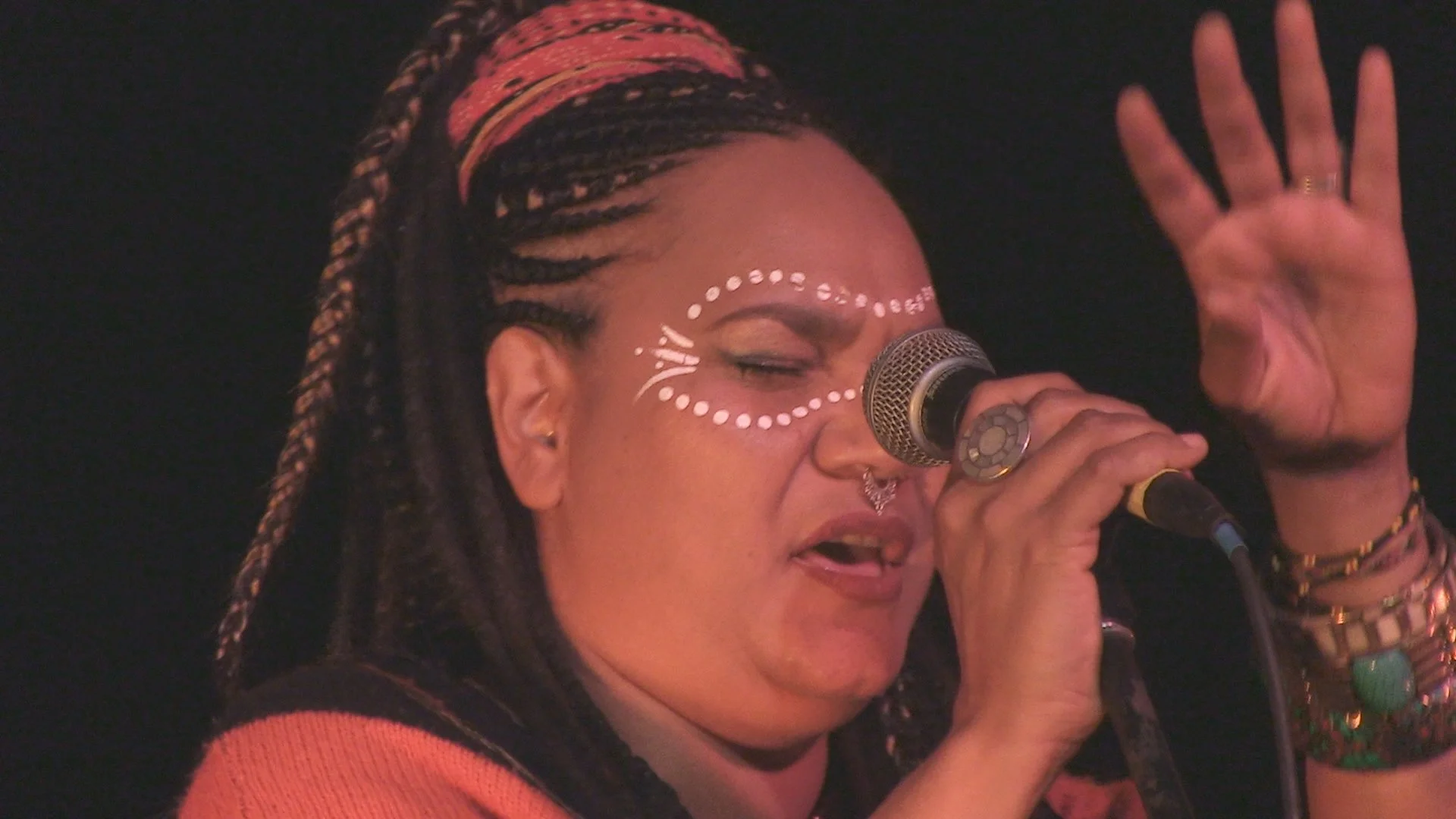
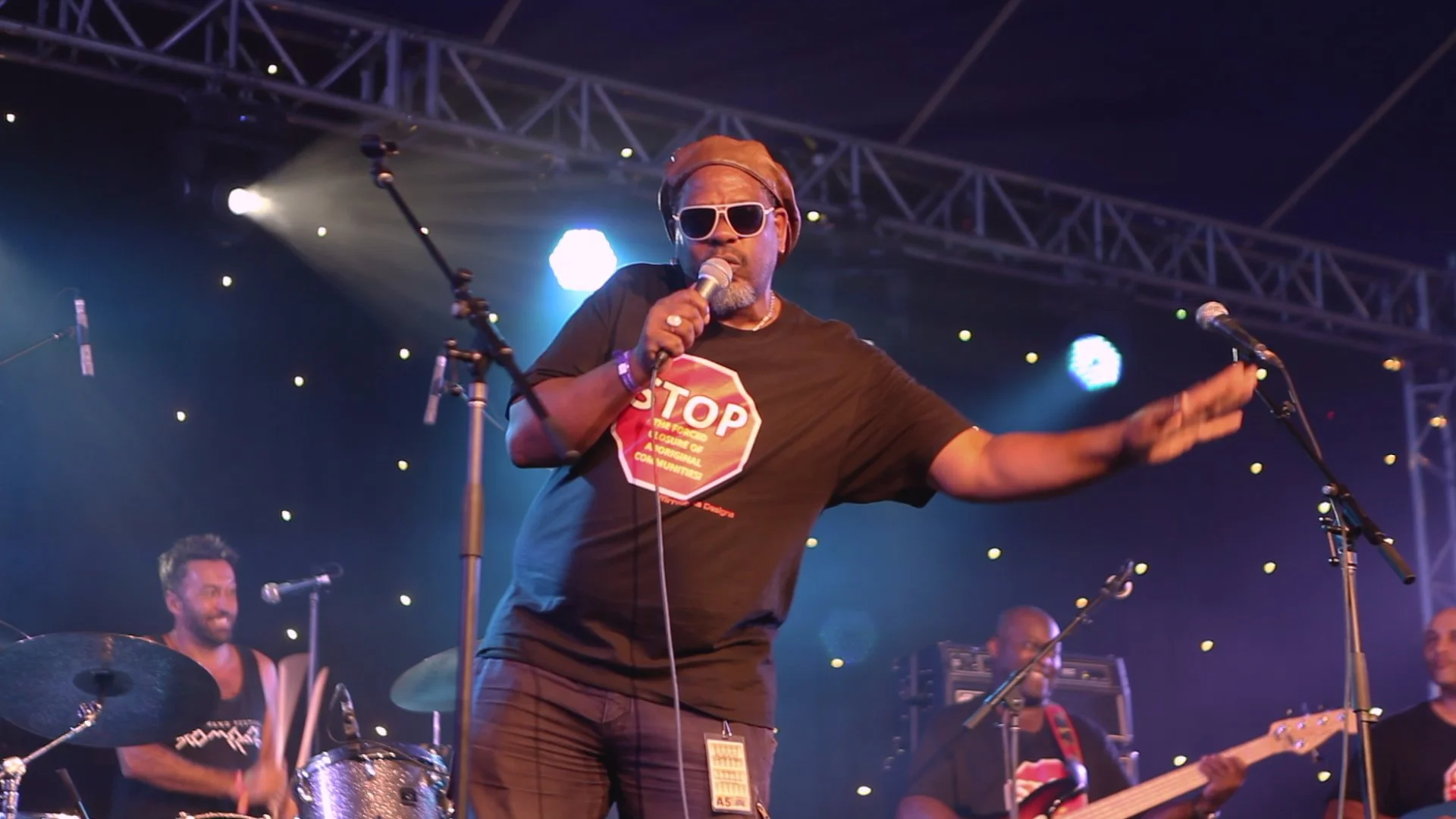
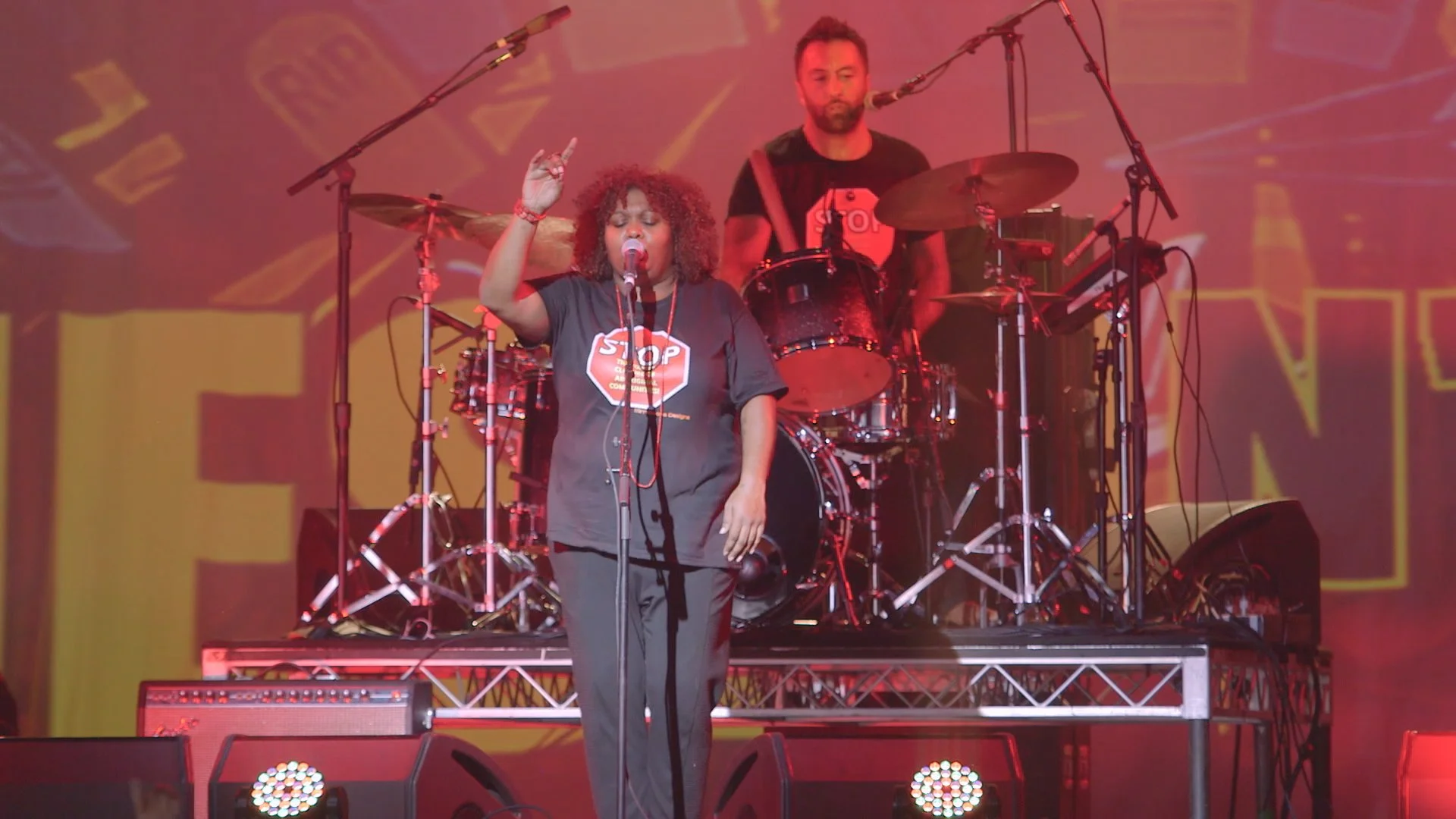
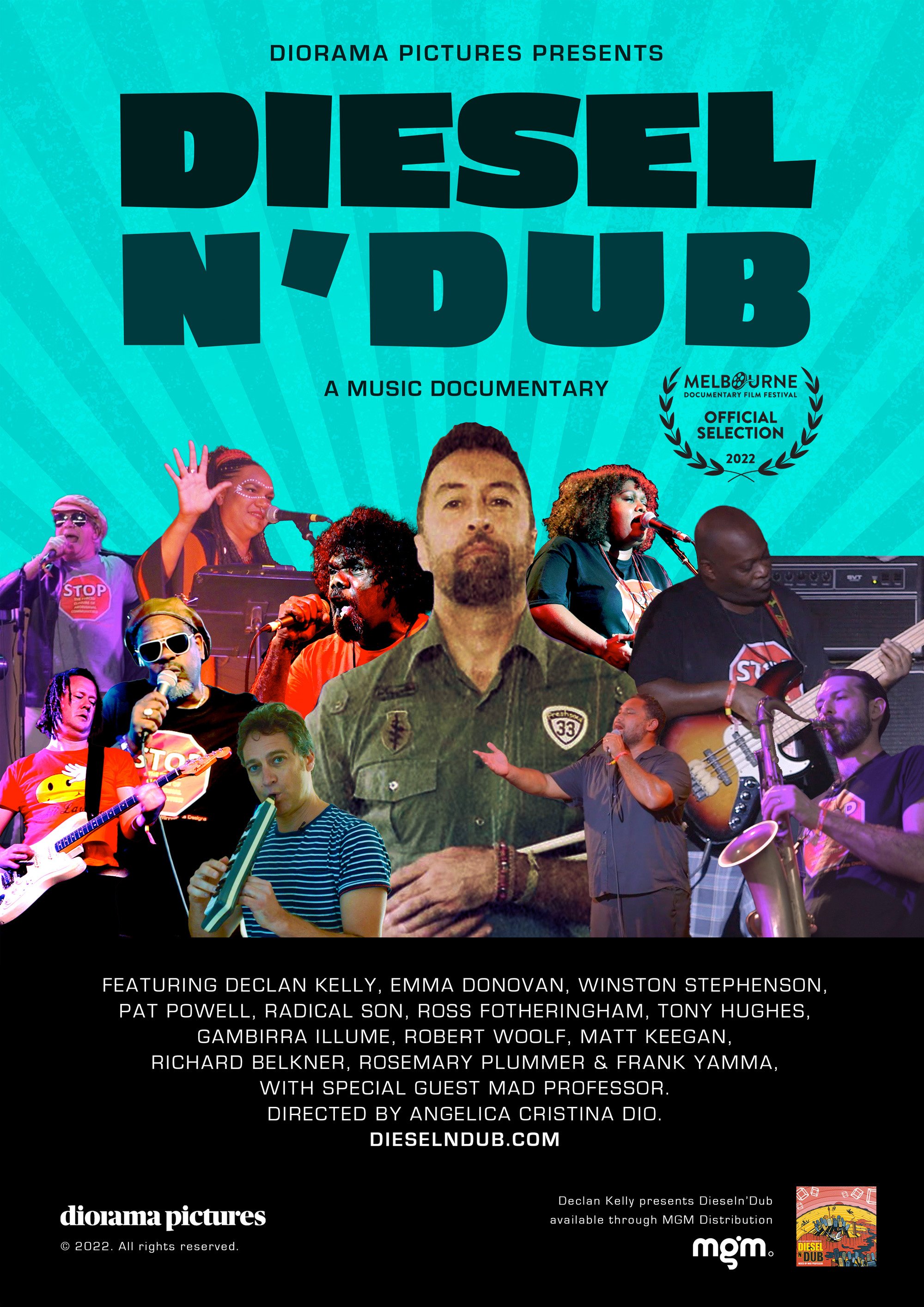
Aussie musicians Declan Kelly, Emma Donovan, Radical Son, Pat Powell and others reflect on the legacy of Midnight Oil’s protest hits and what it means to sing those words decades later, under the weight of Black and Indigenous experience, asking what has changed and what has remained the same?

Interview with Writer/Director/Producer Cristina Dio


Congratulations! Why did you make your film?

When musician Declan Kelly told me he was creating a new album of Midnight Oil songs in dub-reggae style I was immediately intrigued. Being an Oils fan from back in the day I understood the power of those songs and to then consider them again, reinvented in the reggae sound, I thought was irreverent but, in a way, also visionary. I knew the songs had a longevity long beyond their hit cycle decades ago and knowing of Declan and his band as artists, I knew the respect was there. With their permission I started documenting – recording sessions, meetings and conversations, the odd radio interview and then the album tour.

Meeting the artists and hearing their perspectives on the songs was really enlightening. For most of them, these songs were popular when they were kids, but they understood the messages in the lyrics and found them as relevant in the present as in the day they were written. They brought their own weight of experience to the songs, their own point of view. Emma Donovan brought her traditional language of Gumbaynggirr to lyrics of The Dead Heart, for example. As the project grew, I could see how this amazing group of artists were in a way shining a new light on these hits. It was almost as if they had written the songs themselves in the present day, there was so much insight and so much heart in their renditions, bringing out the enduring relevance of those songs. I felt that this project would speak to people, about so many issues that we don’t necessarily openly discuss as a society. I felt that an audience could learn so much from the gems of wisdom that these artists shared between themselves, as members of a complex and complicated multicultural existence. And the live performances were so powerful that they deserved to be documented and shared with a bigger audience beyond the live festival stages.

Dieseln'Dub - A Music Documentary

Yes, the project is about Midnight Oil songs and we’ll hear them and see them performed but it is about so much more, and this film looks at those in-between spaces that occupy the bigger story. It’s about the people who came together to create this and their stories. After a while documenting I knew I had something special to share. I asked for sit-down interviews with as many participating artists as were available, and I was fairly blown away by what they were willing to share and discuss. Talking to them was often a revelation of sorts. I learned so much about music, songwriting, language and living life in-between different cultures, that I was super excited about sharing with an audience. The whole experience of making this film was very uplifting for me. That’s why I made the film, because I wanted to share that experience through the songs, the images, the sounds and the stories, so that other people could also have the opportunity to watch and learn and feel uplifted by the experience.

Imagine I’m a member of the audience. Why should I watch this film?

You will be entertained. You will learn something. You will feel like you are on tour with the band. You will feel your mind and your heart open up a little and feel really good from the experience.

How do personal and universal themes work in your film?

On a personal level, at the heart of this film there is the story of knowing oneself and one’s story. It is about identity and of identifying with a culture through language and more specifically through songs and storytelling. While we break down the legacy hits of Midnight Oil, some of which are burned in our collective consciousness - Beds are Burning, The Dead Heart, Power and the Passion among others – the artists discuss what the songs meant to them when they first heard them and what they mean now, decades later, asking what has changed and what has remained the same, since the songs were first written? We have all individually changed and evolved, but has the society? Has the collective? We realise we are still dealing with much of the same stuff they were singing about back then.

Personal reflections take us into so many interesting and profound directions. When Declan and the band meet Indigenous elder Rosemary Plummer, they realise what a crucial role song, language and storytelling play in keeping their community alive and together in connection with country. Guest singer Gambirra Illume further elaborates on the power her traditional languages and stories from Yolngu Country have on protecting ancestral boundaries; while keys player Rob Woolf reflects on the necessity of language to form identity with culture from the perspective of his Jewish background and the resurgence of Modern Hebrew. Radical Son talks about his developing pattern of speech as a young man to becoming a community role model.

Matt Keegan, Tony Hughes and Ross Fotheringham bring the perspective of Midnight Oil’s key audience back in the day and how they connected with the identity of the band, in a sublime way understanding the power of the music. Declan Kelly shares his tribal ancestry and how it has shaped his musician’s sensibilities. Pat Powell, Winston Stephenson and Mad Professor share insights into identity and connection through Black music and it’s evolution as a uniting force from slavery to modern reggae. Truly the themes touched on are fascinating, far reaching and go deep.

Dieseln'Dub - A Music Documentary

Connecting with culture, family and community through language is not only a personal theme that runs through the film, but it’s also one of the most fundamental universal themes that we all share. If we radiate outwards from that, we touch on universal themes of belonging and loss; of sacrifice and survival; of music and storytelling; and in a sense there is also a coming of age, as the artists look back on their introduction to music and these songs and their present day take on them, looking back with the wisdom of an adult. The songs have come of age and so have we. The artists tread very articulately and sensitively across all this terrain, yet with a disarming lightness that is refreshing and compelling.

How have the script and film evolved over the course of their development?

Dieseln’Dub – A Music Documentary is a truly grassroots film. There was no conscious development or scriptwriting as such. The structure came out of dozens of hours of raw footage revised over months and viewed again and again in the editing phase until a narrative of sorts emerged. When I first picked up the camera I was simply documenting believing I would cut short clips for social media but the more involved I became with the project, I knew it deserved a bigger consideration. So in that sense it evolved into a fully-fledged feature documentary because there was just so much rich material to work with. And it was very difficult to pare it back even to 90 minutes.

If it were up to me I would allow the songs to play out in their entirety, the performances are just so powerful. And every artist interview deserves its own film, to be honest. There is so much wisdom in there. It was difficult to cut it back to fit neatly into a feature length format. It was also important to connect with Midnight Oil themselves and get their blessing for this project, which they supported since day one. I went along with Declan Kelly when he met with Peter Garrett to basically let him know he was embarking on this project and the response was very positive and encouraging. I kept in touch through their management all the way through to the final edit and in their own words, they always maintained a fondness for the project, and were very encouraging on the release.

What type of feedback have you received so far?

The film has not screened anywhere yet. It is literally fresh out of post-production and was selected to screen as part of the Melbourne Documentary Film Festival which I am absolutely thrilled about. I can’t wait for it to be seen by a wide audience and am keen to hear people’s reactions. Often people comment on the Midnight Oil angle, and wonder why on earth anyone would do those songs as reggae, but it is about much more than that and I think when people watch it, they’ll embrace the bigger story.

All of the artists involved with the film have seen the final edit and the response was overwhelmingly positive, very warm and generous; and to me that is the most important thing. Even if it doesn’t gain a large audience, I am happy that those involved have a film that has captured their participation in an extraordinary project.

Has the feedback surprised or challenged your point of view?

I do expect to be surprised and challenged by feedback, and I look forward to it. Whatever it is, it will help me grow as a filmmaker and as a person!

Dieseln'Dub - A Music Documentary

What are you looking to achieve by having your film more visible on www.wearemovingstories.com?

I love the idea of being part of such a vibrant and passionate filmmaking community. So many films showcased on this site are stunning and powerful and to be included with them is very encouraging. It is a really good way to showcase the film and introduce it to a new audience.

Who do you need to come on board (producers, sales agents, buyers, distributors, film festival directors, journalists) to amplify this film’s message?

I would love to reach as wide an audience as possible, so interest from sales agents, buyers, distributors, film festival directors and journalists would be very welcome.

What type of impact and/or reception would you like this film to have?

It would be good if this film can spark some interest and awareness of some of the issues of First Nations people of this country. Midnight Oil sang about Indigenous rights, the surrounding politics and the environment and we forget that not much has been resolved since the release of “Diesel and Dust” back in 1987. If the film can remind people what these songs were about and offer the audience a different perspective on the issues, I think it might open some minds and hearts.

What’s a key question that will help spark a debate or begin a conversation about this film?

Why would anyone reinvent Midnight Oil hits in dub-reggae style?

Would you like to add anything else?

Gather a few mates, bring some snacks and tune in to the film while it is streaming as part of the Melbourne Documentary Film Festival. Turn up the volume and enjoy the experience!

Dieseln'Dub - A Music Documentary

What other projects are the key creatives developing or working on now?

I am working on my next documentary feature about Indigenous artist and activist Blak Douglas who has just won the Archibald Prize. Blak Douglas is always outspoken, always provocative and the film is shaping up to be a cracker.


Interview: July 2022


We Are Moving Stories embraces new voices in drama, documentary, animation, TV, web series, music video, women's films, LGBTQIA+, POC, First Nations, scifi, supernatural, horror, world cinema. If you have just made a film - we'd love to hear from you. Or if you know a filmmaker - can you recommend us? More info: Carmela


Dieseln'Dub - A Music Documentary

Length:

1:30:00

Writer/Director/Producer

ANGELICA CRISTINA DIO is a Uruguayan-Australian filmmaker.

Key cast:

Declan Kelly, Emma Donovan, Pat Powell, Radical Son, Winston Stephenson, Mad Professor, Tony Hughes, Ross Fotheringham, Gambirra Illume, Robert Woolf, Matt Keegan

Looking for:

film festival directors, sales agents, distributors, buyers, journalists

Twitter:

https://twitter.com/DieselnDub

Facebook:

https://www.facebook.com/dieselndub/

Instagram:

https://www.instagram.com/dieselndub/

Hashtags used:

#dieselndub #declankellymusic

More info:

http://www.dieselndub.com/

Where can I watch it now?

Melbourne Documentary Film Festival


July 02, 2022 /Carmela Baranowska
Comment

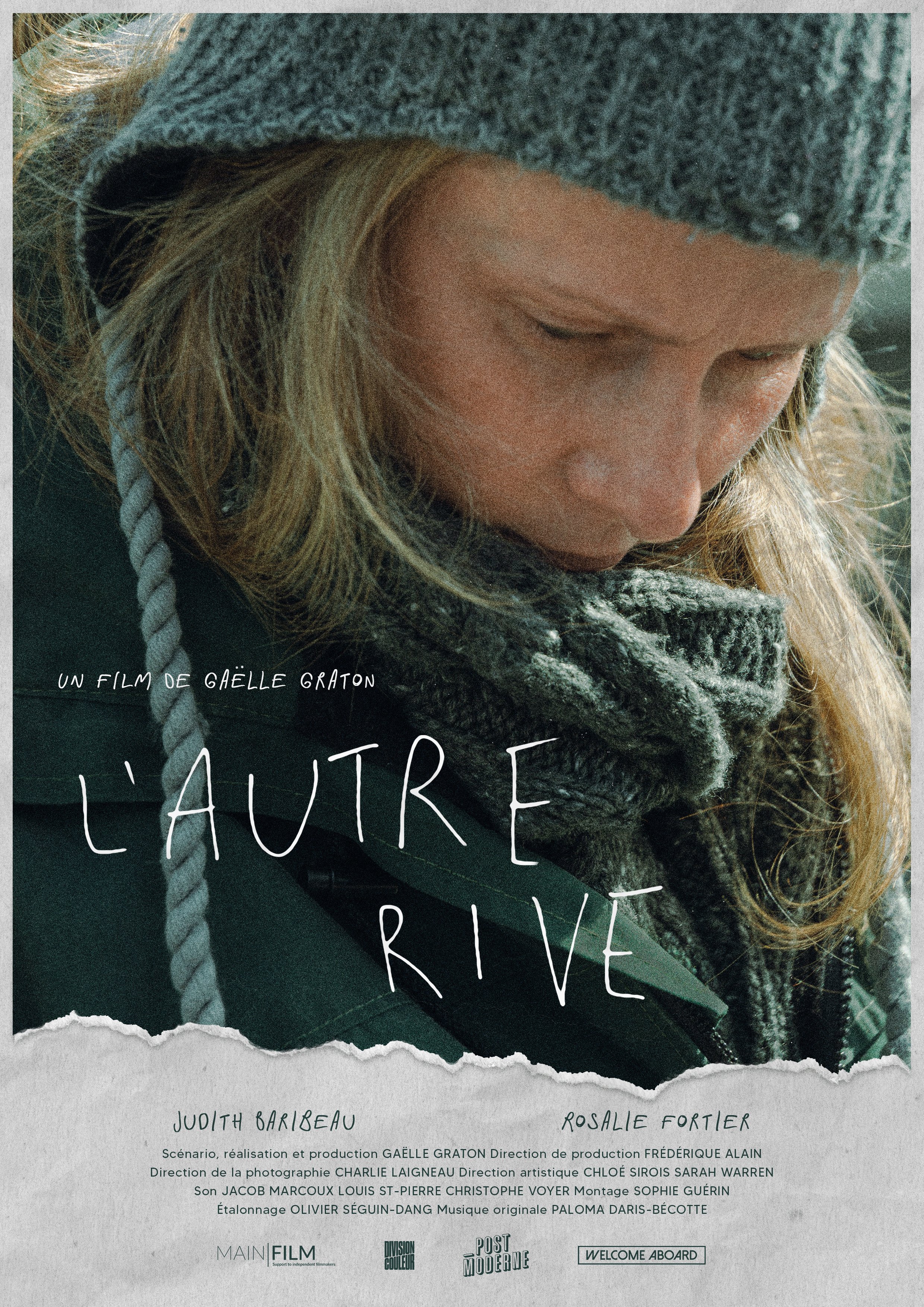
L'autre rive (A Shore Away)

July 01, 2022 by Carmela Baranowska

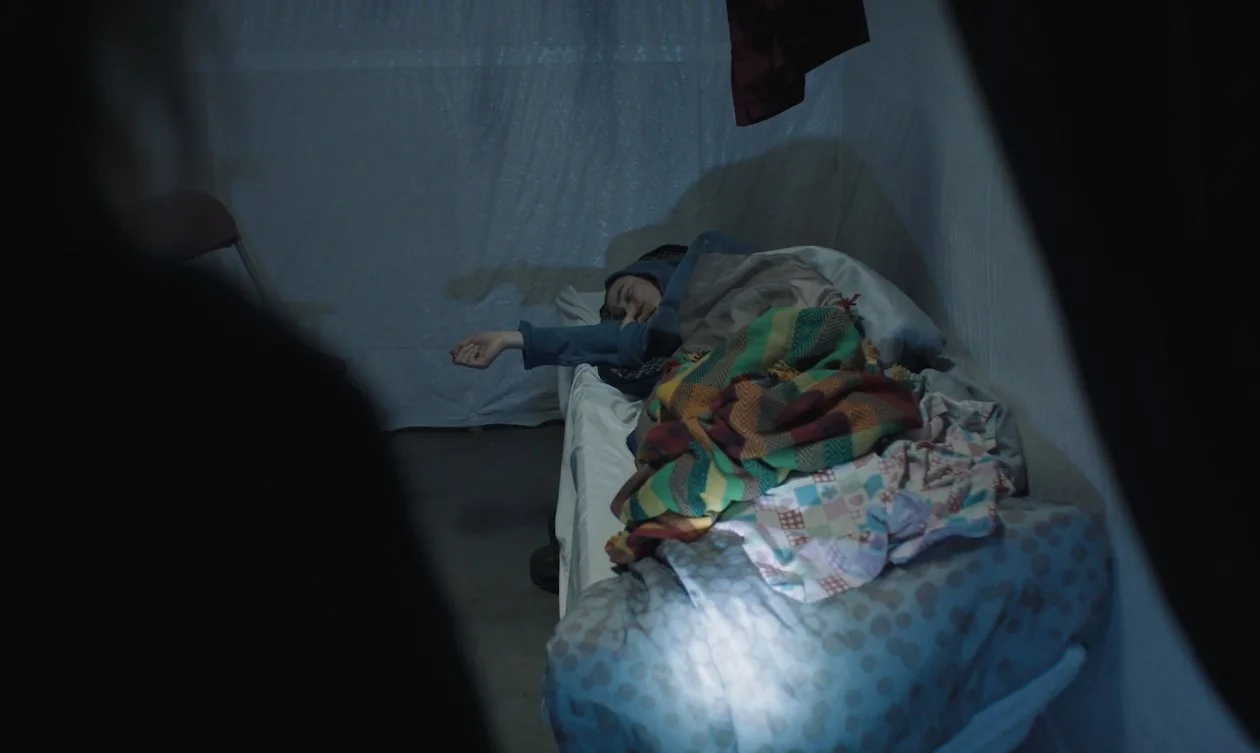
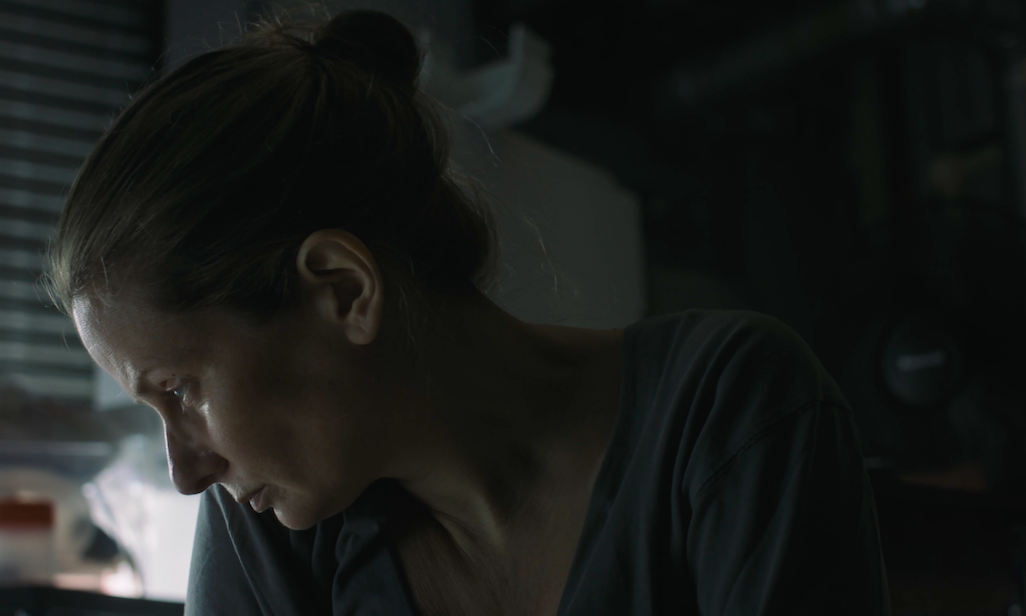
Newly employed in an emergency shelter for people experiencing homelessness, Genevieve is shaken up to meet again with Camille, a young woman whom she believed to have successfully reinserted while being her social worker.
​
*Shot in a real emergency shelter of Montreal, QC, Canada.

Interview with Writer/Director/Producer Gaëlle Graton


Congratulations! Why did you make your film?

Thank you very much! For many different reasons. Firstly, five years ago, I was studying in Sociology in university but I felt more and more driven by a profound desire to work in cinema. I eventually chose to stop pursuing these studies. I wanted to give myself the chance to turn my repressed passion for storytelling into something tangible that I could also share with others. Nevertheless, I remain deeply passionate and informed by the social phenomena I studied, by social justice, climate action, and human rights.

Therefore, I must say that writing and directing the social drama that is L'AUTRE RIVE (A Shore Away) felt challenging but incredibly comfortable. The whole production process from the development to the ongoing distribution process feels like I have arrived home in a way. I mean that this experience finally regrouped so many things I adore from my background as a Sociology student to the art of making cinema. I think I somehow made this film to prove to myself that I could be a storyteller that also participates in raising the awareness on major social issues such as homelessness.

L'autre rive (A Shore Away)

Imagine I’m a member of the audience. Why should I watch this film?

My film L'AUTRE RIVE is a deeply honest film on injustice, human rights and social solidarity. It’s about women who are caught in the stresses and hardships of deprivation, impoverishment, and a lack of resources. After having done an internship in social work, tackling the theme of social disqualification was important to me. Homelessness affects almost every community around the world and the individual responsibility we attribute to people living in the streets is often wrongful and very hurtful. Homelessness is not a lifestyle choice one makes. It’s the social factors that are external to the human being who finds himself in a sudden situation of precariousness that are responsible.

The factors that are at play can vary from poverty, rejection, domestic violence to the scarcity of affordable housing, foreclosure, the loss of a job, substance abuse, the high healthcare costs, etc. I hope that my film will make some people realize that these men and women living in the streets are also citizens in their own right. We all have the to reach out to them with consideration, a greeting, or a smile. If L'AUTRE RIVE sheds light on the responsibility we carry, I’ll be extremely happy because the time for a change is now.

How do personal and universal themes work in your film?

They work hand in hand, I guess. Throughout the whole process of crafting the film, I was more interested in tracking the characters’ emotional journey rather than explicitly stating their identity or creating a teaching moment out of their experience. I tried to make place for the viewer to integrate his own reflection in the film and to hopefully have his prenotions on homeless people be challenged. Furthermore, L'AUTRE RIVE is also about something that unites us all as human beings: the fact that we can all dream and have higher aspirations regardless of our socioeconomic status, our material conditions and our past actions that may sometimes weigh on us.

Both female characters in the film aspire to achieve something greater. Personally, when I meet someone with this very quest, I’m always deeply heartened. I also think of the concept of universality as something I must work to achieve through my very new filmmaking journey. I wish for the audience to feel less lonely when they leave the screening or finish watching the film at home. The goal is that the film becomes a shelter for themselves.

L'autre rive (A Shore Away)

How have the script and film evolved over the course of their development?

In the summer of 2020 in Montreal (QC), Canada, I walked by a homeless encampment installed next to a busy boulevard. There were around 80 tents up from people of all walks of life. I quickly met with a young girl my age living in the streets. I was deeply moved by our long conversation on our dreams, the chaos of our teenage years as well as by the similarities – both physical and emotional – that united us. I was somehow struck by her. That same evening, I felt truly lucky when I opened the door of my apartment. I felt very inspired to tell a story about our encounter.

I walked by the encampment a few days later and a homeless man I chat with walked me to an emergency shelter located a few blocks away. He showed me this old skating rink of the Hochelaga-Maisonneuve neighborhood in Montreal that had just been converted into a temporary shelter. As I set foot inside, I immediately discovered a place swarming with people hoping to get a bunk for the night. It felt busy and somewhat chaotic. To this day, I still remember the frenzy… The social workers were overwhelmed with cleaning chores and interventions. They seemed like the purest people, and I was utterly lost for words. I knew right away there was a story to tell but it took me a few weeks to conceptualize it into a short film and convince myself that it could be my first one as a director.

The twist is that the writing process had to be quick because the survival of the shelter was at risk due to lack of government funding. Hence, I wrote the script in the summer of 2020. Therefore, the script evolved rapidly since it was informed with the candid encounters I was doing at the camp and the research that followed at the shelter.

However, in early December 2020, a riot police woefully dismantled the tent city with the help of a garbage truck. The city officials plan was to have everyone under a roof by nightfall, but the plan failed drastically. These homeless people were once more fragilized by the system, having nowhere to go and no more basic amenities to camp in. This event informed my writing and deepened my desire to integrate some sort of a call to action in the film.

We shot it in March 2021 (in the midst of the Covid crisis) by virtue of a short but successful crowdfunding campaign. The beauty of it all is that my team and I had the great chance to shoot in the very shelter I walked in and did my research at. We put in many efforts to preserve the look of the place and work with it to craft an authentic world that the audience can really dive into. And I feel like this is precisely because nothing is forced, that the film has the power of creating new connections and introduce new conversations.

What type of feedback have you received so far?

We receive consistent feedback from people curious about the location as well as positive comments on the authentic depiction of homelessness which is a subject rarely portrayed in fiction. The realistic performances are also often acclaimed. I salute the work of both actresses: Judith Baribeau as Geneviève, a heart-rending former social worker living a tough live herself, and Rosalie Fortier as Camille, a young homeless adult animated by a sort of childish mischievousness and the inhibited ardor of people for which there only remains a slight slender of hope. For Camille, I wanted someone who would give me trouble for real… I wanted an actress who would not appear to be acting at all but be herself and Rosalie work sublimely to give me that. And I think that with Judith’s kindness, deployed through the hardships both characters face, the audience can grasp the promise of hope that arises between the two characters.

Overall, we are very happy with our debut. We had our world premiere at REGARD where L’AUTRE RIVE won an Audience Award. The film also won four awards at Prends Ça Court (QC) and was recently selected in competition at FANTASIA International Film Festival.

L'autre rive (A Shore Away)

Has the feedback surprised or challenged your point of view?

With L’AUTRE RIVE being my first film, I’m not used to having such direct feedback but I’m always extremely moved when people come up to me after watching the film or send me a message to express how it affected them. After the world premiere screening, one elderly woman came to up me and whispered: ‘’I was crying my eyes out my dear and now I’m left with no words but ‘’f*ck’’...’’ I started tearing up and did not know what to answer aside from a heartfelt thank you for her sensitivity to cinema and the subject matter…

What are you looking to achieve by having your film more visible on www.wearemovingstories.com?

It’s always such a pleasure to share the film with a wider audience. I hope that by watching L’AUTRE RIVE, audiences will connect with the story and start thinking of homeless people as humans, not statistics.

Who do you need to come on board (producers, sales agents, buyers, distributors, film festival directors, journalists) to amplify this film’s message?

Anybody who can come on board to fight for human rights and access to lodging for all is more than welcomed. The right to shelter, to have one’s own bed to sleep in, a roof over one’s head, a place where one’s person and possessions are safe is a fundamental human right. It is essential to the preservation of one’s dignity and health which means that housing providers, service providers and employers should consider different ways of accommodating people with a past or present experience of homelessness. If active participants of the film industry want to partake in the spreading of this message by sharing about L’AUTRE RIVE, I think that it is greatly beneficial considering that they all reach different audiences.

What type of impact and/or reception would you like this film to have?

I wish that the film allows at least one viewer to perceive the homeless population in a different light than how it is often portrayed in the media. Particularly girls and women living in the streets since they are even more disqualified. I’m optimistic that the film can be effective at changing people’s perceptions and spark discussions about this ongoing humanitarian crisis. Tell me that I am naive but I think that movies and art can certainly change the world.

What’s a key question that will help spark a debate or begin a conversation about this film?

That’s such a great question… I think that it would be: ‘’what attitude can you adopt or what behavior can you change to better the lives of the homeless people you cross paths with?’’

Would you like to add anything else?

I’m so grateful to wearemovingstories.com for supporting new voices in film. Thank you so much!

What other projects are the key creatives developing or working on now?

I am currently developing two short films, one of which is JUPONS produced by UGO Media. I am also developing SOIF, a feature film that I’m co-writing with Judith Baribeau. It’s produced by Les Films Camera Oscura. Lastly, I’m also collaborating on a handful of other projects as an independent producer. There is no greater joy than the joy of creating something for the big screen.

Interview: June 2022


We Are Moving Stories embraces new voices in drama, documentary, animation, TV, web series, music video, women's films, LGBTQIA+, POC, First Nations, scifi, supernatural, horror, world cinema. If you have just made a film - we'd love to hear from you. Or if you know a filmmaker - can you recommend us? More info: Carmela


L'autre rive (A Shore Away)

Length:

17:46

Cast:

Judith Baribeau (Genevieve), Rosalie Fortier (Camille), Olivier Aubin (M. Sinclair)

Writer/Director/Producer

Gaëlle Graton is an emerging director/screenwriter and producer from Montreal (QC), Canada. Her first short film L'AUTRE RIVE won an Audience Award at Festival REGARD and distinguishes itself in the festival circuit. Gaëlle is currently developing her second short film JUPONS produced by UGO Média. She also co-writes a feature film titled SOIF with screenwriter/actress Judith Baribeau (Les Nôtres), produced by Les Films Camera Oscura. Gaëlle also produced LUEURS (in postproduction) by writer-director Rebecca Vachon and works in feature film distribution at h264.

Key cast:

Judith Baribeau (Genevieve), Rosalie Fortier (Camille), Olivier Aubin (M. Sinclair)

Looking for:

journalists, film festival directors, buyers

Twitter:

https://twitter.com/GaelleGraton

Facebook:

https://www.facebook.com/lautrerivefilm

Instagram:

https://www.instagram.com/lautre_rive_shortfilm/

Hashtags used:

#lautreriveshortfilm

More info:
https://gaellegraton.wixsite.com/accueil

Where can I watch it?

Fantasia International Film Festival

L'autre rive (A Shore Away) in is competition in the program OUR WORLD

Screening on Sunday, July 17th, 20:00 at Cinéma du Musée in Montreal, QC, Canada.


July 01, 2022 /Carmela Baranowska
Comment

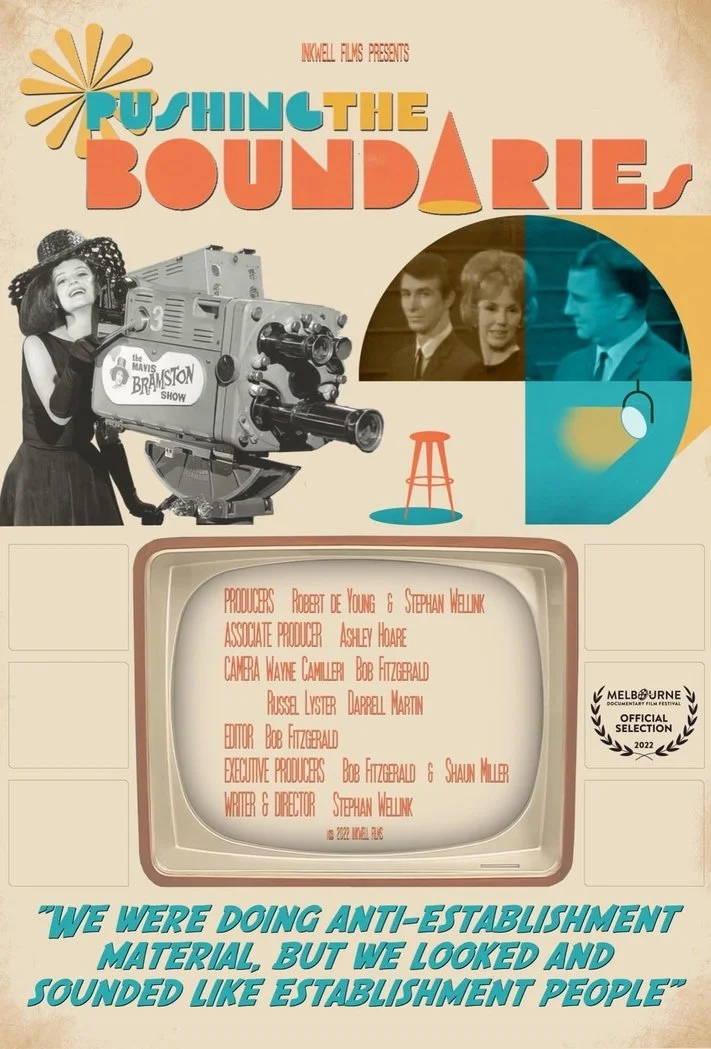
Pushing The Boundaries: The Mavis Bramston Show

June 30, 2022 by Carmela Baranowska

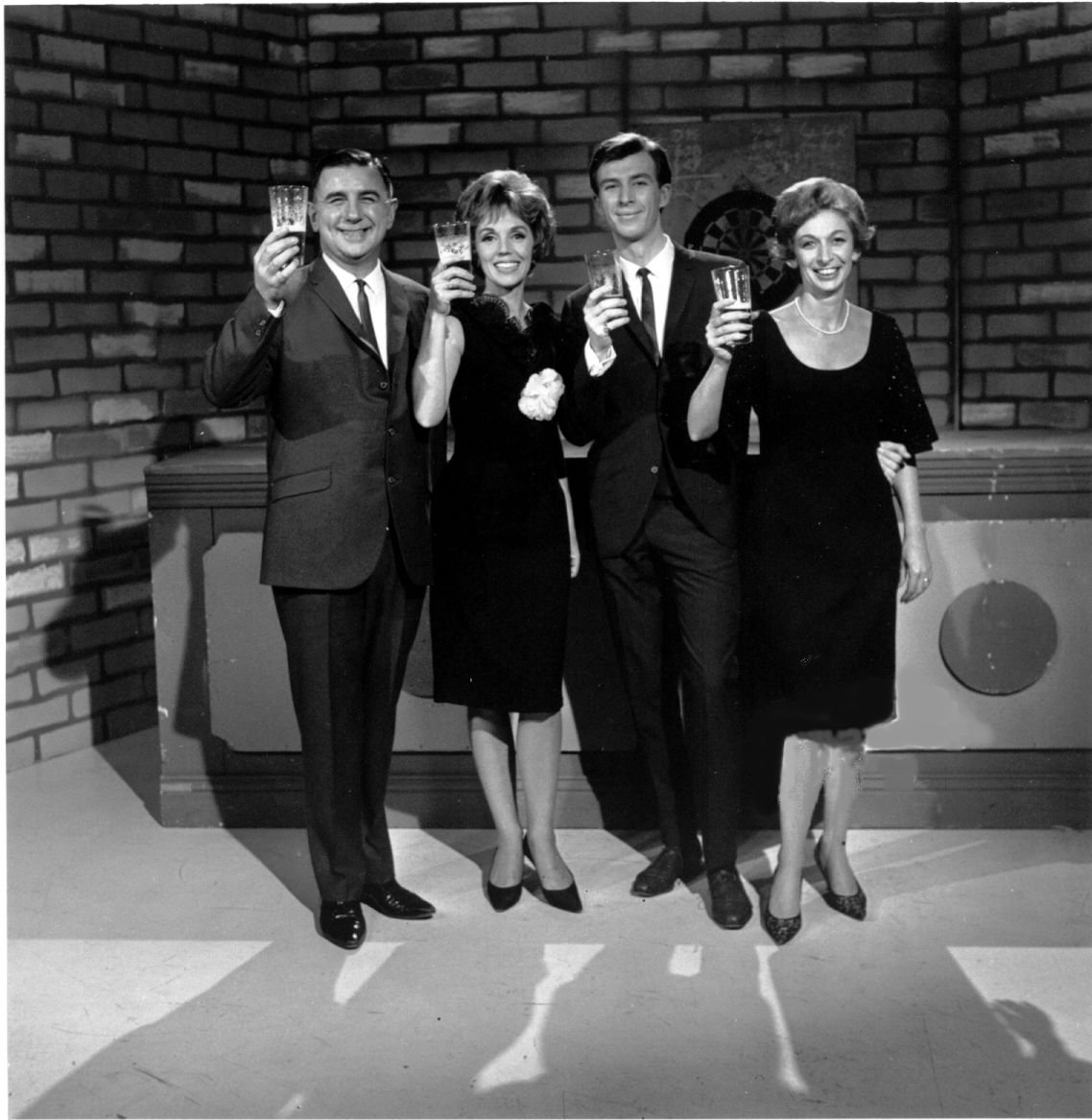
In 1964, Carol Raye became the first female television executive in Australia when she created the mother of all Australian television comedy, The Mavis Bramston Show, which boldly tackled subjects such as sexuality, politics, religion, women’s rights and racism; nothing was sacred.

Interview with Writer/Director Stephan Wellink

Congratulations! Why did you make your film?

I was in a conversation with Barry Creyton, one of the principal cast members of the show in 2014. Barry mentioned it was the 50th anniversary of the premiere of the pioneering satirical program The Mavis Bramston Show on Australian television and he lamented the fact that no DVD or "best of" the show had been produced to mark the occasion. I said to Barry I thought there might be an opportunity to celebrate all that MAVIS was by making a documentary and I set out to do just that. I was a pre-teen when the show first screened on Australian TV. I knew about the show from the reaction of my parents to it. I knew it had been controversial and I knew there had been calls for it to be banned. However, I did not realise the extent to which the show broke new ground until I started my research which included watching each episode and being astounded at how far the producers, writers and cast pushed the boundaries of what was acceptable to Australian society at that time.

Imagine I’m a member of the audience. Why should I watch this film?

The film places the Mavis Bramston Show (1964 - 1968) within the context of the time during which it was broadcast. The 1960s was a time of great change in the western world. It was a cultural revolution led by music, literature, film and civil rights activism. Australia was coming out of the austere years following World War Two and Australians suffered from a cultural cringe. By the early - mid 1960s, the baby boomers were becoming well educated adults and began travelling the world in large numbers. The world view of many people shifted from monochrome to vibrant colours during the 1960s. In 1964, The Beatles visited Australia and as Glenn A Baker says in the film: "Life began that day". Australia was growing up as a nation and MAVIS played its part. MAVIS held up a mirror to Australians who started to see themselves for the first time.

The sketches we include in the film point to the pioneering approach of the show. Nothing was sacred and taboo subjects like sexuality and racism were portrayed through biting, satirical sketches and occasionally serious narrative, in ways that hadn't been seen before. The cast of the documentary paint the picture of champions who made the program happen, the style that MAVIS developed and the challenges the producers faced from censors, politicians and the Catholic Church who were savage in their public condemnation of the show. MAVIS was the mother of many similar shows that appeared in subsequent decades and is the benchmark against which those shows are judged, even today.

How do personal and universal themes work in your film?

That's an interesting question. My job is to observe and document what I hear, see and learn without bias. In the case of our film, the personal and universal themes are shown through the lens of The Mavis Bramston Show. Universal themes of the film include racism, human rights, religion, contraception, sexuality and equality for women. The personal themes come from the cast. We link the themes with relevant archival material and sketches from MAVIS episodes that highlight or punctuate the observations that are made throughout each sequence of the narrative. In the case of equality for women, the film shows how Carol Raye, an immigrant from the UK via Kenya, became Australia's first female tv executive at a time when the industry was totally dominated by men.

Carol broke the glass ceiling and the film celebrates her personal achievements which contributed so much to the success of the show. A number of MAVIS sketches speak to the importance of women playing a stronger, more prominent role in society. Other themes, for example, sexuality, are addressed. Again, the sketches show overt flirting among the male cast members, something that society frowned upon at the time.

Cast members like the late Gordon Chater, who was openly gay, revelled in dressing in woman's clothes and often portrayed another point of view regarding sexuality which in his case, brought the personal and universal together. In the case of the writers, the film explores the process of the MAVIS writers' room, particularly the challenges they faced in providing content each week for a show that relied on topicality for its satire and comedy. The raw material came from the newspapers and radio. No internet in those days. Quite often the material in the opening sequence of the show, which was called the Oz Newsroom, was handed to the the three principals, Carol Raye, Gordon Chater and Barry Creyton immediately before they faced the cameras. This explains why they are seen holding clipboards during those sequences.

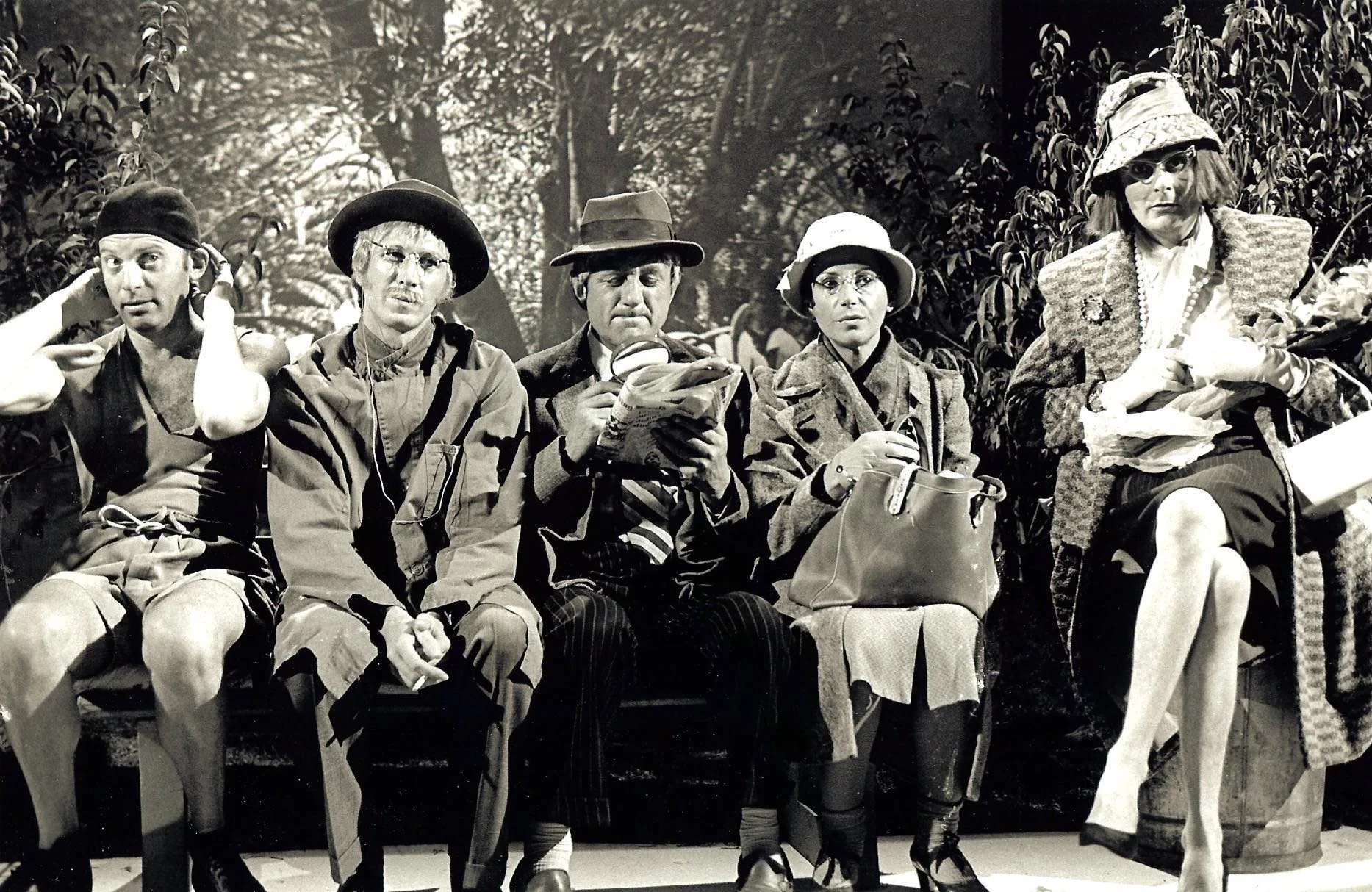
Pushing The Boundaries: The Mavis Bramston Show - Bramston Show MIM and EDNA - from the famous park bench sequences which played in many episodes of the show. Of particular interest is one of the first appearances of Edna Everage (then Mrs soon to become Dame Edna Everage) and guest star Mirianm Karlin.

How have the script and film evolved over the course of their development?

Work on the film started 8 years ago. Initially, the film was going to be a cradle to grave story of the show with not a great deal of in depth analysis. However, this changed when I saw the issues the show addressed and how the cast and crew shaped the program. Having done initial research, I worked out the possible themes of interest. We were fortunate that most of the principal cast and crew were living and access to them was invaluable. I called each of the surviving cast and crew and those chats informed my thoughts regarding the shape of the film. This also established a rapport with each of them before we met to film the interview.

So, having worked out themes, questions were written specific for each interviewee and the transcript of each interview became the core of the script. The more we learnt about the principals of the show, the sketches and the issues of the day, the more the film evolved and we were acquiring archival assets as we went, almost up until we locked the film. In reality, whilst we had a terrific extended team on the film, it was made by three people - Bob Fitzgerald, Robert de Young and I. Ashley Hoare provided the wonderful graphics and his contribution was very important.

What type of feedback have you received so far?

It is early days. The feedback from the cast and crew has been positive. I was heartened by the selection of our film by the Melbourne Documentary Film Festival. It's the first step in getting exposure for our product.

What are you looking to achieve by having your film more visible on www.wearemovingstories.com?

There are so many fine films and wonderful documentary filmmakers out there. Getting attention for one's films is a challenge. You have provided us with a conduit to raise the awareness of our film beyond traditional social media platforms.

Who do you need to come on board (producers, sales agents, buyers, distributors, film festival directors, journalists) to amplify this film’s message?

Most certainly, sales agents, buyers, distributors and film festival directors. Reviewers/journalists will come in when the film is available for them to view.

What type of impact and/or reception would you like this film to have?

In my view, to complete a film is a minor miracle. All I ever wish is that my/our film is seen by an audience or multiple audiences. That is the payoff because it means that the film is finished. Of course, I would be delighted if the reception is favourable.

Pushing The Boundaries: The Mavis Bramston Show

What’s a key question that will help spark a debate or begin a conversation about this film?

How important is satire today? AND Is satire dead?

Would you like to add anything else?

Just to say thank you for giving me the opportunity to speak about our film.

What other projects are the key creatives developing or working on now?

Two documentaries: "The Sculpture" about art and philanthropy followed by "The Maestro" about a great Australian musician, Maestro Tommy Tycho. Also in pre-production on a film about the actress and pioneering female director, Ida Lupino.

Interview: June 2022


We Are Moving Stories embraces new voices in drama, documentary, animation, TV, web series, music video, women's films, LGBTQIA+, POC, First Nations, scifi, supernatural, horror, world cinema. If you have just made a film - we'd love to hear from you. Or if you know a filmmaker - can you recommend us? More info: Carmela

Pushing The Boundaries: The Mavis Bramston Show

Length:

1:31:39
Writer/Director

STEPHAN WELLINK is a writer, producer and director at Inkwell Films. Stephan’s screen credits include: Rod Taylor: Pulling No Punches (2016); Jerry Lewis: The Man Behind The Clown (2016); Sam Spiegel: Conquering Hollywood (2018); Pushing the Boundaries: The Mavis Bramston Show (2022) and Uniting a Nation (2022). Stephan has lived with Jennifer for 44 years. Together, they conceived, nurtured and then released five children into the world.

Producer

ROBERT DE YOUNG, is especially experienced in feature-length documentary and has a particular interest in Hollywood and music industry biographies. He and writer / director Stephan Wellink have made films on Rod Taylor, Jerry Lewis and Sam Spiegel. In addition, Robert has produced documentaries on Errol Flynn, Tarzan, Peter Finch and Lillian Roxon,

Key cast:

Carol Raye, Barry Creyton, David Sale, Maggie Dence, Ken Shadie, Bill Harding, Andrew Mercado, Max Gillies, Anthony Ackroyd, Richard Walsh, Patrick Condon, Brian Davies, Glenn A Baker, Lucky Starr

Looking for:

sales agents, distributors, film festival directors, buyers

Twitter:

https://twitter.com/Crowdedhouse7

Facebook:

https://www.facebook.com/stephan.wellink

Hashtags used:

#mavisbramston

More info:
Melbourne Documentary Film Festival online - July, 2022

June 30, 2022 /Carmela Baranowska
Comment

In The Name Of Tomorrow

June 28, 2022 by Carmela Baranowska

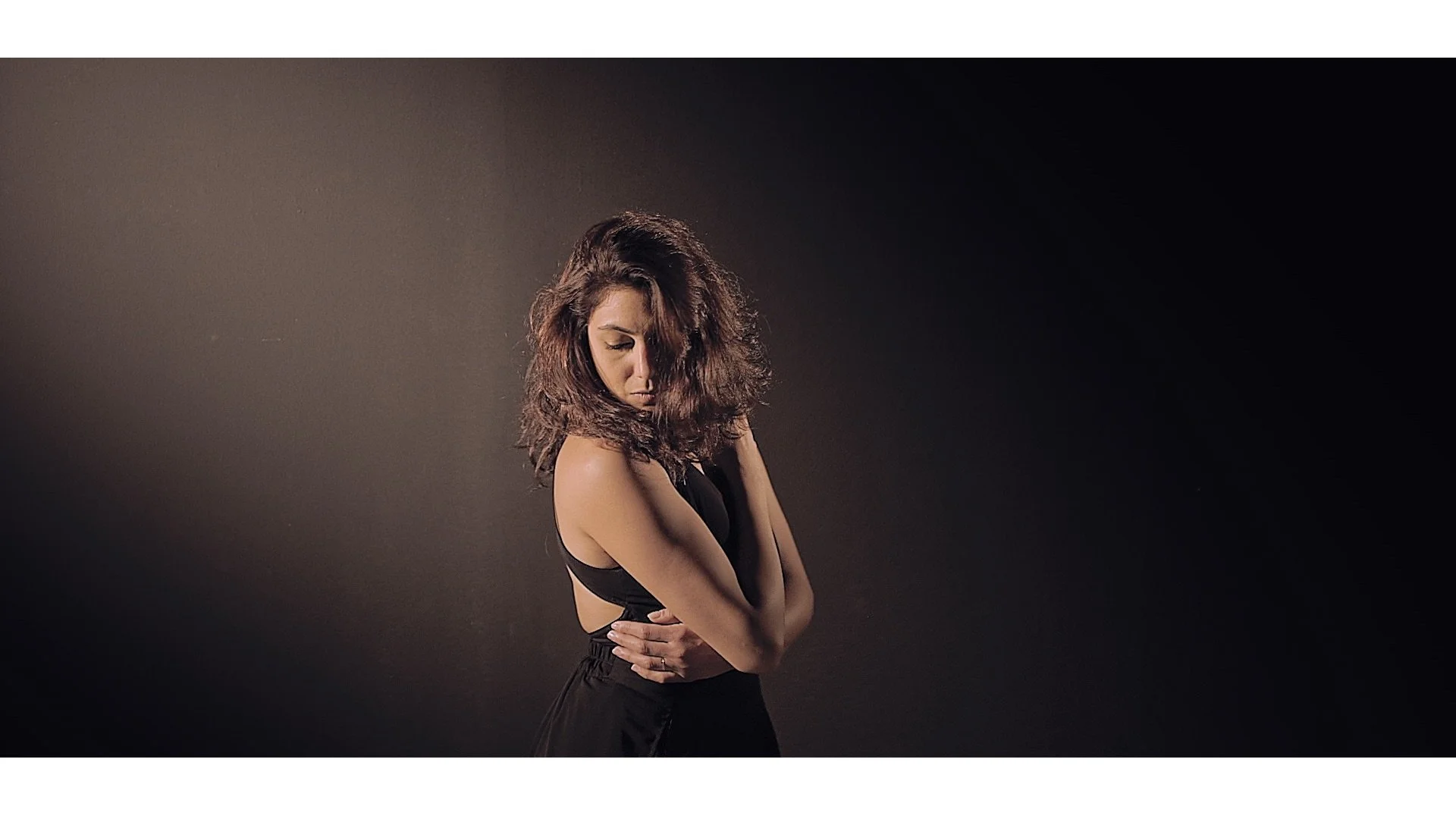
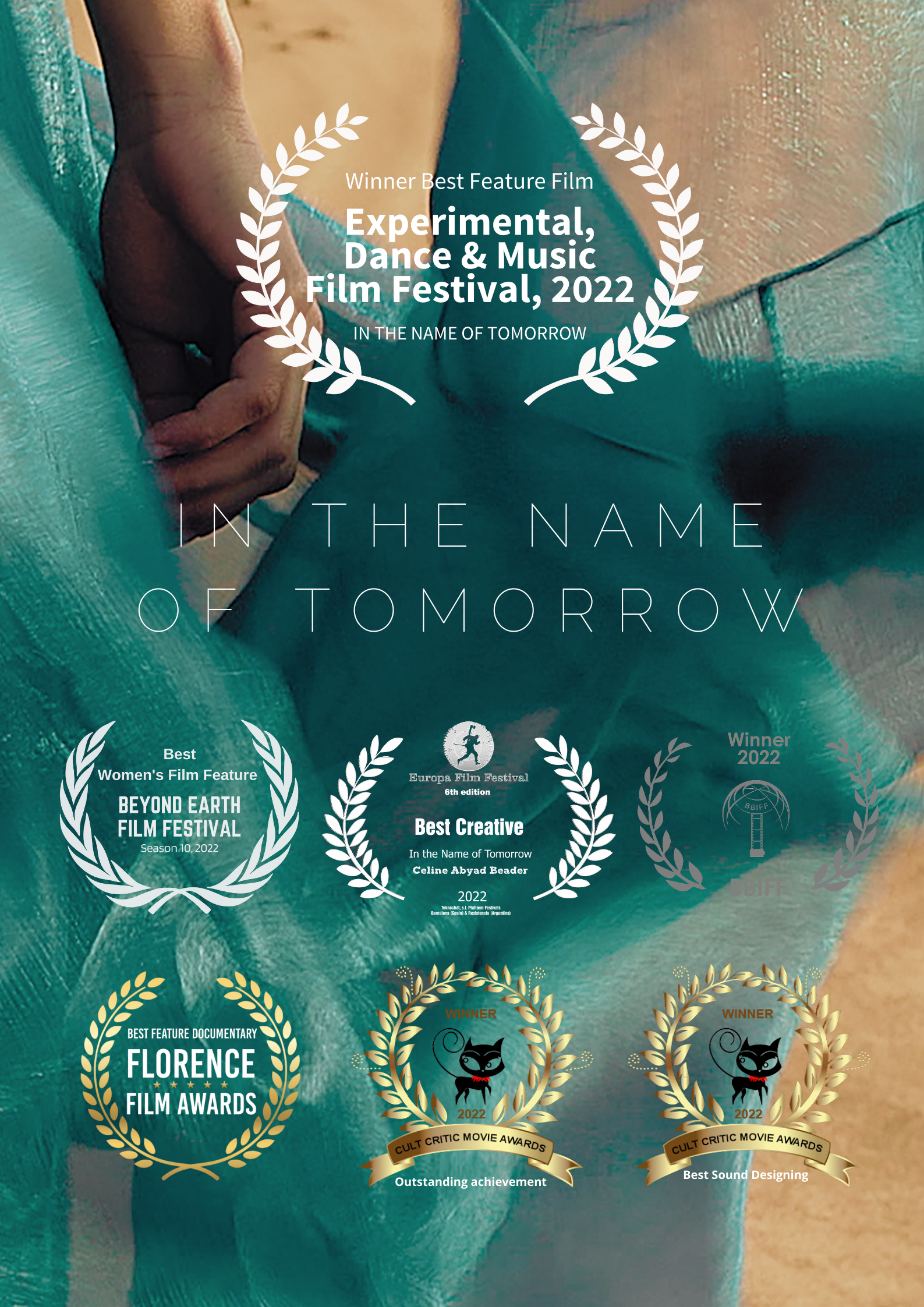
In a world that is screaming, bleeding, and trying to heal, when nothing makes sense, as we collectively feel deceived and almost delusional - When the "unexpected" is the new standard; Tomorrow seems far, and hope sounds like a fairytale. Aren't We all fighting for a Better Tomorrow? This is not a film that claims to bring a conclusion or relates to the wisdom of science, religion, or politics. This film is a DANCE of thoughts, a glimmer of hope, and a journey with 45 people from different walks of life sharing their own truth. In a grieving world that forgot that we are all connected - We danced to remember, danced IN THE NAME OF TOMORROW, for a better tomorrow, for OUR tomorrow.

Interview with Director/Producer Celine A. Beader


Congratulations! Why did you make your film?

Thank you! For the Love of Film, for the Love of Humanity and to try to send a message of hope during these harsh times the world is witnessing.

This Film is a dance of thoughts, a pure and honest sharing with people from around the world. When we usually talk about a documentary, we talk about a question, a quest, or a person with a theme trying to reach a specific answer at the end. In The Name of tomorrow is a mix of interviews and company dance exploring the answers to existential questions in different expressions.

We interviewed 45 people from different walks of life, backgrounds, and ages, including poets, philosophers, chefs, pilots, mothers and fathers, businessmen, yoga instructors, students, artists, engineers…

And we made 10 "tableaux" of dance following every question. There is no conclusion, final point after a build-up, but a movement, a full circle.

The quest in this Film was unity in our diversity, honesty, similarity in our differences, and answers of hope and Love regardless of political, religious, or dogmatic beliefs. The film is a message of hope that is not based on predetermined prescriptions or concepts but on an honest, genuine, and transparent human dialogue. We can change if we are the change we want!

In The Name Of Tomorrow

Imagine I’m a member of the audience. Why should I watch this film?

To continue this dance, this discussion and help it spread even more.

How do personal and universal themes work in your film?

All the questions asked are universal, What is Love, Life, Death, or War... What was personal were the answers to these by the interviewees. Each interviewee allowed him/herself to talk his truth and so share their vision.

On the other hand, all performers/actors used the universal expression of dance to convey their answers to the same questions.

Also, the music, the other universal medium, answered the same questions we tried to explore.

In this perspective, the Film became like a canvas that each of us colored with his form of answers. Therefore, my goal for the Film is to reach the widest audience possible as it carries a life pulse, feelings, and human interactions that speak to all of us, reflecting our fears, emotions, thoughts, and how we co-exist.

How have the script and film evolved over the course of their development?

The film kept transforming and following the journey behind it: From one country to another, from one person to another, from dance to another, from one stage of production to the other.... this documentary held all these thoughts "offered" and got shaped by them.

In The Name Of Tomorrow

What type of feedback have you received so far?

Until now we received a lot of positive feedback, a lot of people were moved and touched by the honesty and how profound yet personal each interviewee was. It made them think and they searched for their own answers to the proposed thread of thoughts.

We also received feedback that the music and the dances supported and colored the answers making the film a coherent piece.

Has the feedback surprised or challenged your point of view?

I was pleasantly surprised and humbled that the message intend was reaching.

What are you looking to achieve by having your film more visible on www.wearemovingstories.com?

I would like more people to know about the film, to follow its journey and to watch it once it's released. The more eyes the film meets, the more hearts it touches; this is what is the most important to the people that worked with me and to me.

Who do you need to come on board (producers, sales agents, buyers, distributors, film festival directors, journalists) to amplify this film’s message?

sales agents, buyers, distributors, film festival directors, journalists

What type of impact and/or reception would you like this film to have?

It's a very difficult question! :)
but I think it's everything I said before... simply reaching the widest audience, as it holds a message of hope and a beautiful sharing.

What’s a key question that will help spark a debate or begin a conversation about this film?

Every question in the film can spark a debate, every aspect, and choice. As it's very personal yet very much open to interpretation and to involvement.

It's a very up-to-date film, it communicates the fears of people during these hard times and how when we face uncontrollable events we put everything back in perspective and what usually are things we don't think about it, we start pondering about everything, the meaning of life, the meaning of staying, the meaning of being together...

In The Name Of Tomorrow

Would you like to add anything else?

I would like to thank everyone who believed in this film, as I would not have been able to make it without them. I am grateful to the people who shared their thoughts, ideas, and inspiring life experiences, the crew for their professionalism and belief in the goals of this project, and the actors for their extraordinary cooperation. And my husband, Ognjen Beader, his beautiful music that brought a new and beautiful aspect to the film and for his continuous support.

What other projects are the key creatives developing or working on now?

I am currently developing many films and series projects that hopefully will start production very soon. I am also finishing my book, and four of my art pieces have been selected to participate in an international exhibition, in galleries in Milano and The Canary Islands but also in the metaverse :)

Ognjen is working on his new album while working on the score of web series that is in post-production.

Interview: June 2022


We Are Moving Stories embraces new voices in drama, documentary, animation, TV, web series, music video, women's films, LGBTQIA+, POC, First Nations, scifi, supernatural, horror, world cinema. If you have just made a film - we'd love to hear from you. Or if you know a filmmaker - can you recommend us? More info: Carmela

In The Name Of Tomorrow

Length:

1:10

Director/Producer

CELINE A. BEADER is a Lebanse multidisciplinary artist, Writer, and Creative producer. Currently based in Dubai, and heading a content development company.

Key cast:

WAFA'A CELINE HALAWI Performer, DEJAN STOJKOVIC Performer, MASA JELIC Performer, RIMA MAROUN Performer, OGNJEN BEADER Music Composer, ZIAD OAKES Director of Photography, RANDULA DE SILVA Sound Engineer, ZEINA NEHME Editor

Looking for:

sales agents, distributors, journalists, film festival directors, producers

Facebook:

https://www.facebook.com/Inthenameoftomorrow

Instagram:

https://www.instagram.com/celine.a.beader/

Hashtags used:

#film #documentary #artistic #experimental #feature #newspaper #article #culture #lebanon #love #art #dance #peace #human #humanity #hope #heal #peace #inthenameoftomorrow #bettertomorrow #tomorrow

More info:
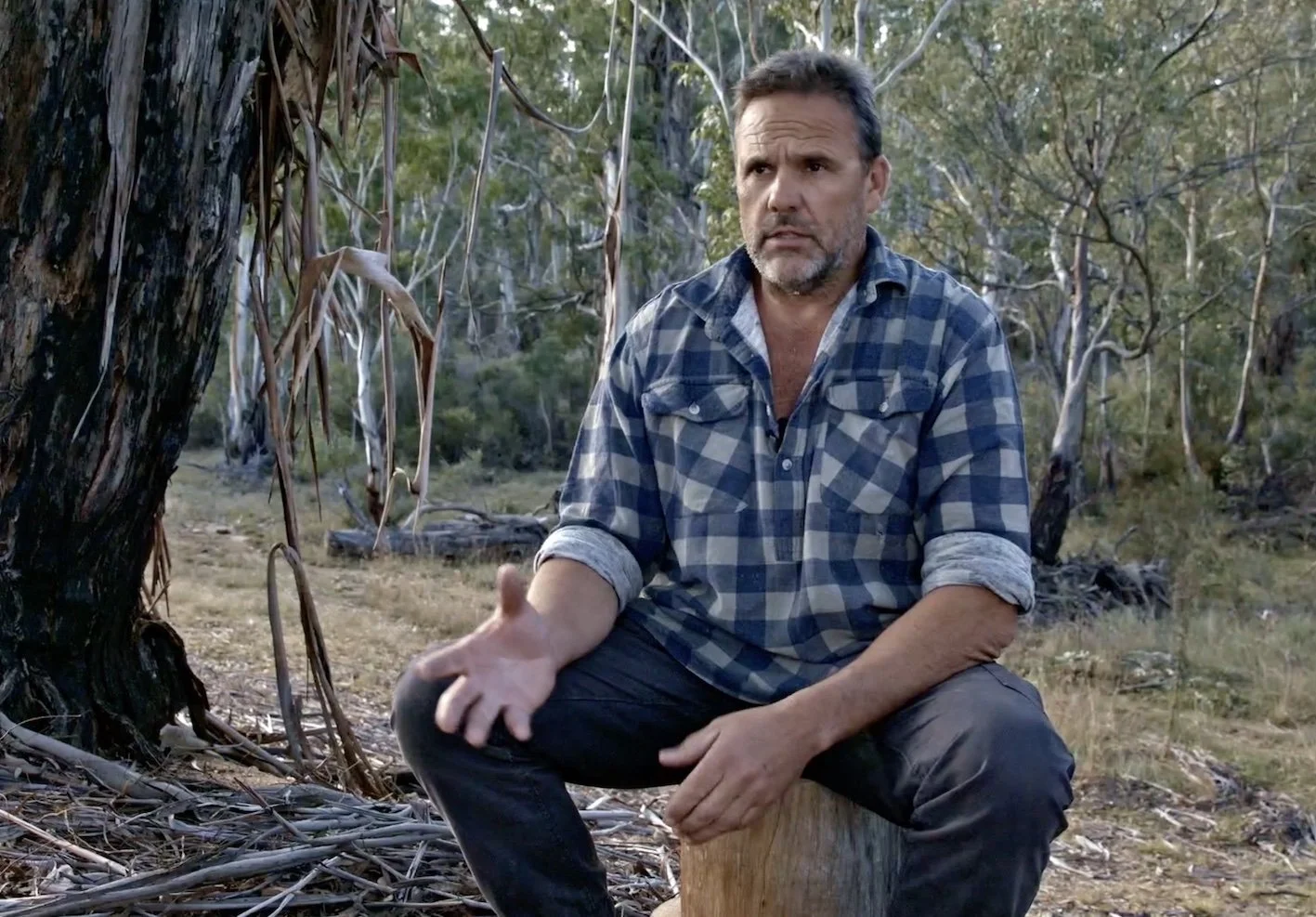
https://www.inthenameoftomorrow.com

June 28, 2022 /Carmela Baranowska
Comment

Doctor Who Am I

June 26, 2022 by Carmela Baranowska

An infamous Doctor Who screenwriter is reluctantly dragged back into the American Whoniverse, in this funny and moving documentary about finding family in the unlikeliest of places.

Interview with Writers/Directors/Producer Vanessa Yuille, Matthew Jacobs


Congratulations! Why did you make your film?

MATTHEW: It seemed like an intrinsically funny and dramatic situation - venturing back into a world that I thought had rejected me. Also, the landscape of American Doctor Who fandom has never really been explored, and they are pivotal to the show’s global appeal in my opinion. I also wanted to work with Vanessa again after having collaborated with her on two of my previous independent fiction features. And lastly, I’d never made a documentary feature, and after thirty years of making movies and TV, I wanted that experience. Little did I know how complex and lengthy that process can be!

VANESSA: It all started over a cup of coffee and catching up with Matthew in a café in San Francisco. He mentioned that he was invited to a Doctor Who convention, and I asked, “What? Why?!” I had no idea that Matthew wrote the Eighth Doctor and was a part of the Doctor Who universe. My mind was blown. I had fond memories of watching Doctor Who in the 1980s with my dad when it was on public television in the US, but I hadn’t followed it since then. I also thought the controversy around the TV movie was hilarious. Two months later, we were filming, blissfully unaware of the long and arduous road ahead (aka documentary filmmaking).

Doctor Who Am I - Paul McGann, the Eighth Doctor

Imagine I’m a member of the audience. Why should I watch this film?

VANESSA: It’s fun! You’ll laugh, and you’ll be moved. You don’t have to know anything about Doctor Who to enjoy Matt’s journey. It's a touching film that anyone can relate to.

MATTHEW: Maybe to reflect upon your own relationship with stories that you love, and how they help you cope with life’s ups and downs. Also to simply enjoy our roller coaster ride with a family of fans that are truly lovable at the end of the day!

How do personal and universal themes work in your film?

MATTHEW: The relationship between personal and universal themes sits at the heart of our story.

VANESSA: They’re intertwined. Fandom is a very personal and universal experience, and so is identity, family, community, forgiveness, mortality, and rebirth/regeneration.

Doctor Who Am I

How have the script and film evolved over the course of their development?

MATTHEW: Initially I wasn’t that enthusiastic about bringing my personal backstory to the table, but Vanessa always knew my personal history was a massive element in our quest to understand why stories are so important. We learnt that fandom is about so much more than the shows that are adored. Just as I’d brought myself to creating the Eighth Doctor in the 90s, it seemed natural that this was the right way to go. So, we went for it!

VANESSA: Even though I knew Matt was central to the story, he had to be convinced; and that happened in the editing room. As the editor, Matthew placed a tremendous amount of trust in me, and I deeply thank him for that, especially since I never edited a feature before. It became clear that there were three storylines: on one hand we’re following Matthew’s journey of self-discovery; on another we’re learning about the fans and fandom; and lastly there’s our journey together as friends making this movie. To me, it’s an ode to fandom, friends, and the love of filmmaking.

Doctor Who Am I

What type of feedback have you received so far?

MATTHEW: So far so good. Audiences both laugh and are touched by our journey. We picked up The Audience Award at the movie’s world premiere at Sci-fi London International Film Festival in May, and glowing press in the UK Guardian, Starburst Magazine, and Digital Spy. Now we are hopeful Australia will be warm to the movie.

VANESSA: What Matt said!

Has the feedback surprised or challenged your point of view?

MATTHEW: What has both pleased and surprised me is the degree to which so many viewers see themselves in both my story and the fan’s stories. Especially because the movie embraces me becoming a fan, they can reflect on their own journey to fandom.

VANESSA: If anything, I feel relief. I’m happy that people are emotionally connecting with it and seeing themselves in Matthew’s journey.

Doctor Who Am I

What are you looking to achieve by having your film more visible on www.wearemovingstories.com?

MATTHEW: I’m hoping that through your site we can broaden our audience to people who will see the truly universal nature of the story we are telling.

VANESSA: We want to get the word out! We’re an official selection of the Melbourne Documentary Film Festival next month. If you live in Australia, it will be available for online screenings. Also, the BBC recently announced Ncuti Gatwa as the 14th Doctor, and the 60th anniversary is next year. There is a lot of excitement for Doctor Who, and We Are Moving Stories can help tap that excitement for our documentary.

Who do you need to come on board (producers, sales agents, buyers, distributors, film festival directors, journalists) to amplify this film’s message?

MATTHEW: At the moment we are starting the search for buyers and platforms. To that end, the more noise we can make in Australia, the better. We want to prove that just as there is a global market for Doctor Who, there is a global audience for this documentary.

VANESSA: What Matt said!

Doctor Who Am I

What type of impact and/or reception would you like this film to have?

VANESSA: I want people to enjoy Doctor Who Am I and be surprised by it. Similar to how Shrek says he’s like an onion and has layers, so too is this film.

MATTHEW: Obviously if we can get people thinking about the themes of community, family, and regeneration within their own lives that would be fantastic!

What’s a key question that will help spark a debate or begin a conversation about this film?

MATTHEW: Do you ever really know who you are?

VANESSA: What are you a fan of, and how has it enriched your life?

Would you like to add anything else?

MATTHEW and VANESSA: You don’t need to be a Doctor Who fan to understand or enjoy our documentary.

Doctor Who Am I

What other projects are the key creatives developing or working on now?

MATTHEW: As always, more scripts for TV and the movies, and I continue to occasionally act for other directors and in my own projects. Both Vanessa and I have good roles in Bernard Rose’s upcoming release, “Traveling Light” where we appear alongside Danny Huston, Tony Todd, and Steven Dorff. Look out for it. I also continue to coach new filmmakers and occasionally guest lecture at universities.

VANESSA: Aside from getting Doctor Who Am I out there, I’m editing commercials, writing my first feature, and talking to Matt every day.


Interview: June 2022


We Are Moving Stories embraces new voices in drama, documentary, animation, TV, web series, music video, women's films, LGBTQIA+, POC, First Nations, scifi, supernatural, horror, world cinema. If you have just made a film - we'd love to hear from you. Or if you know a filmmaker - can you recommend us? More info: Carmela

Doctor Who Am I

Length:
1:20:00

Writer/Director/Producer

VANESSA YUILLE is an award winning filmmaker and editor. DOCTOR WHO AM I is her feature film directorial and editorial debut. She earned her bachelor’s in Astronomy from Barnard College and her MFA in film from the Academy of Art University. Her thesis documentary AN AMERICAN CONTRADICTION investigates one of the Japanese American concentration camps from WWII.It was screened at international film festivals and continues to be viewed as an educational resource today.

MATTHEW JACOBS has been writing, directing, and acting for over thirty years both in the UK and America. Writing credits include THE EMPEROR'S NEW GROOVE, DOCTOR WHO, LASSIE, PAPERHOUSE, and YOUNG INDIANA JONES CHRONICLES. Directing credits include award-winning BBC feature films: MOTHERTIME, HALLELUJAH ANYHOW and indy movies YOUR GOOD FRIEND and BAR AMERICA. Acting credits include leading roles in Bernard Rose’s BOXING DAY (2012) TRAVELING LIGHT (2022).

Key cast:

Paul McGann (self), Eric Roberts (self), Daphne Ashbrook (self)

Looking for:

sales agents, distributors, journalists, film festival directors, buyers

Twitter:

https://mobile.twitter.com/docwhoami

Facebook:

https://www.facebook.com/doctorwhoami/

Instagram:

https://www.instagram.com/docwhoami/

Hashtags used:

#doctorwhoami

More info:
www.doctorwhoami.com

Where can I watch it?

Melbourne Documentary Film Festival / Online / July


June 26, 2022 /Carmela Baranowska
Comment

1-800-HOT-NITE

June 25, 2022 by Carmela Baranowska

When 13-year-old, Tommy, loses his parents to a drug raid he turns to a phone sex operator (his fairy godmother) for help as he embarks on an urban odyssey to escape foster care with his two best friends, Steve and O’Neill.

Interview with Writer/Director/Producer Nick Richey

Congratulations! Why did you make your film?

My wife and producing partner and I had finally saved up enough cash for a down payment on a house. It's the middle of the pandemic and we're sick of our one bedroom apartment. Instead, we decided to put every dollar we had into making this film. Our creative lives have always come first for us. This film is a semi-autobiographical exploration of these critical moments from my childhood where I was distinctly thrust from childhood into adulthood at an age that I would consider "too early". So I wrote this coming-of-age tale to broach those subjects that were so personal to me. It has been a cathartic experience.

Imagine I’m a member of the audience. Why should I watch this film?

As a young man who grew up under some difficult circumstances, I made many mistakes that could have landed me in jail and ruined relationships with family and friends. Instead, many of the people in my life showed me grace and a pathway that allowed me to make changes and become the worst version of myself. I think this film challenges the viewer to look at these children's lives through a non-judgmental lens and will ideally challenge the way a viewer will approach those young people out there making mistakes and who so desperately need a second chance.

1-800-HOT-NITE

How do personal and universal themes work in your film?

The personal themes are very direct in this film due to its autobiographical nature. There's a moment in the film where Tommy (the lead) has to make the decision to be "a man" and a brother and give up on the fantasy of running away from his responsibilities. I always feel like the personal themes are universal. The more personal, the more universal. I think that any viewer will be able to see themselves in these young characters and relate to the mistakes of youth and the way that we are all doing our best to work through a very confusing life.

How have the script and film evolved over the course of their development?

The first draft of the script was almost the final draft actually. There were very small changes as it developed and a lot of that was through dialogue and a little bit of scene swapping. We were filming a movie in 18 days with minors and every scene takes place at night so we could only shoot from 9pm (sundown) until 12:15AM which meant we had a 3 1/2 hour window per night to shoot 93 pages. It was extremely difficult and required a lot of evolution in the way were shooting the film as we went along. There was a lot of consolidation to ensure that we got through the scenes. Additionally, our editor did a fantastic job with pacing out the film in post to find the moments to give the film a deep breath. It moves pretty quickly otherwise.

1-800-HOT-NITE

What type of feedback have you received so far?

The feedback has been really spectacular so far. There have been so many people that have approached us after a screening to say that they related to these characters and that it reminded them of their childhood. That was truly the response we were hoping for so it feels really great to see that connection. Additionally, it's great to hear from the film festival programmers that are champions of the film talk about how they laughed and cried and everything in between. I always wanted the movie to feel like a roller-coaster.

Has the feedback surprised or challenged your point of view?

There are definitely moments where the audience is laughing at a moment that I didn't think was necessarily funny. I love when that happens. otherwise, I feel like the feedback has been pretty spot on to what we were hoping for.

What are you looking to achieve by having your film more visible on www.wearemovingstories.com?

This independent film-making world is already so difficult to stand out in and it's really all about finding our way to film lovers. We want those people out there that will give an indie film a chance to watch the movie, seek us out and find the project.

1-800-HOT-NITE

Who do you need to come on board (producers, sales agents, buyers, distributors, film festival directors, journalists) to amplify this film’s message?

For us, it would be amazing to get a worldwide sales agent and to connect with other journalists.

What type of impact and/or reception would you like this film to have?

I want it feel like a modern-day "Stand By Me". I want people to watch it and see that the youth can carry a rated-R drama and actually impact the viewer in a meaningful way. I want it to spark conversation between children and their parents.

1-800-HOT-NITE

What’s a key question that will help spark a debate or begin a conversation about this film?

Do we think the foster care system can play a hybrid role with parents who are struggling but still clearly love their children and want to be in their lives?

What other projects are the key creatives developing or working on now?

Nick Richey is currently seeking studio partnership/financing for his follow-up feature film, "Jack Ricky". He's also currently in development on a television series, "Section 8"


Interview: June 2022


We Are Moving Stories embraces new voices in drama, documentary, animation, TV, web series, music video, women's films, LGBTQIA+, POC, First Nations, scifi, supernatural, horror, world cinema. If you have just made a film - we'd love to hear from you. Or if you know a filmmaker - can you recommend us? More info: Carmela
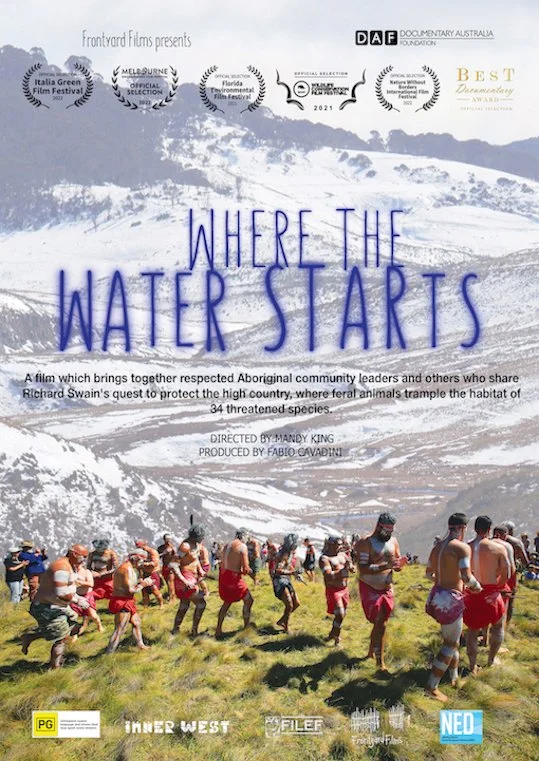

1-800-HOT-NITE

Length:

1:33:00

Writer/Director

Nick Richey is an award-winning independent filmmaker whose latest feature film he wrote and directed titled, Low Low, received critical acclaim from NPR, LA Times and Variety amongst others. He co-wrote Room 203, released theatrically in April 2022 by Vertical Entertainment. His sophomore writing/directing effort, 1-800-HOT-NITE had its world premiere at the Santa Barbara International Film Festival in 2022. He is now entering pre-production on his third feature film, JACK RICKY.

Producer

Zach Mann is the Co-President of Halfway Crooks Entertainment with business partner Nick Richey. Zach produced the highly acclaimed and certified fresh feature film "Low Low" (2019). "Birthday Boy," a short film he produced was acquired by HBO in 2017. The film was Executive Produced by Oscar nominated and Emmy Award winning director Jean-Marc Valle (Dallas Buyers Club, Big Little Lies.)

Key cast:

Dallas Young (Tommy), Gerrison Machado (O'Neill), Mylen Bradford (Steve), Ali Richey (Ava), DaJuan Johnson (Russ), Brent Bailey (Officer Riden), KImleigh Smith (Patty)

Looking for:

  • journalists, sales agents

Instagram:

https://www.instagram.com/1800hotnitefilm/

Hashtags used:

#indiefilm #comingofage

More info:
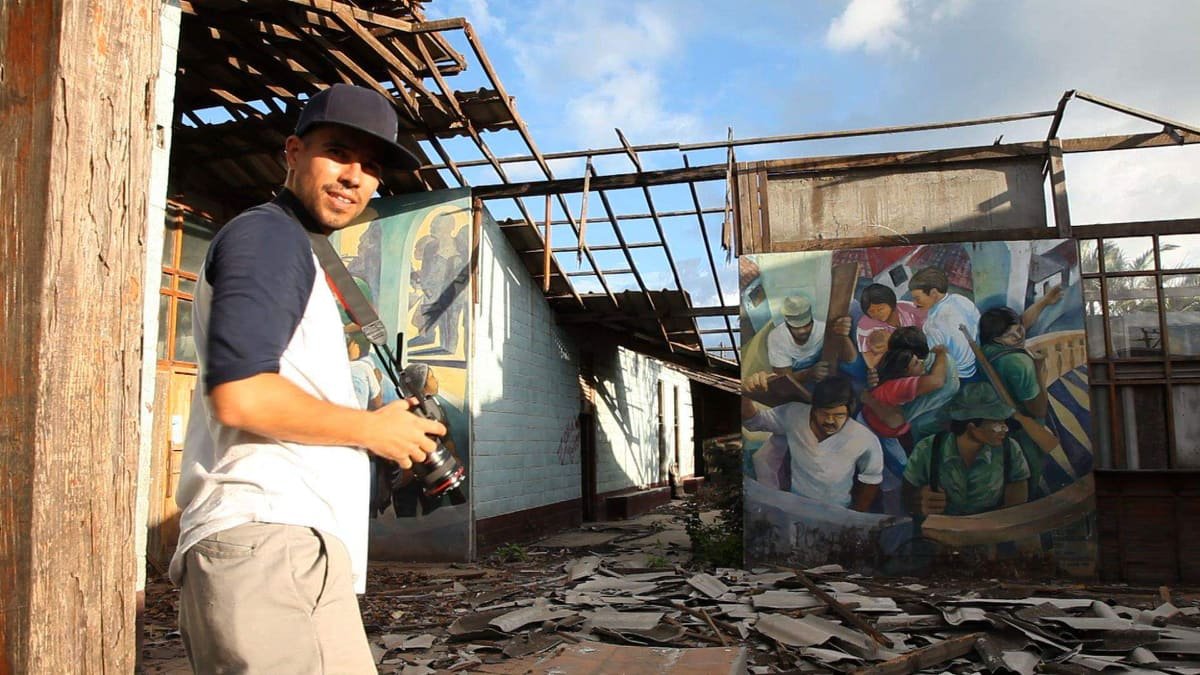
1800hotnite.com

Where can I watch it?

Film Festival/Woods Hole Film Festival - August 4th, 2022

June 25, 2022 /Carmela Baranowska
Comment

Where The Water Starts

June 24, 2022 by Carmela Baranowska

After seeing the destruction of Australia's Snowy Mountains fragile alpine ecology first hand, Richard Swain decides to speak out.

Interview with Writer/Director Mandy King


Congratulations! Why did you make your film?

Myself and my partner, cinematographer and producer, Fabio Cavadini started filming in mid 2019 to create a documentary focussing on the environment in Australia through stories about our precious and fragile high country. Not having spent much time in the Australian Alps we were intrigued to be hosted by Indigenous Ambassador, Richard Swain to see how the 34 mostly small and fragile animal and plant species that are unique to this part of the world, are threatened largely by habitat destruction caused by a feral animal. Astonishingly one of those, the feral horse is protected by state legislation.

After three months of filming, our main protagonists and most of the rest of the country was engulfed in wild fires never seen on such a scale or intensity before. Much of the alpine region was severely burnt. While the immediate issue for our participants was the highly destructive impact of feral animals in Kosciuszko National Park, the fires brought the larger picture of climate change into sharp focus. Our intention is to inspire communities to take a different approach and work alongside Indigenous communities speaking out about environmental degradation and threats to life, water and country.

Where The Water Starts

Imagine I’m a member of the audience. Why should I watch this film?

Where The Water Starts highlights the strong Indigenous voices speaking out about highly sensitive environmental and cultural concerns in a very small yet vital part of the Australian landscape - its High Country, its alpine region. Richard Swain, the Indigenous Ambassador with the Invasive Species Council with the support of his wife, Alison decide to highlight the threats to the viability of the headwaters of three iconic rivers caused by the protection of a feral animal and the growing impacts of climate change. The challenges facing Kosciuszko National Park have resonances for those campaigning around water and feral animal issues around the country.

“This environment is meant to be pristine, and we can no longer ignore the damage being done. It is the responsibility of all Australians to accept this land as your heritage, caring for it and protecting it as your culture.” - Richard Swain, Indigenous Ambassador, Invasive Species Council

How do personal and universal themes work in your film?

The personal themes centre around the courage and tenacity of individuals to speak out about environmental and cultural issues they are passionate about despite social media harrassment and threats.
The universal themes at the core of the film are the environment and the cultural context of colonial heritage which has denied First Nations existence and their experience of colonialism for centuries. The Care for Country concept that Aboriginal people offer the wider community in Australia is beginning to receive acceptance and recognition. The core theme of caring for our water sources and the native species and habitat that play a vital role in the health of that environment.

Where The Water Starts

How have the script and film evolved over the course of their development?

We started filming in mid 2019 to produce a documentary focussing on the environment in Australia through stories about our precious and fragile alpine region. Not having spent much time in the Australian Alps we were greatly concerned when hosted by Indigenous Ambassador, Richard Swain to see how the 34 mostly small and fragile animal and plant species that are unique to this part of the world, are threatened largely by habitat destruction caused by a feral animal. Astonishingly one of those, the feral horse is protected by state legislation to roam freely throughout the Park. After three months of filming, our main protagonists and most of the rest of the country was engulfed in wild fires never seen on such a scale or intensity before.

Much of the alpine region was severely burnt. This compelled us to incorporate the broader issue of climate change and the effects of global warming as a theme which interweaves through the film. While the immediate issue for our participants was the highly destructive impact of feral animals in Kosciuszko National Park, the fires brought the larger picture of climate change into sharp focus.

What type of feedback have you received so far?

The film is attracting like minded people who are concerned about all natural rivers in Australia and restoring them to full health. The response has been overwhelmingly positive. Many people are emotionally moved. During Q&A sessions they are strongly motivated to explore the complexities of the environmental and cultural issues. Many audience members embrace Richard's message, "It is the responsibility of all Australians to accept this land as your heritage, caring for it and protecting it as your culture." Requests for screenings are strong.

Where The Water Starts

Has the feedback surprised or challenged your point of view?

The feedback has been very positive. The film does not attempt to represent a traditional journalistic approach of the balance of differing viewpoints. It strongly represents voices, many of whom are not regularly heard, that are critical of the conservative political agenda that has led to the protection of a feral animal in a national park, their dismissing of individuals who challenge them and their lack of action on climate change.

What are you looking to achieve by having your film more visible on www.wearemovingstories.com?

With any film, opportunities to increase one's audience and public debate and discussions round the issues it highlights is crucial. We hope that We Are Moving Stories as recommended by the Melbourne Documentary Film Festival will play an important role to draw more attention to and interest in our documentary.

Who do you need to come on board (producers, sales agents, buyers, distributors, film festival directors, journalists) to amplify this film’s message?

At this stage following an intensive film festival strategy and with our distributor, Fan Force we are more interested in having journalists and critics to preview the film and write about it. While it hasn't yet had a free-to-air broadcast in Australia, often a prerequisite for effective educational distribution, we anticipate constructive reviews and critiques will harness more interaction with, and heighten distribution of the film.

What type of impact and/or reception would you like this film to have?

Where The Water Starts takes the audience on a discovery tour of the Snowy Mountains from perspectives rarely heard. It highlights the voices of a range of respected Indigenous and non-Indigenous people, giving insight into the vital ecological, cultural and historical context of the themes in the film. These different perspectives come together to illustrate that the best of Aboriginal connection and the best of regenerative science can work together for a better future for the mountains and the planet.

We hope this film will inspire communities to take a different approach and work alongside Indigenous communities speaking out about environmental degradation and threats to life, water and country. It is a positive and constructive impact we envisage that encourages both respect, listening and allyship with Indigenous peoples' who are showing leadership on environmental disputes.

Where The Water Starts

What’s a key question that will help spark a debate or begin a conversation about this film?

How do we protect our vital natural resources for future generations?

What other projects are the key creatives developing or working on now?

We are working on a couple of documentary projects; a labour history themed film about the attempt to eliminate union representation, in fact the unionised workforce itself, from the Australian wharves in the late 1990's. Another, the story of a fiercely independent journalist who worked with whistleblowers and under-represented communities to tell their stories.

Interview: June 2022


We Are Moving Stories embraces new voices in drama, documentary, animation, TV, web series, music video, women's films, LGBTQIA+, POC, First Nations, scifi, supernatural, horror, world cinema. If you have just made a film - we'd love to hear from you. Or if you know a filmmaker - can you recommend us? More info: Carmela
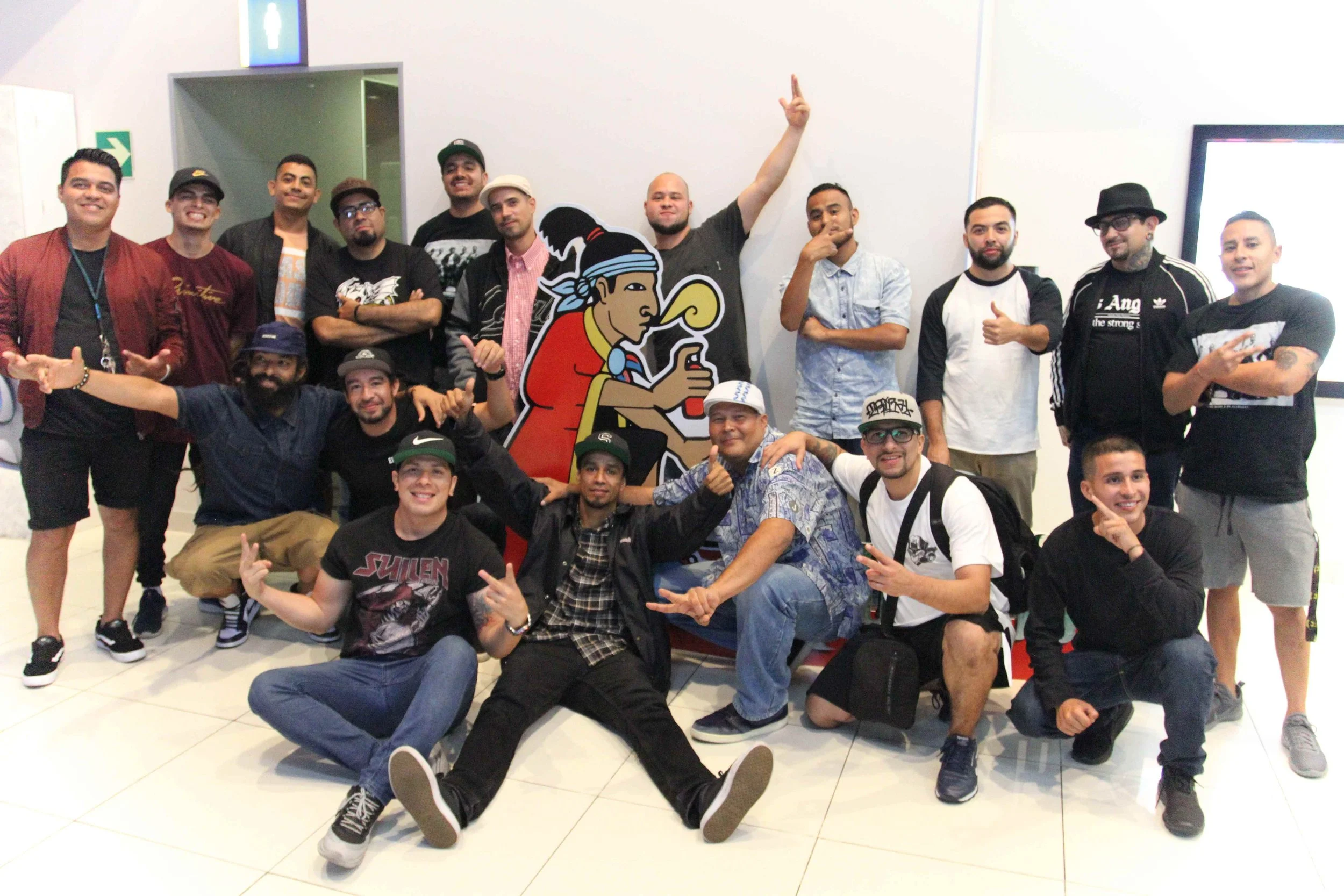


Where The Water Starts

Length:

1:11

Writer/Director

Mandy King is an Australian filmmaker who has been producing documentaries since the late 1980's. Her interests range from contemporary issues such as the environment, Indigenous rights and independence struggles, through to the arts and labour history. She works closely with her partner, Co-Producer and Cinematographer Fabio Cavadini, as the partnership Frontyard Films. They have produced a number of documentaries based in the Pacific as well as social justice, labour history and arts themed films.

Producer

Fabio Cavadini began his career as an independent Producer-Director and Cinematographer in the late 1970’s. He produced his first film, Il Rovescio della Medaglia, (The Other Side of the Coin) in the 1980's. Since the late 1980’s Fabio has been producing with partner, Mandy King on a string of documentaries with Indigenous rights, environmental and arts themes.

Key cast:

Richard Swain – Indigenous Ambassador, Invasive Species Council

Richard has worked for 25 years as an Indigenous guide within Kosciuszko National Park. Having spent his life in the Snowy Mountains he has seen first-hand the huge impact feral animals are having on the park and the threatened species that rely on Kosciuszko for survival. He is passionate about educating the public on the true history of landscape changes and degradation over the past 230 years.

Looking for:

journalists

Facebook:

https://www.facebook.com/wherethewaterstarts

Twitter:

https://twitter.com/FrontyardFilms_

Hashtags used:

#WhereTheWaterStarts

More info - Screens at:

23July2022/Melbourne Documentary Film Festival/Cinema Nova

June 24, 2022 /Carmela Baranowska
Comment

Tlacuilos

June 23, 2022 by Carmela Baranowska

Chuck, a Nicaraguan graffiti pioneer, begins a trip through Central America in which he alters the spray can of the different "writers" of each country in the region. It takes us to know the movement from its beginnings. Its lines unite us to create an urban cultural bridge.

Interview with Writer/Director/Producer Federico Peixoto


Congratulations! Why did you make your film?

I wanted to document the evolution of Graffiti in Costa Rica since day one, later I decided to document the whole Central American region since we have a similar story and it is a forgotten part of the world.

Imagine I’m a member of the audience. Why should I watch this film?

It is a window to the Central American underground movement and a story that has not been told before.

How do personal and universal themes work in your film?

The struggle to survive and acknowledge your existence is a universal need!

Tlacuilos

How have the script and film evolved over the course of their development?

I started to make a documentary about Costa Rican graffiti, but end up doing a documentary about the whole Central American graffiti history (Panama, Costa Rica, El Salvador, Guatemala, Honduras, Nicaragua).

What type of feedback have you received so far?

People are surprised to learn about Central American artists, they did not expected to see such a developed movement in our region.

Has the feedback surprised or challenged your point of view?

Yes it has! We are happy to share our story to the world.

What are you looking to achieve by having your film more visible on www.wearemovingstories.com?

We want to be more visible and show Central American talent and story to the world and find more support for the project.

Tlacuilos

Who do you need to come on board (producers, sales agents, buyers, distributors, film festival directors, journalists) to amplify this film’s message?

We need journalists to reach out to more people, we need distributors, sale agents and buyers since the doc is only on Vimeo On Demand and has no distribution yet.

What type of impact and/or reception would you like this film to have?

I would like to put Central America graffiti/artists on the map since we are invisible to the world.

What’s a key question that will help spark a debate or begin a conversation about this film?

Central America’s culture is invisible to the world. We are small undeveloped countries in a forgotten region of the world, only known for war, gangs, or Tourist attractions, but our culture and artists are unknown to the world for many reasons...

Would you like to add anything else?

Thank you for the support and letting Central American artist tell their story!

Tlacuilos

What other projects are the key creatives developing or working on now?

We are working on a new cultural series in Central America.

Interview: June 2022


We Are Moving Stories embraces new voices in drama, documentary, animation, TV, web series, music video, women's films, LGBTQIA+, POC, First Nations, scifi, supernatural, horror, world cinema. If you have just made a film - we'd love to hear from you. Or if you know a filmmaker - can you recommend us? More info: Carmela
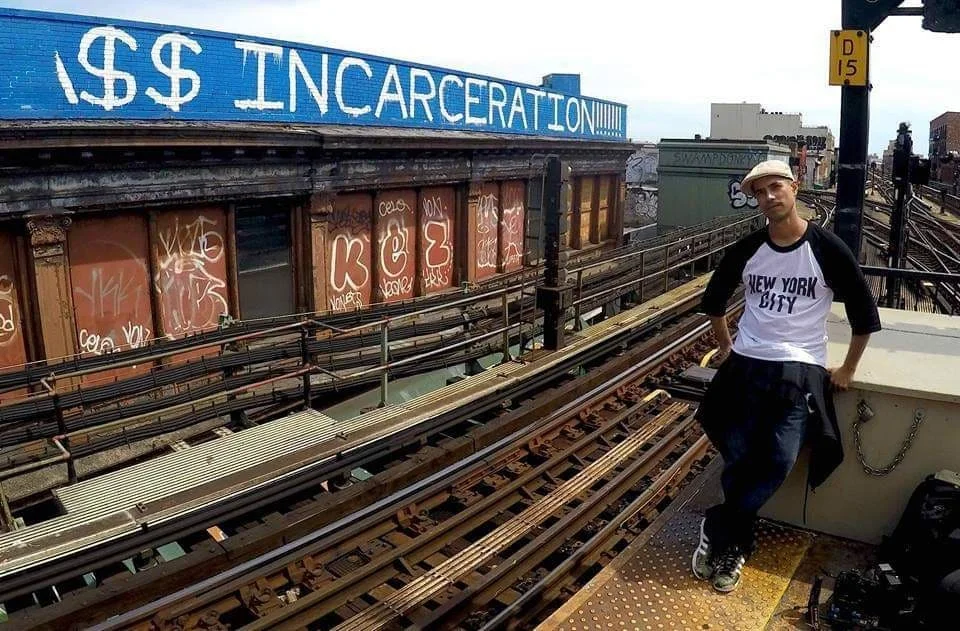

Tlacuilos

Length:
1:21:00

Director

FEDERICO PEIXOTO ZAMORA

Costa Rica filmaker/DJ, has promoted the Hip Hop culture in Costa Rica and Central America since early 2000’s, a DJ and events organizer. His filmmaking career started doing Sk8 videos, music videos and short films in the mid 90s. Federico Peixoto is the creative mind and founder of Productions Gafeto. Gafeto´s brand is widely recognized in Central America for its work with sub-urban cultures.

Producer

LAURA CORNEJO

Laura Cornejo is Industrial Engineer and holds a Master´s in International Development. Ms. Cornejo has 13 years of experience in planning and implementing projects. Her role within Gafeto Production´s is related to the development and implementation of budgets, preparation and adherence to schedules, organizing mass events, recruitment, logistics and financial management.

Key cast:

Chuck (Nicaragua), Mush (Costa Rica), Echo (El Salvador), Caso (Panama), Dopezilla (Guatemala), Soft (Guatemala)

Looking for:

  • distributors

  • sales agents

Facebook:

https://www.facebook.com/tlacuilosgraffitidocumental

https://www.facebook.com/profile.php?id=710420647

Instagram:

https://www.instagram.com/tlacuilos_documental

Twitter:

https://twitter.com/GafetoTv

Hashtags used:
#documentaltlacuilos #tlacuilos #centroamerica #tlacuilosdocumental

More info:

gafetotv.com

Where can I watch it?

Golden Sneakers Hip Hop Culture & Film Festival Hamburg 2022


June 23, 2022 /Carmela Baranowska
Comment

The Last Touch

June 18, 2022 by Carmela Baranowska

A young couple struggles to keep their love alive in a world where technology has replaced intimacy, and human touch is deadly.

Interview with Director/Producer Melissa Mars


Congratulations! Why did you make your film?

I had just moved to New York from California and was at an acting class with my favorite coach, the legendary Anthony Abeson, who gave us a challenge: “Our lust to go viral dehumanizes us... With that theme, create a movie. You can be a Writer, Director and/or Actor or all three.” — I chose to be all three.

That night, as I was going through my pre-bed rituals – plugging in my “smartphone” to charge, setting up my wake-up alarm, turning on Sleep Cycle, scrolling through social media — I was suddenly overwhelmed by visions of a dark, dystopian world in which our attachment to our devices stripped us of our humanity, a world in which our desire to connect virtually left us unable to connect physically. It was in that moment that the concept for The Last Touch was born.

Imagine I’m a member of the audience. Why should I watch this film?

'The Last Touch' holds a metaphorical mirror up to our world. It shows us a vision of what we are drifting towards, a world where we are so connected virtually that we are disconnected physically and emotionally. It acts as a warning - [look at what we have to lose]. It may be disturbing, but isn’t it what we all like about dystopias?

The Last Touch

How do personal and universal themes work in your film?

Through ‘The Last Touch’ I really wanted to explore the theme of connection, and how technology gives us such an illusion of true connection to the world but it can come at the expense of our intimate personal connections. We can be emotionally distant from each other in the most intimate settings and not even realize it.

How have the script and film evolved over the course of their development?

The idea came out as a three-page script. Very contained. We shot it pretty much as it was written and I presented it to my class and Anthony Abeson. It wasn’t until the pandemic hit and I decided to turn the concept into a true short film that the real edits began.

I cut out the only scene in the whole short during which the two main characters look at each other. It took a lot out of me to sacrifice that moment, and make the choice to show no emotional or physical contact between the characters (besides the accidental touch). Eye contact can convey a deep emotional bond and I wanted to show both the physical and emotional disconnect between these two - the eye contact had to go! The only thing connecting these two people is their devices.

I also added a character that was not in the original version - or rather it was but only “silently”. The voice of the Sweet Cherry corporation was born in the second edit! What was interesting was that some filmmakers who had seen the first version thought I had reshot it - the first and second edits were so different!

What type of feedback have you received so far?

The feedback has been overwhelmingly supportive and positive! A lot of people who’ve seen it immediately compared it to Black Mirror, which is a huge compliment to me!

The key words I heard or read the most about The Last Touch were “disturbing”, “unnerving” and “thought-provoking”.

The Last Touch

Has the feedback surprised or challenged your point of view?

I’m actually very touched and impressed - after having sacrificed the eye contact scene I just spoke about - when some viewers at festivals point out the total absence of eye contact and tell me how powerful and unnerving they find it. It is gratifying to have people notice that detail!
I have been positively overwhelmed with encouragement to take it further. People want to see more to my great surprise! Hopefully they will be satisfied, as I’ve been working on developing the concept into a pilot!

What are you looking to achieve by having your film more visible on www.wearemovingstories.com?

I’m hoping greater visibility will fuel a continued interest in the film and spark a desire in viewers to see more of the world and characters as I continue to expand the story for a pilot!

Who do you need to come on board (producers, sales agents, buyers, distributors, film festival directors, journalists) to amplify this film’s message?

The run “The Last Touch” has had on the festival circuit has been beyond what I could have hoped for in terms of success and invaluable for sharing the film’s message. With the festival run coming to an end, finding online distribution larger than my Vimeo and YouTube channels would be the “sweet Cherry”* on top of everything!
(*name of the A.I & corporation in the movie)!

What type of impact and/or reception would you like this film to have?

I’m honestly blessed with the feedback I’ve had so far, it’s been in alignment with my hopes. I love that “The Last Touch” is disturbing enough that people remember it as well as thought-provoking enough that it may challenge people to view their relationships - both online and off - in a new light. I hope it continues to impact viewers the way it has been!

What’s a key question that will help spark a debate or begin a conversation about this film?

I’d say… What is true connection? How is technology connecting us and how does it threaten the existence of connection as we know it?

Would you like to add anything else?

Yes! I would like to thank you for inviting me on your platform. I also would love to thank my wonderful cast and crew! My co-star, James Kacey, my Sweet Cherry Voice, Monica Blaze-Leavitt, the composers Steve Sholtes, who created the original soundtrack, as well as Olivier Schultheis who let me use a beautiful track of his, and of course Anthony Abeson who triggered the birth of this project as well as Eric R. Mizrahi who helped me find my wonderful director of photography, Yaniv Glaser!

The Last Touch

What other projects are the key creatives developing or working on now?

I have a few projects on the go right now, including the expansion of “The Last Touch” into a pilot, as well as a dystopian novel. I’m also working on a short drama close to my heart and my French-Algerian roots, which I hope to direct this year or next year. Fingers crossed!

Interview: June 2022


We Are Moving Stories embraces new voices in drama, documentary, animation, TV, web series, music video, women's films, LGBTQIA+, POC, First Nations, scifi, supernatural, horror, world cinema. If you have just made a film - we'd love to hear from you. Or if you know a filmmaker - can you recommend us? More info: Carmela


The Last Touch

Length:
4:40

Writer/Director

International award-winning actress, singer-songwriter and filmmaker, MELISSA MARS is well-known in France for her pop music career with her three solo albums with Universal Music, her duet and hit song “1980”, her leading role in the smash hit musical Mozart the Rock Opera, directed by Olivier Dahan (La Vie en Rose).

She received major notice in the US after appearing alongside John Travolta in From Paris With Love produced by Luc Besson (Nikita, Lucy), winning multiple best actress awards for her performances in American movies such as the feature The Cabining, the short drama Polly, and having her song “Beautiful” picked up by Coca-Cola Music for their "52 Songs of Happiness" worldwide music compilation album.

Producer

Founded originally in France by award-winning international artist Melissa Mars, MADE IN MARS STUDIOS is a growing global production with a home base in New York, while operating and maintaining business relationships in Los Angeles, Paris, London and Algiers.

Connected to the movie industry as well as the music industry, MADE IN MARS STUDIOS tells stories that put women in the spotlight, whether through acting, writing or directing. With several projects under development encompassing a variety of genres and story-telling mediums — from dystopia to comedy, songs to graphic novels, literary fiction to movies- the heart of the drive is female-driven, compelling stories
.

Key cast:

Melissa Mars (Clea), James Kacey (Cain), Monica Blaze Leavitt (Sweet Cherry Voice)

Looking for:

distributors

distributors

Twitter:

www.twitter.com/melissamars

Facebook:

www.facebook.com/melissamars

Instagram:

www.instagram.com/melissamarsofficial

Hashtags used:

#shortmovie #dystopian #sciencefiction #melissamars #femalefilmmaker #womeninfilm #womanwriter #indiefilmmaking #scififilm #awardwinning

More info:

www.TheLastTouchMovie.com

Where can I watch it?

Vero Beach Film Festival / Vero Beach, CA - June 9-12 2022

Hollyshorts Monthly Screenings, Los Angeles, CA - TCL Chinese Theater - June 29 2022

Now streaming on Vidiverse - bit.ly/lasttouch-vidiverse


June 18, 2022 /Carmela Baranowska
Comment

Hostile

June 17, 2022 by Carmela Baranowska

Hostile is a feature-length documentary focusing on the UK’s complicated relationship with its migrant communities. Told through the stories of four participants from Black and Asian backgrounds, the film reveals the impact of the evolving ‘hostile environment’ - a term used by the UK government in 2012 to illustrate the atmosphere they wanted to create for migrants, with the intention of provoking them to leave of their own accord.

Hostile explores how the lives of international students, members of the Windrush generation and ‘Highly-Skilled Migrants’ have been affected. After decades of hostile immigration policies, Britain has reached a crisis point. With Brexit, the Points Based Immigration System and the Nationality and Borders Bill taking effect, the film asks: once the ‘hostile environment’ has targeted all migrants, who will it extend to next?

Interview with Writer/Director/Producer Sonita Gale

Watch Hostile on BFI Player and NGTV

Congratulations! Why did you make your film?

My parents were the primary inspiration for the film. They migrated to the UK in the 1950s, almost a decade after their lives had changed dramatically due to the partition of India and Pakistan. Their story of migration, and of eventually making a home in England, became the seed of an idea to make a film about the experiences of migrant communities.

When lockdown began, I started to see the rising number of people who were unable to get their basic needs of food and shelter met.

This made me think of my childhood growing up in the Midlands with Sikh parents, and the support network we had amongst our mixed community in Wolverhampton. My father’s cornershop was the hub of this community.

When I began filming, my focus turned to the very communities I grew up with: Sikhs, Hindus, Muslims, Black and White working-class communities. The more I filmed, the more I learned about the Hostile Environment.

Meeting my participants and filming their unravelling narrative led me on a personal journey of discovery, one which linked my family’s history to the larger story of British identity, and the extent to which migrant communities, such as the one I grew up in, were essential to the fabric of this country.

As a filmmaker, the compelling personal nature of the story, combined with the fact that there were so many inconsistencies in our society and contradictions in our current political system, made me want to embark on my directing debut.

I wanted to make a film that highlights the inequalities of a system that affects migrant communities. In making and completing Hostile, I want to raise awareness of the issues migrants face in our country, and what it feels like to live day-by-day in such circumstances.

My goal is to start a dialogue between individuals who are unaware of these issues and to bring together grassroots organisations, law firms, policy-makers and politicians in order to enact positive change.

Hostile

Imagine I’m a member of the audience. Why should I watch this film?

Dear Audience Member,

I think you should watch Hostile because the issues we cover in it impact us all, whether we form part of the migrant population or not.

From watching the film you will have a greater understanding of the way migrants are treated by our government, the challenges they face, and the way they are discussed in the media.

We may think of immigration policies as something that impacts other people, but in this film we pose the question: “What happens when the hostile environment comes for us all?” In the UK, recent bills such as the Police, Crime, Sentencing and Courts Bill and the Nationality and Borders Bill recently passed through Parliament, and will impact UK citizens. This is not an abstract question.

The film allows you to understand our history by delving into the roots of immigration policies and the eras in which they came about.

And while we look at the UK’s immigration system, it shares many similarities with the one in Australia. Indeed, the Points Based Immigration System that was adopted after Brexit, was modelled after the one that has been in use in Australia for some time.

Audiences of all ages have come out to see the film. Those from the post war, post empire era are more familiar with some of the history the film covers. That said, younger people in particular have been coming out to see this film and support it, and universities, for example, have been in touch to express an interest in hosting screenings of the documentary. So it really is a film for all ages.

When considering the future that we want to achieve as a society, I hope the film will give you information about the hostile environment that you may not have known before. By doing so, we hope to inspire viewers to use their voice to influence the direction we are headed in, and consider practical solutions that will lead to real change.

Hostile

How do personal and universal themes work in your film?

The interweaving of the personal and the universal was something I had to think about a lot while making this film, in particular when considering my parent’s history. They have been interweaved in several ways:

i) With the personal narrative of the participants in the film, and how the policies we describe over the duration of the film has a direct impact on their lives.

ii) The universal themes around the migrant crisis which affect every country experiencing war, famine or displacement.

With regards to the first point, the stakes are high. Farrukh Sair, an NHS IT Engineer has spent tens of thousands of pounds on visa applications and is still waiting for settled status Anthony Bryan, a member of the Windrush generation, has not recovered from detainment due to a lack of paperwork, in what became to be known as the Windrush Scandal. International students, now destitute, face deportation, and community organisers are struggling to feed these vulnerable communities without government support.

Hearing stories directly from those who are deeply affected by these issues, we open the doors to show what the real-life effects are for those trying to navigate their everyday lives in a hostile environment.

What does it mean to be British? How does it feel to be told you don’t belong?

Regarding the second point, we look at the history and development of immigration laws and how they were rooted in specific eras, like the end of the British Empire and the Partition of India, and how this impacted people on a personal level.

We utilise archival footage to depict this history as well as charting the UK’s immigration policies over recent years to inform on how we arrived at the situation we’re in today.

The Partition example is particularly relevant to me. The participant I interviewed in the film is my mum (the interview was conducted before I began to make Hostile). It was a particularly difficult moment during the editing process. My mother passed away during the edit of Hostile, so I still had feelings that were quite raw.

So revisiting these stories was not an easy thing, but it was important to do. I feel like sometimes you can think of an event like Partition and not really feel its relevance or impact on the world we live in today. In my mother’s recollections, however, I found a way to link the story of Partition to our present day and I hope that it was able to provide a wider context to the immigration policy debate.

We also look at how specific laws, such as the Points Based Immigration System which was inspired by Australia’s immigration framework, are interconnected, and lead to the global refugee crisis that we are seeing today.

This is evident in the huge number of refugees and asylum seekers seeking refuge taking huge risks crossing borders and oceans by boat in the hope of securing a better life.

To conclude, when we finished making Hostile we couldn’t imagine how things could get any worse. But we have since learned of the government’s plans to deport refugees to detention centres in Rwanda, with the first deportation flight scheduled on June 14th.

This does not bode well for the future of our immigration laws, and the impact it will have on individuals and families will be enormous.

Hostile

How have the script and film evolved over the course of their development?

We had a number of iterations of the script, 23 in fact. The first phase during filming was all about learning and exploring the issues. From there, in the edit room, we honed into the story weaving the present with the past. Our final delivery was a 97 minute film which includes a mix of actuality, interviews and archive.

Filming:
As I touched on above, the film started out as an exploration about how migrant communities in the UK were coping with the impact of the lockdowns during the early stages of the pandemic. I was interested in this because of my own memories growing up in such communities.

It was during this process, and seeing what our participants were living through day-to-day, that I learned about the hostile environment and its impact.

From a larger perspective, what was interesting to me about the process of making this film was filming while so much change was happening in real time. 2020 and early 2021 was a very politically active time, with the global protests that began after the murder of George Floyd, and which were accompanied by Extinction Rebellion protests and NHS Fair Pay protests.

From the other perspective, Brexit negotiations were ongoing, and government policy on a whole number of issues was, for a long time, up in the air.

During filming, the participants' situations were constantly changing, while the policies and legislation whose development formed the structure of the film was also constantly evolving. And this was all against the backdrop of the deteriorating situation due to the pandemic.

Edit:
This evolution was a challenge, especially during the edit, as we had to be really alert to constant changes in the debates that were going on, as well as changing legislation. We had to translate these in a way that we wanted to be relevant a year or two later when audiences would actually watch the film. Our initial cut was three hours long, and we had to do a lot of work to shape the narrative and streamline it.

It was during this process when I came to see that the hostile environment didn’t just come about out of thin air, but it had its own history. And this is something I wanted to explore further, by going back through history and charting its development over time.

Delivery:
This overall process of making this film began in May 2020 and was completed in September 2021, and we are very happy with the way it turned out.

What type of feedback have you received so far?

The response has been very positive.

It premiered at Raindance Festival 2021 in the ‘Homegrown’ category, and soon after it was longlisted for a 2022 BAFTA for Outstanding Debut By A British Writer, Director Or Producer, as well as three 2021 British Independent Film Awards - Best Documentary, Best Debut Director and the Raindance Discovery Award.

It has since been an Official Selection at the Cambridge Film Festival 2021 and London Migration Film Festival 2021, and Winner of Best Documentary Feature at the South London Film Festival 2021. It recently played in competition at the Manchester Film Festival, and screened at ZagrebDox 2022 and will soon play at the Melbourne Documentary Film Festival and Roxbury International Film Festival.

A Q&A tour for the film which is taking place in cinemas across the UK as well as other community venues began on January 21st and is still going strong.

We have had some fantastic hosts (like UK film critic Jason Solomons and director Ursula Macfarlane), and high profile speakers like human rights activist Bella Sankey, Yasmine Ahmed (UK Director of Human Rights Watch), author Maya Goodfellow, and more, who have enthusiastically endorsed the film.

Meanwhile, our Q&As have provoked some really insightful responses and debates from the audience and we hope that Hostile can really help to open up vital conversations around migrants rights and how we can inspire positive change. Individuals in the audience have been very open in sharing their personal experiences living under the Hostile Environment. Since the film’s release I have been hearing from people all around the UK about the impact it has on our communities.

Critics have reviewed Hostile in The Guardian (Peter Bradshaw), The New European, Gal-Dem, Timeout, Morning Star and The Upcoming to name a few.

On March 15th I have also been invited to screen Hostile at the BFI as part of ‘The Camera is Ours’ - a series of films celebrating pioneering female documentary makers from the 1930s til now. The event is going to be hosted by former Channel 4 news anchor Jon Snow, who has described the film as “An important and revealing film with critical questions and revelations about UK society in the 21st Century.”

Recently, the film played in front of lawmakers in the UK’s Parliament where the film was well received and inspired some critical debate, and we are developing plans to screen the film at the UN in Geneva later this year.

Hostile

Has the feedback surprised or challenged your point of view?

The feedback was surprising in that, while I knew that the subject of immigration in the UK had not been tackled in quite the same way (i.e. one which delved into the historical development of ‘hostile environment’ policies), it was still unclear whether people would be interested in hearing about it. So the interest in the film from audience members was pleasantly surprising. Especially as a debut director.

With regards to my point of view, that is debated with every screening.

The issue of immigration is a sensitive one for many people, and the solutions are not easy.

I have taken these different points of view into consideration when discussing the film and its impact, including with the UK’s Chancellor of the Exchequer Rishi Sunak, whom I met at an event at 11 Downing Street where I was able to discuss the No Recourse to Public Funds policy which prevents migrants from accessing public benefits.

So I recognise the complexity of these issues. The primary argument that I make, in the film and in discussions that follow, is that we can come up with solutions that at least take common sense approaches that are rooted in maintaining dignity and integrity for anyone who has either been welcomed into a country by its government, or arrives because they are fleeing persecution or danger of some kind.

What are you looking to achieve by having your film more visible on www.wearemovingstories.com?

I think We Are Moving Stories is a wonderful resource for filmmakers and audience members. We are living in a time when a lot of people from different backgrounds are able to share their experiences, which is a great thing. At the same time, there is so much content that it is easy for these stories to get lost in the mix.

We Are Moving Stories is a great solution for this, and we hope that it will help ensure our film remains a part of the conversation with regards to the themes of migration we are exploring.

Who do you need to come on board (producers, sales agents, buyers, distributors, film festival directors, journalists) to amplify this film’s message?

The film is currently still showing in cinemas in the UK, but will soon be on an SVOD platform in the UK, and has sold to a distributor in Norway. Our next step will be to partner with distributors in other territories as the theatrical run comes to an end.

We will begin by focusing on the European Market, with the US and Australia also being a part of our distribution plan. We are ultimately seeking distribution worldwide

With regards to journalists, we have already had some great responses in the UK. Amelia Gentlemen, who broke the Story of the Windrush Scandal that we examine in the film, used the documentary to further explore issues related to the Hostile Environment in a separate write up for The Guardian.

It would be great to get these messages out via news outlets in different countries to get our film’s message out to as wide an audience as possible.

Hostile

What type of impact and/or reception would you like this film to have?

Our goal for this film has always been to have an impact beyond the initial screening. We created an impact campaign which is all about bringing about awareness of the issues in the film, and seeking solutions to them.

As a part of this, we are hosting community screenings across the UK, and have recently screened the film in front of lawmakers in the UK’s Parliament (with a planned UN screening later this year).

We are also planning a petition for MPs to reconsider some of the more strict rules we have when it comes to offering public support to migrant communities.

Our end game is to open up this discussion to people who have real power to make a difference, in order to bring about actual policy change.

Our targeted goal is to have lawmakers assess the impact of the No Recourse to Public Funds Policy, which prohibits most migrants from accessing public funds. During times of crisis, such as the pandemic had severe economic consequences, this can often lead to destitution.

Almost 1.4 million people who are subject to immigration control have NRPF. 84% of them are currently working or studying. Nearly a quarter of a million of them are key workers. And it is estimated that 175,000 of them are children.

Following a review, we hope the government will eventually reconsider the implementation of this policy.

You can learn more about our campaign on our website: www.hostiledocumentary.com/impact

What’s a key question that will help spark a debate or begin a conversation about this film?

The key question that I think helps people to more deeply consider the issues at stake is one we developed during production, and became one of the ways we organised the structure of the film.

The question is: what happens when the ‘hostile environment’ - which is the set of increasingly draconian immigration policies that target migrants - turns on us all?

It is something we have started to see with the passing of successive bills in the UK which systematically strips citizens of their rights and is in our eyes the best way to start the debate on these issues by making audience members more empathetic to the plight faced by migrants.

What other projects are the key creatives developing or working on now?

In 2015, I produced a documentary called Andrew Carnegie: Rags, to Riches, Power to Peace, narrated by Brian Cox. I am now developing the Andrew Carnegie story into a limited series, with Brian Cox in the lead role and serving as EP.

I have teamed up with renowned tour manager Theo London to co-produce a music documentary centred on the female artists who inspired a music icon, directed by the Emmy Award-winning Geeta Gandbhir. Alongside this, I am developing a hip hop documentary set in India, with the Oscar-nominated Smriti Mundhra and Jerry Henry as directors, and co-produced by the award-winning Shelby Stone and Derek Dudley of ID8 Multimedia.

As a director, I am developing my next documentary which focuses on the history of India. I am also writing a script and developing my first narrative short centred around the day my father died when I was a child.


Interview: June 2022


We Are Moving Stories embraces new voices in drama, documentary, animation, TV, web series, music video, women's films, LGBTQIA+, POC, First Nations, scifi, supernatural, horror, world cinema. If you have just made a film - we'd love to hear from you. Or if you know a filmmaker - can you recommend us? More info: Carmela


Hostile

Length:

1:37:15

Writer/Director/Producer

Sonita Gale is an independent producer and director.

Her directorial debut HOSTILE was longlisted for the BAFTAs in 2022 and three British Independent Film Awards.

Her first project with Galeforce Films was the documentary Andrew Carnegie: Rags to Riches, Power to Peace.

Upcoming projects include a music documentary directed by Geeta Gandbhir, a drama on Andrew Carnegie with actor Brian Cox, and a hip-hop documentary set in India, directed by Smriti Mundhra and Jerry Henry.

Key cast:

FARRUKH SAIR (DOCUMENTARY PARTICIPANT), ANTHONY BRYAN (DOCUMENTARY PARTICIPANT), DAKSHA VARSANI (DOCUMENTARY PARTICIPANT), PARESH JETHWA (DOCUMENTARY PARTICIPANT)

Looking for:

distributors, sales agents, buyers

Twitter:

http://twitter.com/hostiledoc

Facebook:

www.facebook.com/galeforcefilmsUK

Instagram:

http://instagram.com/hostiledoc

Hashtags used:

#hostileenvironment #hostile #documentary #windrush #highlyskilledmigrants #migrantsrights #windrushscandal #documentaryfilm #activism #impact #community #ukfilm #ukdocumentary #hostiledoc #galeforcefilms

More info:

www.hostiledocumentary.com

Where can I watch it?

Melbourne International Film Festival - July 1 - 31
Melbourne Documentary Film Festival - July
VG TV Norway - June 17th, 2022 onwards

www.hostiledocumentary.com/tickets


June 17, 2022 /Carmela Baranowska
Comment

Cats of Malta

June 16, 2022 by Carmela Baranowska

Cats of Malta celebrates the island's stray cats and the locals — who through volunteering, art and folklore—show the cats unconditional love and support.

Interview with Director Sarah Jayne Portelli

Congratulations! Why did you make your film?

We kept meeting stray cats everywhere and we wanted to tell their story. We also wanted to make an entertaining film that showed off the wonderful Maltese community spirit and explore how it and cats have the power to bring people together. What started out as a camera test following stray cats around a park during the start of a pandemic presented an opportunity to create something unique. We chose to pursue it as we wanted to tell a Maltese story that hasn't been told before. Plus we love cats!

Imagine I’m a member of the audience. Why should I watch this film?

A great reason to watch Cats of Malta is to be entertained. Our perfect audience member is purely looking to escape into a unique story and landscape. Cats of Malta will surprise audiences and make them feel a rainbow of emotions as they go on an unforgettable journey into the lives of stray cats and Maltese locals. Cats of Malta is not just a film for cat people; its themes of animal welfare, community spirit, and mental health are universal.

Cats of Malta

How do personal and universal themes work in your film?

Through a series of carefully selected interviews with Maltese locals, Cats of Malta has universal appeal as each story is relatable – community, travel, and unconditional love are all universal themes explored in the doco. Cats of Malta is also a personal journey that I took, meeting the cats and talking with locals more about their connection to the stray felines.

How have the script and film evolved over the course of their development?

Due to the documentary genre there was no script. Cats of Malta did however start off as a camera test after we had purchased new equipment. The pandemic restrictions meant we weren't sure if we were able to film with a group of people, so we couldn't actually make a film. Instead we started filming stray cats at Independence Garden, this massive garden in Malta that has cat colonies. From there the story came to us after finding that artist Matthew Pandolfino painting his giant cat sculpture in the garden. We spoke with Matthew to get the background on his cat-inspired work and the film evolved from there.

What type of feedback have you received so far?

The film is yet to be officially released, but so far the feedback has been positive from test screenings. People have enjoyed the stories and become smitten with the characters we chose to interview. Audience members laugh in the right spots and react as we had hoped.

Has the feedback surprised or challenged your point of view?

Neither at this point – we knew Cats of Malta would be viewed as a fun film, and it seems to be hitting the mark. At a test screening, where we showed a rougher and unfinished cut of the film, our audience members kept returning to the idea that Cats of Malta could be educational. That didn't surprise us so much, but it did tell us that we were on the right track.

Cats of Malta

What are you looking to achieve by having your film more visible on www.wearemovingstories.com?

Exposure to grow our audience, more signups on the films newsletter and also an interest in the upcoming free public screening at Federation Square as part of the Melbourne Documentary Film Festival.

Who do you need to come on board (producers, sales agents, buyers, distributors, film festival directors, journalists) to amplify this film’s message?

As part of our distribution plan we are seeking like-minded sponsors for various events this year and next, including virtual and live events. So should anyone out there within a suitable company, educational provider, or NGO within the tourism, animal welfare or mental health industries want to reach out about working with us, we would love to discuss opportunities with you.

What type of impact and/or reception would you like this film to have?

We would love the reception towards Cats of Malta to be positive. On a larger scale we were always keen on Cats of Malta having an impact in an educational sphere and enough of an impact to makes audience think about animal welfare, responsible pet ownership, and how important it is to be mindful of how human actions towards the environment can affect animals.

What’s a key question that will help spark a debate or begin a conversation about this film?

How can humans work with stray cats to create a harmonious living environment that is not harmful to the well being of the animals, while also positively impacting the environment we both inhabit?

Would you like to add anything else?

Cats of Malta has a newsletter -- we only send mail when we have news -- so it's a spam free way to keep in the loop with the progress of the film. Go to www.CatsofMaltaFilm.com and leave your details.

Cats of Malta

What other projects are the key creatives developing or working on now?

We have just released our psychological thriller film Machination out into the world and are looking at that film hitting larger platforms soon. Ivan and I are both working on an outline for our next feature, which we will shoot this summer, somewhere in Europe. My focus has very much shifted to selling and distributing of Cats fo Malta, and seeking buyers and sponsors.

Interview: June 2022


We Are Moving Stories embraces new voices in drama, documentary, animation, TV, web series, music video, women's films, LGBTQIA+, POC, First Nations, scifi, supernatural, horror, world cinema. If you have just made a film - we'd love to hear from you. Or if you know a filmmaker - can you recommend us? More info: Carmela


Cats of Malta

Length:

1:09

Director

SARAH JAYNE is an Australian film director and writer based in Europe. As a storyteller, SARAH JAYNE is naturally drawn to visually showcasing and exploring raw, truthful experiences and the complex nature of relationships and human connection. Cats of Malta is her first solo directorial debut under her production Nexus Production Group -- she has co-directed three other feature films prior.

Producer

IVAN MALEKIN is one half of independent film production company Nexus Production Group. The director and editor is based in Croatia, after relocating from his hometown Australia. Being in the indie film scene for over fifteen years, IVAN MALKIN has solid experience in many roles, and Cats of Malta is not IVAN's first producer credit. In 2017 IVAN produced the indie feature film Choir Girl, which is distributed by Leomark Studios. In total IVAN has produced a handful of short films and six feature films.

Key cast:

Matthew Pandolfino, Polly March, Isaac Muscat, Roza Zammit Salinos, Karmen Coleiro, Michelle Deguara & Saviour Gilson

Looking for:

journalists, buyers

Twitter:

https://twitter.com/CatsofMaltaDoco

Facebook:

https://www.facebook.com/CatsofMaltaFilm

Instagram:

https://www.instagram.com/cats.of.malta.doco/

Hashtags used:

#CatsofMaltaDoco #MeowFromMalta

More info:

www.CatsofMaltaFilm.com

Where can I watch it?

Melbourne Documentary Film Festival July 25th Federation Square 6.30pm

June 16, 2022 /Carmela Baranowska
Comment

Freedom Street

June 15, 2022 by Carmela Baranowska

14,000 Refugees are trapped in limbo; caught in the crossfire of Australia’s border policy and Indonesia’s indifference.

Interview with Writer/Director/Producer Alfred Pek

Congratulations! Why did you make your film?

For the longest time, refugee rights advocacy in Australia feels incomplete in my view as an Immigrant coming from Indonesia. As a filmmaker who have had journalism experiences, I was unsettled by how much gap there is in terms of the perspective and knowledge we have when it comes to not only challenging the government's policy against refugees coming by boats, but realising the regional context that this issue brings beyond our borders.

From my simple beginning as an Asian immigrant child aspiring my best to fully integrate and contribute to Australia by showing the full gratitude for the opportunities we have in this country. To then realising the extent of Australia's human right's abuse and how it has involved its poorer neighbouring countries (including my home Indonesia) was perhaps the biggest whiplash I've experienced in my appreciation to this beautiful and prosperous country. Knowing all this, I felt the moral obligation to create a film that will finally, once and for all contextualise this entire situation. Its beyond imperative to stand for what's right and save our tax payers money from contributing to this kind of oppression.

Imagine I’m a member of the audience. Why should I watch this film?

This film asks questions a lot of brand new questions and perspectives on the idea of belonging, intersections of identity, gender (within the refugees in transit context), migration politics, our essence of human fragility, society and ultimately, the idea of what being a citizen of this world means.

But the most important thing, we need a film that not only highlight the deeper dimensions of what it means to be a refugee, but to also educate, inspire, and asks the most crucial questions in challenging Australia's cruel and inhumane border protection policy

How do personal and universal themes work in your film?

The topic of belonging, citizenship, migration, identity, gender, and politics are perhaps some of the biggest and most confronting topics that we all face at some points in all of our lives. This is particularly interesting within the multiculturalism and the cosmopolitanism that is modern Australian society. Apart from it's indigenous people, the very foundation of Australia in it's modem manifestation is based on immigration and the diversity that it brings. This includes my personal experience having to immigrate with my family to Australia, building our lives from the bottom up and only being supported by a hard working single mother for my entire childhood.

But perhaps Australia's cruel border protection policy is the biggest irony that literally challenges the very foundation of these modern Australia's essence. And I wanted to confront these six topics in order to properly elevate the necessary discussion and action that we hope will inspire many more people in our region to ask the critical questions about this illogical, expensive, and inhumane politics that's causing the misery for the tens of thousands who have been impacted in the region and the billions Australia's tax payer's money has been wasted in putting up these costs.

How have the script and film evolved over the course of their development?

There wasn't any particular script for this film, but rather a synthesis of concepts and personal narratives being refined and weaved into a cohesive messaging. Shaped very much by the limitation of scarce funding, rudimentary resources, small timing, and little support. The film's development has to practically revolved around two stages. Academic and Journalism research to contextualise and structure the skeletons of the film. This takes place mostly during the first half of the development.

Followed by building relationships to all the subjects reached out. In particular, building trust and integrity amongst the refugee film stars and the experts interviewed. This process takes up the entire second half of the development. Practically, we have achieved the balance between storytelling and journalism, which I believe will be a necessary component for both as an education and activism tool.

What type of feedback have you received so far?

We have been really surprised by the accolades that the film has received from a lot of small to medium festivals worldwide from Winning 12 best Documentary, 2 best Human Rights Film, and 2 best Original Soundtrack so far. The fact that we are finally being accepted into major festivals like Melbourne Documentary Film Festivals was a step up in validation of the documentary's quality.

Furthermore, the community screenings that has been held by various refugee advocates and organisations across Australia and beyond have been most fruitful. As the initial intended audience, the reception has been very eye opening, heart wrenching, and of surprise. I am really grateful that this film is slowly getting the necessary momentum across the region amongst the advocacy and educational sector.

Has the feedback surprised or challenged your point of view?

The feedback has surprised me very much professionally. Not only the validation of quality and integrity that this film brings, but also how with enough determination, one can create such an impactful work in spite of the myriad of personal and resource challenges. And lastly, this was also the first feature film I have ever directed, presented, produced, and coordinated.

What are you looking to achieve by having your film more visible on www.wearemovingstories.com?

We want to expand our reach to as many people as possible. We would like to have this film to be an important asset in the refugee rights advocacy within the Australian region. And we hope this will spark very important discussions within the region to challenge the ongoing human rights abuse the Australian government has perpetrated in both of my home countries towards refugees.

Who do you need to come on board (producers, sales agents, buyers, distributors, film festival directors, journalists) to amplify this film’s message?

We would like to have first and foremost distributors, as I won't have the capacity to continue doing this myself and there are great interests from the refugee advocacy, institutions, and compassionate citizens in having this film as their educational resource and tools.

Followed by sales agents, buyers, journalists and festival directors to come on board in order to further elevate the relevance, profile, and the importance of this project as a pragmatic educational tool for change beyond just your inspirational stories.

What type of impact and/or reception would you like this film to have?

We hope that many more advocates, institutions, and compassionate citizens would further elevate the issue. It would be a dream if this film could be part of the the mainstream media conversations and bring about the change and retribution for those who have been impacted by the wrath of the politics and the policies.

What’s a key question that will help spark a debate or begin a conversation about this film?

What will it take to overturn Australia's cruel border protection policy and instead create a safe passage for all refugees? (especially for those who no option to come here on a visa)

Would you like to add anything else?

Our website is www.freedomstreefilm.com where you can contact us, find all the information about the issue, research materials, and info to support existing organisations and causes.

And follow us on Facebook, Twitter, Instagram, an Youtube for all the latest news, updates and announcements for future screenings, stories, and development of what I hope is a very meaningful project.

What other projects are the key creatives developing or working on now?

None at the moment, I am planning to take a short break before I take on the next endeavour. But I certainly have solid plans already in mind to explore more Indonesia and Indonesian based stories. I believe that Indonesia is the biggest invisible thing on this planet and uncovering it's secrets and gems would serve the world brand new inspirations.

Interview: June 2022


We Are Moving Stories embraces new voices in drama, documentary, animation, TV, web series, music video, women's films, LGBTQIA+, POC, First Nations, scifi, supernatural, horror, world cinema. If you have just made a film - we'd love to hear from you. Or if you know a filmmaker - can you recommend us? More info: Carmela


Freedom Street

Writer/Director/Producer

ALFRED PEK is a filmmaker, video journalist, director, and an aspiring storyteller, adventurer, and explorer of pluralism and intersections of identities. Having diverse life experiences in Indonesia and then Australia, it has inspired him to pursue the direction of telling stories that matter to broader social contexts to inspire actions and move human hearts.

Key cast:

JN Joniad, Ashfaq Hussain, Nur Azizah

Looking for:

distributors, sales agents, film festival directors, buyers

Twitter:

https://twitter.com/FreedomStreetD1

Facebook:

https://www.facebook.com/freedomstreetfilm

Instagram:

https://www.instagram.com/freedomstreetfilm/

Hashtags used:

#FreedomStreetFilm #Oneoffamnesty

More info:

www.freedomstreetfilm.com

Where can I watch it?

Follow our events schedule on Facebook, Twitter, & Instagram updates for Independent Community Screenings & Announcements. We will also have our film also screened in Melbourne Documentary Film Festival next month. Here is the link for it: https://watch.eventive.org/mdff/play/629460f094e30400e7bbb5f3

June 15, 2022 /Carmela Baranowska
Comment

RACHEL RAMA

June 14, 2022 by Carmela Baranowska

RACHEL RAMA follows Rachel as she navigates the blurry landscape of millennial dating and life in Los Angeles. Here we see the humble beginning of a woman who is a self described, “dating disaster”, who will eventually transform into one of the world's leading relationship coaches.

Interview with Actor/Writer/Producer Rachel Bennish


Congratulations! Why did you make your film?

Thank you! Well the idea of this pilot was actually born from a storytelling class my co-writer Michael-David Ker and I were in together. In the class, I would tell my funny and oftentimes cringeworthy stories about my dating life in Los Angeles. Michael was really inspired to bring these funny stories and my point of view to life. I think we were both itching for a project to work on and our shared sense of humor and creative partnership was a fun surprise to both of us. These stories bring a level of authenticity, humor and compassion to the blurry and frustrating landscape of millennial dating which I thought many audiences could appreciate.

Imagine I’m a member of the audience. Why should I watch this film?

Because it’s fun and entertaining and brings a level of play and self compassion to places in our lives where we’re often asked to be the most vulnerable; like in dating and relationships.

How do personal and universal themes work in your film?

Because RACHEL RAMA is semi-autobiographical, writing about my own love life and then getting feedback on it during the writing process from people who didn’t know me was really interesting. I would get feedback like, “It seems like Rachel doesn’t know what she wants.” And I was like ‘oof, you’re right about that.’ All of a sudden it brought a layer of self learning and compassion for myself and my past relationships that I hadn’t had before. It was like a free therapy session! It also made me realize people could relate to some of Rachel’s hangups and fears around not feeling good enough or the desire to belong. Beliefs that might hold people back from getting what they truly want in life.

RACHEL RAMA

How have the script and film evolved over the course of their development?

Well my writing partner and director Michael-David Ker always told me there are three films you make. The one you write, the one you shoot and then one you edit. He could not have been more spot on when it came to this project. For example we had originally written this ‘TED talk’ character as a fantasy of Rachel’s. In her fantasy, she was not only a confident woman who knew what she wanted, but also a world famous relationship coach known as ‘The Relationship Whisperer’. We had so much fun filming the TED talk with this ‘fantasy’ version of Rachel that we played around with the idea of it not being a dream but actually her future self. We decided to try it out and it ended up shifting the whole premise of the show (for the better!).

What type of feedback have you received so far?

Overall we’ve received some good feedback from trusted friends and other filmmakers while still in the editing process. We were told we did a great job with casting which I have to say I agree with (and not just because I play the lead). We got super lucky and pulled a lot of our comedic actors from the Upright Citizens Brigade improv school in Los Angeles. One of our lead actors, Ahmed Alsawalhy, is a talented actor but was actually pretty far from how we had originally pictured Rachel’s love interest. When he auditioned though, he brought so much of his own unique personality and style to the character that we instantly fell in love with him.

Has the feedback surprised or challenged your point of view?

A lot of the initial feedback on the script was a concern that as the main character, Rachel didn’t have a strong enough drive or know what she wanted. She was seen as more of a reactionary character to the larger than life characters around her instead of driving her own ship. While this is a very good note for any pilot project, it was challenging to take because a lot of the premise of the series is around the growth and challenges that Rachel goes through to help discover what she truly wants and who she is. We took the note but stood by the premise to watch as Rachel learns (the hard way) what feels ok and doesn’t feel ok for her in her life.

RACHEL RAMA

What are you looking to achieve by having your film more visible on www.wearemovingstories.com?

Not only would I love to share the journey of RACHEL RAMA as she makes her premier into the world; I would love for all the talented actors and filmmakers who worked on it to have their moment to shine. From our director of photography Alex Alvarado to our composer Colton Weatherston Jr., there are so many talented people who worked on this show that I am rooting for. Comedy is a really hard genre to land and I think we had the perfect creative team to get us there.

Who do you need to come on board (producers, sales agents, buyers, distributors, film festival directors, journalists) to amplify this film’s message?

We’re currently looking for a producer and showrunner who are a great fit and would want to sign on to help us pitch this series to networks.

What type of impact and/or reception would you like this film to have?

My biggest hope is that people laugh and find it funny! We did make a comedy after all. I think it’s a little nerve racking knowing the first time it’ll be screening in front of a live audience will be at its premier but I guess that’s the journey or a filmmaker right?

What’s a key question that will help spark a debate or begin a conversation about this film?

A key question I think will help begin a conversation is ‘What are some big things you've learned about yourself in your dating life or in your relationships?’

Would you like to add anything else?

Making RACHEL RAMA was both a dream come true for me and a huge learning process. As a comedian and writer I’ve always leaned pretty heavy on ‘write what you know’. Learning how to step into this character we’d created that was based on me while keeping some objectivity was a challenge. And this was my first film I’ve ever produced so I was so thankful to have my co-pilot and experienced filmmaker Michael-David Ker as the director and our producer Jeana Sullivan there to support along the way.

RACHEL RAMA

What other projects are the key creatives developing or working on now?

Our director and my co-writer Michael-David Ker is currently bringing his solo show BIRTHDAY to the Hollywood Fringe Festival June 5 - 12 2022. After an intense & painful year – losing both parents, then his home in the Woolsey fire – one man attempts to rise from the ashes and celebrate LIFE in a new way. This one-person show is a comic reexamination of what’s really important in life. It’s about holding onto humor, hope, and trusting that something bigger is at play, even in the midst of personal loss.

Interview: June 2022


We Are Moving Stories embraces new voices in drama, documentary, animation, TV, web series, music video, women's films, LGBTQIA+, POC, First Nations, scifi, supernatural, horror, world cinema. If you have just made a film - we'd love to hear from you. Or if you know a filmmaker - can you recommend us? More info: Carmela


RACHEL RAMA

Length:

26:22

Writer

RACHEL BENNISH is originally from Long Beach and graduated from UC Santa Cruz with a bachelor’s in Theatre Arts. She has a background in improv comedy from the Upright Citizens Brigade and began doing stand up five years ago. Last summer she starred in New Age, an indie comedy pilot presentation written and directed by Amir Baigmoradi that premiered at the Long Beach DIY Film Festival.

MICHAEL-DAVID KER is originally from Malibu and has a long history with indie filmmaking. His short film, “ANGRYMAN” won a prize at Slamdance and played at South-by-Southwest, New York Underground, and many more. His short "Never Date An Actress" starring Naomi Watts, was part of Slamdance’s $99 film program (where filmmakers made an entire film for $99). It screened at Slamdance and South-By-Southwest and was the catalyst to get him invited into the Fox Filmmaker's Lab.

Director

MICHAEL-DAVID KER is originally from Malibu and has a long history with indie filmmaking. His short film, “ANGRYMAN” won a prize at Slamdance and played at South-by-Southwest, New York Underground, and many more. His short "Never Date An Actress" starring Naomi Watts, was part of Slamdance’s $99 film program (where filmmakers made an entire film for $99). It screened at Slamdance and South-By-Southwest and was the catalyst to get him invited into the Fox Filmmaker's Lab.

Producer

A lover of the arts and execution, JEANA SULLIVAN spent 4 years working in development beside prolific director and mentor Jonas Åkerlund. Immersed in the filmmaking process from the ground up, Sullivan was an important asset to the director’s team on Netflix’s hitman thriller POLAR starring Mads Mikkelsen and Vanessa Hudgens, and Vice’s coming-of-age black metal film LORDS OF CHAOS, with Rory Culkin, Emory Cohen, and Jack Kilmer. Her extensive behind the scenes work includes music videos with today’s greatest artists and influencers such as Beyonce, Madonna, Lady Gaga, Kesha, U2, Pussy Riot, Taylor Swift and Queens of the Stone Age, to name a few. Sullivan is a consulting producer and visual content artist providing writers, directors, and producers with creative treatments that bring their stories and vision to life.

Key cast:

Rachel Bennish (Rachel Bennett), Hester Jean Lee (Sam), Ahmed Alsawalhy (Benny), Jocelyn Fee Miller (Gerturde), Steven Arce (Nico), Joshua-David Bishop (Forest), Joe Willand (Gift), Jeremy Weinreich (Ice Cream Worker), Monique Reymond (Anna), Christian Henley (Jackie), Madison Taylor (Sparrow Spirit)

Looking for:

producers

Instagram:

https://www.instagram.com/rachelramashow/

Hashtags used:

#rachelrama

More info:

Dances With Films/Grauman's Chinese Theater in Hollywood - June 11, 2022 at 4:45PM


June 14, 2022 /Carmela Baranowska
Comment

Queering Yoga

June 11, 2022 by Carmela Baranowska

Queering Yoga tells stories of personal transformation and healing through yoga in the Queer, Trans, and QTPOC communities through the lens of decolonizing yoga.

Interview with Director/Producer Ewan Duarte

Congratulations! Why did you make your film?

Thank you, kindly. I began making the documentary Queering Yoga during 2015. It took 5 years to make. I was inspired to create this film when I noticed in many yoga classes there was a lack of representation and inclusion. This is from my perspective as a person living in the West and specifically in California in the United States. Participant Skeeter Barker's yoga classes were the first yoga classes where I experienced a variety of diverse representation. From different body sizes, abilities, ages, races, ethnicities, gender expressions, gender identities, a diverse array of the LGBTQIA spectrum. The classes were inclusive and very queer and trans friendly. I really, really appreciated that.

One goal/intention of making Queering Yoga the documentary was to focus on the aspect of honoring the roots, history, and lineage of yoga through decolonizing the yoga practice. To know where it comes from and to honor the practice and to strive to understand the effects of colonization and how that has impacted the history, culture, and lineage of yoga. Another intention was to highlight the voices, experiences, and perspectives of queer, trans, and QTPOC yoga teachers and to hear their stories of how yoga was healing and transformative to them and their communities.

Showcasing voices and people who are not typically represented in media is powerful. It is my aim that more queer, trans, and QTPOC individuals and community will have inclusive access to yoga as a powerful form of healing, transformation, and connection. In essence, it is my intention with this documentary to increase the conscious awareness of viewers through engaging stories from the participants, plant seeds of healing, and to educate viewers through touching their hearts and minds with these stories.

Queering Yoga

I’m a member of the audience. Why should I watch this film?

There is not a documentary like Queering Yoga! I have yet to come across a documentary that focuses on the intersectionality of decolonization, queer/trans/qtpoc themes, yoga, representation, etc. It's a unique documentary and a part of a larger conversation. It's a valuable and timely documentary for all viewers to watch. You don't even have to have an interest in yoga to get something from watching this film. Maybe you learn about decolonization or hear a new/different perspective from someone who has a world view completely different from your own. There is much to discover and insights to gain from this documentary. The visuals in the documentary are stunning and the music is beautiful. The documentary is overall very well done when it comes to craft as well as content.

How do personal and universal themes work in your film?

The personal is political and vice versa. Universal themes of the human experience such as connection, acceptance, belonging, community, representation, honoring/respecting the roots of yoga and lineage, etc. are all interwoven in this documentary. Personal themes such as lgbtq identities, lgbtq expression, representation, community, belonging, honoring the lineage, tradition, and roots of yoga are explored in the documentary. These themes are very clear and a part of the documentary as a whole.

How have the script and film evolved over the course of their development?

Well, I would not say script, I would say overall story. The project continually changed. With any documentary or story, you want to allow it to emerge. Changes and shifts will happen and that was certainly the case with the Queering Yoga process. It was my goal to steward the story along. I had an idea at the beginning of this process in 2015, of the vision of the film. That vision and essence remained throughout the duration of the process to create the documentary. Which was to focus on decolonizing the yoga practice in this documentary and to highlight stories of healing and personal transformation through yoga in the queer, trans, QTPOC communities from the perspective of queer, trans, and QTPOC identified yoga teachers. It was my role as the director to steward the story along while the essence and vision remained as the foundation for the documentary.

Queering Yoga

What type of feedback have you received so far?

All feedback on the completed and final version of the documentary has been unwaveringly positive. People have loved the documentary. I have heard that it is powerful, empowering, wonderful, amazing, incredible, well-crafted, educational, people have loved the music in the documentary, and have found the participants, and the message of the documentary to be wonderful and inspiring. Conversations around decolonization are important and I have heard that viewers really appreciated the focus of decolonization in this documentary and honoring the roots of the yoga practice.

Has the feedback surprised or challenged your point of view?

I am grateful that viewers have been receptive to the documentary and that they have really enjoyed it! I am grateful that I have heard it is a brilliant film! Truly, this documentary was a labor of love on my end as the Director/Producer. I am elated and very grateful that viewers are touched and appreciate the documentary.

What are you looking to achieve by having your film more visible on www.wearemovingstories.com?

It is my intention to get the word out about Queering Yoga so that more people will see the film! I am also looking for distribution as well as ways to stream the documentary to continue to get it out into the world!

Who do you need to come on board (producers, sales agents, buyers, distributors, film festival directors, journalists) to amplify this film’s message?

All of the above, please! I am open to receiving all support possible to get the film out into the world and seen by many viewers! The documentary brings healing and an important message.

What type of impact and/or reception would you like this film to have?

My aim is for the film to make a splash. To positively impact viewers through touching their hearts and minds through the engaging stories interwoven in the documentary. It is also a joy to watch from the visuals and music to hear.

What’s a key question that will help spark a debate or begin a conversation about this film?

Why is representation important? Why is language important? Why is the awareness and practice of decolonization important? What are your thoughts, feelings, and insights on the above questions?

Would you like to add anything else?

Thank you for including Queering Yoga the documentary on your platform. It is greatly appreciated.

Queering Yoga

What other projects are the key creatives developing or working on now?

Myself as the Director/Producer of Queering Yoga am currently working on academic research about the transgender and gender expansive communities in Sri Lanka. Theses communities in Sri Lanka are hidden. I was recently in Sri Lanka on a Fulbright. I aim to continue this research and also focus on writing. I am also working on exhibition and distribution of Queering Yoga the documentary.

Interview: June 2022


We Are Moving Stories embraces new voices in drama, documentary, animation, TV, web series, music video, women's films, LGBTQIA+, POC, First Nations, scifi, supernatural, horror, world cinema. If you have just made a film - we'd love to hear from you. Or if you know a filmmaker - can you recommend us? More info: Carmela


Queering Yoga

Length:

45:20

Participants:

Skeeter Barker, Richelle Donigan, Deontre Martin, Roshan Sukumar, Chani Nicholas, and Jacoby Ballard

Director/Producer

Filmmaker Ewan Duarte holds his MFA in Cinema from SF State University and his MSW from Fresno State University. Ewan is a published writer, award-winning filmmaker, and artist. Ewan’s previous award-winning films, Spiral Transition (2010) and Change Over Time (2013) have screened in more than 150 film festivals worldwide. For more information check out the filmmaker’s website at: www.ewanduarteproductions.com and www.queeringyoga.com

Looking for:

film festival directors, journalists, distributors, sales agents, buyers

Twitter:

@ewanduarte

@queering_yoga

Instagram

https://www.instagram.com/ewanduarte/

@queeringyoga

Facebook:

https://www.facebook.com/queeringyoga.org

Instagram:

Hashtags used:

#queeringyoga #queeryoga #yogay

More info:

www.queeringyoga.com

Where can I watch it now?

San Francisco Documentary Festival from now until June 12th.
Melbourne Documentary Festival. July 1st-July 31st online.


June 11, 2022 /Carmela Baranowska
Comment

A Certain Mother

June 10, 2022 by Carmela Baranowska

A Certain Mother interweaves the stories of four women from across Australia as they navigate the challenges of parenthood - offering an intimate look into social issues, and a snapshot of motherhood today.

Interview with Director/Producer Mihaal Danziger


Congratulations! Why did you make your film?

I started conceiving of this film when my third child was turning one. I felt at that time a tremendous shift from being a “young mum” with babies, those blurry years when you’re mostly focused on just keeping them alive, to suddenly becoming a fully fledged adult, with little people whose needs become more complex by the day. My kids’ habits, their struggles, their stumbles - were like one giant mirror reflecting back both my own unresolved issues, and those of our society. I wanted to make a film about this. I wanted to find women whose own stories could shed light onto mine.

Imagine I’m a member of the audience. Why should I watch this film?

For anyone who’s a parent, it’s a chance to pause for a moment and consider this humble, yet colossal, work of raising children. For anyone who has ever confronted issues relating to mental health, or to their identity, to body image or to being different - it’s a chance to untangle and reconsider some of our deepest held beliefs. And for anyone interested in the real face of motherhood - this a very honest and intimate look into this world: full of humour, frustration, tenderness and exhaustion.

How do personal and universal themes work in your film?

Through the lens of motherhood, the film takes a close look on themes of disability and difference, body-image and feminism, depression and anxiety, identity and relationships. These themes are examined through the very personal stories of four mothers, yet they tap into issues that affect us all. As the stories weave together, the shared human experience of motherhood comes to light: one that transcends our personal, particular circumstances.

A Certain Mother

How have the script and film evolved over the course of their development?

Originally I conceived this to be a TV series - with separate stories, each shedding a light both on motherhood and on a particular topic. It was only after making the first three stories, and with considerable input from Jasmine, that we decided to pivot from this concept and aim to interweave the stories instead into one piece. It suddenly became clear that the different threads connect with each other, and speak with each other, and the whole became bigger than its parts.

What type of feedback have you received so far?

People who have watched the film have said it really stayed with them. I've also been told that it’s the sort of film you want to talk about with your best friend over coffee. The funniest feedback was from fellow filmmaker Sally Aitken: After having her viewing cut short by a family situation, Sally says she woke up in the middle of the night and had to, just had to, go back and continue watching to the end - I thought that was a pretty good sign.

Has the feedback surprised or challenged your point of view?

Quite early on I realised that each viewer will experience the stories very differently. The same character might be seen as very insecure by one person, and extremely confident by another. Ultimately the stories meet each viewer wherever they are in their own life, and their impressions and takeaways are the result of that meeting. As the filmmaker I found that very interesting.

What are you looking to achieve by having your film more visible on www.wearemovingstories.com?

We Are Moving Stories is about reflecting the world we see around us, and I love for A Certain Mother to be part of that world. It’s also an opportunity to connect the film with an engaged community, to raise its visibility, and to tell people: come watch it at the 2022 Melbourne Documentary Film Festival!

Who do you need to come on board (producers, sales agents, buyers, distributors, film festival directors, journalists) to amplify this film’s message?

At this stage we are looking for everyone and anyone who can help take this film out there to the world, and bring it to the audiences who are thirsty for it.

A Certain Mother

What type of impact and/or reception would you like this film to have?

I would love for people to come out of the film with a tangible sense of just how huge the work of parenting really is. I also hope it will support and inspire parents who are facing similar issues, and prompt all of us to reconsider some of our deeply held ideas of right and wrong, good and bad.

What’s a key question that will help spark a debate or begin a conversation about this film?

What is really the role of a parent? What can we do to raise people who are comfortable in their skin? Who are resilient, and kind? Can we help them cope better with the world they are growing into?

Would you like to add anything else?

This indie production was made over the course of four years, and it can be a very dispiriting experience at times. I am grateful that along the way I came across filmmakers who generously gave of their time and expertise, and helped push me past those breaking points - Rebecca Barry, Diana Fisk, Phoebe Hart, Felicity Blake and Sally Aitken each helped nudge this film forward at one point. Kirsten Johnson helped too, though unbeknown to her, in a very inspiring talk she gave for AIDC 2021. Lastly, WIFT Australia was amazingly supportive throughout the making of the film. I think it can’t be stressed enough, that raising a film too, takes a village.

What other projects are the key creatives developing or working on now?

Throughout the making of A Certain Mother I fell in love with editing! I am looking forward to focusing more on this craft in the near future, working with other creatives in shaping new and inspiring stories.

Interview: June 2022


We Are Moving Stories embraces new voices in drama, documentary, animation, TV, web series, music video, women's films, LGBTQIA+, POC, First Nations, scifi, supernatural, horror, world cinema. If you have just made a film - we'd love to hear from you. Or if you know a filmmaker - can you recommend us? More info: Carmela


A Certain Mother

Length:

1:12:00

Writer/Director

Mihaal Danziger

Mihaal is a documentary maker with a love for people-centred stories. She has produced and directed short documentaries, interviews and animations, while also facilitating film workshops with vulnerable communities. Her work includes locally producing for Say What, an Emmy Award nominated documentary series. A Certain Mother is her feature debut.

Producer

Producer- Mihaal Danziger; Associate producer- Jasmine Yuen Carrucan

Jasmine began her career working in the camera department of films helmed by local and international directors such as Jane Campion, George Miller, Deepa Metha, John Woo and Quentin Tarantino. An editorial apprenticeship on Kill Bill Vol 2 broadened her film education and preceded the writing and directing of the feature film CACTUS. This Awgie Award nominated mystery-thriller screened in numerous film festivals, including Shanghai, Brooklyn, and Munich where Jasmine was nominated for best debut feature film director.

Looking for:

sales agents, distributors, buyers

Facebook:

https://www.facebook.com/mihaal.danziger/

More info:
https://a-certain-mother.yolasite.com/

Where can I watch it now?

Melbourne Documentary Film Festival


June 10, 2022 /Carmela Baranowska
Comment

Chicken

June 09, 2022 by Carmela Baranowska

In a Bronx juvenile prison, a 16-year old boy faced with losing custody of his child must discover what it takes to be a father through the raising of a chicken.

Interview with Writer/Director/Producer Josh Leong


Congratulations! Why did you make your film?

Back in June 2021, I first volunteered at a juvenile detention center in the Bronx, with my church. My first visit preceded Father’s Day, a particularly difficult time for many residents who were young parents – some merely 16 years old. Having grown up with difficult and sometimes traumatic home lives, many believe they don’t have what it takes to become a parent. Residents believe they're programmed to repeat the actions of their own flawed fathers, and there’s no hope for their future.

Over the next months, I got to speak with and mentor several boys in the facilities, learning that the prison also ran a chicken hatching program with Sprout by Design. It’s primarily used as a gentling activity and to teach responsibility, but I also saw it as a metaphor for raising children. I eventually understood that many residents develop strong attachments to their chicks – treating them like surrogate children. I was so impacted by that experience that I decided to write a script inspired by the lives of those kids. At the end of the day, my intention with CHICKEN was to remind these children that they can still turn a new leaf – as fathers, working professionals, and dreamers in this world.

Imagine I’m a member of the audience. Why should I watch this film?

I want people to watch this film not because it's entertainment – but because it's a real thing. Right now, there are children who lack hope and dignity inside detention centers just like the one depicted in the film. There are kids in our own backyards; written out of history; hidden to the point that our own communities don't even know they exist. CHICKEN serves as a call to action, raising awareness for issues all around us.

Chicken

How do personal and universal themes work in your film?

CHICKEN started out as a very personal project – so much of it stemmed from my own experiences inside the detention centers. I was able to get firsthand experience with these children and could see doubts and insecurities about their futures. But at some point, I began to see the story (and the raising of baby chickens) as a metaphor for fatherhood. It was at that point that it perhaps became more universal – this was a story about parenthood and generational trauma – simply told through the lens of these kids.

How have the script and film evolved over the course of their development?

Early versions of the script always included the chick metaphor, but it wasn't being used in a very central or compelling way. Luckily, I was really encouraged by my NYU professor Janet Grillo to really strip the script down and rebuild the story around just "chick scenes". Once I was able to distill a through-line purely through moments exclusively between Shrue and his chick, everything else fell into place and added color to the world.

Who do you need to come on board (producers, sales agents, buyers, distributors, film festival directors, journalists) to amplify this film’s message?

Our team's goal is identify people who can promote the story BEHIND the film, not just the film itself. In many ways, that looks like finding impact partners that work in the juvenile justice space – or simply meeting distributors, journalists, or festival directors that can allow this film to be seen and read about in more cities and regions across the country. At the end of the day, this is kind of story I love telling – and if we can even identify feature producers, investors, or studio executives who share that mission, we can continue to tell untold stories like this, all around the world... and hopefully on a bigger scale!

Chicken

What type of impact and/or reception would you like this film to have?

I believe that our films can’t exist in a vacuum – as filmmakers, we have an obligation to mobilize audiences and engage them with the realities we present on screen. I’m proud that our team remains committed to working alongside impacted BIPOC prison communities and recently-paroled children in the Bronx/Brooklyn through local city partners Sprout by Design, C3.NYC Juvenile Justice, and the NYC Administration for Children’s Services. We seek to mobilize volunteers for programs inside the detention centers, move audiences to donate to rehabilitation programs, and support mentorship and early-career programs for children exiting prisons/close-to-home facilities. We’re also excited to host a juvenile justice impact event at the Tribeca Film Festival where audiences can engage with our impact partners, and we ultimately believe CHICKEN seeks to be more than a film – it's a movement of young activists raising awareness for local issues in our city.

What’s a key question that will help spark a debate or begin a conversation about this film?

Why do we have such high rates of recidivism in America, particularly among young people? What can we be doing to lower that rate?

Would you like to add anything else?

According to the CSG Justice Center, 84% of children in juvenile detention will be re-incarcerated within 5 years. And while it’s one thing to hear about statistics, it’s entirely different to be on the ground, experiencing those things with your own eyes. Being present within the communities you’re attempting to represent is integral, as a filmmaker. It gives you the ability to discover authentic details about an issue – and sometimes entirely different angles to approach it from. The latter was true for me, as I had no idea about the chick hatching program before spending time in the facilities. Without being there and volunteering first – no camera included – this film wouldn’t even exist, in the first place.

Chicken - Behind the scenes

What other projects are the key creatives developing or working on now?

My previous short in Ethiopia, THE OTHER SIDE (www.theothersideshortfilm.com), is actually being developed into a feature, LOST BOYS, with Sundance and Berlinale-winning producers, A51 Pictures. It’s a story inspired by the life of boys I met in an orphanage in Addis Ababa in 2018 – and that’s a personal project really dear to my heart. After the festival, my hope is to get that project financed and off the ground. It’s been a long, winding journey – and I’m really excited to see where it leads next. But CHICKEN is a film that I really think represents the kinds of stories I want to tell. Hopefully Tribeca can be a time to share that with the world, maybe find representation, and at least shed some light on things going on in our own backyard.

Interview: June 2022


We Are Moving Stories embraces new voices in drama, documentary, animation, TV, web series, music video, women's films, LGBTQIA+, POC, First Nations, scifi, supernatural, horror, world cinema. If you have just made a film - we'd love to hear from you. Or if you know a filmmaker - can you recommend us? More info: Carmela


Chicken

Length:

13:26

Writer/Director

JOSH LEONG is an Asian-American writer, director, and producer from the NYU Tisch School of the Arts. Having screened at six Academy Award®-qualifying festivals, Josh directed the Webby Award®-winning short, THE OTHER SIDE in Ethiopia, now streaming on Peacock. Currently, he’s a spotlight director with NBCUniversal’s Scene in Color Film Series, presented by Target. He was most recently awarded a blind script deal with NBCUniversal and acclaimed film producer, Will Packer.

Producer

Raised in Hong Kong, Singapore and New York, DENYVI ROSE is a Senior majoring in Film & Television at NYU's Tisch School of the Arts, minoring in Business, Entertainment & Media Technology, in addition to a concentration in Environmental Studies. She has produced several short-form projects including Some Time To Ourselves, directed by Sebastian Martinez, In The Making, a web series created by Alexandria Hellman, and Nairobi, a short by Tribeca Film Festival winner Phillip Youmans.

NADERA HERBERT-BEY, originally from Atlanta, is a junior at NYU. She is an aspiring producer & director. Throughout her life she has attended performing arts schools and had a deep appreciation for the arts. She truly believes that the media holds so much power and can shape the way we see the world. She hopes to be a part of that shaping to give voice to the voiceless and create stories to highlight marginalized groups.

CATHERINE NGUYEN is a junior at NYU Tisch School of the Arts, majoring in Film & Television with a concentration in producing. She currently works as Creative Development Associate at EST Studios (co-founded by Jaeson Ma and Eric Tu) where she focuses on uplifting Asian filmmakers and their stories. There, she leads development of both scripted and unscripted slates. In the past, Catherine has worked alongside Emmy-nominated Director Bao Nguyen and Academy Award-winning Producer Gigi Dement.


Key cast:

Jordan C. Biggs (Shrue), Biorkys Acosta (Mel), Opal Besson (Monica)

Looking for:

film festival directors, buyers, distributors, sales agents, journalists, producers

Instagram:

https://www.instagram.com/josh_leong/

Where can I watch it?

Tribeca Film Festival, June 12th and 13th
https://tribecafilm.com/films/chicken-2022


June 09, 2022 /Carmela Baranowska
Comment
  • Newer
  • Older
 
No results found
 

© We Are Moving Stories 2016.