Film Invasion LA 2020 – To the Moon and Back
In the moments before a man has to eulogize his mother, he finds solace in the presence of his wife and daughter.
Interview with Writer/Director Nate Hapke
Congratulations! Why did you make your film?
I am a firm believer that everything happens for a reason. I am also a firm believer in using writing as a catharsis for emotional pain.
There was a period in 2018 where I would have these days (dreams) nightmares; no matter where I was, I'd be hit with the image of my mother on her death bed. Vulnerability and fear on her face in a way I'd never seen before. Days later, it was Dominic Zamprogna's last day at General Hospital and he leaned into me and said: "send me something, I just want to play." And then it clicked; extrapolate out myself down the road when my mother has just passed away, I've seen this face, I've lost her, and I'm here in this impossible situation of being tasked with only a finite period of time to eulogize her. What would I say? What would I need?
The words flowed. I sent it to Dom, and he was in "for a million reasons." At the time, I had no idea about his own mother's recent passing. There was a very real, very tangible, very emotional connection that we both had to this piece.
Imagine I’m a member of the audience. Why should I watch this film?
You should watch this film to know it's okay to grieve however you need to grieve when you lose someone close to you. There's no right or wrong way, there's simply what you need and what works for you to be okay. Sometimes you'll have a wonderful support system entrenched in the family you've made for yourself, and sometimes you'll need to seek out the connection, and sometimes you'll just want to be alone. And that's okay.
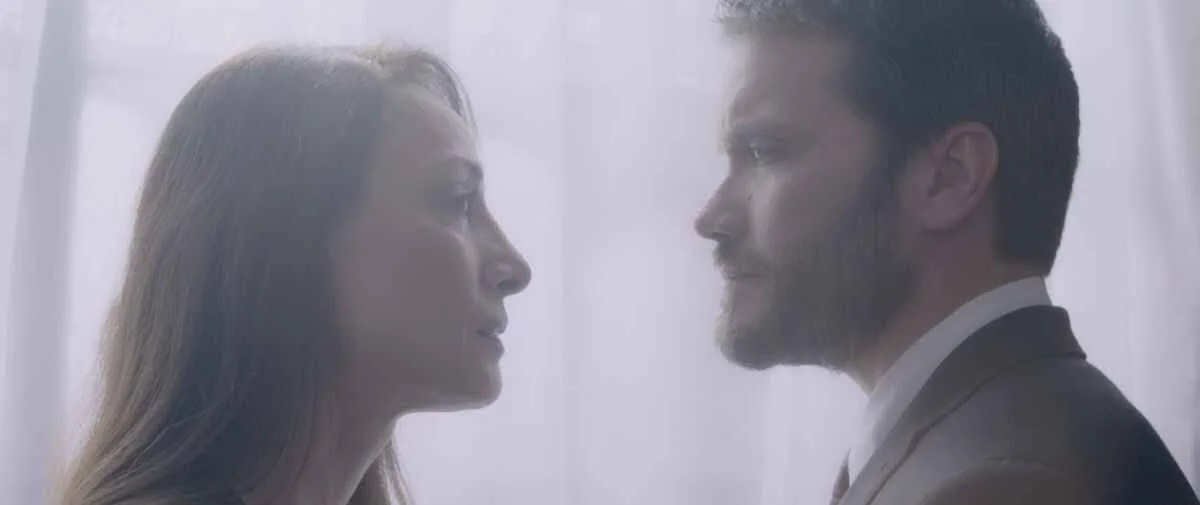
Danielle Rayne and Dom Zamprogna as Judith and Robert Westfield
How do personal and universal themes work in your film?
Many of the themes tackled in this film operate both personally and universally at the same time. There's the theme of grief and the grieving process and the questioning of the right or wrong way to do it. With grief being something that everyone experiences at some point in there lives, this very personal experience that Robert goes through offers a sense of solidarity for those going through it anywhere and everywhere.
The theme of genuine human connection also operates on both a personal and universal level. The two different supporting characters offer very different relationships with our lead and provide what they can in this time of grieving. On the microscopic level, they serve as the supportive wife and daughter to our lead character but on the macroscopic level, they serve as archetypes for different figures that can provide a sense of connection in a time of need. A sensitive partner who provides an ear to listen or the embodiment of hope and a light for a path forward.
The theme of healing is provided personally with Robert realizing what he has to look forward to after spending so much time reflecting and universally with the presentation of the idea of cyclical patterns to life providing empirically the same, or at least a similar, feeling of warmth or encouragement or safety.
How have the script and film evolved over the course of their development?
The original name for the project was Imperfect. I had briefly also considered Fallible.
From this project, in particular, I've learned never to decide definitively on a title before finishing the script. Fallible and Imperfect worked initially because I wanted to explore the idea of that moment when you have to accept the fact that your parents are not perfect, that they make mistakes, and that they're human. As this script was revised, I decided to use a phrase that was very near and dear to me in "To the moon and back" as a through-line for the main character's relationship with his mother and then with his daughter. I decided to change the title right then and there.
After making the announcement of the title change, I get a message from Danielle Rayne, who plays Judith in the film, saying that it was fate. That phrase was something she had said to a loved one who had just recently passed. I had no choice but to smile.
The script itself didn't change much from the initial draft I sent to the actors to what we ended up shooting. There was a wonderful mutual trust between myself and the actors with the material. They made it come to life.
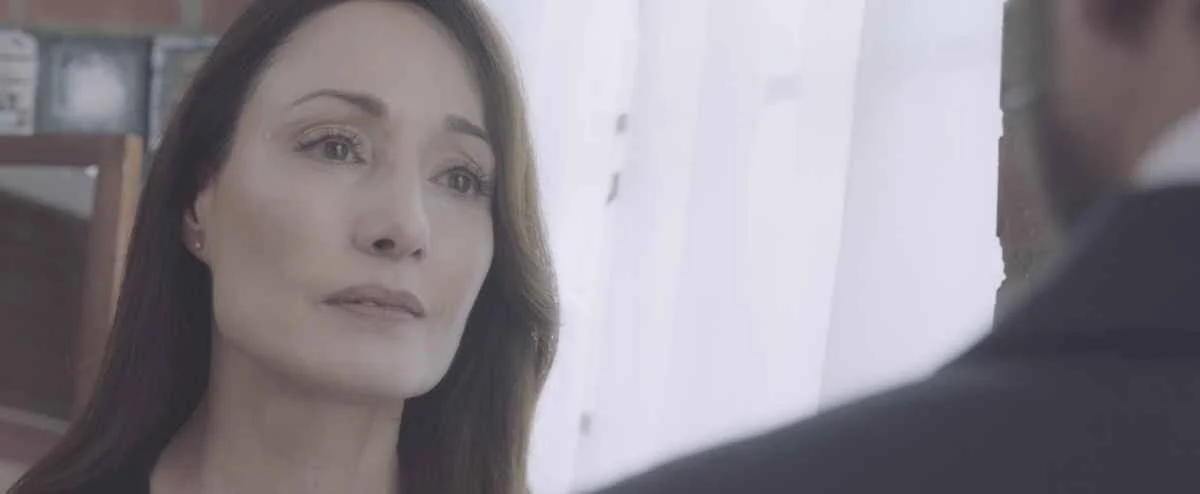
Danielle Rayne as Judith Westfield
What type of feedback have you received so far?
So far, we have received tremendous feedback. Some have called it my best film to date, all have complimented the camera work of DoP Dana Fytelson, and others have shared the tremendous sense of solidarity and community that the story provided for them.
Has the feedback surprised or challenged your point of view?
The feedback has not surprised or challenged my point of view. My point of view was created when I set the expectation that I was making the film to be enriched by the experience of creating with my cast and crew. That's the only thing that's in my control, so I let the rest go.
Don't get me wrong, I am thankful for the positive feedback, however, it had no ability to change what I knew and know to be true about the film.
What are you looking to achieve by having your film more visible on www.wearemovingstories.com?
I'm hoping to open the film up to a wider audience and for a chance to share the story with like-minded creatives and artists. www.wearemovingstories.com is a wonderful source of inspiration and community.
Who do you need to come on board (producers, sales agents, buyers, distributors, film festival directors, journalists) to amplify this film’s message?
We would welcome any help to amplify the film's message, whether it be producers who would like to see what else we've done or help us expand it into something larger, sales agents or distributors or buyers who could help us get the film in front of more audience members, film festival directors who could help us add more notoriety to the film with additional laurels or journalists who could help us talk about our intentionality behind the creation of the film itself.
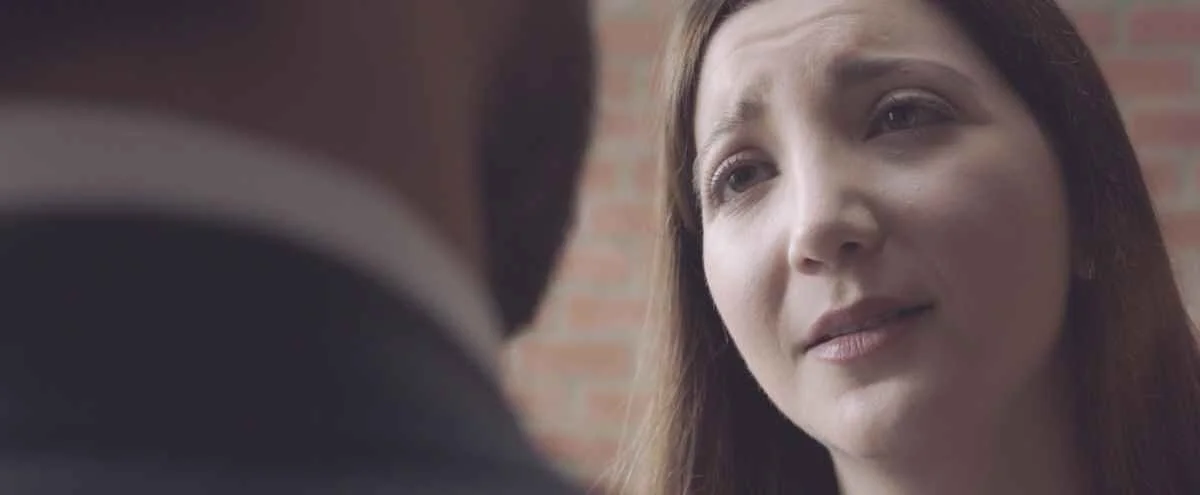
Julie Romano as Freddi Westfield
What type of impact and/or reception would you like this film to have?
I would love for this film to remind our audience to tell the people that they love "I love you," always and often. Life is uncontrollable and shorter than we know.
What’s a key question that will help spark a debate or begin a conversation about this film?
A key question that may help spark a debate or begin a conversation about this film is: "Is there a proper way to grieve?"
Would you like to add anything else?
Thank you for this opportunity. I hope people are enriched by the experience of watching it.
What other projects are the key creatives developing or working on now?
Our next project Ride Share is a romantic comedy that debuts this Fall on the festival circuit. More information about this short can be found here: www.natehapke.com/rideshare
Nate Hapke and Rosie Grace have been busy co-writing two features. Two Dash One One will be shot in 2021, and Driving Me Crazy will hopefully be shot soon after that.
Hapke and Grace are also in pre-production on three more short films: a science fiction drama Empiricism, a conceptual drama Scene Study, and a comedy What's Yours Is Mine. All three will be shot this Fall and will be debuting in 2021 on the festival circuit.
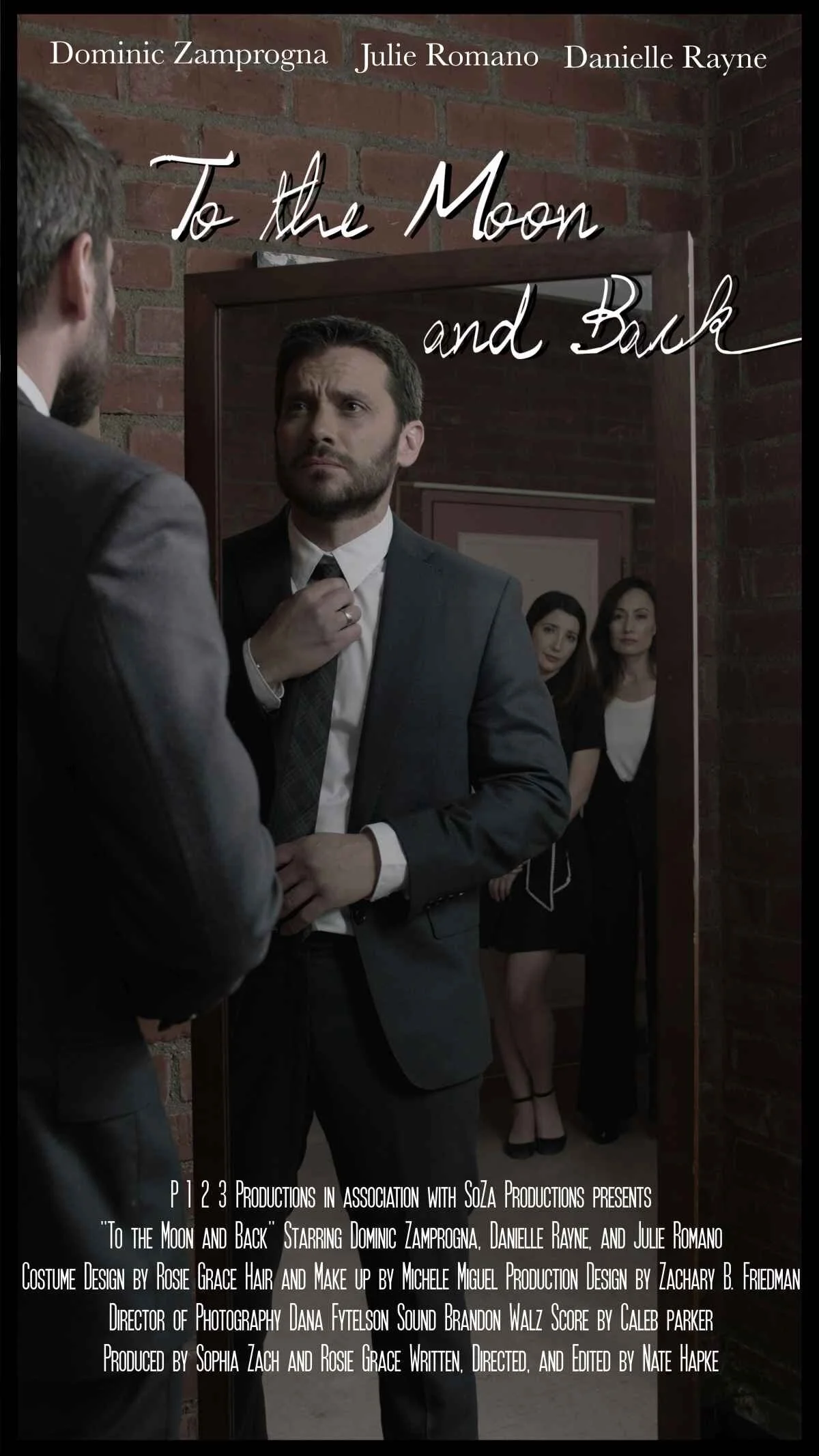
To the Moon and Back poster
Interview: June 2020
We Are Moving Stories embraces new voices in drama, documentary, animation, TV, web series, music video, women's films, LGBTQIA+, POC, First Nations, scifi, supernatural, horror, world cinema. If you have just made a film - we'd love to hear from you. Or if you know a filmmaker - can you recommend us? More info: Carmela
To the Moon and Back
In the moments before a man has to eulogize his mother, he finds solace in the presence of his wife and daughter.
Director: Nate Hapke
Producer: Sophia Zach and Rosie Grace
Writer: Nate Hapke
About the writer, director and producer:
NATE HAPKE is an award-winning writer-director with a passion for people and stories, predominantly focusing on characters dealing with grief and trauma. Hapke has been working full-time as a DGA Production Associate as a member of the Emmy-Winning Directing team for Disney/ABC’s General Hospital, where he won a Daytime Emmy in 2017. He was nominated for the same award in 2018, 2019, and 2020. He has been writing/directing 2-3 short films a year since 2014, screening in festivals around the world (including the Short Film Corner of Cannes 2015, 2017, and 2018) and having garnered 13 awards.
Born and raised in the movie industry’s capitol, SOPHIA ZACH has 25+ film credits to her name - both short and long form. Sophia holds a Bachelor of Arts in Cinema Television Arts with an emphasis in Film Production from California State University, Northridge. After graduating from college, Sophia ventured into the freelance arena in the capacities of Producing, Assistant Directing, and Production Managing. As a freelance filmmaker, Sophia has accumulated extensive experience working on film crews and partnering with a wide variety of production companies and vendors.
As a storyteller, ROSIE GRACE enjoys exploring the sometimes simple, sometimes heart-wrenching, and often ridiculous experience of being human, telling universally affecting stories with equal parts humor and heartbreak. Rosie also served as the costume designer and location scout for the film.
Key cast: Dom Zamprogna (Robert), Danielle Rayne (Judith), Julie Romano (Freddi)
Looking for: film festival directors, distributors, sales agents, buyers, producers
Facebook: Nate Hapke
Twitter: @YourFavN8Hapke
Instagram: @n8hapke
Hashtags used: #loveyou #tothemoonandback #indiefilm #supportindiefilm
Website: www.natehapke.com
Other: IMDb
Funders: Kickstarter
Where can I watch it next and in the coming month? Film Invasion Los Angeles - June 17th at 7 pm PST