Flickerfest 2019 - The Lost Sound
Inspired by the poem 'On Ç' by Hiromi Itō, a woman looks at the matrilineal inheritance of linguistic tones in her family, mourning the parts of languages that become extinct through semantic evolution.
Interview with Director Steffie Yee
Watch The Lost Sound here:
Congratulations! Why did you make your film?
Thank you. I made my film as a graduate project for my degree. At the time, I came across the incredible work of Hiromi Itō and I based the script for my film on one of her prose poems called ‘On Ç’ from the book 'Killing Kanoko'.
Imagine I’m a member of the audience. Why should I watch this film?
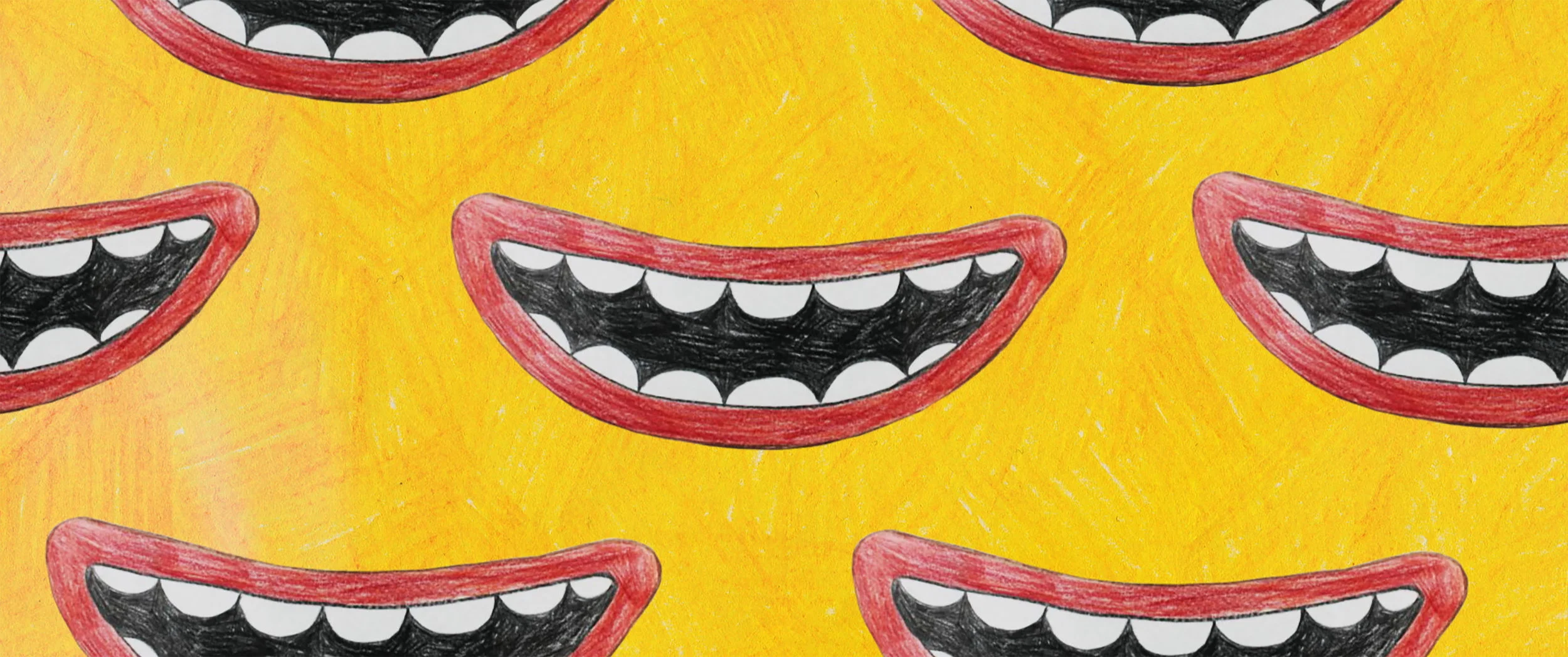
The film explores a range of hand-made and mixed-media animation techniques including strata-cut plasticine animation, pencil on paper, and ink animation. There are also underlying thought-provoking themes around the loss of language and the generational gap, which are raised though Hiromi Itō’s poem. It’s also a very short film! It goes for roughly 2 minutes, so I guess it’s easy and (hopefully) fun to watch.
How do personal and universal themes work in your film?
Underneath all the colourful animation techniques is a poignant story of a woman struggling to communicate with her elders. Hiromi Itō’s poem ‘On Ç’ highlights issues around the evolution and extinction of language, and how this can cause a generational gap between family members. As someone who is second-generation Australian, I resonate with the poem personally. However, it seems that this experience with language is fairly universal across all kinds of cultures, so hopefully there are a range of people who can see themselves in the shoes of the character in my film.
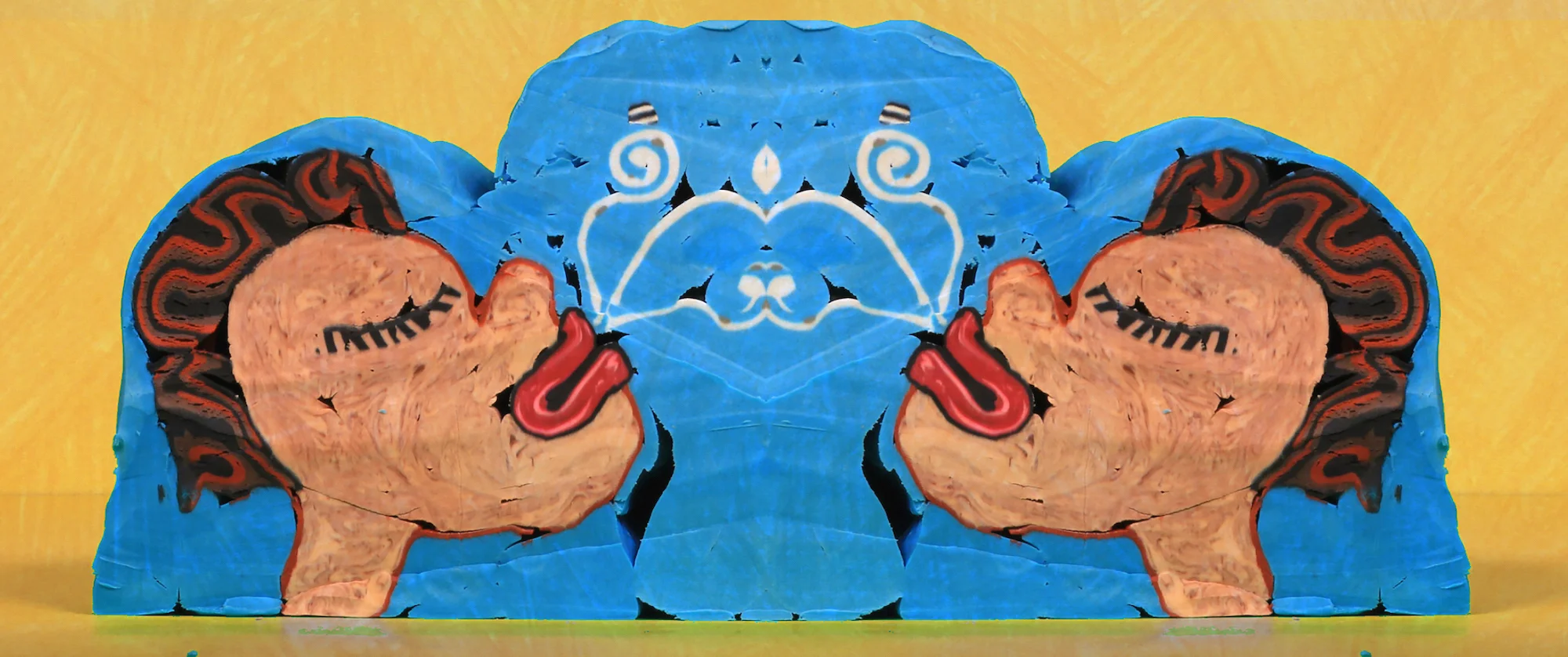
The Lost Sound
How have the script and film evolved over the course of their development?
The original version of the poem ‘On Ç’ is much longer than what appears in ‘The Lost Sound’. I would have loved to animate to the entire poem but I was restricted on time and needed to be selective about which sections to feature.
One of the ways I managed to condense the core idea of the poem into a 2 minute film was through writing my own section in the script which allows the music and sound design to do some of the storytelling, rather than purely having the poem narrated throughout the whole film.
The concept for the sound and music was significant in that I wanted most of the sound to be created vocally to reflect the whole idea of language, sounds and pronunciation. I’ve always been fascinated by a cappella and also looked at artists like Camille. Donny Janks did an amazing job with the sound design, using sections of the narration of the poem as percussive vocals (you can listen to his creation in the trailer), and Amy McNickle wrote the music that runs through the film using voice with slight pitch shifting and body percussion.
What type of feedback have you received so far?
Overall, feedback has been fairly positive. I’ve been posting photos on Instagram of my strata-cut animation process to give context to the film since it is very process and technique centric. It’s quite rare to see strata-cut animation, so people seem to be interested in the “making of” side of things.
Has the feedback surprised or challenged your point of view?
When I was making the film, I was quite loose in my approach in a sense that I used the poem and music as a springboard for my animation experiments, and I was open to whatever direction those animation experiments would take me in. The positive feedback does surprise me a bit because the structure of the film is quite unconventional since there isn’t a definite plot, so it’s nice that people are responding well to it.
The Lost Sound
What are you looking to achieve by having your film more visible on www.wearemovingstories.com?
It’s always really nice when people take the time to watch my film and I’m open for people to take what they want from it - whether it be the messaging behind the script or the creative process.
Who do you need to come on board (producers, sales agents, buyers, distributors, film festival directors, journalists) to amplify this film’s message?
I’m happy to connect with anyone who is interested in similar topics that I highlight in my film, with people who like the film and are willing to share it, or with any other experimental animators out there.
What type of impact and/or reception would you like this film to have?
I hope that people can resonate with the message from Hiromi Itō’s poem ‘On Ç’. I also hope that people are interested in and appreciate the hands-on process behind the animation, since that was a big motivation for me to make the film.
What’s a key question that will help spark a debate or begin a conversation about this film?
How closely tied are the ideas of language, identity, and self-worth?
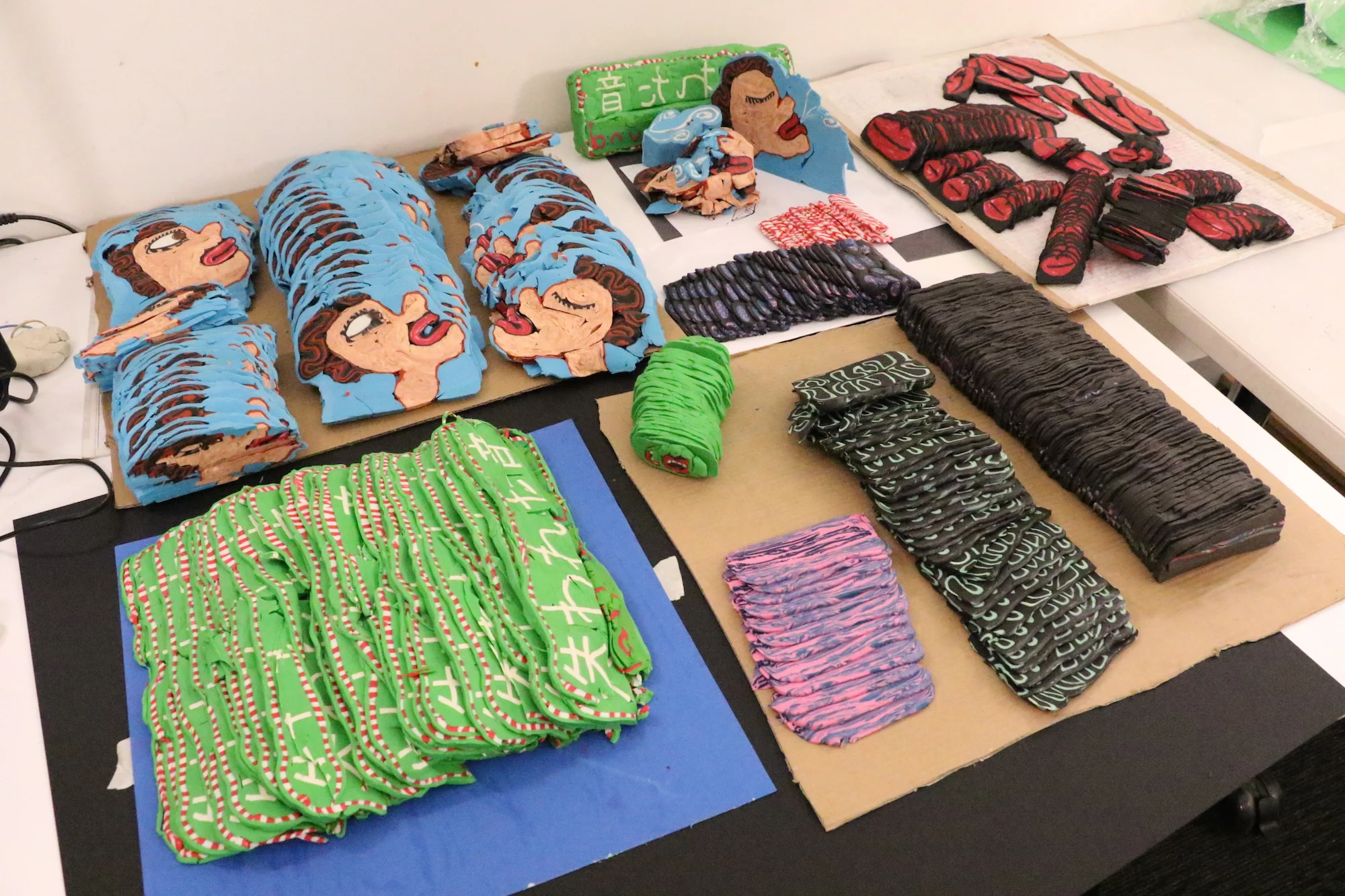
Plasticine slices of strata-cut animation blocks from The Lost Sound
What other projects are the key creatives developing or working on now?
Amy McNickle, who composed the music for ‘The Lost Sound’, is currently working on an interactive film about time travel called Worldline Corporations, which is premiering at the 2019 Adelaide Fringe Festival in February. We’re working on the project together – she’s on music and script, while I’m on animated visuals.
Interview: January 2019
We Are Moving Stories embraces new voices in drama, documentary, animation, TV, web series, music video, women's films, LGBTQIA+, POC, First Nations, scifi, supernatural, horror, world cinema. If you have just made a film - we'd love to hear from you. Or if you know a filmmaker - can you recommend us? More info: Carmela
The Lost Sound
Inspired by the poem 'On Ç' by Hiromi Itō, a woman looks at the matrilineal inheritance of linguistic tones in her family, mourning the parts of languages that become extinct through semantic evolution.
Length: 2 min
Director: Steffie Yee
Producer: Steffie Yee
Writer: Original Poem: 'On Ç' by Hiromi Itō
About the writer, director and producer:
STEFFIE YEE (director) is a mixed media animator and illustrator based in Sydney.
HIROMI ITŌ (writer) is one of the most prominent woman writers of contemporary Japan, with more than a dozen collections of poetry, several works of prose, essays, and several major literary prizes to her name.
Key cast: Steffie Yee (creator, animator), Hiromi Itō (narration and original poem), Jeffrey Angles, Nina Kimura-Budzyniak, Taeko Kimura-Budzyniak (translators), Jessica Edge, Erika Ju, Alice Wong (colour and animation assistants), Amy McNickle (music), Donny Janks (sound design)
Looking for: film festival directors, journalists, whoever else is interested in promoting the film or working on future projects
Instagram: @steffieyee
Website: steffieyee.net
Vimeo: vimeo.com/steffieyee
Funders: Independent
Made in association with: University of Technology Sydney
Where can I watch it next and in the coming month? Flickerfest 2019, Coven Film Festival 2019, San Fransisco Bay Area