Seeing is Believing: Women Direct
Female directors have a story to tell.
Interview with Director/Producer/Writer: Cady McClain
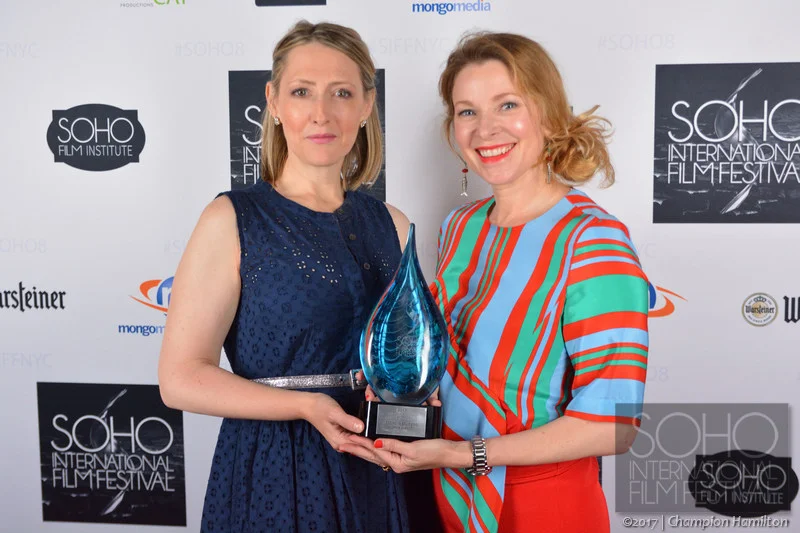
Main image: Producer Kate Super and Producer/Director Cady McClain winning the Audience Award at the 2017 SOHO International Film Festival
Congratulations! Why did you make your film?
I wanted to be a director starting when I was 22. My mom begged me not to pursue it. Not only was I financially supporting her (she had cancer) but she also strongly felt it was an area where women had a really hard time making a living. Looking back, I can see her point, but it devastated me to kill that dream. Twenty years later, I was encouraged to direct a short film I had written, and it changed my life. It was simply the most fun thing I could think of doing that fit my personality completely. After I made a couple of shorts I started hearing about the statistics and it really made me depressed again. I thought, “Why should I not pursue something if it’s my passion?”
After I experienced some pretty unpleasant #metoo type of moments on an acting job I knew I had to do something to change the overall environment for women on sets. I knew that if there were more women in positions of leadership the likelihood of the entire narrative would change. I was struck with a passion to be able to make available the wisdom and insights from the women who were persevering despite all, so that I could help not only women like me who were coming to the game late, but the next generation of female storytellers. That’s how the idea to make a documentary about women directors started. Then I told a woman I knew, Robin Greene, that I was considering it. She fixed me with a gaze that I can only describe as riveted and said, “DO IT.” It was like a command. I could see there was a deep need for a documentary on the subject. Thus I began what has been a journey that has been pretty nuts, but boy have I learned a LOT.
Imagine I’m a member of the audience. Why should I watch this film?
You should watch this film because you are feeling incredibly alone in your pursuit of your passion and you need to see people who are like you telling you that not only CAN you keep going but here is how and here is WHY! You should also watch it because the film shows both women and men talking about how to create a great work environment. I really think we all need to think “partnership” going forward, not continuing to be in a position where we are thinking “us versus them” because that just continues to create a “club” mentality and I think that mentality is unhealthy no matter what club you join. Seeing is Believing: Women Direct will help you realize that despite people loving their clubs, that we really are all in it together. And it is completely meant to help you find your own unique voice, and realize why that voice is so important to our culture. I want someone watching this to know that they can come from anywhere, be inspired by anyone, and do this job.
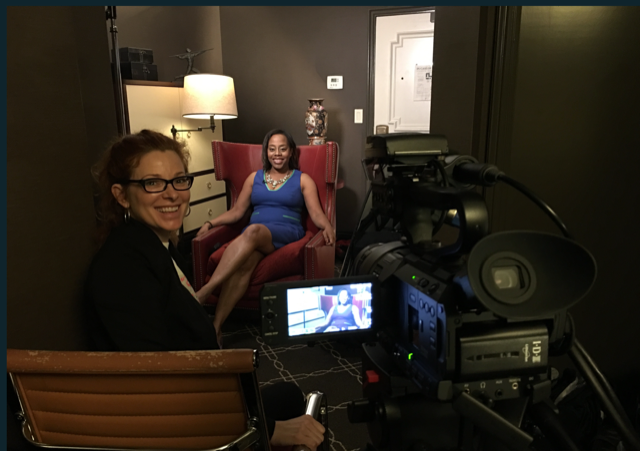
Seeing is Believing: Women Direct - Producer/Director Cady McClain interviewing Director Deborah Riley Draper of “Olympic Pride, American Prejudice”
How do personal and universal themes work in your film?
A very important teacher in my life, Michael Howard, used to say “The more personal, the more universal,” and it has come in very useful in all my creative endeavors. It basically means, “Be honest, really honest, with yourself and others in your creative work. Work with integrity.” The men and women in the film therefore speak to me with integrity and from a truthful place, and I think the viewer can tell that. Their integrity helps you to believe what they are telling you.
In the 84 minute version, I added just a bit of my own journey: why I made this film, and how I lost and found my voice again. Finding it had a lot to do with talking to all these amazing women.
How have the script and film evolved over the course of their development?
I started out making a film, then pivoted and turned it into a series, which I started submitting as a short film to festivals just to see how it would resonate. That short won a Jury Award at the Newport Beach Film Festival and was encouraged by the SOHO Film Festival to become a one hour feature. Then a distributor came along and asked me to make the film longer so I dived back in and now it’s an 84 minute feature! So yes, the whole project developed a great deal and mostly because of audience or industry feedback.
I’d never made a doc before, and it was quite intimidating. So this slow way of doing it really worked for me. He helped validate my way of wanting to approach the documentary structure, which I must say is a bit radical. It’s by no means a classic doc structure.
I had discovered “The Heroine’s Journey” and so based it very much on that. I don’t think I’ve ever seen anything like this, to be honest. It’s quite amazing how this structure resonates with women. It’s really special.
What type of feedback have you received so far?
I think one of my favorite quotes is from Kelly Brinker who works for American Cinematographer Magazine. She came to the Pepperdine screening of the one hour version and said, “If I had seen this while I was still a film student at USC, I would have stayed in production instead of switching my major to writing. Seeing this film now has inspired me to step out from behind my desk and step back onto a set.”
That blew me away, because that has been my goal, to make sure that women either get back into pursuing their passion or just don’t quit. That’s a hashtag! #Don’tQuit. It’s a tough job! So I want to keep giving those who are called to do it “food for the spirit” if that makes sense. Kelly’s response gave me so much joy. I brought her on a short film I was working on and she really enjoyed it. I can’t wait to be able to hire her again!
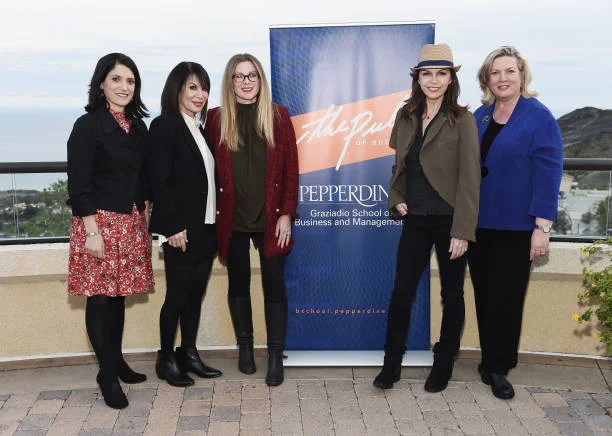
The panel for the Pepperdine screening of “Seeing is Believing: Women Direct” featuring (L to R) Carla Garapedian (“Screamers”), Lizzie Borden (“Born in Flames”), Cady McClain, Finola Hughes (“The Bet”), and Bethany Rooney (EP/Director “Bull”).
Has the feedback surprised or challenged your point of view?
I was surprised by this quote from a male student at Pepperdine: “I thought that no matter who you were in the audience, the words that the women on screen had to share were empowering,” Barba said. “I felt incredibly encouraged and more conscious of the role that men have to play with this new generation of filmmakers in relation to women.” ~Senior Moises Barba Jr., media production major
It surprised me to hear that the young men who were seeing this film were actually seeing themselves in the women onscreen, which is something you don’t hear a lot about. Women and people of color or differing sexual identities have had to do for a long time when it came to movies where straight white dudes were more prevalent. So hearing that from him was really, really encouraging. The world is changing!
What are you looking to achieve by having your film more visible on www.wearemovingstories.com?
I’d like people to know that there are people out there like me who really care about the new voices out there and want them to have encouragement, support, and access to wisdom that will help them succeed. I really enjoy helping people.
I’d like them to show the film to their communities, organizations, etc and not only push the conversation forward but get excited about how they can inspire and educate more female filmmakers to tell stories that matter to them, and for more men in the creative arts to collaborate in a more thoughtful, proactive way with women.
Who do you need to come on board (producers, sales agents, buyers, distributors, film festival directors, journalists) to amplify this film’s message?
I’ve actually turned down three offers of distribution, which sounds crazy but I have seen the pain that getting the wrong distribution deal can cause a filmmaker. I have always held on to the idea that self distribution isn’t anything to be ashamed of.
That said, I would really like more organizations, groups, and film festivals to partner with this film to help create more activity around the screening itself. I’d like each screening to also have workshops on directing, breakout lectures on the industry, products available to experiment with, discounts to film tools for those who attend…
That’s my dream. To build a conference full of opportunities around some of the screenings. Because the film is there to help you remember why filmmakers are important to society, and to inspire them to get working! Not just to talk about how hard it is. It’s to INSPIRE! Let’s make movies! Let’s tell the stories that are going to create the change we want to see in the world right now!
Seeing is Believing: Women Direct
What type of impact and/or reception would you like this film to have?
I’d love for women to get together in groups, in their home, and watch this film together and then decide they are going to help one another to get each woman’s dream project moving forward. Trust me, you don’t have to be an expert filmmaker to make a short film, but it can be a joyful experience at whatever level you are at. You just need a bit of support and on the ground help to get started, and that can and should happen at the level of your closest friends.
If I could get thousands of tiny groups doing that, I think we would see an influx of amazing and creative grassroots films and stories hitting our culture in a profound way. Perhaps not every film will convey the zeitgeist of what is happening around women’s voices and stories, but more than one someone will have that magic golden ticket, that story that will resonate for many. I just don’t want that person to not tell that story because they didn’t feel like they had the support to do it.
I want to help more women become great leaders who are also team players. That’s a tough balance but it’s totally required to be a great director. Kindness can have a power and strength in it. And the people who are the most kind are often the ones who have suffered the most. Women filmmakers can really help each other, and I want to help create the environment that is going to make that happen more often than not.
What’s a key question that will help spark a debate or begin a conversation about this film?
What is stopping you, as a woman, from telling your story?
Would you like to add anything else?
I just really appreciate you reaching out and giving me this opportunity to share what I am trying to do. This is very much a grassroots effort. I shot a lot of this film, and I am no DP, but I had a passion for it and that is what comes through. I did not interview a ton of famous people but I did interview the people that really interested me, who I knew would lend an interesting new perspective to the conversation.
I friend of mine always yells, “Content is King!” at me when I get worried that my film is not “commercial” enough, and I think they are right. I really gave my utmost to tell the story I felt would make the biggest impact for women who need to tell their stories.
I think what these women say will change some people’s lives, and that is really important to me. I don’t want anyone having to stop their passion because (like my mom did) someone told them that it wasn’t a place for women. OMG. That is just crazy talk. I don’t want that world and I know there are a lot of other people like me who don’t want that world, for themselves or their daughters, either. So let’s get busy making sure that world doesn’t exist anymore!
Stories have, can, and will change the world.
What other projects are the key creatives developing or working on now?
I just finished directing a full length play I shot live in NYC with multiple cameras, and next up I have to sit down and edit it. It’s a wonderful play about a female painter, and my goal is to get it up again on stage in NYC and then take the film around to some festivals. It’s called Paint Made Flesh. You can learn more about it here: https://www.paintmadeflesh.com
Interview: August 2018
We Are Moving Stories embraces new voices in drama, documentary, animation, TV, web series, music video, women's films, LGBTQIA+, POC, First Nations, scifi, supernatural, horror, world cinema. If you have just made a film - we'd love to hear from you. Or if you know a filmmaker - can you recommend us? More info: Carmela
Seeing is Believing: Women Direct
Female directors have a story to tell.
Length: 28, 58, and 84 minutes
Director/Producer/Writer: Cady McClain
About the writer, director and producer:
CADY MCCLAIN is a two time Emmy winning actor and two time Emmy nominated director.
Key cast: Lesli Linka Glatter (“Homeland”), Sarah Gavron (“Suffragette”), Li Lu (“There is a New World Somewhere”), and Naima Ramos Chapman (“Random Acts of Flyness”)
Looking for (producers, sales agents, buyers, distributors, film festival directors, journalists): Always up for a conversation!
Facebook: facebook.com/womendirectors
Twitter: @cadymcclain
Instagram: @cadymcclain
Other: www.seeingisbelievingwomendirect.com
Funders: crowdfunding and private
Where can I watch it next and in the coming month? The film is still making the festival rounds and is available for private screenings. You can get the latest news at www.seeingisbelievingwomendirect.com