Full Frame Film Festival / One Take Film Festival - 12th and Clairmount
In July 1967, Detroit experienced one of America’s most violent civil disturbances. To tell that story in an emblematic way, this film fuses rare archival footage from the era – including newsreel, educational films and more than 400 reels of home movies donated by Detroiters – along with illustrations. The narrative combines contemporary interviews, oral histories, radio broadcasts and dispatch recordings to create an immersive film experience that transports the audience back in time to explore the causes and aftermath of Detroit’s most pivotal moment in history.
Interview with
Director Brian Kaufman and Producer Kathy Kieliszewski
Congratulations! Why did you make your film?
In anticipation of the 50th anniversary of the 1967 Detroit riot/rebellion, we wanted to look back – both figuratively and literally – at that pivotal moment in the city’s history. By looking back literally, we intended to keep all of the film’s visuals in the era. The Detroit Free Press, the Detroit Institute of Arts, The Detroit Historic Society and many other cultural institutions partnered and put a call out to the community seeking 8mm home movie recordings from the 1960s. The response was overwhelming. The hundreds of reels of films that we received served as a visual base from which to structure the film. Beyond that, the now digitized archive will serve as a visual reference to the 1960s for generations of future Detroiters.
Imagine I’m a member of the audience. Why should I watch this film?
In addition to home movie recordings, we partnered with WXYZ TV for newsreel footage, mined our own newspaper vaults and sourced photographs from numerous libraries. The film’s narrative draws from over 100 interviews and oral histories, dispatch recordings and radio broadcasts. Combined, it’s a truly immersive experience. Viewers won’t see talking heads. In fact, viewers won’t even know whose voice they’re hearing in the recounting. Historians, politicians, looters, police and everyday folks contribute to the narrative, their voices all holding equal weight. Detroit artist Rashaun Rucker created original artwork for those scenes in the film without natural visuals that were too important to leave out.
How do personal and universal themes work in your film?
Our initial intent was to make a historic film, but only through the writing/editing process did themes start to emerge that were eerily relevant to present day events, both in Detroit and nationwide. The emerging of these themes happened organically; they became apparent without any narrative voice explicitly saying so. In the 50 years since Detroit erupted, issues of class and race, housing and opportunity, policing and politics are things that we still struggle with as a country. Our collective response (or lack thereof) to moments of civil disobedience and tragedy often seems frozen in time.
How have the script and film evolved over the course of their development?
Because of the shear number of oral histories and interviews we drew from, our narrative goal of showing the causes and aftermath of 1967 was never a challenge. The starting point of this film was terrifying, however, because we didn’t know how much visual material we’d find to cover 120 minutes with no talking heads. Despite the enormous response we received from the public with home movies, there were still visual holes. To shoot 8mm film in the 1960s would have required money, so much of the footage we drew from came from Detroit’s middle class neighborhoods. Finding footage from the neighborhoods surrounding 12th and Clairmount, where the rebellion erupted, was a challenge. So much of Detroit’s important history, including the black radical movement and now famous speeches from leaders like Malcolm X, weren’t documented to the extent that they should have been. It would have been great to include more of that history.
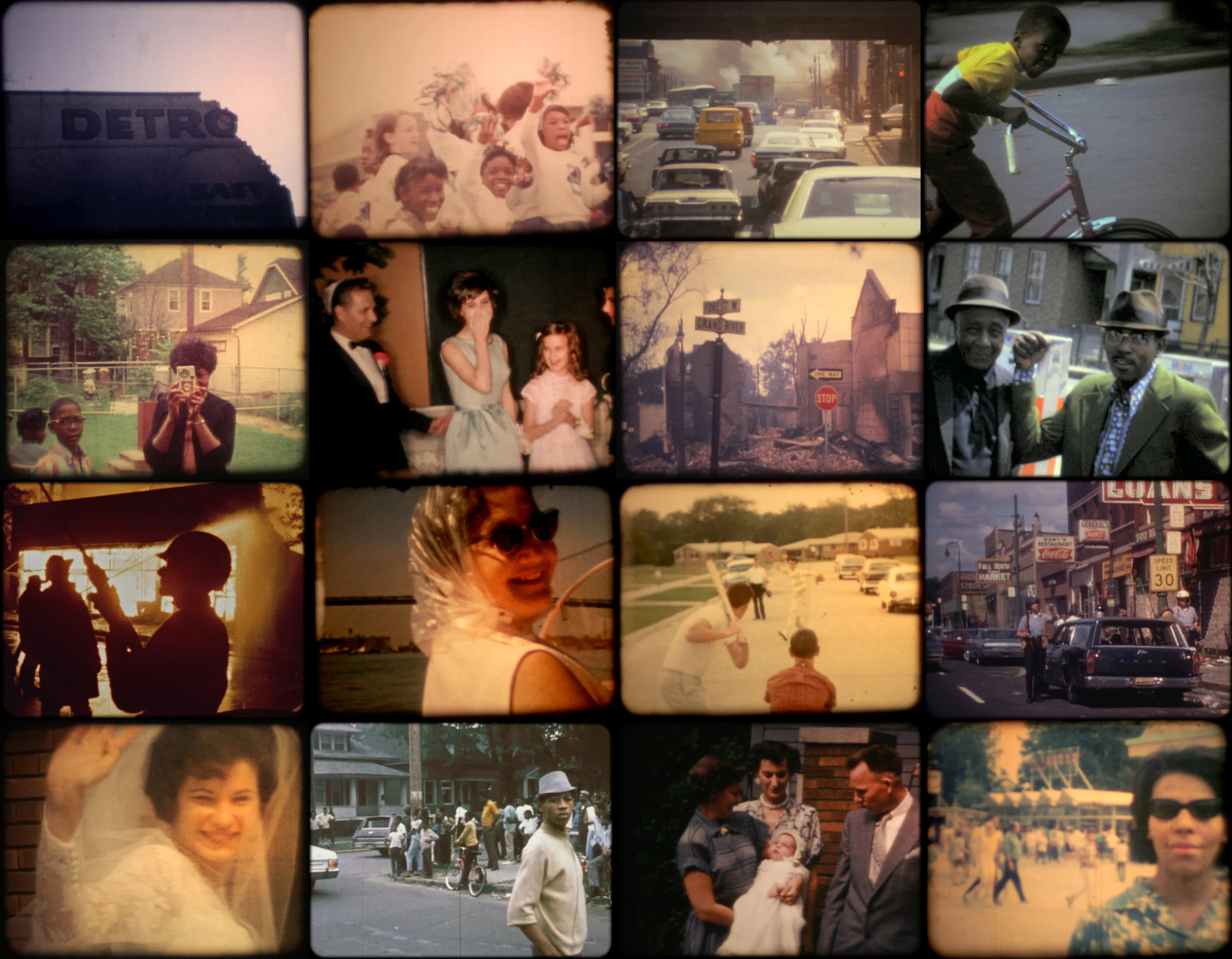
12th and Clairmount
What type of feedback have you received so far?
The events of 1967 were, for years after, largely referred to as a riot. To those who viewed what happened as a rebellion against oppression, the word riot was a mischaracterization with negative and criminal connotations. This film attempts to recast what happened to account for both viewpoints, and the response has been positive because of it. We’ve seen huge demand in Detroit for screenings of the film and fantastic conversations have stemmed from them. With Detroit’s “comeback” such a hot topic these days, it’s important to include the history of 1967 in that conversation, so that we don’t go down the same road.
Has the feedback surprised or challenged your point of view?
Fifty years later, Detroiters' opinions about 1967 are still viscerally strong. We’ve heard from a broad range of people who both agree with and disagree with certain parts of the film. One of the most interesting comments I’ve heard is that we focused too much on former Mayor Jerome Cavanagh, a white liberal, while focusing too little on black leadership of the time. The sentiment certainly stems from the fact that we had a wide range of visual documentation of the former mayor and very little from black leaders of the time. These are important conversation to have about historic documentaries, how our visual source material affects perception, regardless of narrative.
What are you looking to achieve by having your film more visible on www.wearemovingstories.com?
We’ve heard from countless educators who wish to show the film as part of their curriculum. We hope the film will have a long life in education.
Who do you need to come on board (producers, sales agents, buyers, distributors, film festival directors, journalists) to amplify this film’s message?
Distribution remains a primary goal.
What type of impact and/or reception would you like this film to have?
While 12th and Clairmount is a film about Detroit, civil disturbances during the 1960s erupted nationwide, their root causes all related. We hope the film engages a younger audience to think about current day events in relation to historical events.
What’s a key question that will help spark a debate or begin a conversation about this film?
Should civil disturbances be considered riots or rebellions?
What other projects are the key creatives developing or working on now?
We just completed a feature film in partnership with The Arizona Republic and other Gannett newspapers about President Trump’s proposed border wall. An aerial cinematography crew flew the entire 2,000 mile length of the US / Mexico border, assembling a base of footage from which the film was structured.
Interview: April 2018
______________________________________________________________________________
We Are Moving Stories embraces new voices in drama, documentary, animation, TV, web series, music video, women's films, LGBTIAQ+, scifi, horror, world cinema. If you have just made a film - we'd love to hear from you. Or if you know a filmmaker - can you recommend us? More info: Carmela
_______________________________________________________________________________
12th and Clairmount
In July 1967, Detroit experienced one of America’s most violent civil disturbances. To tell that story in an emblematic way, this film fuses rare archival footage from the era – including newsreel, educational films and more than 400 reels of home movies donated by Detroiters – along with illustrations. The narrative combines contemporary interviews, oral histories, radio broadcasts and dispatch recordings to create an immersive film experience that transports the audience back in time to explore the causes and aftermath of Detroit’s most pivotal moment in history.
Length: 1 hour 21 minutes
Director: Brian Kaufman
Producer: Kathy Kieliszewski
Writer: Brian Kaufman, Kathy Kieliszewski, Bill McGraw
About the writer, director and producer:
Brian Kaufman is Executive Video Producer at the Detroit Free Press.
Kathy Kieliszewski is Director of Photo and Video at the Detroit Free Press and Artistic Director of the Free Film Festival
Bill McGraw is a longtime Detroit Journalist.
Looking for (producers, sales agents, buyers, distributors, film festival directors, journalists): sales agents, buyers, distributors
Social media handles:
Facebook: https://www.facebook.com/12thandClairmount/
12th and Clairmount - Home | Facebook
Instagram: @bkjournalism @kathykieliszewski @mcgraw_bill
Funders: Detroit Free Press
Made in association with: WXYZ TV Detroit, Detroit Institute of Arts, Detroit Historic Society,
Where can I watch it next and in the coming month? One Take Film Festival on April 20 in Rochester, NY