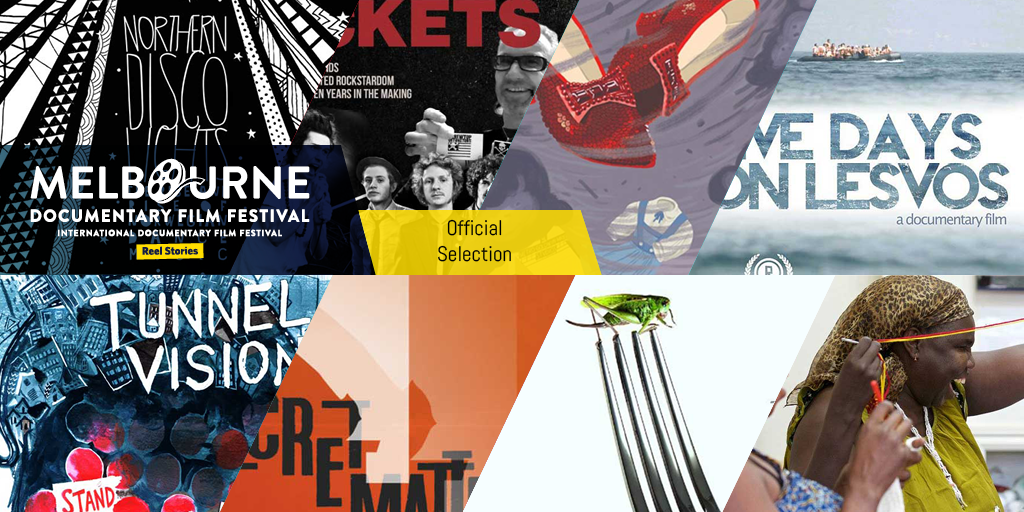
Melbourne Documentary Film Festival - Meet Curator Stephanie Tell
Interview with Curator Stephanie Tell
The Melbourne Documentary Film Festival will take place July 9-16, 2007
More info: http://mdff.org.au/
What does the Melbourne Documentary Film Festival mean for Melbourne?
Melbourne is such a great city for propping up the arts and giving a voice to the esoteric and avant-garde. This festival is such a wonderful extension of this! This year sees the festival being spread over a few amazing venues which I think adds to its Melbourne-esque charm. Focusing on documentaries explicitly is also an exciting plus, as its gives such a breadth of voice and stories in this specific format.
This year will be the second year of the film festival. What are some of the highlights?
There are so many great, varied and unique films on offer! A few of my favourites have already been discussed widely elsewhere, so I'd also really like to make a case for two less discussed but equally captivating gems: 'Migrant Dreams' (playing at Longplay, 13 July) and 'The Road Movie' (playing at Howler, 9 July).
'Migrant Dreams' is an important, fascinating film which examines the exploitation of those in possession of temporary migrant visas working on Canadian farms. The film focuses on a group of workers from Indonesia as well as a few local Canadians assisting these workers while elsewhere looking at various other cases of corruption and extortion more broadly. The great women focused upon in the film are so well drawn, their stories so interestingly shown, in a way that allows the film to fully realise the human costs of this issue. The film touches on an outrageous, tragic issue in an engrossing, empathetic manner. I encourage everyone to see it!
'The Road Movie' is also an exciting, unique submission. Comparable to a grittier Tehran Taxi, it is entirely filmed through dashboard cameras, the scenes collated from snippets uploaded online from drivers’ personal experiences. Through this technique, director Dmitriy Kalashnikov creates a fascinating portrait of Russia (and human road rage, generally) solely through observational footage. In equal parts human and devastating, the film is a surprisingly engrossing watch despite its lack of narrative push. It is a meticulously balanced snapshot of contemporary life, contrasting darkly laugh-out-loud moments with some intensely shocking scenes. This film requires a serious trigger warning given its portrayal of subjects not holding back from some truly awful slurs against their fellow commuters, as well as some traumatic footage of car accidents. With this in mind, however, it's really a fascinating picture.
Melbourne Documentary Film Festival
Can you discuss your involvement?
I helped curate the feature film selection and will also be doing front of house work for the festival at a few of the venues. Curation involved providing detailed feedback to the filmmakers and festival directors and nominating films for inclusion in the festival and awards.
What did you find interesting about the submissions?
It seems almost redundant to say, but their variation! The topics addressed and the manner in which they were approached were so unique and varied, it is almost impossible to touch on the scope of issues on offer. I was also so pleased about (though unsurprised) at the number of high quality submissions from women directors.
What type of feedback have you given the filmmakers? How does that work?
Of course it's difficult to criticise others' work, especially when that work is a film which takes so much love and patience, tears and sweat to create. I try to give feedback on both the film's narrative elements - i.e. what the film is about - as well as the stylistic elements employed - camera work, editing, sound, etc. In this way I hope to give a well rounded assessment of the film on offer. Ultimately however, the most important thing is how the filmmaker tells their unique story and whether that story is of general interest.
Have the documentaries surprised or challenged your point of view?
Absolutely! The wonderful thing about documentaries is their ability to simultaneously educate and entertain. The plethora of subjects taken on by the filmmakers gave me much opportunity to learn about things that I knew very little about and often had never heard of as well as some truly enthralling human subjects, from artists to restaurant managers to nightclub owners.
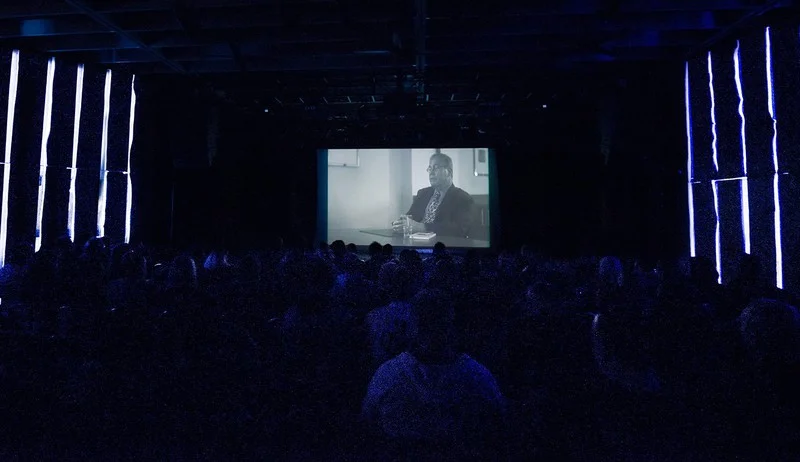
Melbourne Documentary Film Festival 2016
What are you looking to achieve in the film industry and as curator?
Currently I'm focusing on my PhD thesis in the film discipline. Ultimately, however, I'd like to continue with curation and perhaps broaden my horizons to narrative film curation as well.
What have you enjoyed most about being a curator?
Watching films is always a pleasure, of course. There's also something exciting about being one of the first people in Australia to see many of these international gems, and being able to say, "Everyone needs to see this film!" I'm so thrilled to see people's reactions to some of my favourite submissions.
What type of impact would you like this film festival to have?
I'd like people to view this festival as a well-rounded, exciting and respected exploration of the art of documentary film-making. It would be great if we could keep making the festival bigger and more exciting in the coming years so as to see MDFF as a regular fixture on the Melbourne film festival calendar.
Interview: June 2017
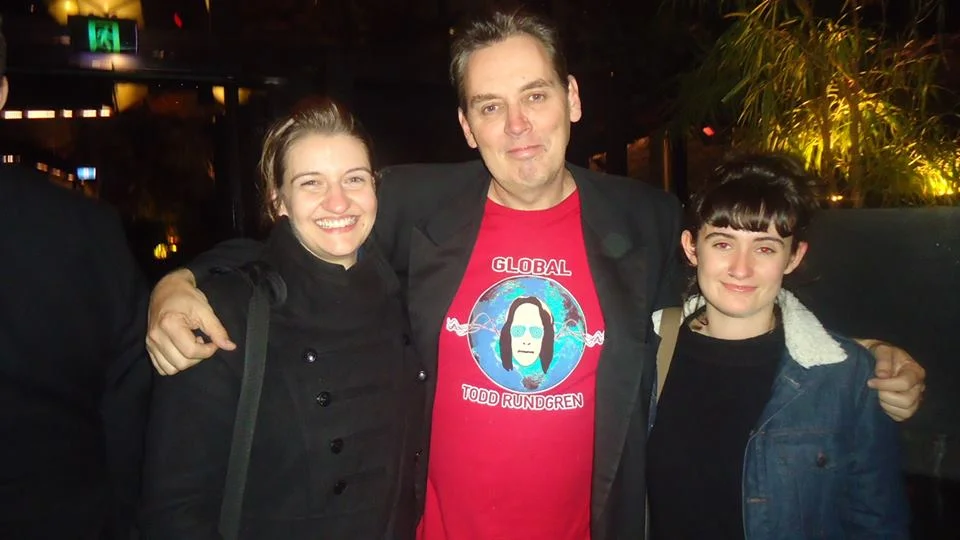
Melbourne Documentary Film Festival 2016 - Left to Right: Curator Stephanie Tell, Director Gavin Bond and Festival Photographer Naomi Pommerell.
_______________________________________________________________________________
We Are Moving Stories embraces new voices in drama, documentary, animation, TV, web series and music video. If you have just made a film - we'd love to hear from you. Or if you know a filmmaker - can you recommend us? More info: Carmela
_______________________________________________________________________________