IFS Film Festival - Three Days Drowning
A young artist is invited to the home of an art collector couple for three days to paint their portrait, but finds himself drawn into a web of secrets, betrayal and danger.
Interview with Writer/Director/Producer: Mark Andres
Congratulations! Why did you make your film?
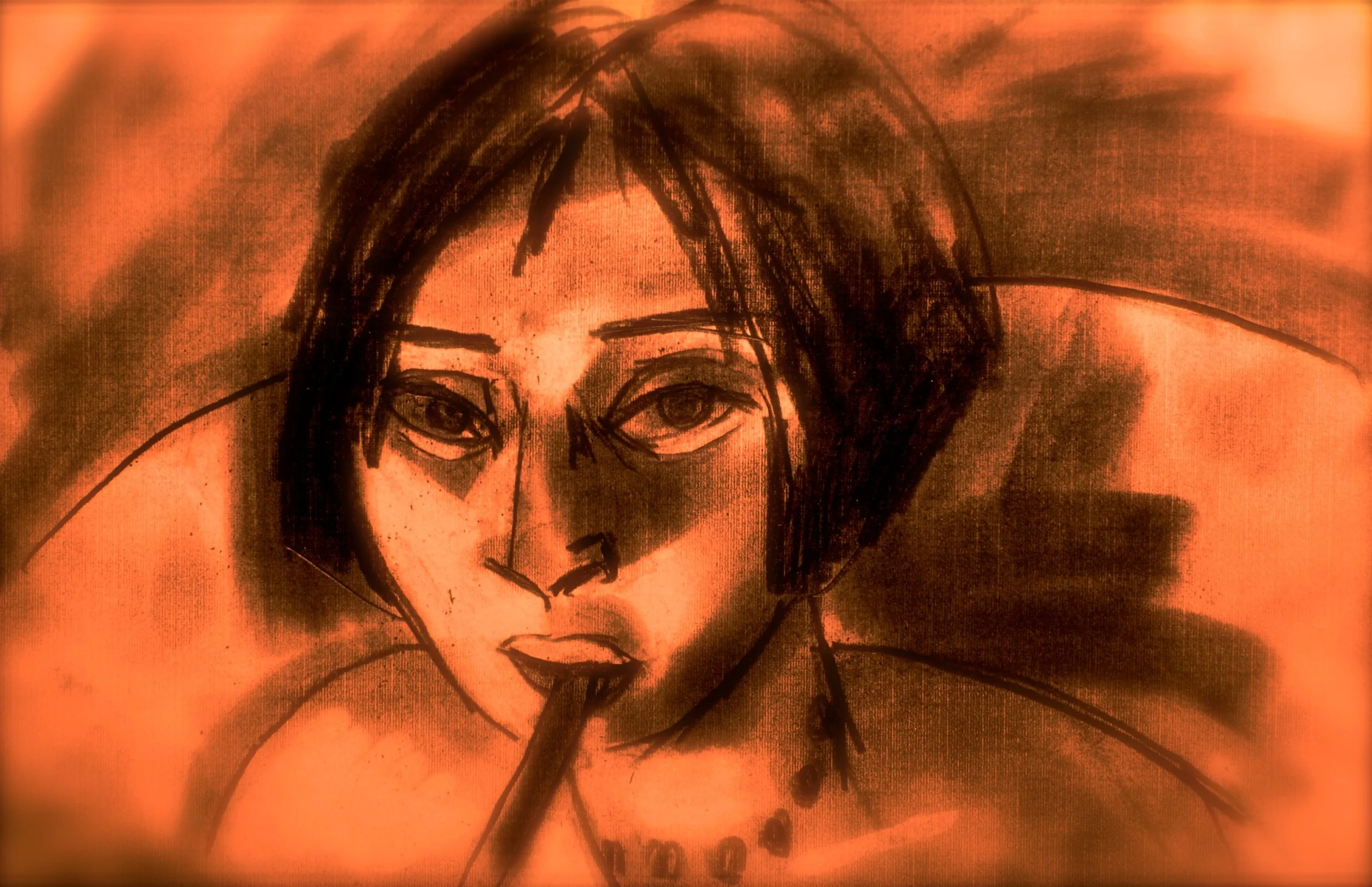
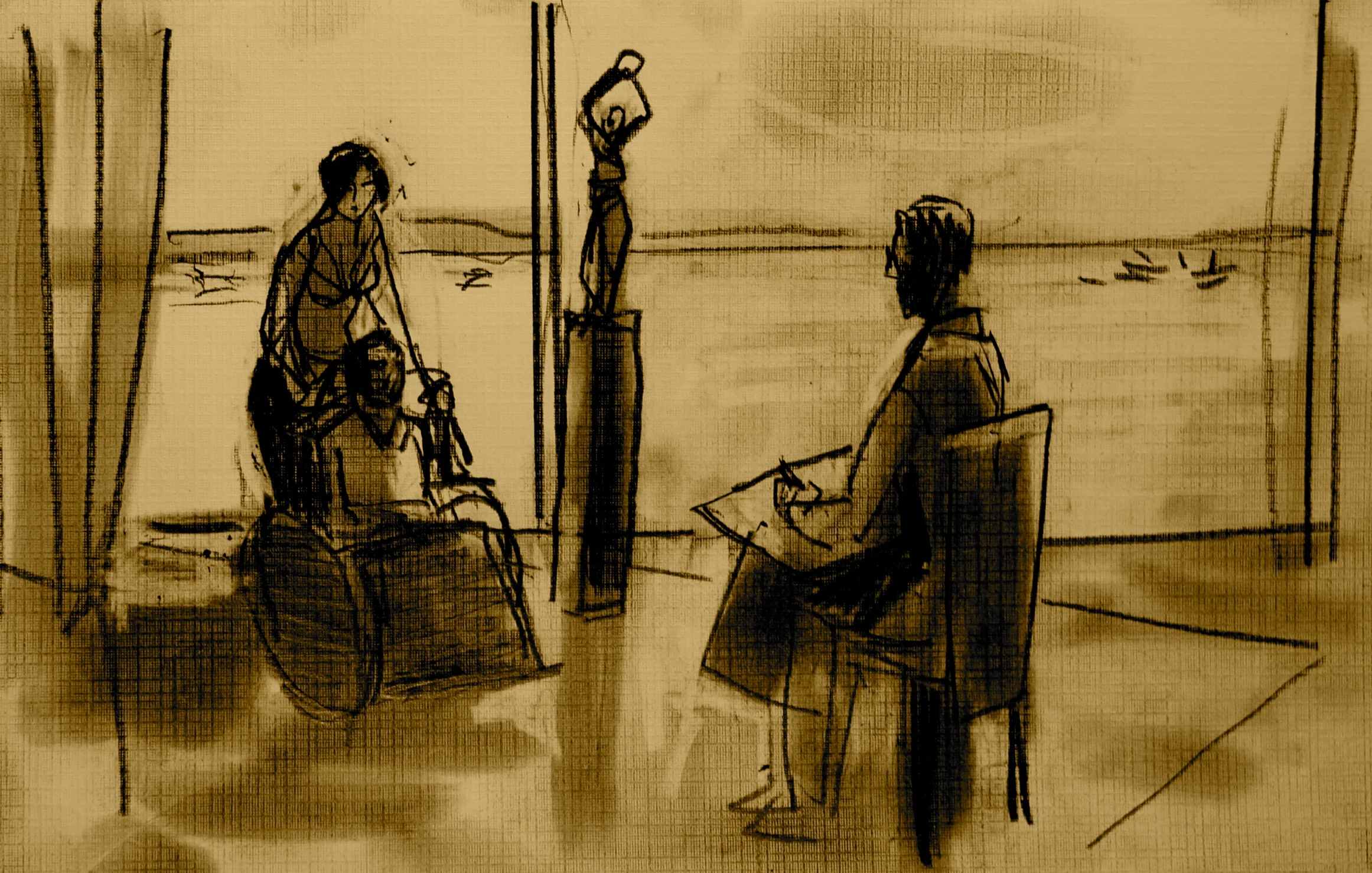
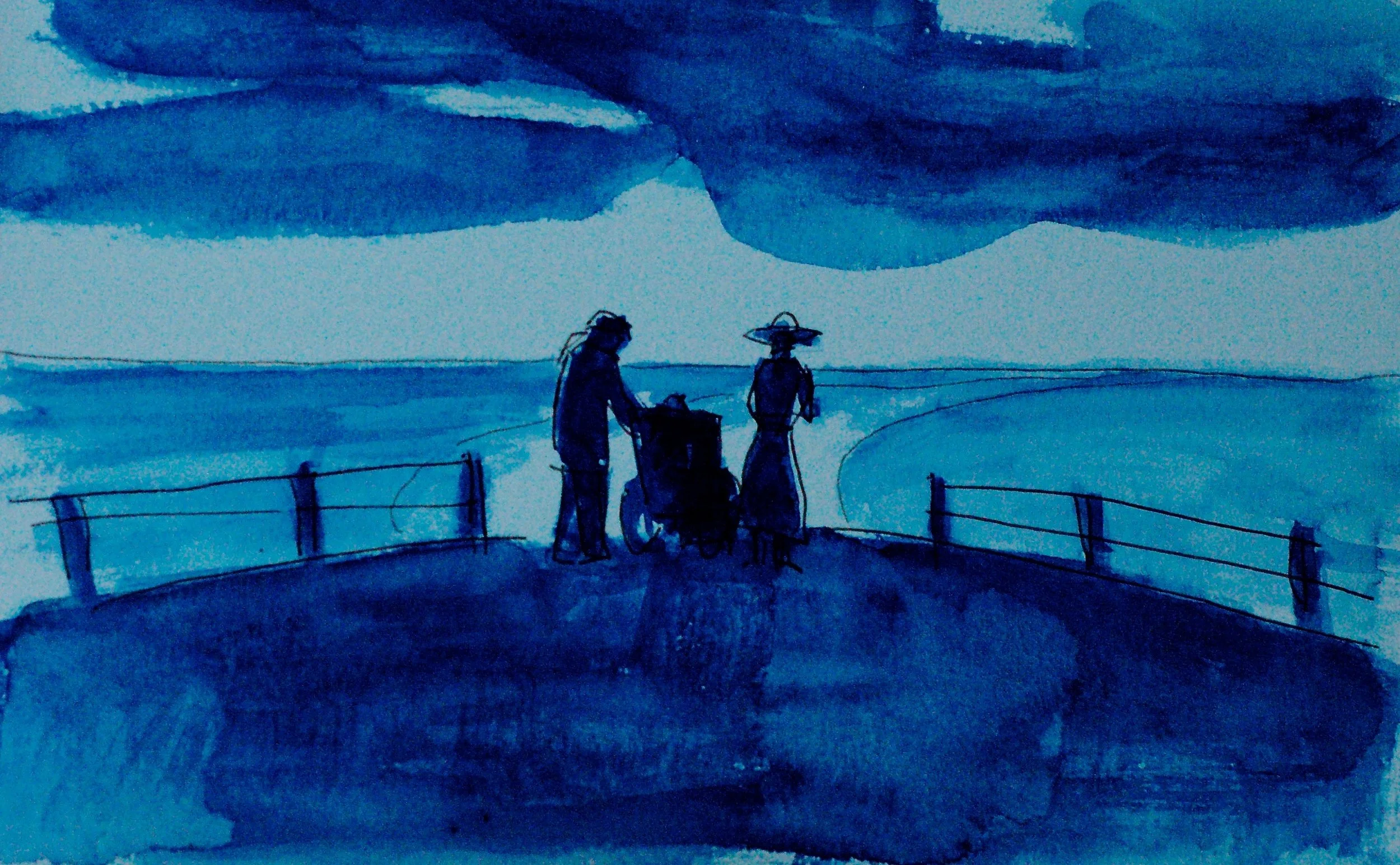
I made this film as an investigation into the possibility of a cinematic equivalent to the first person narration in literature. In live action films, the first person voice over frequently feels at odds with the apparent third person cinematographer. By making an animated silent film in which each frame is drawn by the main character, the viewer has all information filtered through that character— what he sees and what he does not see. The plot concerns a young artist commissioned to travel to San Juan Island for three days to paint the double portrait of an art collector couple who can further his career. His job is to see them clearly in order to make the portrait, but his own blind spots keep him from seeing clearly, leading him into a toxic web of deceit and danger.
Three Days Drowning
Imagine I’m a member of the audience. Why should I watch this film?
Watch this film if you would like an alternative to the traditional cinema of actors, talking, motion. What you will experience is a series of still images, subtitles and continual musical score. By paring cinema down to the bare bones of a musical slide show, I believe viewers get an alternative experience— one which requires some effort and concentration but which can also take you into a more intimate experience in which the characters speak in your ear in your own voice, and the images spark connections in the viewer’s mind.
The film is not for everyone; it is an art film. It is not even an animation in the traditional sense because my drawings do not move, but I also believe that in limits lies liberation. I chose this form — a cinematic equivalent to the graphic novel and early silent cinema which I call the "kinographic novel”-- in the belief that there are viewers who might respond to a different form of cinema, one which connects film to the intimate experience of reading and also of looking.
How do personal and universal themes work in your film?
I believe that the seemingly simple and universal act of looking is never simple and is always filtered through a sensibility with its unique blind spots-- often informed by trauma. The film is an investigation into the idea of trauma as a filter for perception: each character in the film is carrying a trauma and a wound— either psychic or physical. In THREE DAYS DROWNING these wounds go back to the secrets of a previous generation: an ex-Nazi hiding in Brazil, a boy who witnessed his parents die in an accident, a daughter who saw her sister disfigured, a man dying of a terminal illness. The act of seeing (and of making images) is an act of unpacking these stories; I believe this attempt to see clearly can be heroic.
How have the script and film evolved over the course of their development?
I work with a single collaborator, in this case the composer Gilbert Gundersen, which allows me the luxury to let the film evolve organically-- image, script and music are all developed simultaneously together. Although I wrote copious notes and made elaborate sketches, the actual production of the film is full of surprises. I am still a painter, and painters are familiar with a particular bizarre phenomenon Phillip Guston called “ The Third Hand” when the painting itself seems to blatantly contradict whatever plans the artist had, as if the painting had its own notions of itself.
My film evolved organically as a painting does, until all the parts— the characters, the editing, the music and the words found their rightness of place and position. That is true for most films, but what is unique to the way I work is that these all happen simultaneously, not separately.
Three Days Drowning
What type of feedback have you received so far?
The feedback I received from premiering this film at the 43rd Northwest Filmmaker’s Festival in Portland and at the Independent Filmmaker’s Showcase in Los Angeles has been validating, from the very pointed comments and questions in Q &A to the experience of watching the film with an audience and listening to their response. I love the experience of showing my film to a large group of strangers in the dark and listening to the beautiful, collective sound of roomful of people reading silently. There are numerous elements in the film that I changed as a result of these experiences. I love that drawing, a few words and music can hold an audience’s attention for the length of a feature film.
Has the feedback surprised or challenged your point of view?
Some responses from screenings sparked me to answer issues that I did not fully consider, which further unpacked the motives of the characters in the story to me, deepening my sense of them. Comments from viewers also spurred me to change some images because they were repetitive, unclear, or distracting. We all have blind spots! Fortunately reshooting is easy as I literally go back to the drawing board.
What are you looking to achieve by having your film more visible on www.wearemovingstories.com?
As a film maker with seven feature films and a few shorts, whose work remains virtually unknown, I long to connect to the right audience. Despite winning numerous awards at festivals, I have not been able to reach the audience whom I believe would welcome the experience of my films as a viable alternative to other types of cinema. Festivals are very rewarding, but the audiences they reach are small. I believe there is tributary in the great river of film for my little raft of the kinographic novel. I am encouraged by your interest in this film. I also long to connect with other independent filmmakers and see what they are working on now.
Three Days Drowning
Who do you need to come on board (producers, sales agents, buyers, distributors, film festival directors, journalists) to amplify this film’s message?
It is my hope to connect my films to writers who might be interested by the kinographic novel as a form and write about my films. It is my hope that such interest could in turn lead to either distribution or a platform where my audience could easily access and view them.
What type of impact and/or reception would you like this film to have?
I would like an audience to feel for the struggles of my characters and to reflect on how these struggles might dovetail into their own experiences and perceptions. That is perhaps the aspiration of all filmmakers, but in my case I would like the audience to fully experience the mystery of this form in which I work, and discover how it could take them by surprise; they might wade into this strange, archaic slide show tentatively, like a shallow puddle, then find themselves dropped down into an underwater world of the subconscious. Drawing is dreamy.
What’s a key question that will help spark a debate or begin a conversation about this film?
How does the experience of trauma change the way people see the world?
Would you like to add anything else?
I wish to take you back to an ancient form of storytelling-- to the magic lantern, the puppet show, the cave wall by torchlight-- and make you believe you are still seeing a movie. I believe a strong story, lively drawings, good inter- titles and compelling music can do as much (or perhaps more) as the movies of the multiplex. It is my dream that this could happen! But I hope my films may-- like the music of a street performer I once witnessed in Florence, playing Mozart arias on an old accordion-- rise above the din of the crowd and offer in its tawdry, creaky voice: a splendid song. It is a crazy dream, but perhaps you will dream it with me in the dark.
What are the key creatives developing or working on now?
I am reworking and commissioning a new score for an earlier unreleased animated film, Pompeii, Oregon, about a man who is convinced his wife is having an affair. It is my attempt to explore how sexually explicit material could responsibly work in an animated film. I have also begun a new kinographic novel set in a military hospital in Brazil during the time of the Junta Government about a mysterious patient with no face.
Interview: May 2017
_______________________________________________________________________________
We Are Moving Stories embraces new voices in drama, documentary, animation, TV, web series and music video. If you have just made a film - we'd love to hear from you. Or if you know a filmmaker - can you recommend us? More info: Carmela
_______________________________________________________________________________
Three Days Drowning
A young artist is invited to the home of an art collector couple for three days to paint their portrait, but finds himself drawn into a web of secrets, betrayal and danger.
Length: 72 minutes
Writer/Director/Producer: Mark Andres
Musical score: Gilbert Gundersen
About the writer, director and producer:
Mark Andres is an award winning filmmaker living in Portland, Oregon,. He has written and hand drawn seven feature length animated films including The Woman and the Ape, The Immortal Head, The Somnambulists, Dracula (adaptation), and Pompeii, Oregon. As a painter his work is in numerous public and private collections including the Portland Art Museum and the Hallie Ford Museum. He is represented by Augen Gallery.
Key cast: Gilbert Gundersen (original score)
Looking for (producers, sales agents, buyers, distributors, film festival directors, journalists): yes
Social media handles:
Facebook: Kinographic Novels
Other: kinographicnovels.com
Where can I see it in the next month? It is currently submitted to a number of festivals but I do not have screening dates yet.
You can see some of my earlier films on Vimeo. Here is a link to my 2014 film and kinographic novel, The Somnambulists, winner Best Animation at the Independent Filmmakers Showcase in Los Angeles.