Final Girls 'Women in Horror' Film Festival Berlin - Nasty
It’s 1982. Twelve-year old Doug is drawn into the lurid world of VHS horror as he explores the mysterious disappearance of his Dad.
Interview with Director Prano Bailey-Bond
Congratulations! Why did you make your film?
Thank you! There’s this great quote by George Orwell that might help me answer… “All writers are vain, selfish and lazy, and at the very bottom of their motives lies a mystery. Writing is a horrible struggle, like a long bout of some painful illness. One would never undertake such a thing if one were not driven by some demon whom one can neither resist nor understand.” I love this quote. Whilst I don’t consider writing or filmmaking a ‘bout of some painful illness’, I do think that ideas often choose us and they are deep rooted in things we don’t always fully understand. Perhaps I am driven by some demon? I really fell in love with the idea for NASTY, which was born from a feature idea. I think that once an idea hooks you like that, you are kind of compelled to explore it.
Imagine I’m a member of the audience. Why should I watch this film?
You should watch NASTY because it’s a celebration of horror. I call it my love letter to horror. That may not be obvious to everyone at first, but it should make sense by the end.
How do personal and universal themes work in your film?
I’m fascinated by our personal and societal relationships with horror and NASTY explores this. With this film I wanted to challenge The Daily Mail’s notion of the early 80’s that Video Nasties would turn society into monsters. It was a period of immense social hysteria around the genre with headlines such as ‘Taken Over By Something Evil From The TV Set’. Fear and technology seem to have gone hand in hand over the past few decades. I think we need horror; horror stories have always been around – they help us to explore and understand our fears. I’m interested in the complexities of how we seek and respond to horror, and why some people would prefer it not to be there at all. NASTY is about a desire to experience the illicit and understand the things that are kept just out of our reach.
Nasty
How have the script and film evolved over the course of their development and production?
Anthony Fletcher and I got through around 18 drafts of the script, so it evolved a lot at that stage. It took time to get the ending right so that the film was saying what we wanted it to say. I hope the time we took there has helped it move beyond the audience’s expectations. Production is always a huge step in how a film evolves – bringing a script to life is a constant compromise between logistics and creativity, so a lot of it comes down to design and pre-production planning. Then it’s about finding the right collaborators and locations to execute that plan.
I work with a lot of the same crew on most of my films, and that means there’s a real trust between us. As a director you have to be quite fluid whilst keeping hold of your original, overall vision. Post-production on NASTY was similar to the writing process in that we took our time. I think we were in post for just under a year crafting the detail of the film in the edit, VFX, grade, sound design and music. For me, all of these elements are areas to draw out further layers of the narrative and meaning. I was very lucky to have an incredible team.
What type of feedback have you received so far?
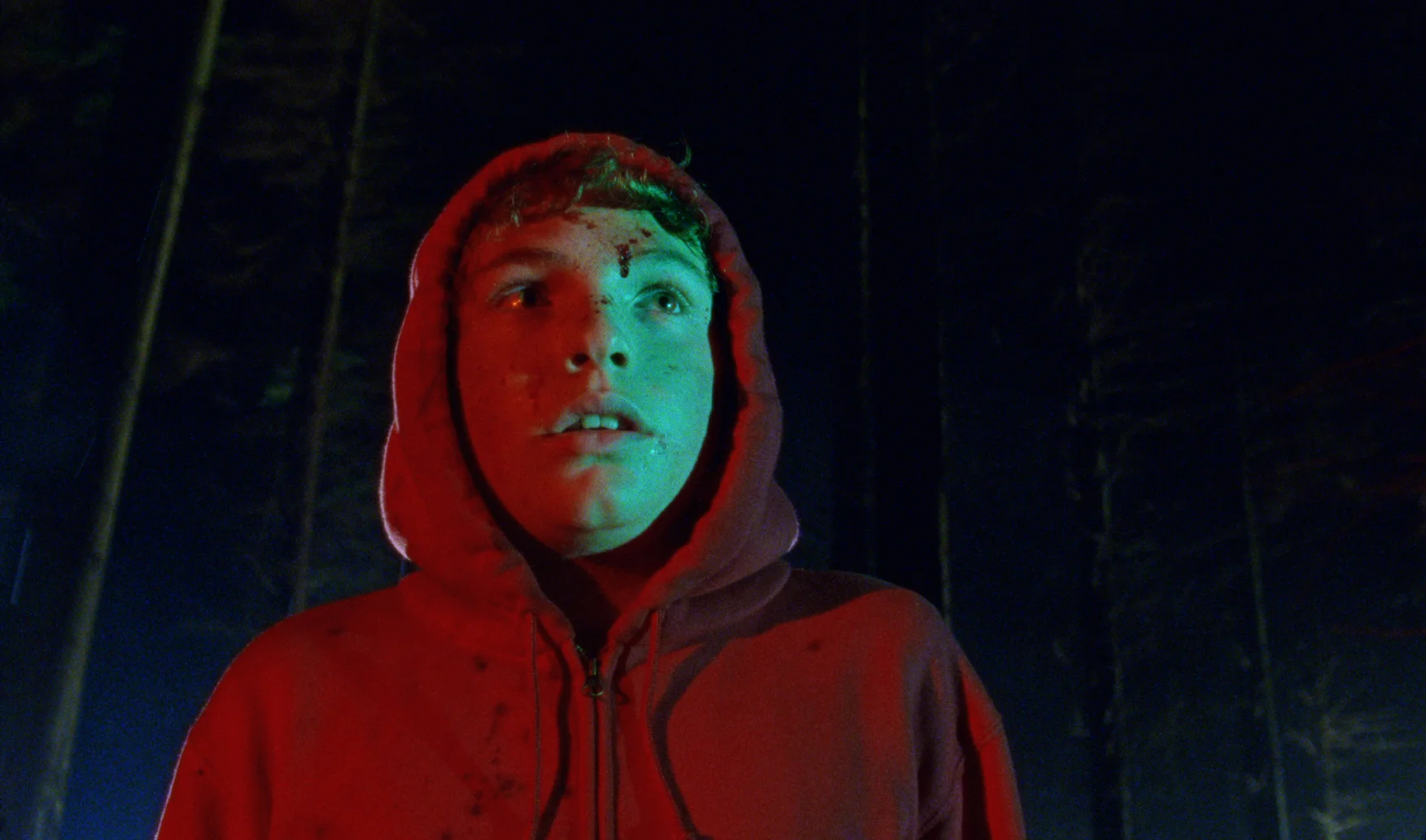
The film has been selected for over 100 festivals so far and won multiple awards. A number of audience members have come and told me that it feels very nostalgic for their own childhoods and their discovery of horror VHS. The scene where Doug watches his first video nasty is based on the feeling I had as a child watching horror, when afterwards going up the dark stairs to bed is a whole different experience to usual, like your house transforms into a different world after watching a horror film.
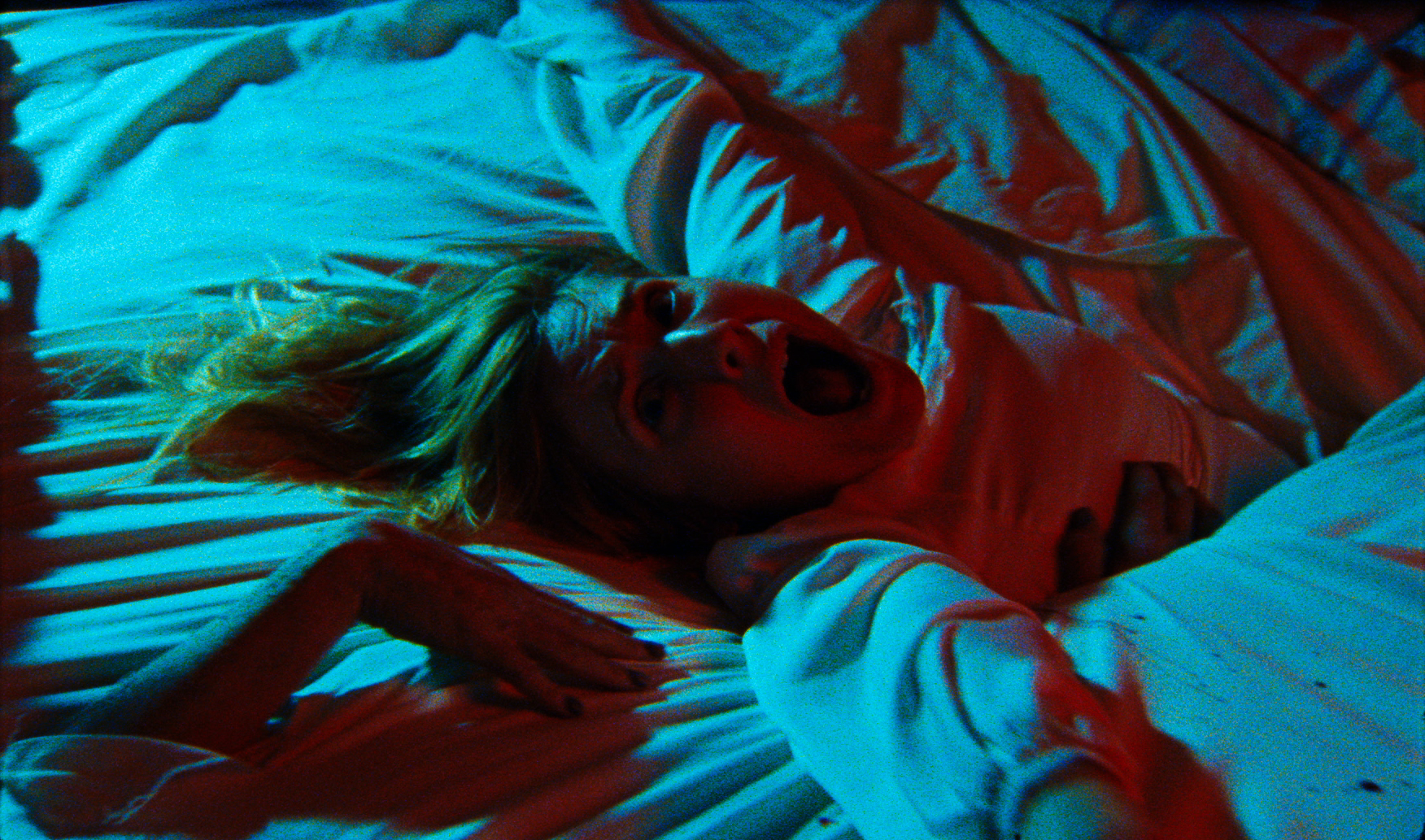
It’s really encouraging and kind of uniting when people tell me NASTY brings back memories for them too – it’s like a special experience we all had separately that we can reminisce about together via the film – an experience that for many has given birth to a lifelong love of horror. It’s also been brilliant to hear from younger audiences who did not experience the VHS era – they seem to also respond to the film really well. We recently had a screening at the BFI Future Film Festival and loads of young people came and spoke to me about it afterwards – they were really taken by the humour, use of colour and white noise VFX, and they got a lot of the references too; it was cool to hear that some of them were also fans of 80s horror.
Nasty
Has the feedback surprised or challenged your point of view?
During screenings I always listen for whether the audience laugh at the climax of the film. There’s no right or wrong response for me, but it nearly always gets a different reaction. The overall tone of the film is definitely not comedic, but it has a dark humour that seeps through. Some people get that immediately and some have told me they find the story quite sad. I wonder if some people feel that they’re not supposed to laugh?
Apparently there was a mini debate during a post-screening Q&A, which I unfortunately couldn’t attend, about whether or not I meant for the ending to be funny. They couldn’t agree on my intention. The truth is for me it’s intended to be darkly humorous but it’s very layered; it’s not one-note. This was the trickiest part of the film to get the music right for, because it needed to be doing so many things. When we added the bird song to the music it seemed to hit the right emotional notes. I think most of my films have an element of humour, but it’s always wrapped up in dark stories.
What are you looking to achieve by having your film more visible on www.wearemovingstories.com?
I hope that more people will hear about NASTY and check it and my other work out.
Who do you need to come on board (producers, sales agents, buyers, distributors, film festival directors, journalists) to amplify this film’s message?
We’re coming to the end of our festival run, so currently we are looking for broadcast opportunities, either TV or on-demand, before we seek an appropriate platform to premiere the film online.
What type of impact and/or reception would you like this film to have?
The film has already had a fantastic reception. I’m so happy with people’s responses and the success we’ve had at festivals. I really want to entertain an audience, to take them on a journey that makes them feel something – tension, anxiety, laughter, sadness. I would also love for NASTY to nudge people into thinking about their own relationship with horror.
Nasty
What’s a key question that will help spark a debate or begin a conversation about this film?
Why does making something illicit make it more desirable?
What are the key creatives developing or working on now?
I wrote NASTY with Anthony Fletcher, who I worked with on my previous 3 shorts too. We are currently in development on a feature titled ‘Censor’, which is the film that gave birth to the idea for NASTY, so they are slightly connected. I have another feature in development titled ‘Crazy Bitch’, which is a psychological horror about the curse of self-doubt. Both films are being supported by Ffilm Cymru Wales and are produced by Silver Salt Films.
Interview: February 2017
_______________________________________________________________________________
We Are Moving Stories embraces new voices in drama, documentary, animation, TV, web series and music video. If you have just made a film - we'd love to hear from you. Or if you know a filmmaker - can you recommend us? More info: Carmela
_______________________________________________________________________________
NASTY
It’s 1982. Twelve-year old Doug is drawn into the lurid world of VHS horror as he explores the mysterious disappearance of his Dad.
Length: 15 mins
Director: Prano Bailey-Bond
Producer: Meghna Gupta and Helen Mullane
Writer: Anthony Fletcher
About the writer, director and producer:
Prano Bailey-Bond is an award-winning director who grew up on a diet of Twin Peaks. Her work invokes dark, imaginative worlds, revealing how beauty resides in strange places.
Anthony Fletcher is a writer known for Tempest (2011), The Trip (2012) and Truck (2015). His work as a writer and director spans fiction, documentary and theatre.
Meghna Gupta is a producer/director whose work is characterized by a cinematic, intimate and fresh approach. She directs documentary and produces both fiction and factual.
Producer Helen Mullane has worked at Optimum Releasing, Studio Canal, Scott Free Films. She produced documentary Futureshock! The Story of 2000AD. Helen is currently mushing around the arctic circle while concentrating on writing projects.
Key cast: Albie Marber, Madeleine Hutchins
Looking for (producers, sales agents, buyers, distributors, film festival directors, journalists): Distributors
Funders: Crowdfunded
Production Company: Soul Rebel Films
Where can I see it in the next month?
Tampere Film Festival (Finland), Monsters of Film (Stokholm, Sweden), Scream Queen Tokyo Nagoya Tour (Japan), Limelight Film Awards (UK)