December 5 Release - Verona: The Story of the Everett Massacre
When those who have nothing defy those who have everything. On 5 November 1916, 250 Wobblies aboard the steamer Verona were met at the Everett City Dock by Sheriff Don McRae and 140 deputies. When the shooting stopped, five men were dead, two were dying, and dozens were wounded. How did they get to this point? Using expert analysis, archival material, and animation, Verona: The story of the Everett Massacre explores the killing, the cause, and the characters in this long-forgotten labor conflict.
Interview with Writer/Director/Producer Denise Ohio
Congratulations! Why did you make your film?
I was fascinated about this story first because I’d never heard of it and second, because people who should have been on the same side were successfully turned against one another. I wanted to explore why and how that happened.
Imagine I’m a member of the audience. Why should I watch this film?
This is a super hero movie with super heroes of a different sort. The heroes in VERONA aren’t from comic books, but were real people who fought real battles and shed real blood. VERONA doesn’t shy away from difficult subjects and images. We see pictures of dead men laid out on slabs because there is always a price for defending the rights of ordinary people, a price that is never paid by the rich and powerful. This is a movie that assumes viewers are intelligent, capable of empathizing with the people it shows, and are driven by more than their own self-interest. It respects the viewer.
How do personal and universal themes work in your film?
The ordinary people who stood up for the rights of others knew they were risking their lives and livelihoods. Some were killed. Some of them were hurt so badly they would never be able to work again. And all of them were manipulated by those with wealth or status to fight each other instead of against those exploiting them.
We continue to debate issues of civil rights versus security, economic opportunity versus economic exploitation, and equality before the law. The arguments people were having on the streets of Everett in 1916 were about what it means to participate fully and equally in American society. The fact they were arguing on the street, they could speak their minds publicly, says something about what it means to be an American then and how different that situation is now. We continue these debates but not in the streets because our public, common places have been sold and speaking up means facing being kettled by cops, beaten by Nazis, or edited for length by TV news.
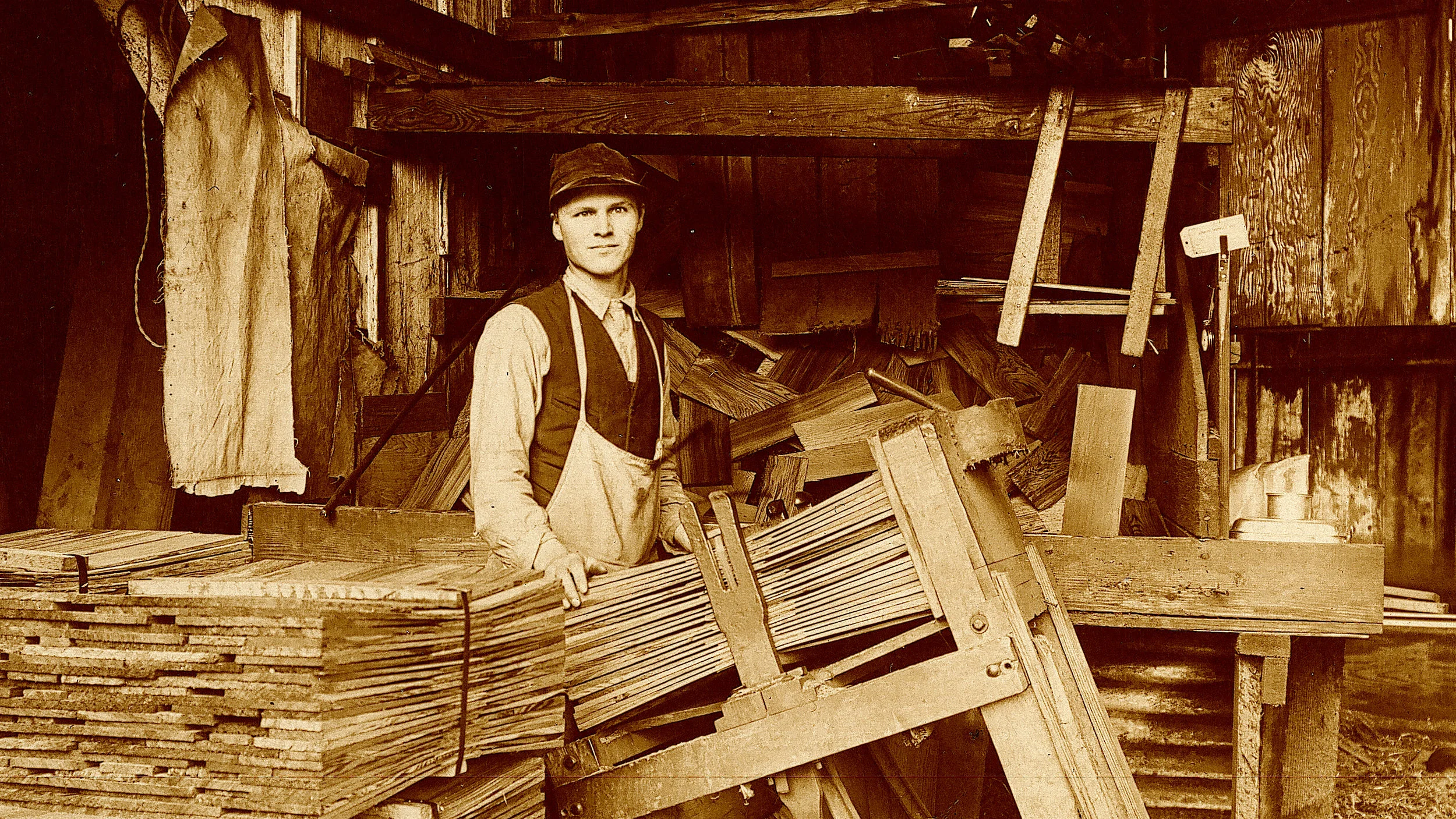
Single man in mill: Shingle packer at the Union Mill, 1910. Shingle packers worked so fast, it appeared they were weaving shingles together. This earned them the name, “shingle weavers,” a name that soon applied to everyone who worked in a shingle mill. Courtesy of the Northwest Room, Everett Public Library.
How have the script and film evolved over the course of their development?
The documentary has grown into a larger multimedia project because of the research I did. We hope to expand on what happened and who was involved with an online presence sharing images, motion picture, audio, and text to further explore the event.
What type of feedback have you received so far?
I’ve been told that the film is fascinating, compelling, and really sad. People are stunned by the images. Even people well-versed in this period of history are surprised by the previously unseen archival footage, most of which is from the area and the time, but were kept in closets, attics, and trunks until I dug them out. You don’t see this stuff on Getty Images.
Viewers also really respond to the interviews with family members of those who died that day. The daughters of one man tell of how they had no idea what happened to their father, only that they were told he wouldn’t be coming home again. The nephew of another man explained how his aunt arranged to have her brother’s body shipped home to New York when she was only twelve years old.
Unfortunately, I’ve heard from acquisitions people that no one cares about labor and labor history. People in the industry don’t seem interested in how working people were able to achieve some economic control over their lives by organizing and fighting on behalf of one another. While this story is part of a legacy we all share, it’s as if it is a legacy that many people in the management class, frankly, seem ashamed of. Or they don’t see how knowing about all of our past (not just World War II) is relevant.
What are you looking to achieve by having your film more visible on www.wearemovingstories.com?
I’d like for people outside of the industry to have a chance to see a film about regular heroes from the working class so they themselves can see you don’t have to be Thor to fight for what’s right,
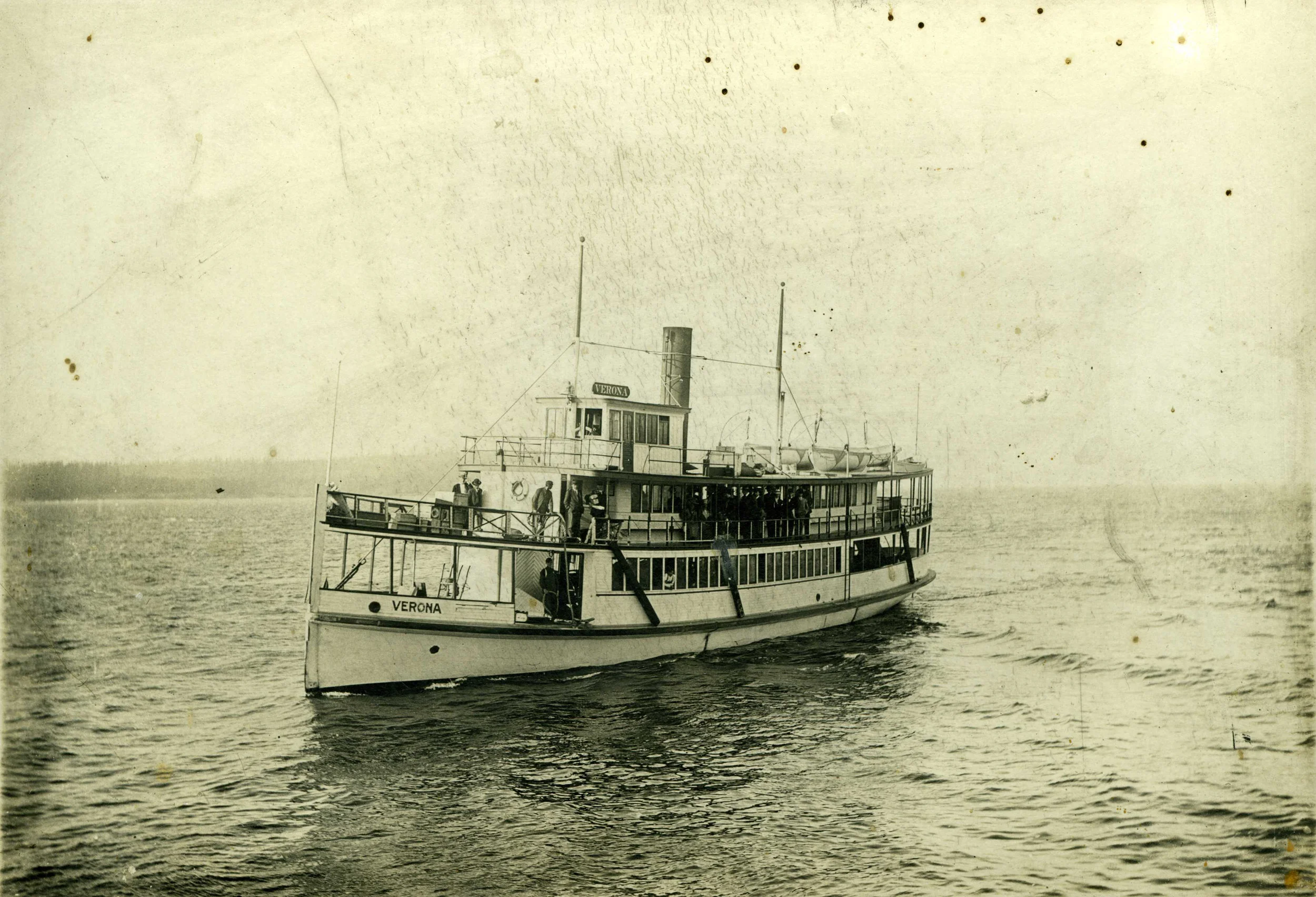
Image of the VERONA ferry: Built in 1910, the Verona was one of the fastest steamships on Puget Sound. Courtesy of the Vashon-Maury Island Heritage Association.
Who do you need to come on board (producers, sales agents, buyers, distributors, film festival directors, journalists) to amplify this film’s message?
Journalists.
What type of impact and/or reception would you like this film to have?
I’d like for people to recognize the parallels between what happened in Everett in 1916 and what is going on now. Our country aspires to be something greater than an economy or a military, and while we don’t always live up to our ideals, we can certainly keep trying. What happened in Everett shows not only how deeply ordinary people feel about our constitutional rights, but how far people will go to fight for them and how violent entrenched power will be to stop us from exercising our rights.
What’s a key question that will help spark a debate or begin a conversation about this film?
How far are you willing to go to protect your rights and the rights of others?
Would you like to add anything else?
I start this movie with a quote from Jay Gould, “I can hire one half of the working class to kill the other half.” What happened in Everett on November 5, 1916 was a great example of exactly that.
What are the key creatives developing or working on now?
I’m writing a novel based on this event and we’re expanding this project into a multimedia experience.
Interview: November 2017
_______________________________________________________________________________
We Are Moving Stories embraces new voices in drama, documentary, animation, TV, web series and music video. If you have just made a film - we'd love to hear from you. Or if you know a filmmaker - can you recommend us? More info: Carmela
_______________________________________________________________________________
Verona: The Story of the Everett Massacre
When those who have nothing defy those who have everything. On 5 November 1916, 250 Wobblies aboard the steamer Verona were met at the Everett City Dock by Sheriff Don McRae and 140 deputies. When the shooting stopped, five men were dead, two were dying, and dozens were wounded. How did they get to this point? Using expert analysis, archival material, and animation, Verona: The story of the Everett Massacre explores the killing, the cause, and the characters in this long-forgotten labor conflict.
Length: 95 minutes
Director: Denise Ohio
Producer: Denise Ohio
Writer: Denise Ohio
About the writer, director and producer:
Denise Ohio and her spouse raise lavender and honey bees outside Monroe, Washington. This is her third film.
Looking for (producers, sales agents, buyers, distributors, film festival directors, journalists): Journalists
Social media handles:
Facebook: https://www.facebook.com/Veronathedocumentary/
Other: www.holytoledo.com
Where can I see it in the coming months?
Beginning December 5, you can see it on iTunes, Amazon, Google Play, Vimeo on Demand, and Vudu.