Slamdance - Moriom
Moriom, a beautiful but strange young woman, says her parents must be punished for holding her prisoner and torturing her. They have a different story.
Interview with Director Francesca Scalisi
Congratulations! Why did you make your film?
Thanks! This film happened by chance. While we were filming our feature-length movie in Bangladesh we saw a beautiful girl wading through a river, lifting her elegantly-embroidered skirt to keep it dry. We were struck by her daring movements and her enigmatic beauty. She immediately caught our attention clapping her hands.
Suddenly, we realised that her left ankle was shackled. Some kids were throwing rocks at her, while her mother was trying to take her back home. We decided to take a break from the shooting of our documentary and started to look for this girl, eager to learn more about her.
Imagine I’m a member of the audience. Why should I watch this film?
I think the audience should watch “Moriom” because this is a story about an incredible and courageous woman. When I met this girl I was amazed by her behaviour: she was much freer than most of the Bengali women that I had met up to that point. She would approach policemen and other men as is if they were women. Because of her mental illness people around her would let her behave as she wanted. Her trauma destroyed any cultural inhibition and a primordial energy emerged. Although she was physically shackled, through her illness she was able to break free from society's constrictions.
A patient afflicted by acute psychosis (like Moriom was) lives in a condition of detachment from reality and because of this he/she is free from any social constriction and often becomes the bearer of subversive and revolutionary ideals.
In our reality this person becomes the bearer of a stigma: society defends itself identifying the mental disease as the cause of a distorted and incorrect message. But this condition often gives voice to a suggestive need for change.
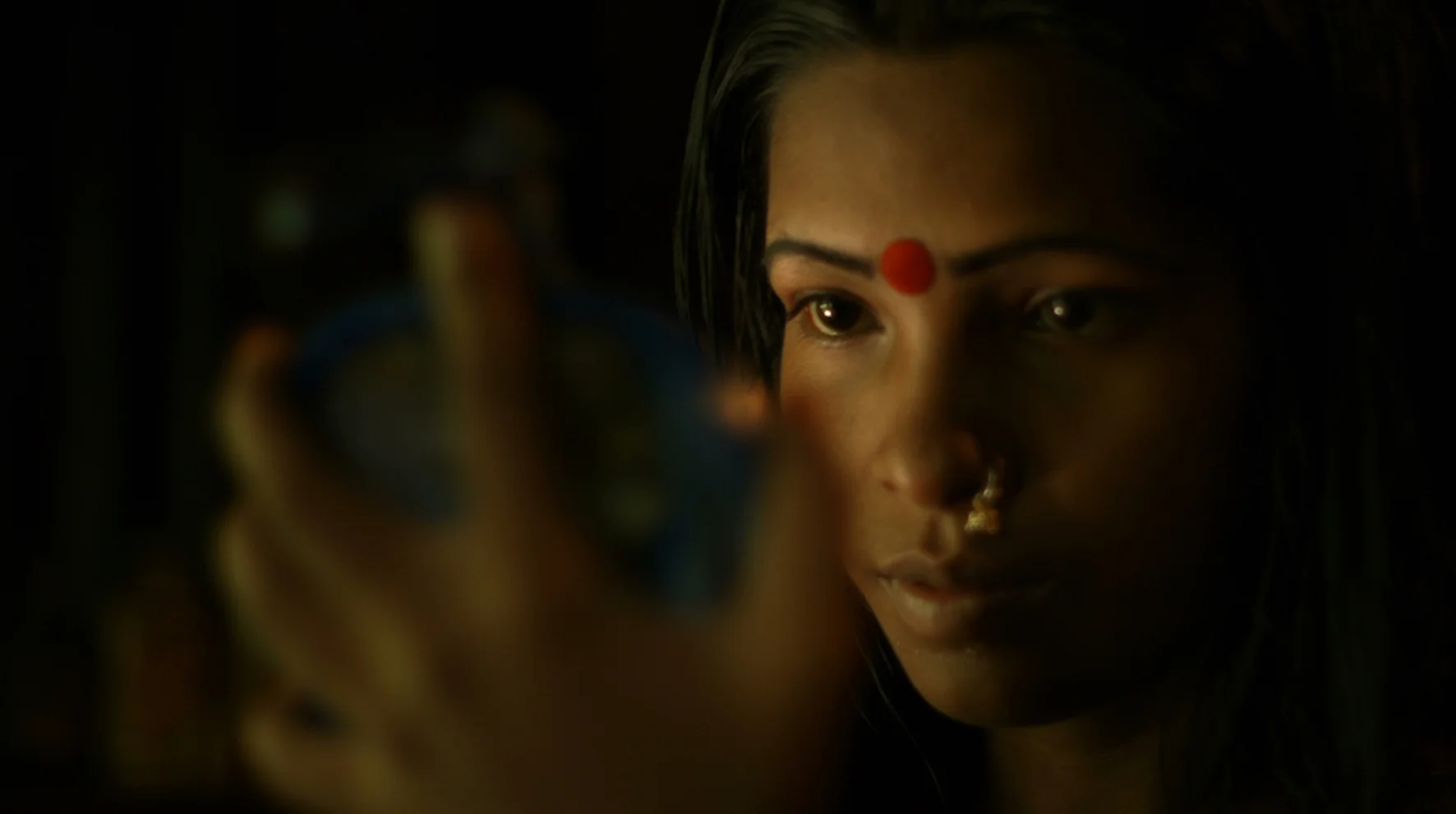
Moriom
How do personal and universal themes work in your film?
We talk about the personal story of Moriom, a young and beautiful woman who, after a trauma, became mentally ill and the difficulties of her parents who had to confront the disease but universally this short documentary deals with the relativity of truth and the subjectivity of memory.
How have the script and film evolved over the course of their development and production?
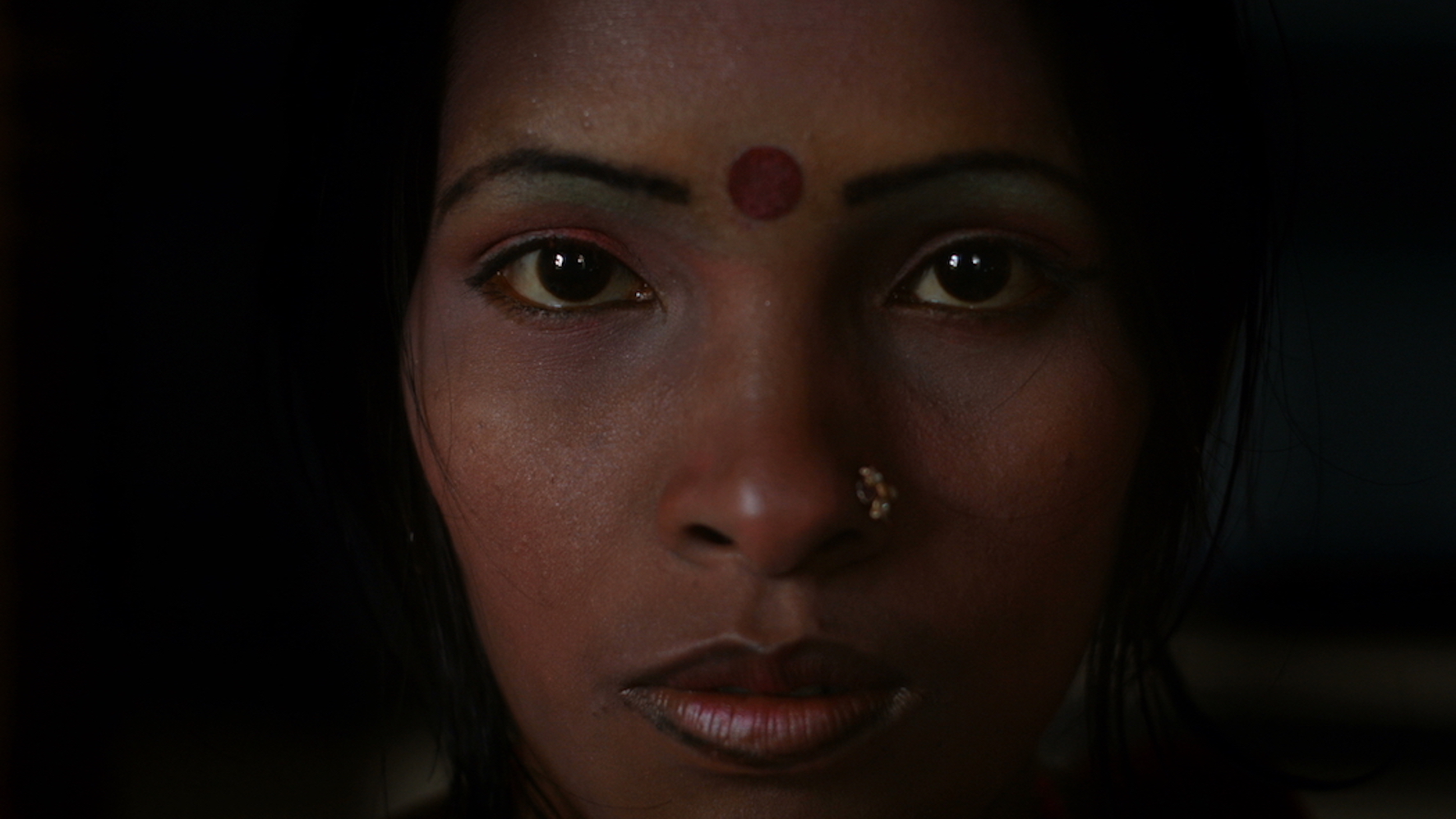
When we decided to shoot this documentary we were looking for the truth behind Moriom’s story. Since every character had a different perspective, we thought that close-up shots would have helped us understanding the truth. Faces became the geography of the soul.
However, after the shooting, we understood that there wasn’t only one truth and it was important to allow the audience to find their own.
So we started to work a lot with the editing. We edited the dialogues so that what seemed to be true quickly contradicted itself.
At the end of the documentary the audience understands that every perspective is relative and it is impossible to obtain an absolute truth.
What type of feedback have you received so far? Has the feedback surprised or challenged your point of view?
So far we had a lot of feedback but two responses affected me the most.
One of the first times that I was showing Moriom to an audience an old man stood up and asked me in a provoking tone whether the film had any kind of message. I was quite shocked because I couldn’t understand why this person would want to make me feel uncomfortable. At the same time I felt that this provocation gave me the strength to defend my film. I discovered how important it is to show your film but also to be able to defend it. It is just like a baby, whom you have spent so much time thinking about… It almost becomes a part of of you.
Another feedback that surprised me was from the director of a film festival. He told me that “Moriom” reminded him of Kurosawa’s “Rashomon”. I was extremely flattered by this statement. Indeed, that film was in the back of my mind while I was editing. I was always thinking about the relativity of truth and subjectivity of memory.
Moriom
What are you looking to achieve by having your film more visible on www.wearemovingstories.com?
By having “Moriom” on www.wearemovingstories.comI wish to raise people’s interest in the film and on the other side to let the people know more about the film, how it was made, the protagonists… It is a great opportunity to let the audience dive deeper in it.
Who do you need to come on board?
I’m always looking for journalists, film festivals and people that want to establish connections.
What type of impact and/or reception would you like this film to have?
We already had a very good impact /reception for “Moriom”. The film crossed the entire world but I would still like for “Moriom” to be screened more in Bangladesh, where the film was born, where the protagonists live and where this theme is very sensitive.
What’s a key question that will help spark a debate or begin a conversation about this film?
I think that there a two key aspects that the film deals with: the relativity of the truth and the social condition of the woman.
Would you like to add anything else?
I would like to let everybody know that Moriom has now recovered. She lives with her family and she is currently working again as a dressmaker at Mr Babu’s.
What are the key creatives developing or working on now?
Right now I’m working on the editing of“Digitalcurry” the feature length that I shot in Bangladesh when I first met Moriom.
I’m also organising the Flying Film Festival, a festival dedicated to short documentary that takes place entirely in the air between November and December 2017 on all long haul flights on Swiss Air Lines. It is a great opportunity for short-movies to be seen by a wider audience.
Moriom
_______________________________________________________________________________
We Are Moving Stories embraces new voices in drama, documentary, animation, TV, web series and music video. If you have just made a film - we'd love to hear from you. Or if you know a filmmaker - can you recommend us? More info: Carmela
_______________________________________________________________________________
Moriom
Moriom, a beautiful but strange young woman, says her parents must be punished for holding her prisoner and torturing her. They have a different story.
Length: 12 min.
Directors: Francesca Scalisi and Mark Olexa
Producer: Francesca Scalisi and Mark Olexa
About director and producer:
Francesca Scalisi (1982) is an Italian director and editor. Mark Olexa (1984) is a Swiss director and producer. They are based in Fribourg, Switzerland, where they run the film production company DOK MOBILE.
Looking for: journalists and film festivals
Funders: DOK MOBILE production
Where can I see it in the next month?
Slamdance Film Festival (USA)
SHORT SOUP International short Film Festival (Australia)
Minimalen Short Film Festival (Norway)
Diritti a Todi Human Rights Film Festival (Italy)
Landshuter Kurzfilm Festival (Germany)
Short waves Film Festival(Poland)