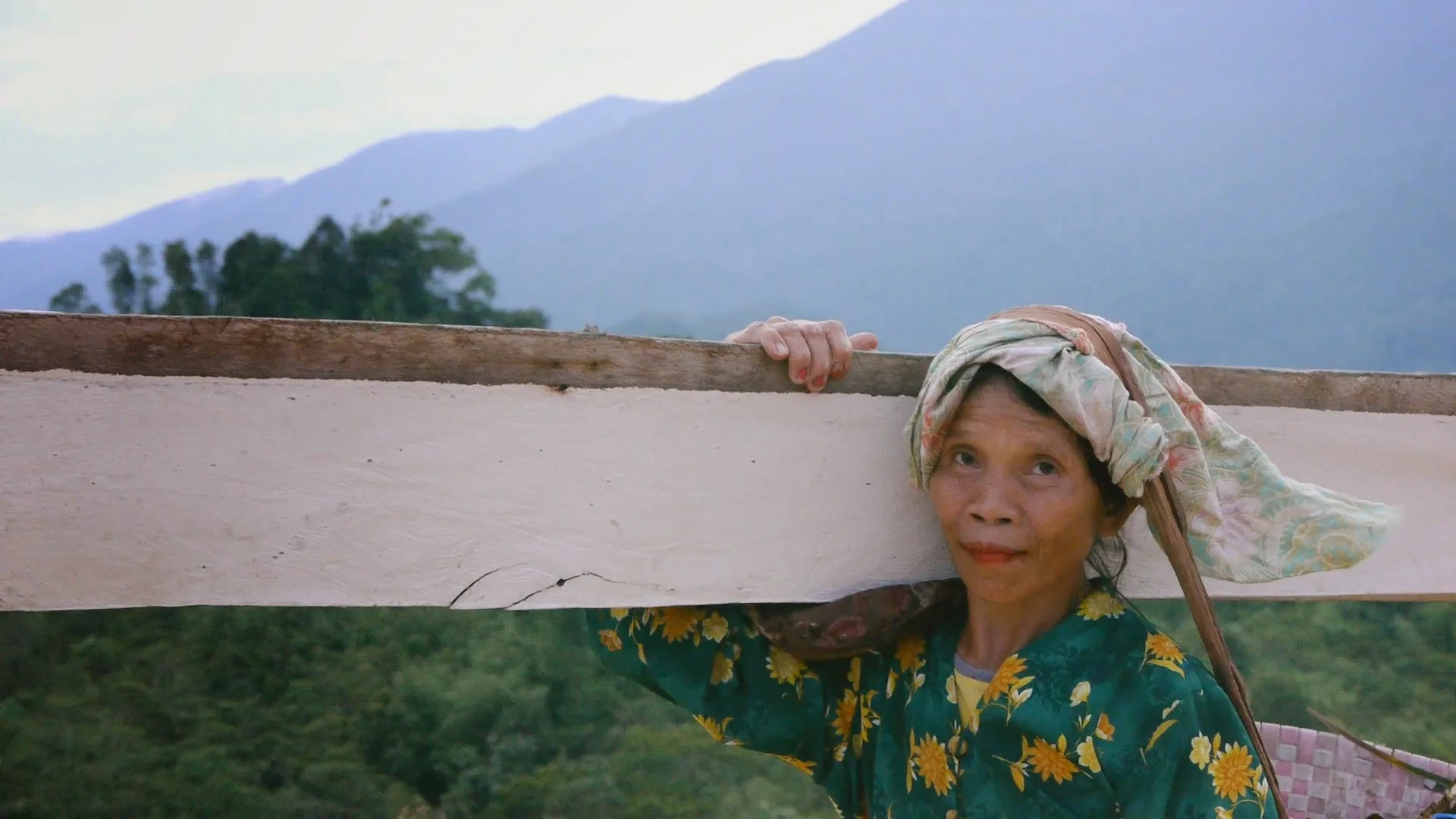
TRILOGY - HIGHER GROUND
Defending Native Customary Rights in Upper Bengoh. This documentary belongs to a trilogy of films on our platform by Andrew Garton dealing with resilient communities responding to grief, native customary rights and the right to be informed. These other films include Ocean in a Drop and Forged From Fire.
Interview with Director Andrew Garton
*
Why did you decide to make this trilogy of films? What themes and discontinuities are there between the three films?
With these films I have attempted to cultivate a space in which we may observe ourselves, where we see ourselves in each other, each an ocean in an ocean of drops. They are as much about informing an audience as they are an experience; stories of triumph against innumerable odds via intrigue and curiosity in such a way that we draw and align the viewer to our subject(s), a route to empathy. “Empathy,” the filmmaker Joshua Oppenheimer says, “is a practice. A practice that's worth practising.”
Higher Ground is the story of a group of the Bidayuh people in East Sarawak who refuse to be relocated so that the Bengoh Dam could be built. How did you find the Bidayuh people and their story?
I have been working with Sarawakians since 1991, helping to setup the first modem connected computers there for use by activists supporting indigenous communities’ native customary right to land. I first visited there in 1992 and began filming in 1999. By the mid 2000s I was so well trusted by my colleagues there, and to some extent known to some indigenous communities, that I was invited to make a film about what was taking place in the Bidayuh villages.
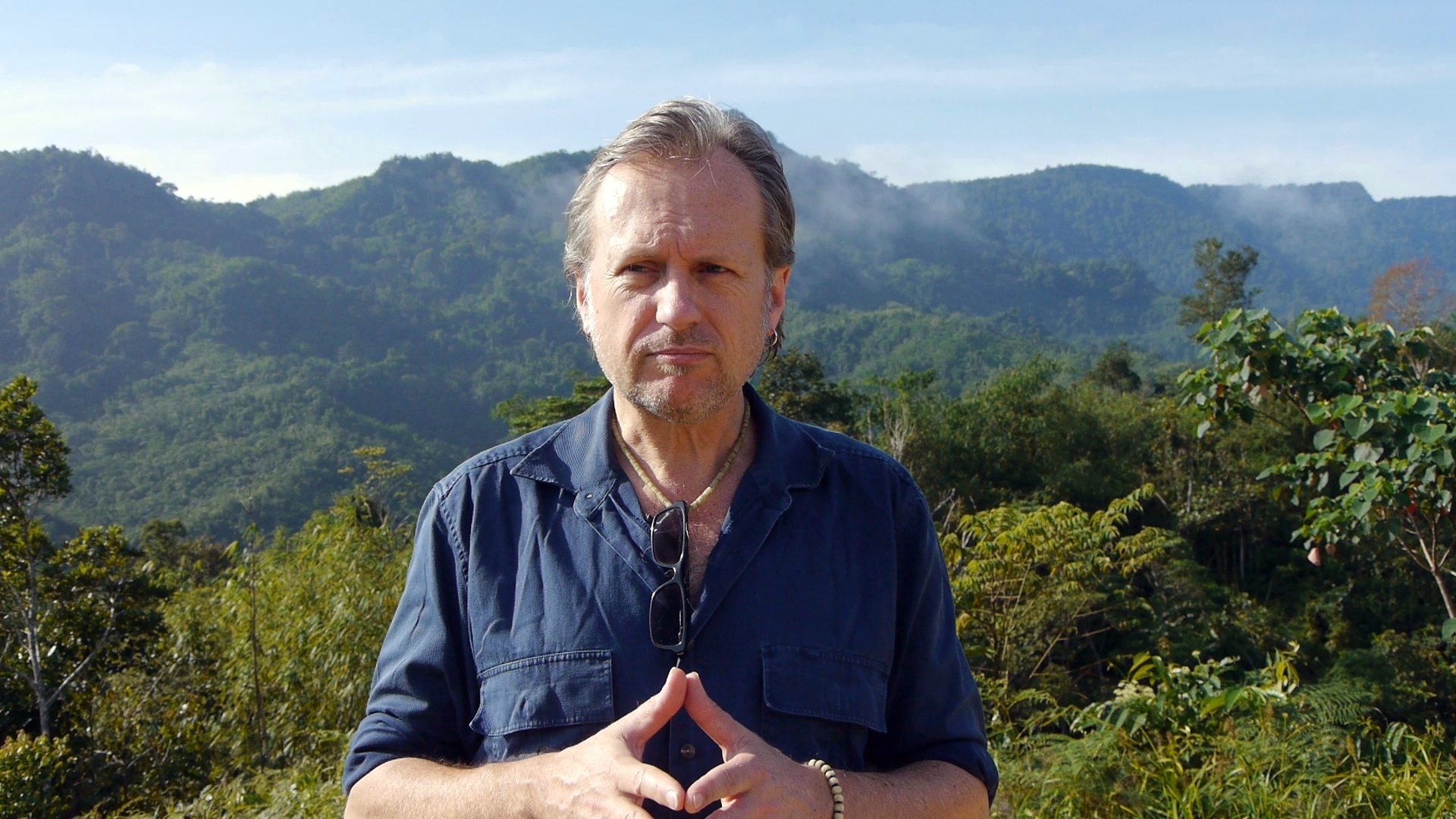
Director Andrew Garton on location, Upper Bengoh.
Native customary right to land issues in Sarawak are not, as they say there, the 'sexiest of issues' to make sense of, particularly when relationships between government and construction contractors are mired with corruption and political inbreeding that can be complex to unravel as it is dangerous to provoke.
Do they still live there or were they ultimately relocated?
Rather than be relocated they moved to higher ground, still on their native customary land, which they had fought their right to keep living on within Sarawak's courts. And won.
It’s a very specific but also a universal story. What is the role of the documentary filmmaker in these struggles?
To listen and record as many diverse voices within these communities, but in doing so one needs a distinct and accrued level of trust. Some stories ought not be told. For example, it is important to keep in mind that as a filmmaker, and a foreign one at that, you can pretty much come and go, but these people remain and often deal with the consequences of poorly told stories and those that may threaten or harm them. Their oppressors may see these films. Reprisals are known to be violent, so one carries considerable responsibility.
What type of feedback have you received so far about the film?
This film has yet to be broadly circulated, but from those that have seen it the response has been nothing short of 'eye-opening' as people are prone to say. You see many West Malaysians are yet to fully know what transpires in the East of their country. This and many of my other films made in Sarawak, have been for Malaysian audiences.
What are you looking to achieve by having your film more visible on this platform?
There are around 40 indigenous peoples on the island of Borneo. Many of them in Sarawak and all of them under pressure to either leave their customary lands or participate in destructive land clearing practices that both limits their own livelihood and contributes to catastrophic climactic consequences for us all.
As such I see We Are Moving Stories as a means to not only inform audiences of the precious livelihoods at stake in Bornea, but it also provides distributors and buyers with another range of stories told by what ever means possible, from low to no budget films, that ought have as much agency as any other format they may seek.
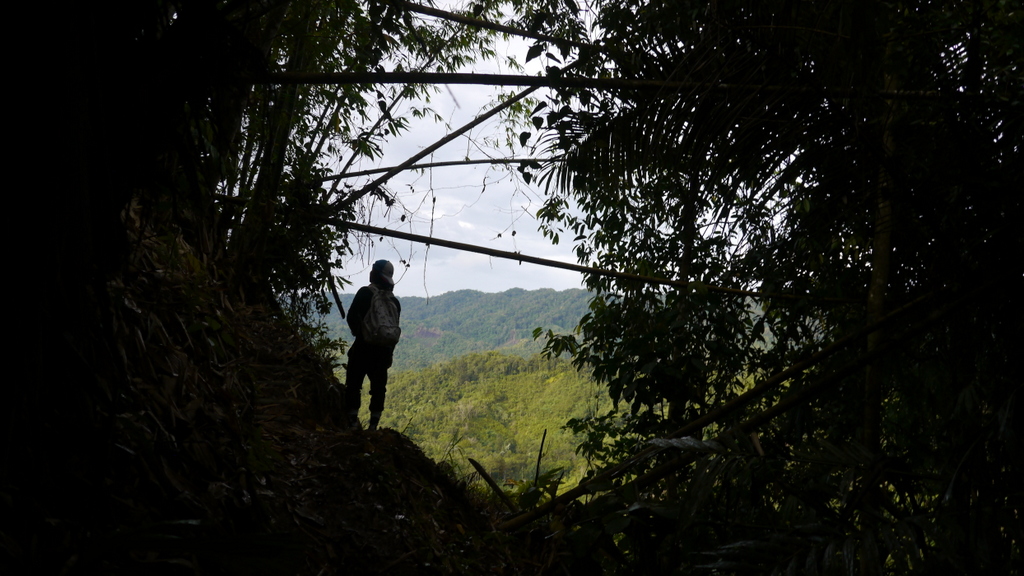
Upper Bengoh. Camera: Andrew Garton
Who do you need to come on board (producers, sales agents, buyers, distributors, film festival directors, journalists) to amplify this film’s message and audience?
Particularly interested in media interest in these stories, and this one which has a positive outcome, that a community stood up to their government and won their right to live on their own customary land. I'm also interested in distributors unafraid of screening films made with any resources available, sometimes barely any at all. Some of my earlier films in Sarawak were shot on borrowed handycams, flip-cameras and in one location a webcam.
What type of impact has this film had?
As this has yet to have any form of circulation, it is hard for me to say.
Lastly, what’s a key question that will help spark a debate about this issue and film?
Is all development inherently corrupt? In East Malaysia it would appear so and that being the case why does Australia recognise the Malaysian government as an exemplary democracy in Southeast Asia? (Rudd, 2008)
*
Interview April 2016
We Are Moving Stories embraces new voices in drama, documentary, animation, TV, web series and music video. If you have just made a film - we'd love to hear from you. Or if you know a filmmaker - can you recommend us? More info: Carmela
*
HIGHER GROUND
Length: 19:42
Director: Andrew Garton
Producer: Andrew Garton
Looking for (ie buyer, distributor, sales agent, producer, media interest): Media interest
Funders: SACCESS, Association for Progressive Communications, Andrew Garton
Made in association with: Sarawak Access (SACCESS), Association for Progressive Communications
Website: http://agarton.org/videos/higher-ground/