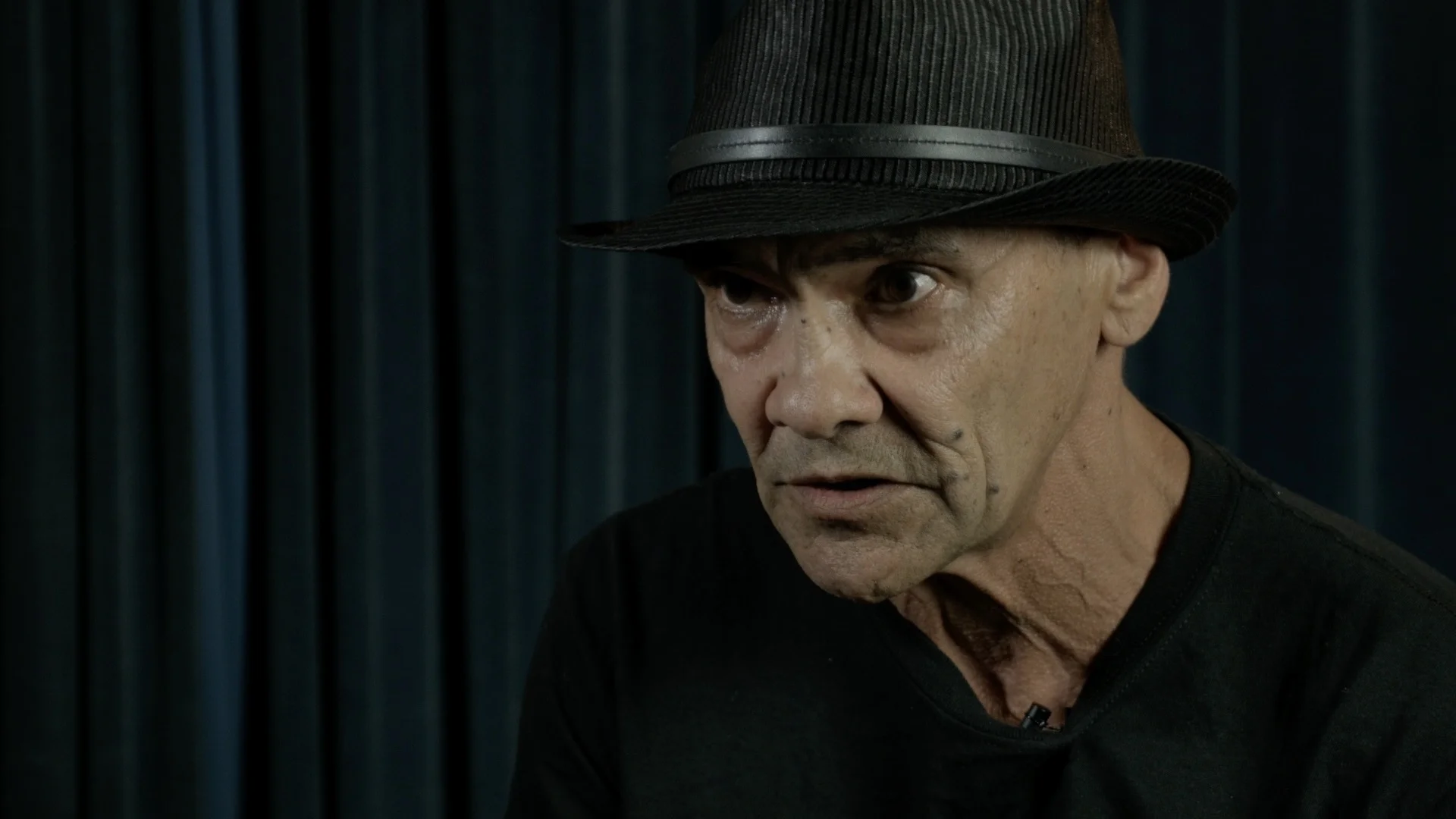
Robbie Thorpe
Robbie Thorpe - First teaser - April 2016
Australian Aboriginal political activist Robbie Thorpe stands as part of a long line of Indigenous resistance to invasion. As the Victorian Government begins a discussion on a Treaty, the story of Robbie's relentless pursuit of justice is vital.
Interview with Director/Producer Anthony Kelly
Robbie Thorpe - Second teaser - January 2017
I believe that this is the first film about Australian Aboriginal activist Robbie Thorpe. Why do you think it’s taken so long?
Robbie has been ‘on film’ for most of his life – his speeches and interviews have been captured by hundreds of news and activist cameras over many years and he has starred in everything from hip-hop video clips to dramas – but I don’t think anyone has set about telling his story. Indigenous activists, particularly those calling for sovereignty and stridently speaking about genocide tend to be marginalised and subsequently, their stories are as well.
You write: ‘Aboriginal political activist Robbie Thorpe stands as part of a long line of Indigenous resistance to invasion.’ Why do you think we’ve heard so little about this history?
My understanding is that the history of Indigenous resistance to the invasion, occupation and colonisation of their country was hidden almost immediately in order to facilitate colonisation. Here in Victoria, Governor La Trobe deliberately hid information about massacres and resistance in his reports to London. Massacres were covered up all over the country and a palatable mythology grew up around colonisation that satisfied white consciences but little else.
This whitewashed view of Australian history was hardly challenged until the 1960s really, but something I realised was that resistance to colonisation never ceased. Whether it be armed resistance, cultural resistance, survival or political resistance, it is possible to trace back through each generation.
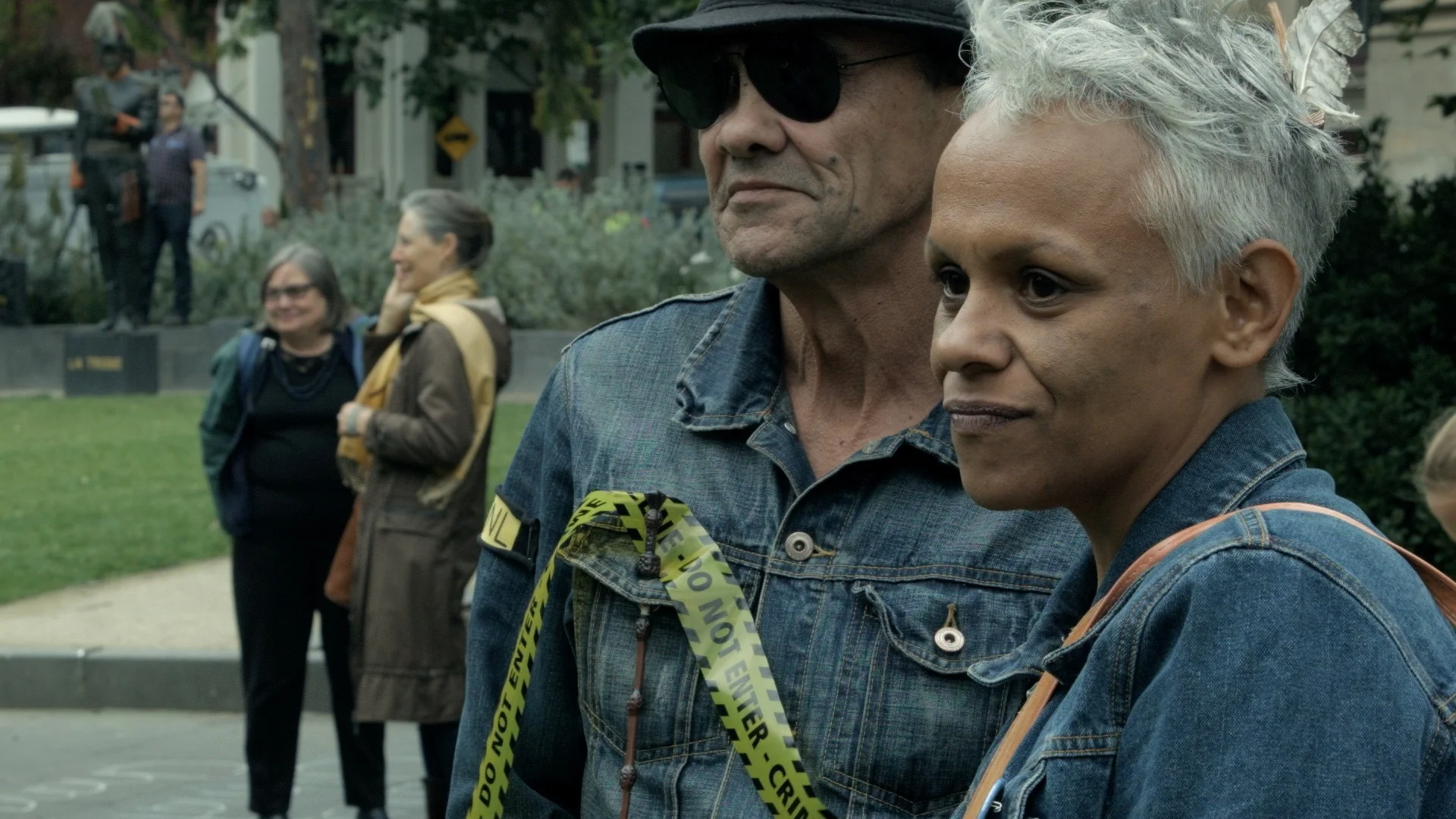
Robbie Thorpe and Viv Malo
What events have you and are you planning to film? Who else will be in the film?
I plan to interview people who were influential in Robbie’s life, who he looked up to, as well as the younger generation of indigenous activists who have been influenced by Robbie. Robbie’s family are extraordinary and a source of support for him – and each of them deserves a longer documentary than I could muster. I’ll be interviewing Dr Gary Foley and WAR (Warriors of the Aboriginal Resistance) co-founder Meriki Onus.
A lot will be archival. I have hours of footage already of his 1997 High Court Genocide case, his time at the Aboriginal Tent Embassy, the highly controversial Camp Sovereignty action at the Stolenwealth Games in 2006 and his various other cultural and political interventions.
The political situation is becoming fluid and now the Victorian government is beginning discussion on a Treaty. What role will Robbie Thorpe play in this process?
This is something I hope to explore in the film. Robbie has been a relentless and very independent voice for Treaty over decades and was a very early and prominent critic of the Abbott government’s ‘Recognise’ process. That critique and the call for Treaty is now widely accepted within Victoria’s First Nations. Robbie was one of the people who spoke out strongly at an historic meeting with First Nations representatives in early February, convened by the State Government, which firmly rejected Constitutional recognition in favour of self-determination and a treaty.
Robbie will undoubtedly play a role. What it is and how the Victorian Treaty process plays out we will have to see.
What type of feedback have you received so far about Robbie Thorpe, the film?
The response to the initial crowd funder showed how much support there was for this project straight away. It went over its target within days. Thankfully, he, his family and key people have been supportive. Everyone I speak to has a story to share about Robbie and really want his story to be told. I’ve got a strong sense of how much respect he has garnered over the years.
Has the feedback surprised or challenged your point of view?
The research so far has focused upon the post Tent Embassy period in Australian Indigenous history, on Fitzroy and inner Melbourne in the 70s and 80s and into the 90s when I met Robbie. The challenge has been how many important stories there are in this time period – not to mention the exciting rise of Warriors of the Aboriginal Resistance (WAR) which has organised some of the largest Indigenous protests in Melbourne since the 80s, and how to tell Robbie’s story within a wider and complex political history of resistance.
What are you looking to achieve by having your film more visible on this platform?
Appreciative documentary and film lovers and producers.
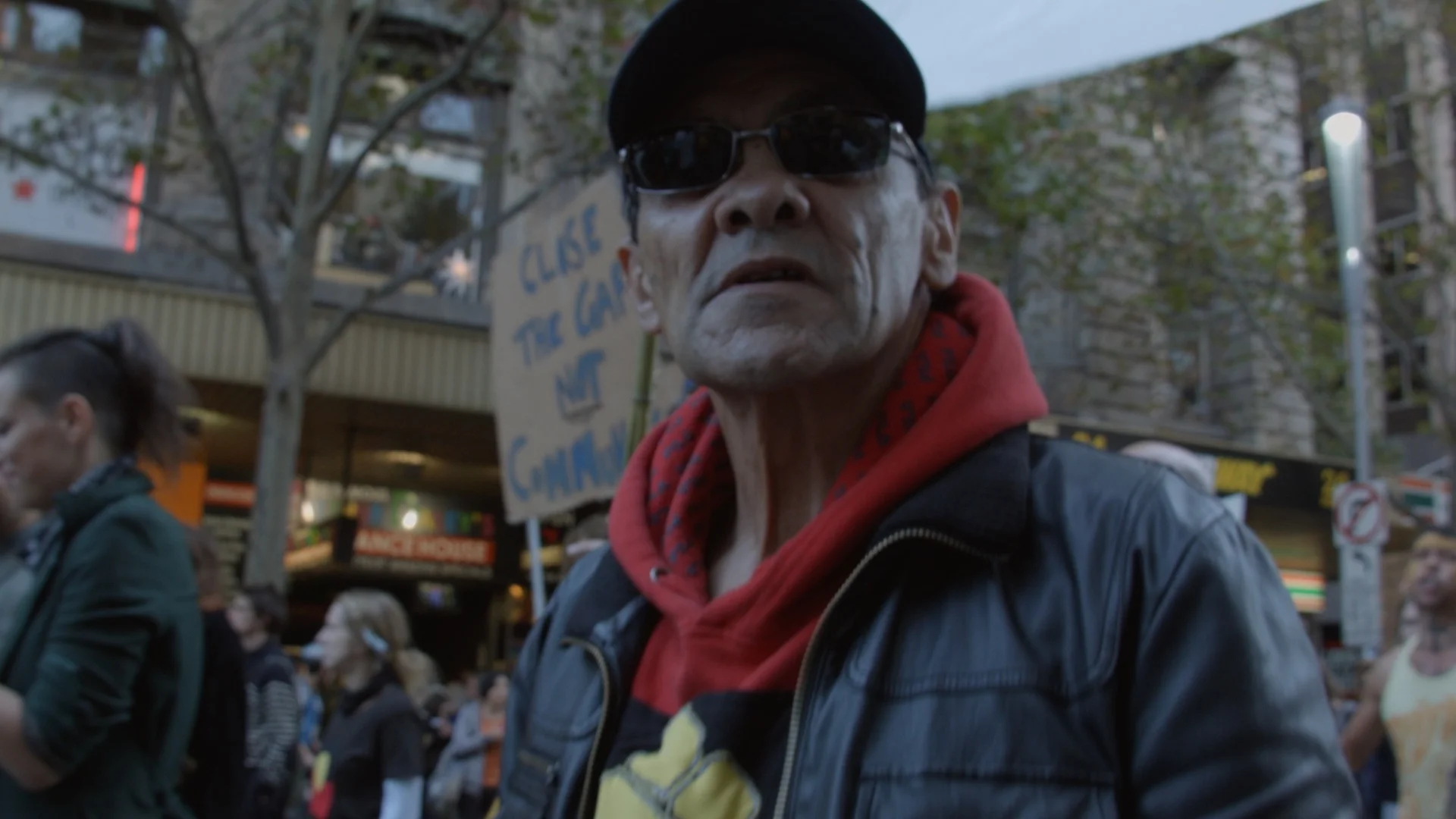
Robbie Thorpe
Who do you need to come on board (producers, sales agents, buyers, distributors, film festival directors, journalists) to amplify this film’s message and audience?
Currently this is an independent micro-budget documentary due for completion in late 2016 early 2017. I would be interested in all forms of production and distribution assistance.
What type of impact would you like this film to have?
At a recent talk in Melbourne Rachael Maza (Actress, Artistic Director, Ilbijerri Theatre Company), told how we need more stories of Indigenous heroes, the ‘everyday heroes’. These are stories that tell of the extraordinary capacity of Indigenous activists to achieve so much under such extraordinarily difficult circumstances. I would like to think that this will be one of those stories.
I also have a strong sense that Indigenous audiences, younger Koorie activists, and non-indigenous audiences will each take away something different. In his public speeches Robbie tends to challenge and confront different audiences within the one speech. I have the feeling this film may end up being similar.
This is not designed as a campaign documentary but well-produced documentaries can boost grassroots campaign efforts through engaging people deeply and personally. Issues covered in this doco including invasion, occupation, treaty and sovereignty will remain hot topics as the national debate around the 'Recognise' constitutional change proposal heats up over 2016 and 2017 and as Victoria’s Treaty talks continue. I hope people will engage with the film through interest in these topics and it may well end up influencing some.
Films like this also form important activist and people's history often neglected and all the more vital to capture.
Lastly, what’s a key question that will help spark a debate about this issue and film?
Robbie is trying to get all of us to confront some pretty basic and hard to deny truths around genocide and treaty. What happens if we do?
Interview: April 2016
_______________________________________________________________________________
We Are Moving Stories embraces new voices in drama, documentary, animation, TV, web series and music video. If you have just made a film - we'd love to hear from you. Or if you know a filmmaker - can you recommend us? More info: Carmela
_______________________________________________________________________________
*
Robbie Thorpe
Australian Aboriginal political activist Robbie Thorpe stands as part of a long line of Indigenous resistance to invasion. As the Victorian Government begins a discussion on a Treaty, the story of Robbie's relentless pursuit of justice is vital.
Length: 25-30 minutes
Director: Anthony Kelly
Producer: Anthony Kelly
Looking for buyer, distributor, sales agent, producer, media interest
Funders: Crowd-funded, self funded