We are moving stories

  • 3500+ films
  • Alphabetical
  • Black Lives Matter (1)
  • Black Lives Matter (2)
  • Black Women's Voices (1)
  • Black Women's Voices (2)
  • LGBTQIA+
  • Lesbian (1)
  • Lesbian (2)
  • Gay (1)
  • Gay (2)
  • Queer (1)
  • Queer (2)
  • Queer (3)
  • Bisexual
  • Intersex & Asexual
  • Love Sex
  • Trans (1)
  • Trans (2)
  • LatinX (1)
  • LatinX (2)
  • LatinX (3)
  • FilipinX
  • Asian American
  • First Nations
  • Kids
  • Mothers
  • Daughters
  • Fathers
  • Teens
  • Coming of Age
  • Gen Z
  • Gen Z / Millennials
  • Millennials
  • Romance
  • RomCom
  • Comedy
  • Thriller
  • Action
  • Western
  • Zombies!
  • Horror (1)
  • Horror (2)
  • Other Worlds
  • Supernatural
  • Fantasy
  • Scifi
  • Technology
  • VR
  • Social Media
  • Women & Animation (1)
  • Women & Animation (2)
  • Artists
  • Musicians
  • Dancers
  • Fashion
  • Mental Health (1)
  • Mental Health (2)
  • Disability (1)
  • Disability (2)
  • COVID-19
  • Migration
  • Refugees Welcome
  • Holocaust
  • Democracy
  • Gun Violence
  • Climate Crisis Solutions
  • Food
  • Cities
  • Home/less
  • Faith and Spirituality
  • #metoo
  • Rape Culture
  • Right to Choose
  • Award-winning
  • Sundance
  • Hollywood
  • Actors
  • Canada
  • Quebec
  • Pasifika
  • French Cinema
  • New Italian Cinema
  • Germany
  • Russia
  • UK
  • Australia
  • New Zealand
  • China
  • South Asia
  • India
  • MENA - Middle East/North Africa
  • Surfing
  • Sport
  • Adventure
  • Drugs
  • Addiction
  • Hip Hop
  • Subcultures
  • Cats and Dogs
  • Animals
  • Environmental
  • AFI Conservatory
  • Filmmakers to Watch (1)
  • Filmmakers to watch (2)
  • Members FAQ
  • why now
  • New Projects
  • Film Finder
  • Database
  • TOS

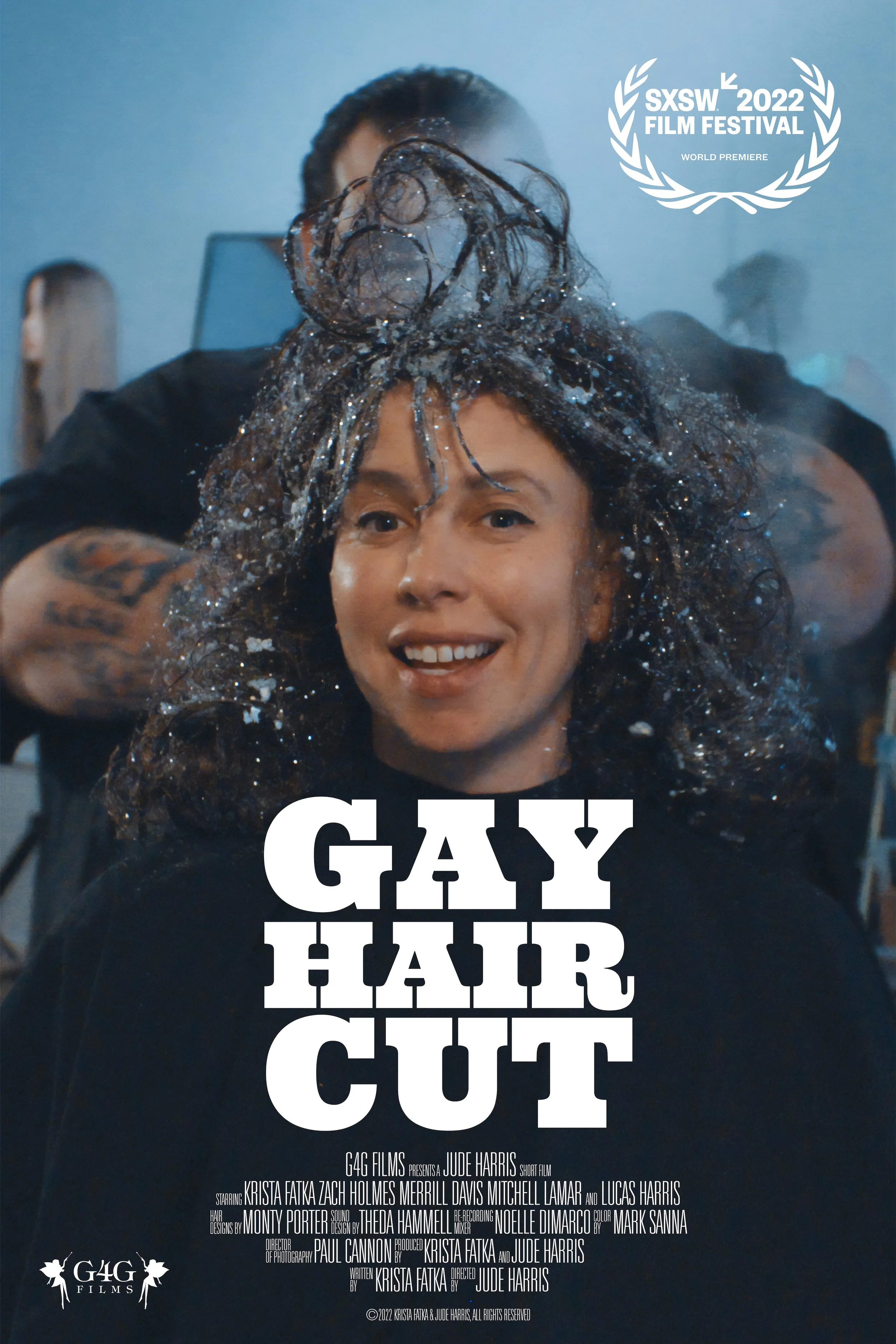
Focus on SXSW - Gay Haircut

March 22, 2022 by Carmela Baranowska

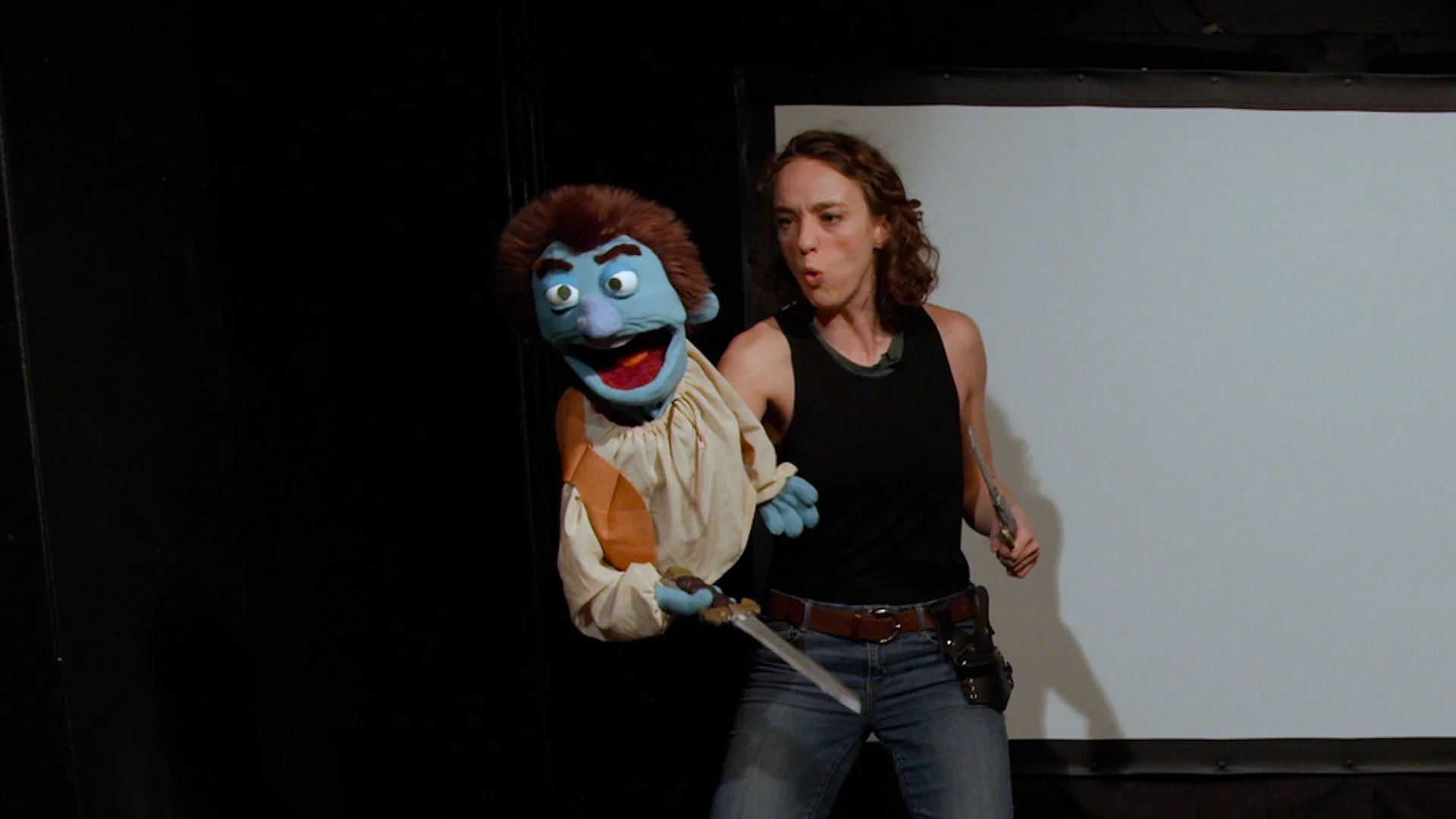
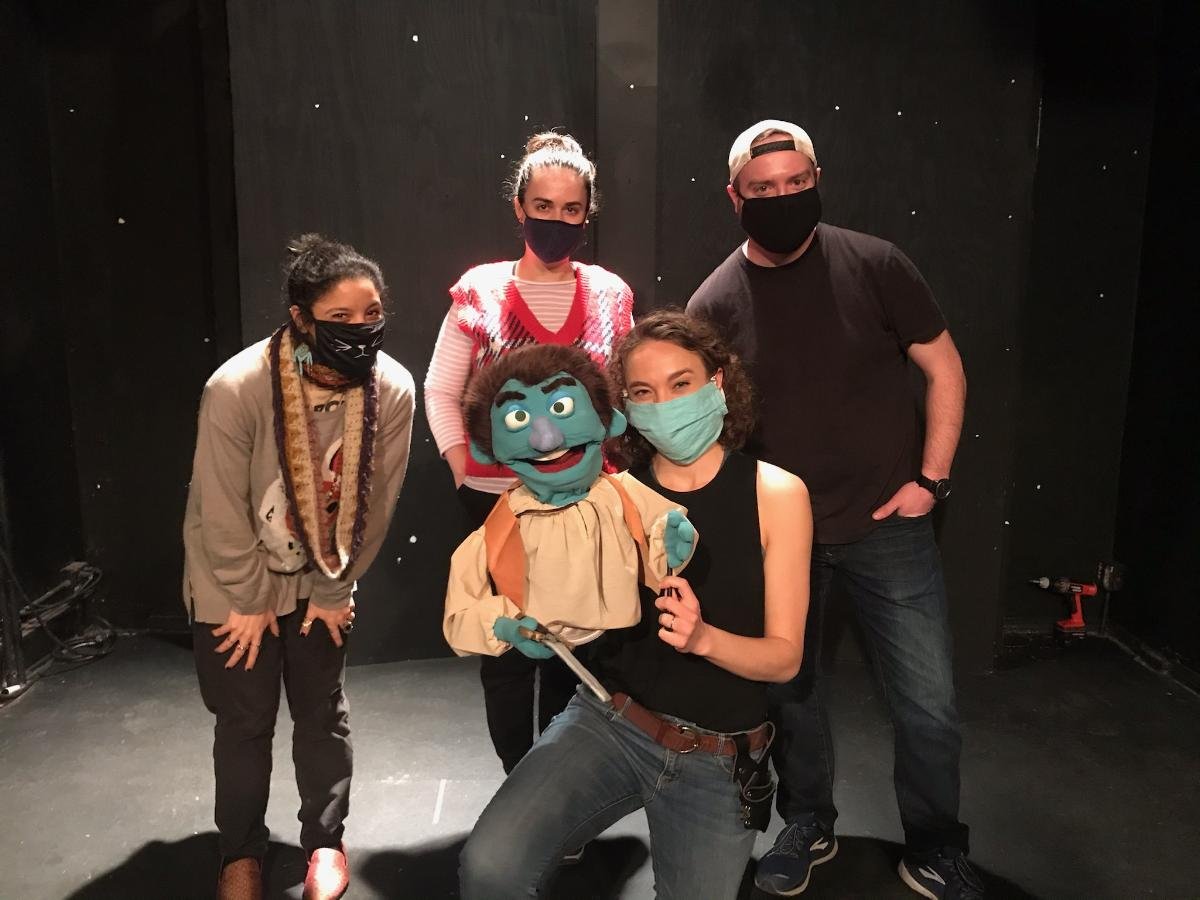
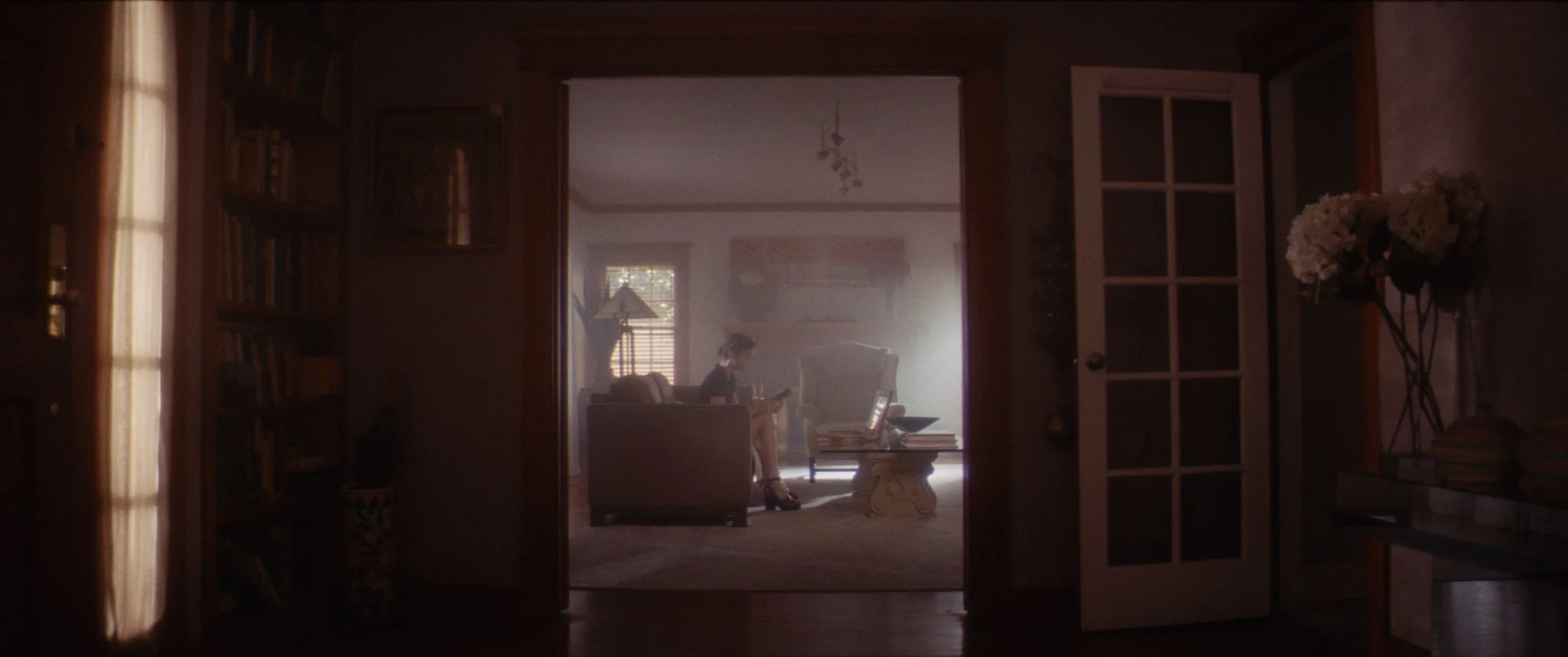
For a stand-up comic, a drastic life change can mean losing one’s entire act. Bisexual comedian Krista has decided her relationship with a trans woman is worth coming out over - but will she commit to an entire rebrand with one gay haircut?

Interview with Director Jude Harris

Watch Gay Haircut here:


Congratulations! Why did you make your film?

Thank you! So many reasons: Because my very funny partner wrote it and I was excited to direct her work. Because there was a little window when it seemed safe to make something during Covid, and I missed collaborating and making movies. And, because in such heavy times I wanted to make something fun and silly and queer.

Imagine I’m a member of the audience. Why should I watch this film?

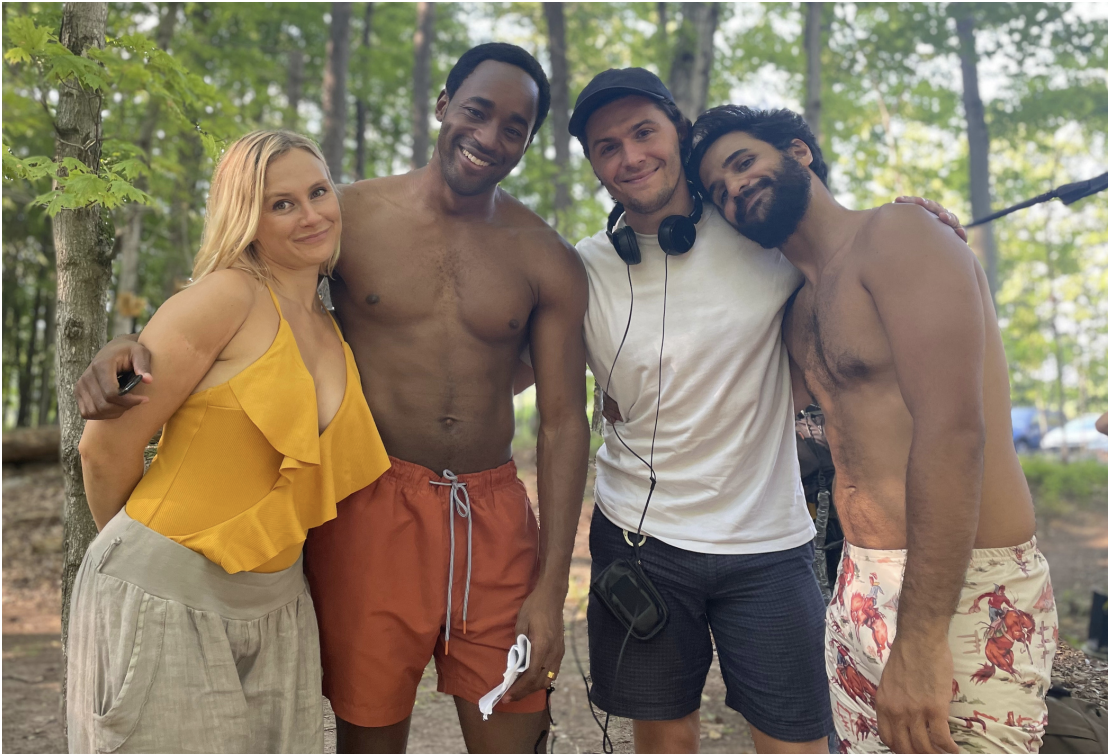
Gay Haircut is a very silly comedy about a gay haircut that's for anyone who has ever taken a surprising step outside of their comfort zone. It stars three funny stand-up comics and one funny stuntman from Jackass Forever.

How do personal and universal themes work in your film?

Gay Haircut grew out of Krista's autobiographical story. She's really a stand-up comic, and she really did spend years making fun of men she was in relationships with. Her new jokes about being in a relationship with me, a trans woman, really did inspire her to reconnect with the more queer-coded style she had in her 20s. I think everyone understands that weird, thrilling awkwardness of trying on a new look and wondering if it fits. You know, when part of you thinks something looks so cool, and feels so "you" - and then another part of you wonders if it's really "you" and can you even pull it off? It's such a funny little identity crisis.
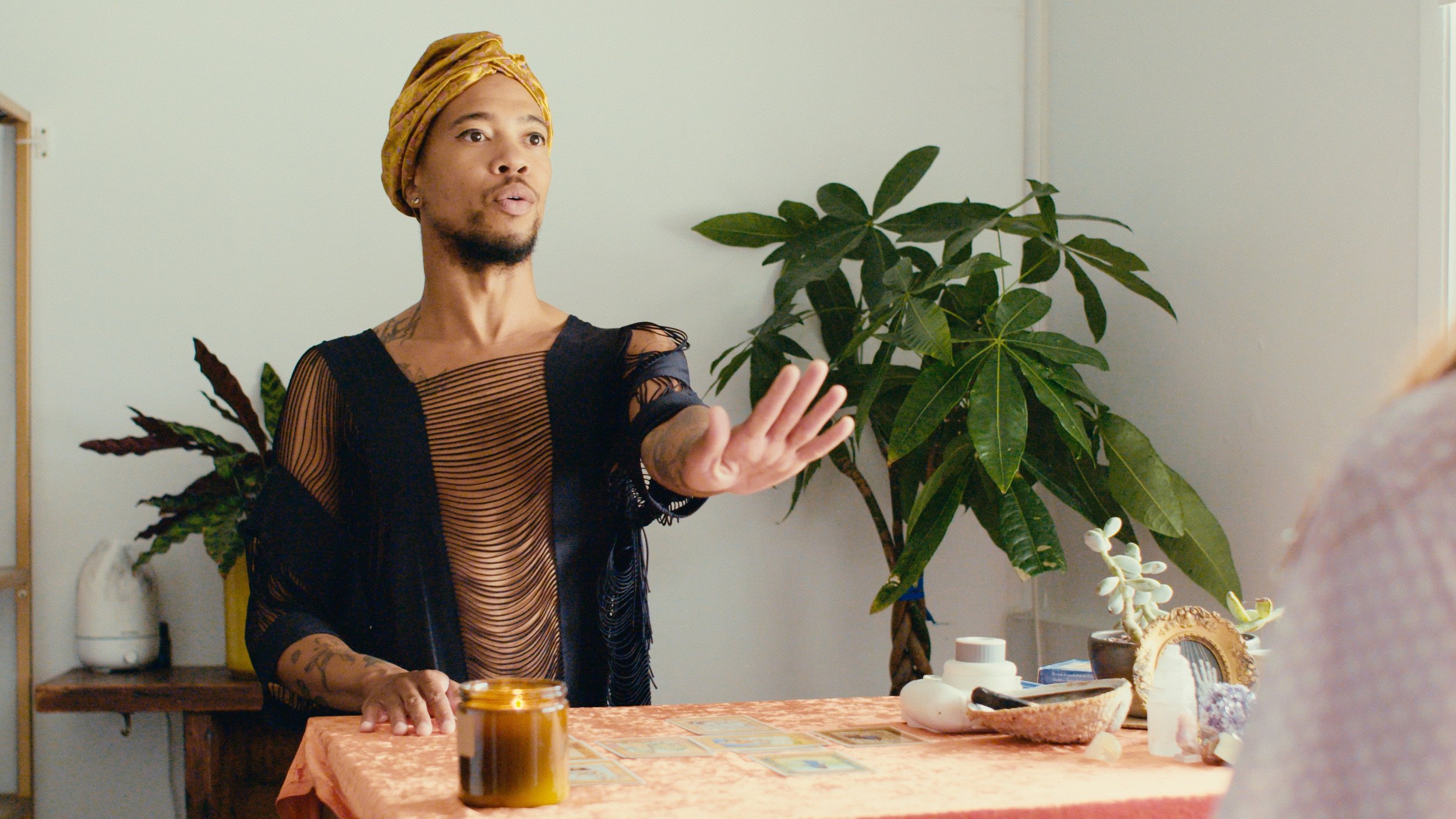
Gay Haircut

How have the script and film evolved over the course of their development?

We very much shot the script Krista wrote, and Krista has the enviable skill of writing very well, very quickly. The biggest evolution were all the weird bits and gags all the performers brought to their characters. Everyone in the film has spent a lot of time being funny, so they all came with fun ideas and we sort of "yes and'ed" everything in. The crew was tiny, but brilliant and everyone in every role also added funny little details (and made it look and sound more expensive than it was), so it was a big, collaborative party.

What type of feedback have you received so far?

The consistent feedback, positive and negative, has been that the film is "silly." We've gotten a few festival rejections based on this feedback. We were also incredibly lucky to have our world premiere at SXSW (who said the film was silly). So, we tried to make s silly film and it seems that we succeeded.

Has the feedback surprised or challenged your point of view?

I think I was surprised that "silly" perceived as negative by online screeners, since the film plays so well in a program of more serious films. I just hope they saw the heart, too - since there's an optimistic little fable about being yourself among all the silliness. It's a fun challenge. For my next film, I'd love to try to make something that keeps the spirit of this film that feels more grounded and pleases the anti-silly crowd.

What are you looking to achieve by having your film more visible on www.wearemovingstories.com?

I would love to connect with the festival programmers and audiences looking for this kind of comedy, especially LGBTQ+ festivals - because of the subject matter and the team that made it, but also all kinds of people looking for 7 minutes of laughter and escape.
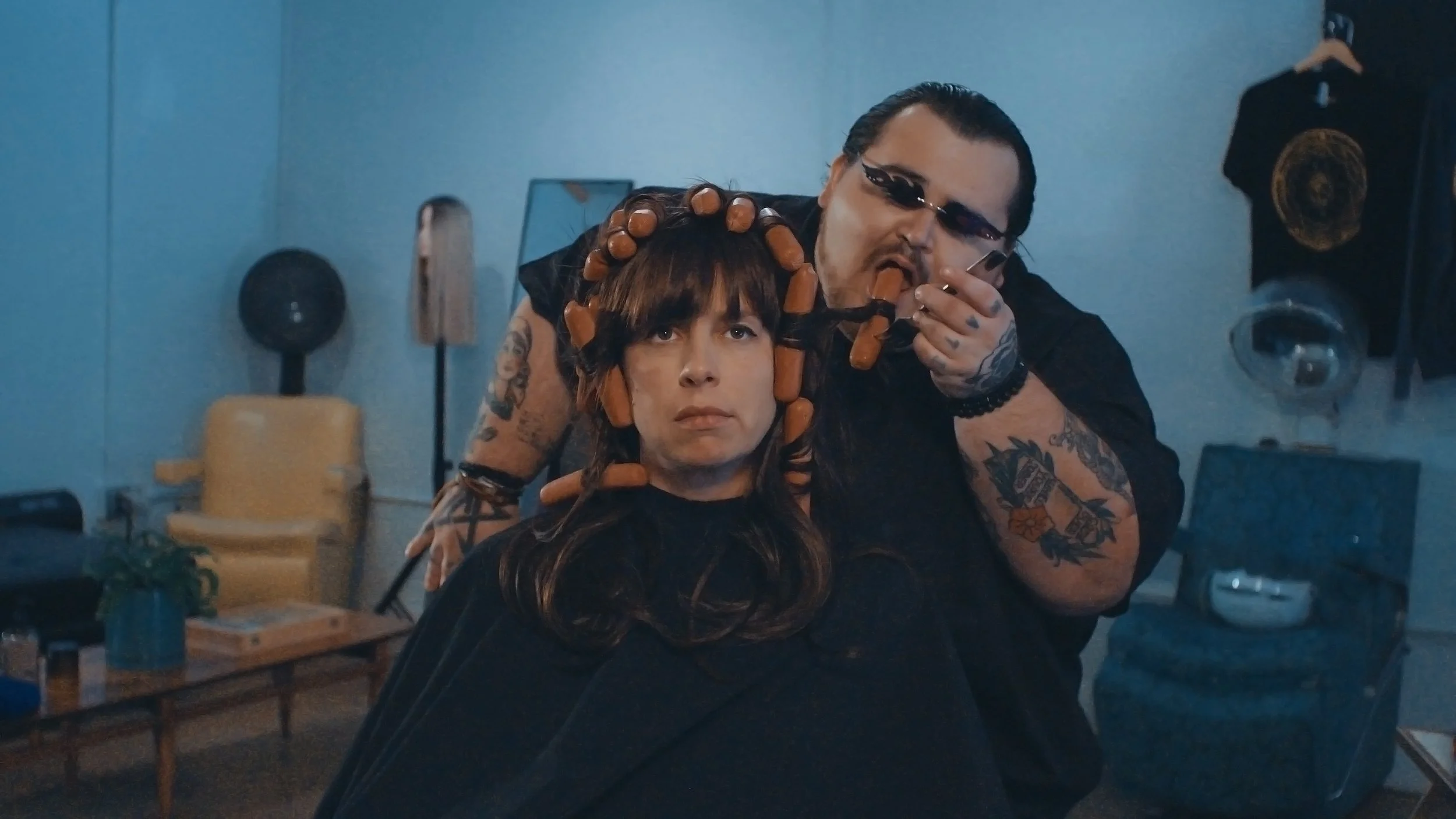
Gay Haircut

Who do you need to come on board (producers, sales agents, buyers, distributors, film festival directors, journalists) to amplify this film’s message?

Film festival programmers and online journalists who can get Gay Haircut in front of as many people as possible.

What type of impact and/or reception would you like this film to have?

My last short, I'm an Expert Haggler at Garage Sales, was based on a brilliant story in McSweeney's by Jory John. The film ended up being watched by McSweeney's fans and, weirdly, a lot of people who spend time in the Reddit garage sale community. If we could reach anyone who's ever had, or thought about getting, a gay haircut - and make them laugh, that would be the dream.

What’s a key question that will help spark a debate or begin a conversation about this film?

What's the boldest statement you ever made with your hair, and what did that feel like?

Would you like to add anything else?

I just want to thank you for supporting short films!
What other projects are the key creatives developing or working on now?

Krista is pitching a TV pilot and working on a feature film script. I'm excitedly waiting for her to write another short script and we'll shoot it right away.


Interview: March 2022


We Are Moving Stories embraces new voices in drama, documentary, animation, TV, web series, music video, women's films, LGBTQIA+, POC, First Nations, scifi, supernatural, horror, world cinema. If you have just made a film - we'd love to hear from you. Or if you know a filmmaker - can you recommend us? More info: Carmela


Gay Haircut

Length:

7:30

Writer

KRISTA FATKA is a seasoned performer who brings a breadth of experience and some questionable life choices to her work on stage and screen. As a stand up comic, Krista is sassy but accessible. In the semi-autobiographical short Gay Haircut, she brings vulnerability and silliness to her confessional style of storytelling which often features whomever she happens to be dating.

Director

JUDE HARRIS is a trans-femme filmmaker living and working in Los Angeles. She has a BFA in Film, Animation and Video from the Rhode Island School of Design and an MFA in Directing from UCLA. Since receiving her MFA, she has worked as a producer of films and series including Hulu’s 69: The Saga of Danny Hernadez, Starz’ Half the Picture, MTV’s anniversary reboot of the animated series Liquid TV, and the Craig Brewer/Lynn Shelton MTV series $5 Cover.

Throughout her career she’s also directed her own work, including music videos for Adult Swim and Innovative Leisure, the NYTVF official selection animated pilot B.F.E., the short film I’m an Expert Haggler at Garage Sales, written by NY Times Bestselling Author Jory John and starring Corporate’s Matt Ingebretson, and the 2022 SXSW short comedy Gay Haircut.

Producer

Partners in love and filmmaking, Krista Fatka & Jude Harris make comedy together as "G4G Films" (they are both Geminis).

Key cast:

Krista Fatka, Zach Holmes, Merrill Davis, Mitchell Lamar

Looking for:

journalists, film festival directors

Twitter:

http://twitter.com/judehopeharris

Instagram:

http://instagram.com/judehopeharris

Hashtags used:

#gayhaircut

More info:
https://www.judehopeharris.com/gay-haircut


March 22, 2022 /Carmela Baranowska
Comment

Focus on SXSW - Homesick

March 19, 2022 by Carmela Baranowska

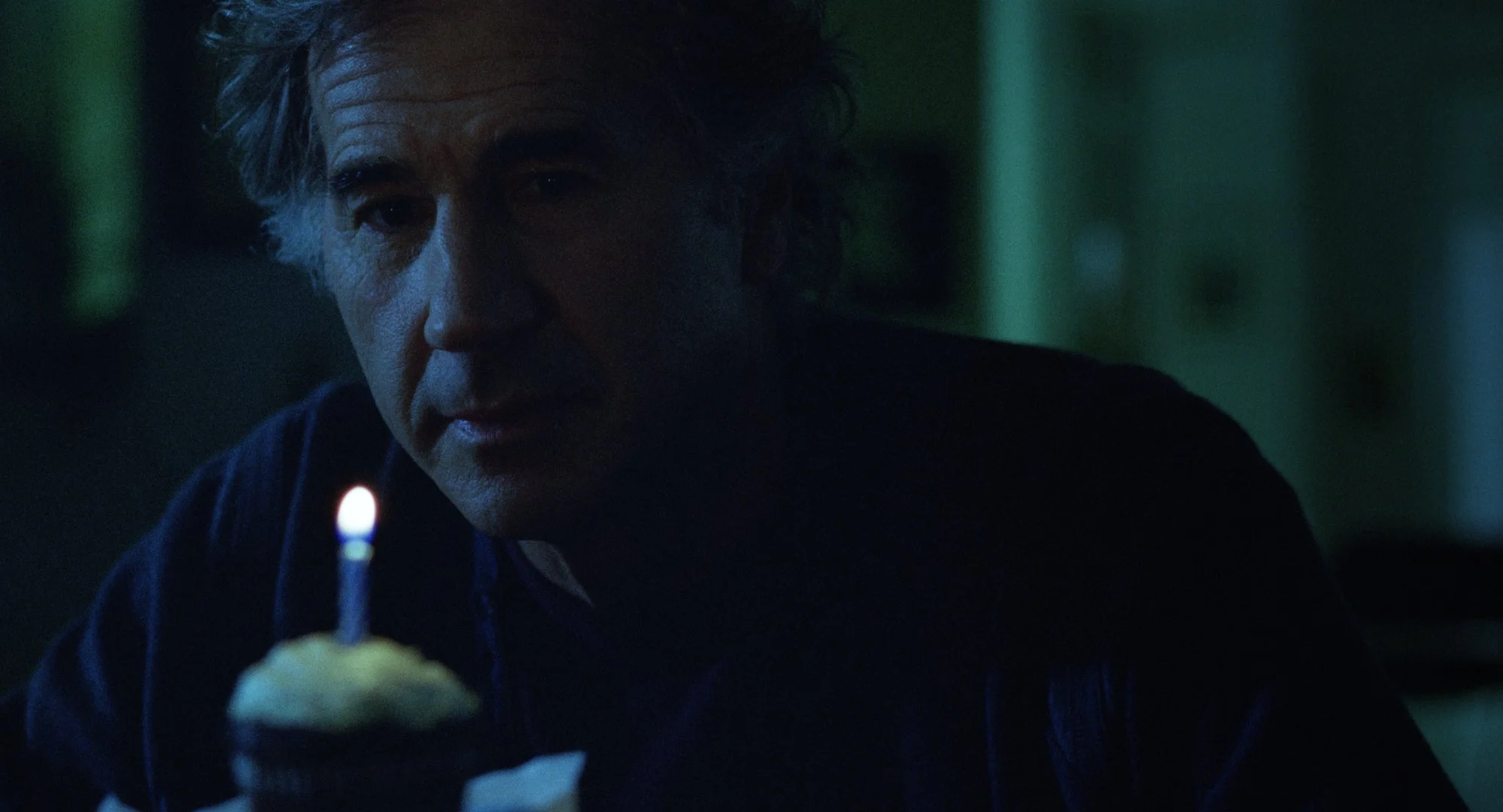
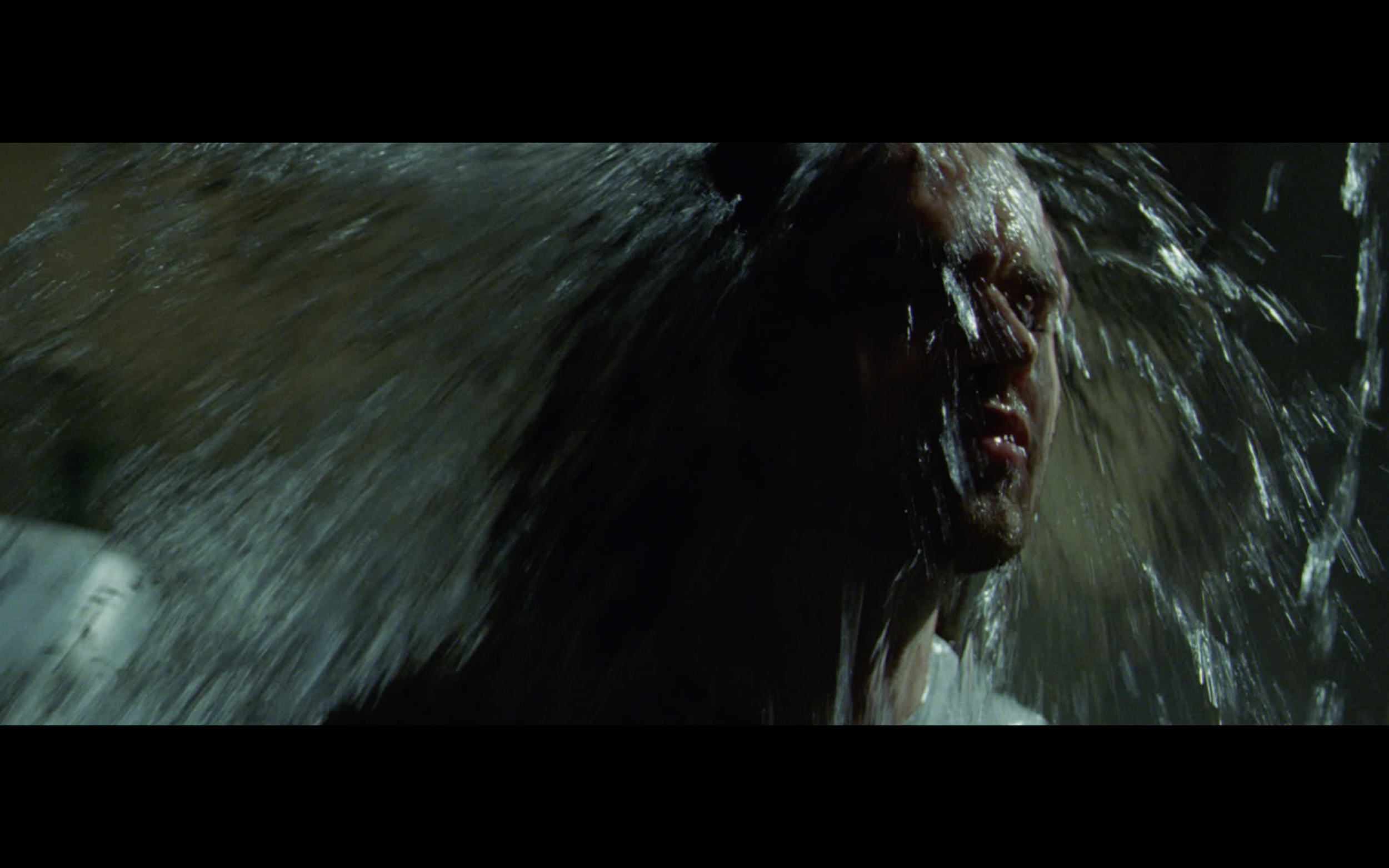
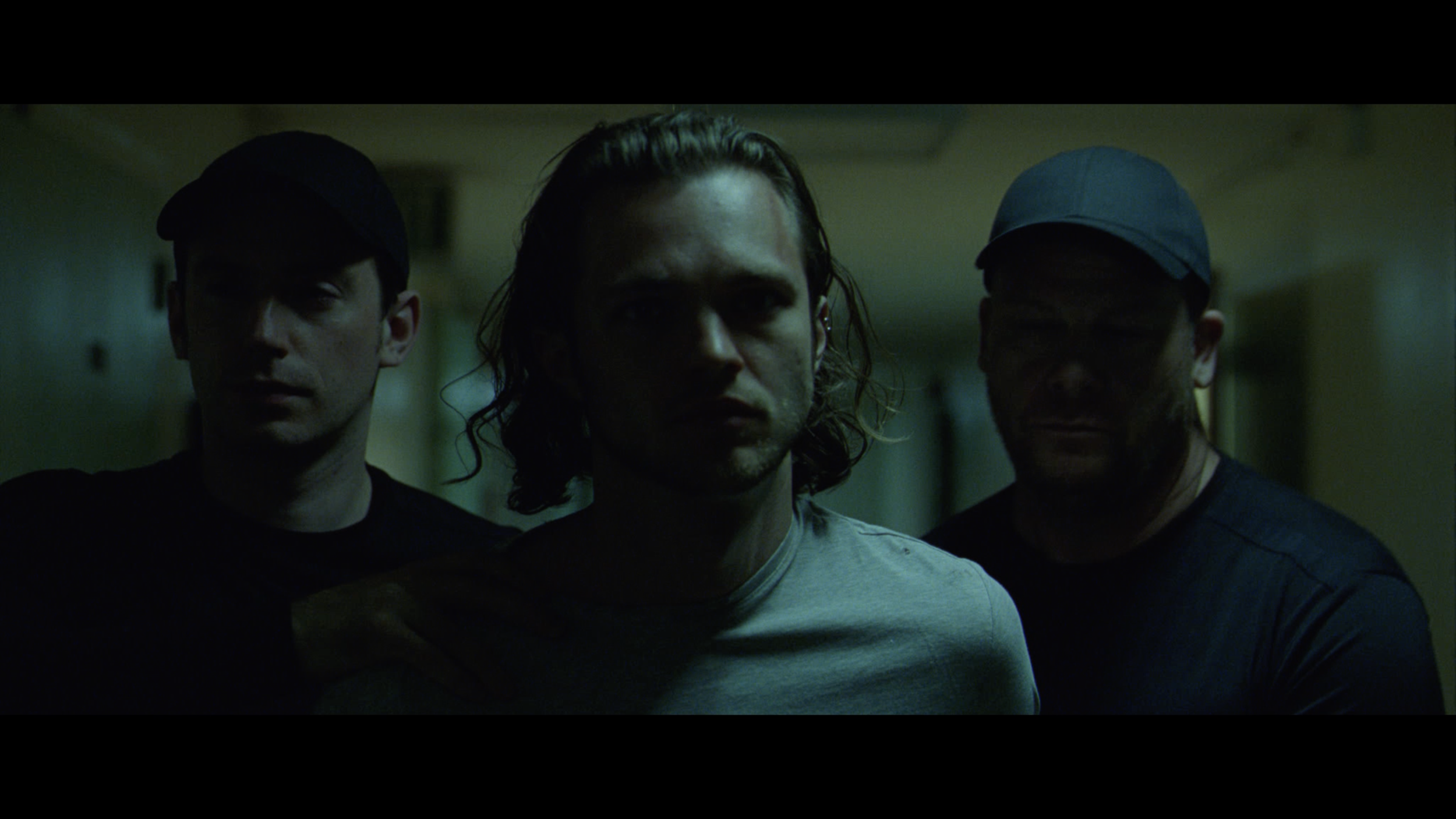
"Homesick" is an absurdist thriller about an unhappy man who attends a retreat offering adults a second chance at a happy childhood.

Interview with Writer/Director Will Seefried


Congratulations! Why did you make your film?

This idea had been percolating for a long time. I knew I wanted to make a short film and this concept felt particularly ripe for the short format, which is a challenging one to crack! The decision to make this film also came at a time in the pandemic when a lot of conversations were centered around the question “when will life go back to how it was before?” This doomed desire to travel back in time and escape the traumas that have defined us (collectively and individually) felt prescient.

Imagine I’m a member of the audience. Why should I watch this film?

It will surprise you and make you feel things. That’s the hope, anyway!

How do personal and universal themes work in your film?

Childhood is both personal and universal. We intentionally left the backstory of the protagonist cryptic to allow space for viewers to project their own experiences onto the journey he has in the film. We all were innocent once, and all must lose that innocence at some stage. That reality is universal, but how it happens is highly personal.

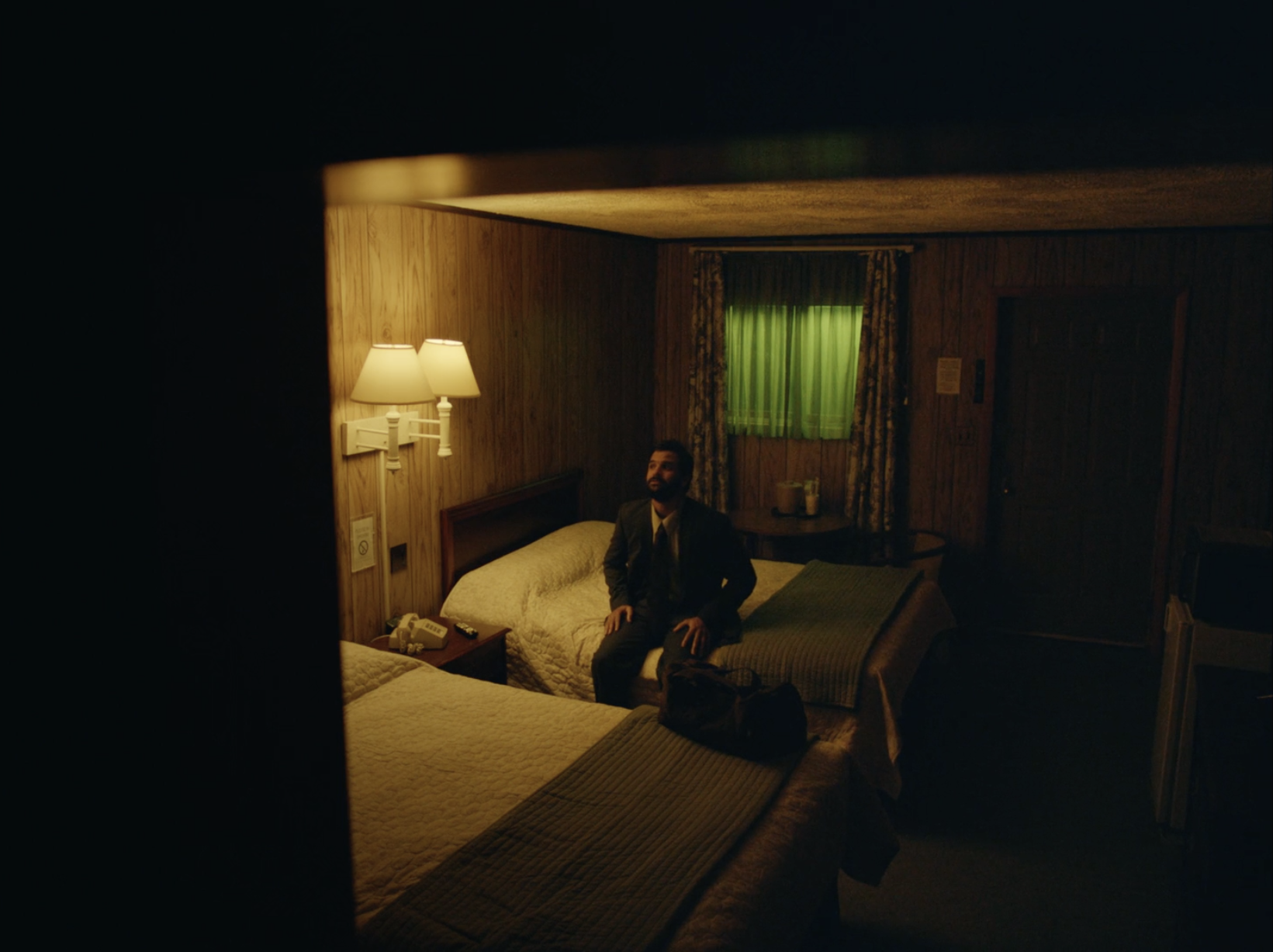
Homesick

How have the script and film evolved over the course of their development?

The final film is quite close to what was on the page, but more essentialized. There were a couple of scenes that felt good on set but proved redundant in the edit. It’s always hard to let those things go because so much effort and care goes into every single scene, but ultimately we have to do what’s best for the story and leave the ego out of it.

What type of feedback have you received so far?

It’s been so fun to see the range of reactions to the film. Some people find it really funny, others find deeply sad, and most find it bizarre. But across the board it seems people relate to the yearning for another shot at childhood.

Has the feedback surprised or challenged your point of view?

I’m not so interested in making work that has a prescribed response/effect, so I really appreciate the range of experiences people have had watching the film. The hope is that audiences will have a strong point of view, even if its radically different than mine.

What are you looking to achieve by having your film more visible on www.wearemovingstories.com?

I want to spend my life making movies and tv shows, so I am grateful for every opportunity to share my work. Profiles like these can serve as a smoke signal for future collaborators and audiences who have a compatible sensibility. If people respond to what they see here, they can stay up-to-date on future screenings and other work on my company’s Instagram @wolflightfilms and my personal page @willseefried.

Who do you need to come on board (producers, sales agents, buyers, distributors, film festival directors, journalists) to amplify this film’s message?

The trajectory for content like this is so nonlinear. Festivals are the focus right now. Reviews and profiles like this really help, too. The hope is to eventually expand this into a feature film with producers and financiers who respond to this story and offbeat aesthetic.

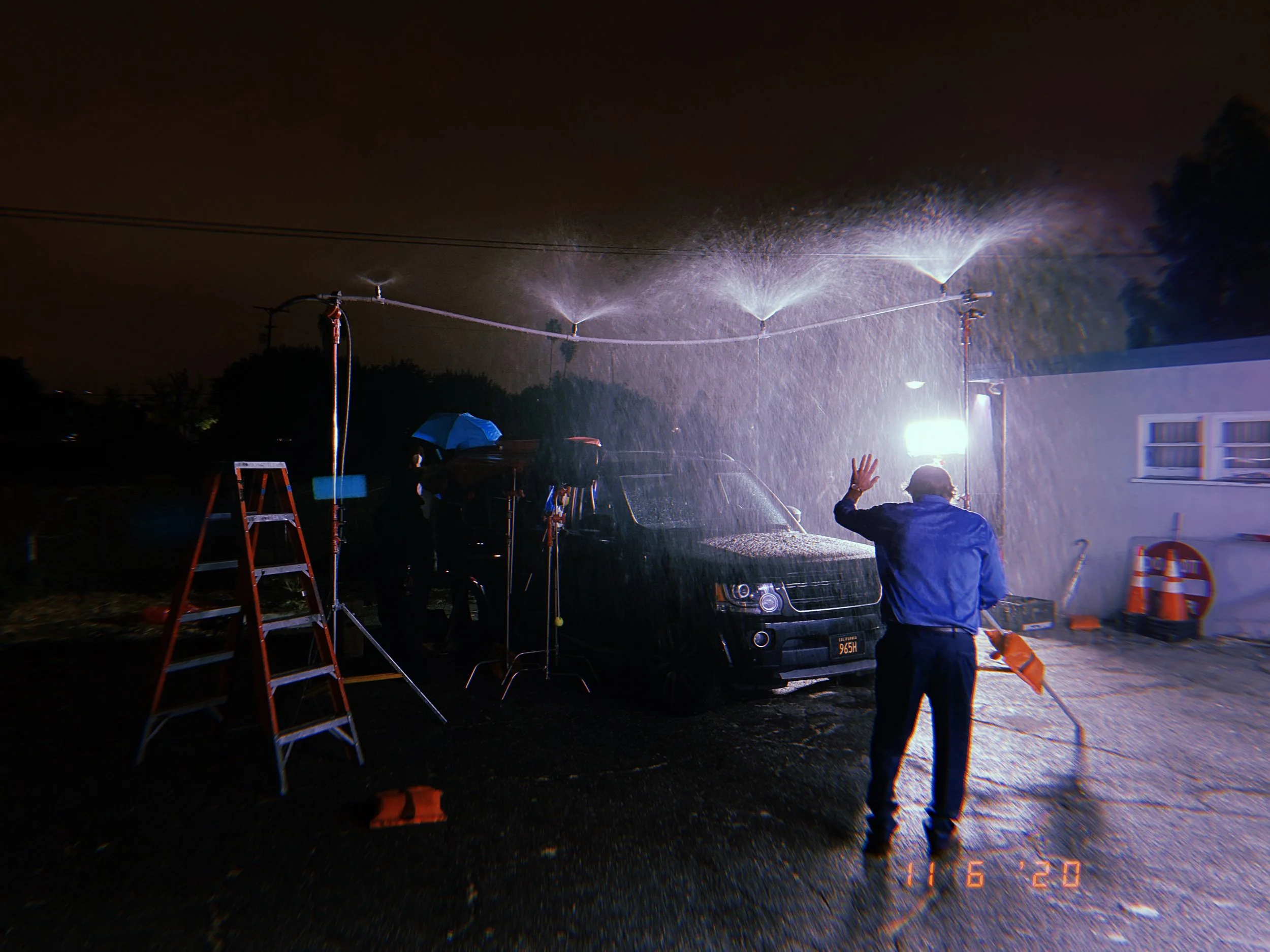
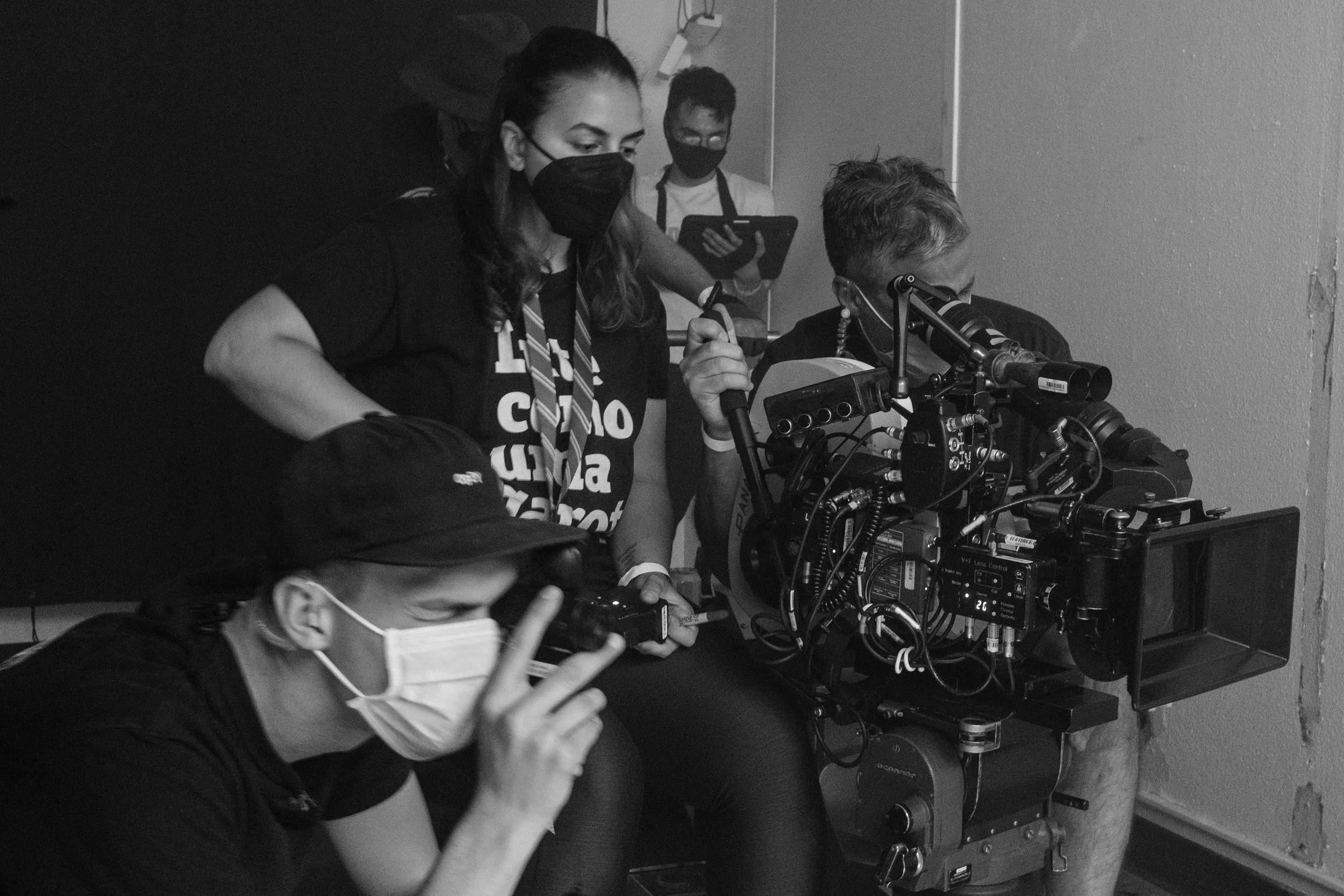
Homesick - BTS

What type of impact and/or reception would you like this film to have?

There are countless short films out there, and so many are excellent. The hope is that this film will make enough of an impression to rise above the noise. Any impact feels like a win. Indifference would be the worst case scenario.

What’s a key question that will help spark a debate or begin a conversation about this film?

Is it ever too late to have a happy childhood?


Interview: March 2022


We Are Moving Stories embraces new voices in drama, documentary, animation, TV, web series, music video, women's films, LGBTQIA+, POC, First Nations, scifi, supernatural, horror, world cinema. If you have just made a film - we'd love to hear from you. Or if you know a filmmaker - can you recommend us? More info: Carmela


Homesick

Length:

15:47

Writer/Director

Will Seefried is a filmmaker & writer with an MFA from NYU/Tisch. His film "Homesick" premiered at SXSW 2022. He is currently developing his first feature film, "Lilies Not For Me", which is an Academy Nicholl semifinalist.

Producer

Hannes Otto is a producer and actor. His work has screened at SXSW, Berlinale, Outfest, SeriesFest, and Toronto Inside Out. Juilliard, MFA.

Key cast:

Hiram Delgado, Leslie Fray, Motell Gyn Foster, Tom Nelis

Looking for:

distributors, journalists, film festival directors, buyers, producers, sales agents

Instagram:

https://www.instagram.com/willseefried/

Hashtags used:

#Homesick #HomesickFilm #Wolflight #WolflightFilms

More info:
www.wolflightfilms.com

March 19, 2022 /Carmela Baranowska
Comment

FRIMAS

March 18, 2022 by Carmela Baranowska

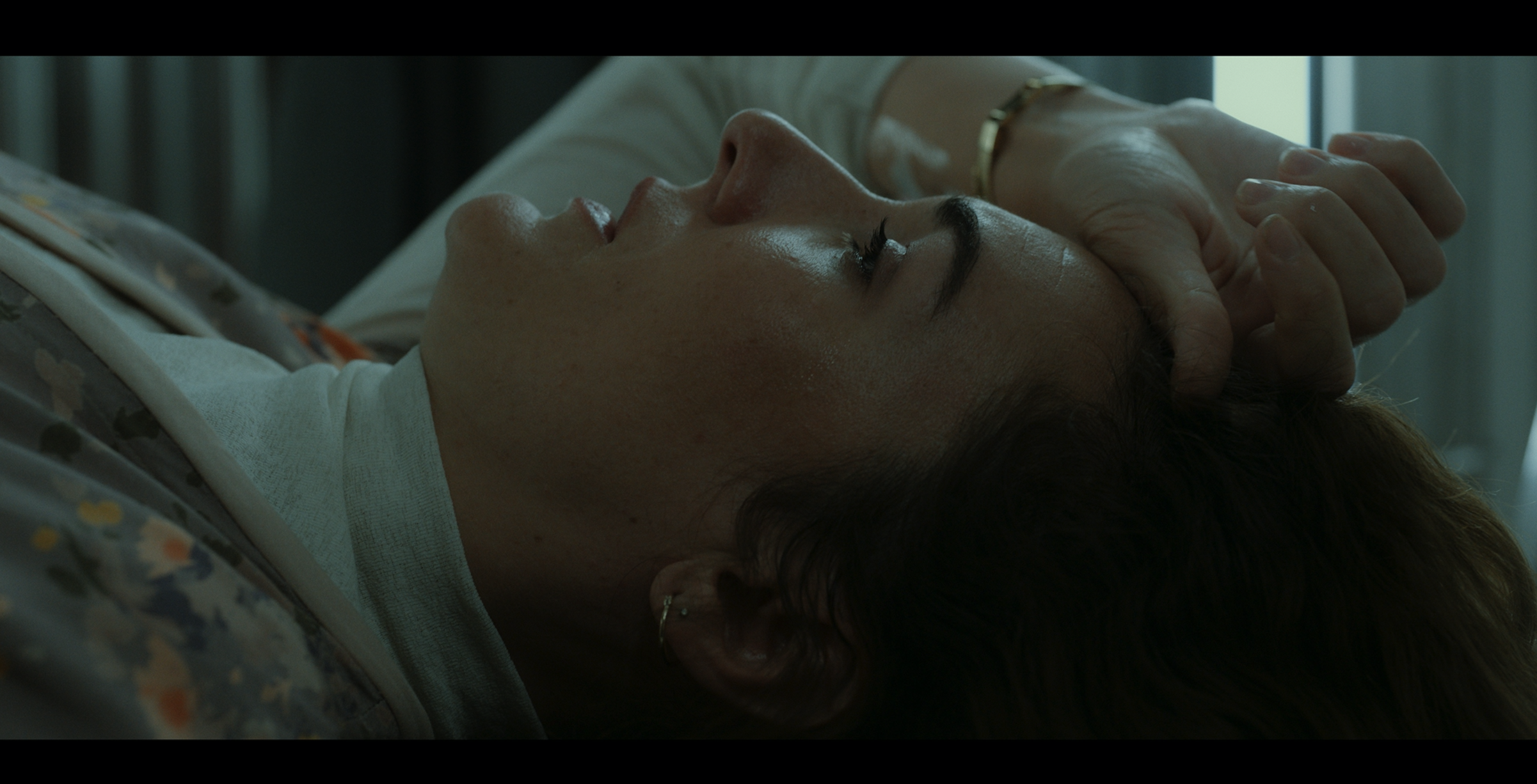
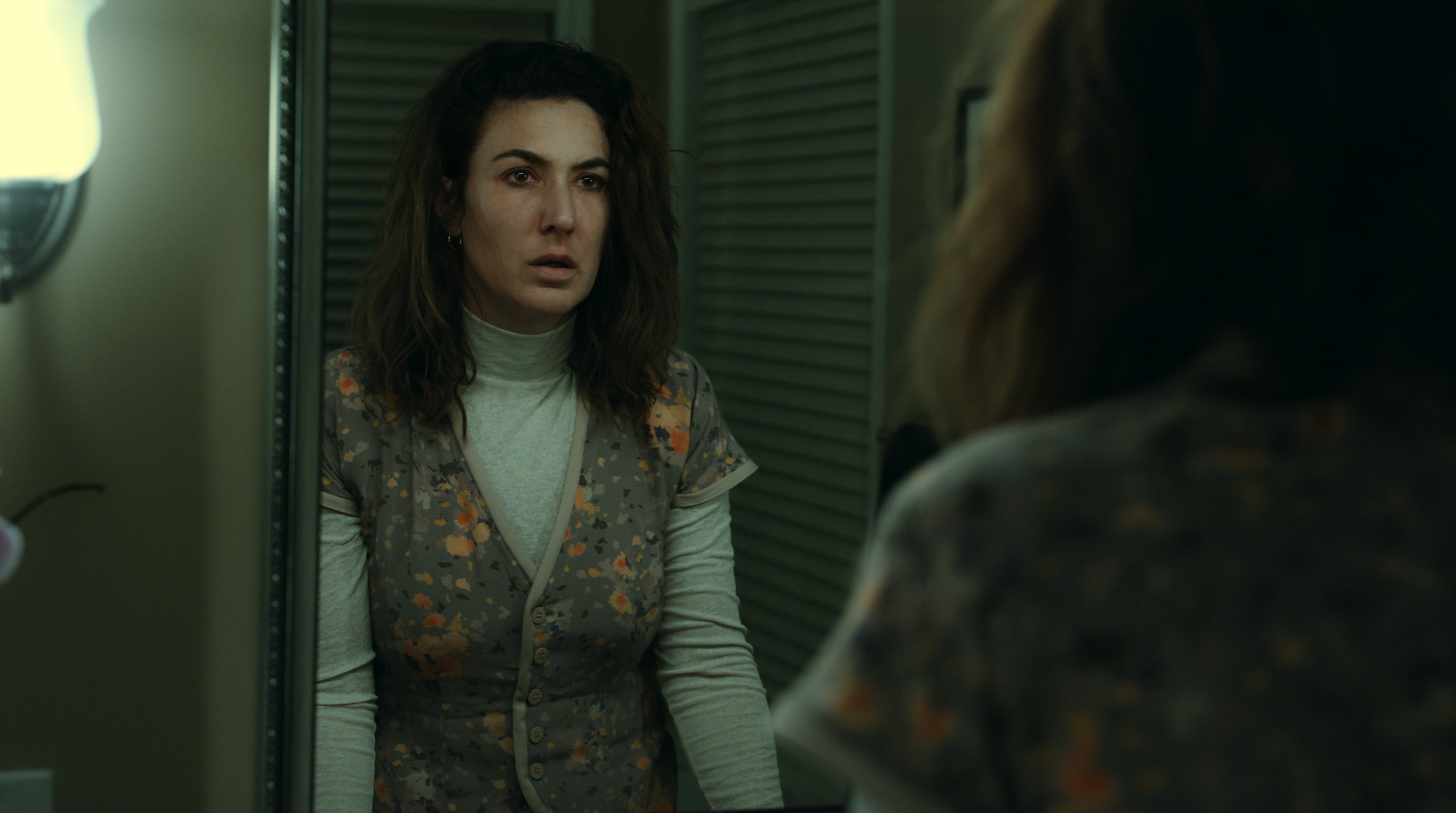
In the near future, following the adoption of an anti-abortion law, Kara has no other choice but to end her pregnancy, using an illegal abortion clinic.

Interview with Director Marianne Farley

** Shortlisted for The Academy Awards 2022

Congratulations! Why did you make your film?

As far as I can remember I’ve been passionate about human rights, and, as a woman, I am particularly committed to protecting women’s rights. After MARGUERITE, which delved on LGBTQ issues, I wanted to address in FRIMAS the threats that women’s right to an abortion were facing worldwide. In the US as witnessed recently in Texas, Mississippi and in other states, legislatures are moving aggressively to repeal Roe vs Wade either directly by bringing the issue to the Supreme Court or indirectly by stripping away at the existing laws.

The bottom line is that women’s rights are definitely in danger and have been so for the last several years. I wanted to draw attention to what illegal abortions could look like and to the level of physical and psychological trauma they could generate in the future.

Imagine I’m a member of the audience. Why should I watch this film?

My film FRIMAS is a standard bearer for a cause that is closest to my heart, “Women’s rights”. It focuses specifically on women’s reproductive rights. The right to abortions. My passion runs wider and deeper. Every woman should also have the right to their voice, their choice of career, their choice of who they love and their right to have bodily autonomy.
.
Women who have rights raise children who are free to pursue their own dreams. This in turn affects the prosperity of families, communities and countries. Empowered women lead to more empowered people and nations. We need to expand the consciousness of these rights to every country. FRIMAS is a call of consciousness to every individual of every gender, color and persuasion. The more conscious we become of how the infringement of the right to abortion negatively affects a woman in her personal relationships and in her relationship with her community, the more we can choose leaders who will support those rights.

FRIMAS

How do personal and universal themes work in your film?

I always choose a universal theme that I’m passionate about. In this instance it’s the right for women to choose an abortion for mental, emotional, physical or financial reasons. These rights are universal in the sense that they affect all women across the world. The consequences of abolishing women’s rights such as the right to abortion also affect society at large but they are also deeply personal.

In order to convey the importance of these universal rights I needed to demonstrate through the media of film the pain and trauma women experience when their rights are not respected and they go through an illegal abortion. That’s why I chose to centre the film around a search scene to underscore the constant fear and panic experienced by individuals who participate in illegal abortions either as patients or as medical practitioners. This scene was crucial to the message of the film: Forcing women to have to turn to illegal abortions is cruel and inhumane. A universal theme then becomes a personal reality that the viewer can relate to.

How have the script and film evolved over the course of their development?

I started writing in 2018. We shot it early 2020. The editing was completed in early 2021. The pandemic definitely slowed down our post production phase but it allowed us time to explore different options. When I was writing the script I did a lot of research in order to identify interesting alternatives to convey the visual and emotional experience I wanted to create for my audience. This research helped me to further clarify my vision but it also forced me to be as specific as possible in the creative choices I made.

During the actual filming, we encountered many challenges. For example we had to figure out how to make it seem like the truck was on the highway without actually being out on the road. Obviously safety always comes first! It was also quite a technical challenge to shoot in tight spots and we needed to create a fake wall, a space where the protagonists could hide. The installation of the wall in the truck forced us to take into account its specific metal structure which was not an easy task. Thankfully our very resourceful production designer Melanie McNicoll and her team pulled it off masterfully. When filming things never turn out quite the way you expect them to, but it always forces you to be flexible and creative. And very often things turn out so much better than you had envisioned originally!

What type of feedback have you received so far?

We’ve had a plethora of reactions. Some audience members were taken aback by the cruel and painful experience of our main character. Others were deeply saddened that in 2021 this futuristic depiction can possibly become a reality in the near future. Finally most audience members felt compassion and empathy for the trauma that our main character had to endure.

Has the feedback surprised or challenged your point of view?

I am very grateful for all the feedback received. We made this film in order to spark conversations about this very important topic. Although I am without a doubt pro-choice I understand that some people are not comfortable with the idea of abortions. I understand that some people do not have the same point of view as I do. But for me the bottom line is that women should have a right to bodily autonomy no matter what. If we want to live in a world where there is gender equality we have to allow women to decide what they want to do with their bodies. Anti-choice laws condemn many women to lives that lack dignity and deprives them of equal liberties. Anti-abortion laws lead people with the least resources to undergo illegal abortions with the attendant risks of death and suffering. Women’s rights are fundamental human rights.

What are you looking to achieve by having your film more visible on www.wearemovingstories.com?

We are hoping to share our film with the widest audience possible. I am grateful for having the opportunity to discuss such an important topic on your platform and to be able to share my views with your readers.

FRIMAS

Who do you need to come on board (producers, sales agents, buyers, distributors, film festival directors, journalists) to amplify this film’s message?

To complete my answer to the preceding question we are hoping to get the greatest level of support available to us. Producers, sales agents, buyers, distributors film festival directors and journalists all reach a different audience. It will take a concerted effort from all of us to get the message across that women’s rights are human rights and that the future generations need us to protect and defend those rights.

What type of impact and/or reception would you like this film to have?

Obviously I would like our film to be viewed by the widest audience available. It will certainly reinforce the level of support for women’s rights from those who already support them.

Philosophical and religious entrenched positions always lead to separation and conflict. With this film I want to go beyond the level of intellectual or faith-based discussions and dig in-depth in the REAL-LIFE experience of women who go through an illegal abortion procedure. I do hope that watching a woman go through this traumatic experience can elicit some level of compassion and understanding from those who wish to restrain or abolish those rights.

What’s a key question that will help spark a debate or begin a conversation about this film?

The key question that could spark a healthy debate or begin a conversation about this film could be: “What is the experience of a woman who is forbidden to have the medical procedure that she believes to be her only choice, an abortion?”

Women will continue to choose to have an abortion for various reasons. These may be mental, emotional, physical or financial. A woman may also choose to have an abortion because she knows that her child will die at birth or have a difficult life because of health issues. The traumatic reality for a woman who chooses for very personal reasons to terminate a pregnancy and the trauma that she will endure if this medical act is driven underground is probably something that we could all relate to.

FRIMAS Director Marianne Farley

Would you like to add anything else?

Bans and restrictions have harrowing consequences on all people but they also impact disproportionately low-income people, people of color, LGBTQ+ people and those who live in rural areas. If these restrictions come into effect, it will have devastating consequences on so many and create a deeper and wider gap between social classes.

What other projects are the key creatives developing or working on now?

I recently completed the post production of my first feature film NORTH OF ALBANY. It should be released in the fall of 2022. I am also developing two feature films. LA FAUCHE and À DEMI SOUPIR. Both will be produced through my production company Slykid & Skykid. Finally I’m collaborating on a few other projects with independent producers but I can’t divulge any information on those at this time.


Interview: January 2022


We Are Moving Stories embraces new voices in drama, documentary, animation, TV, web series, music video, women's films, LGBTQIA+, POC, First Nations, scifi, supernatural, horror, world cinema. If you have just made a film - we'd love to hear from you. Or if you know a filmmaker - can you recommend us? More info: Carmela


FRIMAS

Length:

Writer/Director

Marianne Farley is a director/screenwriter, producer, and actress from Montreal, Canada. Her second critically acclaimed short film MARGUERITE won over forty awards around the globe and earned an Academy Award® nomination for Best Live Action Short Film in 2019. Marianne is in the post production phase of her first feature film NORTH OF ALBANY (co-written with Claude Brie). Her experience as an actress drives every decision she makes as a director. Marianne also produced LES NÔTRES by Jeanne Leblanc in which she plays one of the lead roles. Through her production company SLYKID & SKYKID she is also developing the feature films LA FAUCHE (written by Camille Trudel) and À DEMI- SOUPIR (cowritten with Claude Brie).

Producer

Ô Films is a Montreal-based production company founded by Sophie Ricard-Harvey and Charlotte Beaudoin-Poisson, which specializes in developing and producing projects by filmmakers whose vision stands out locally and internationally. The strikingly beautiful cinematography of FRIMAS was crafted by Benoit Beaulieu.

Key cast:

Karine Gonthier-Hyndman as Kara, Kent McQuaid as Benji, Alex Bisping as Agent Pelletier, Chantal Baril as Dre Hubert, Christian Jadah as Agent Johnston, Jean-Moïse Martin as Jacob

Social media:

https://www.instagram.com/frimasshortfilm/

https://www.facebook.com/FRIMASshortfilm

https://twitter.com/Frimasshortfilm


March 18, 2022 /Carmela Baranowska
Comment

Five

March 17, 2022 by Carmela Baranowska

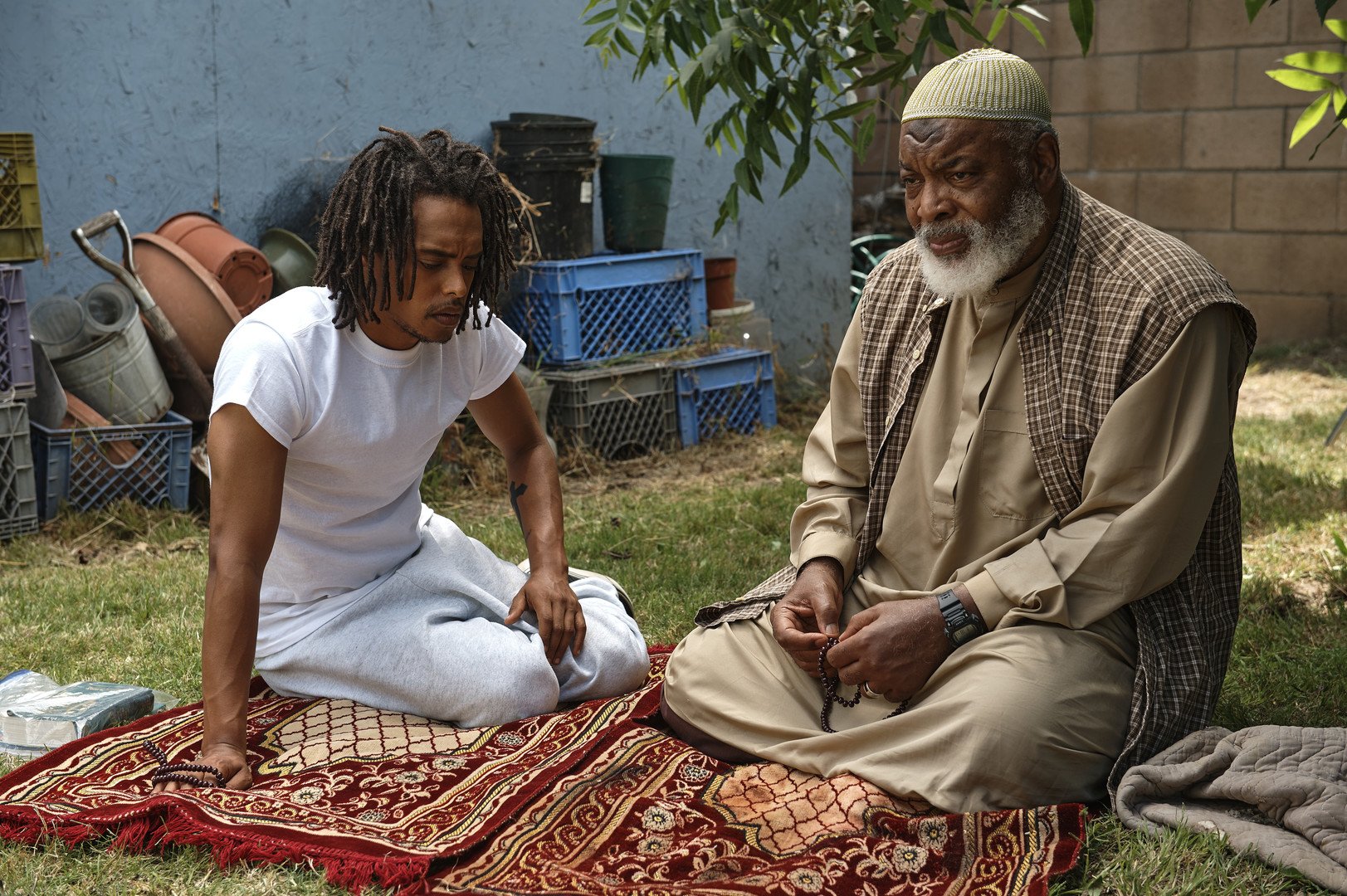
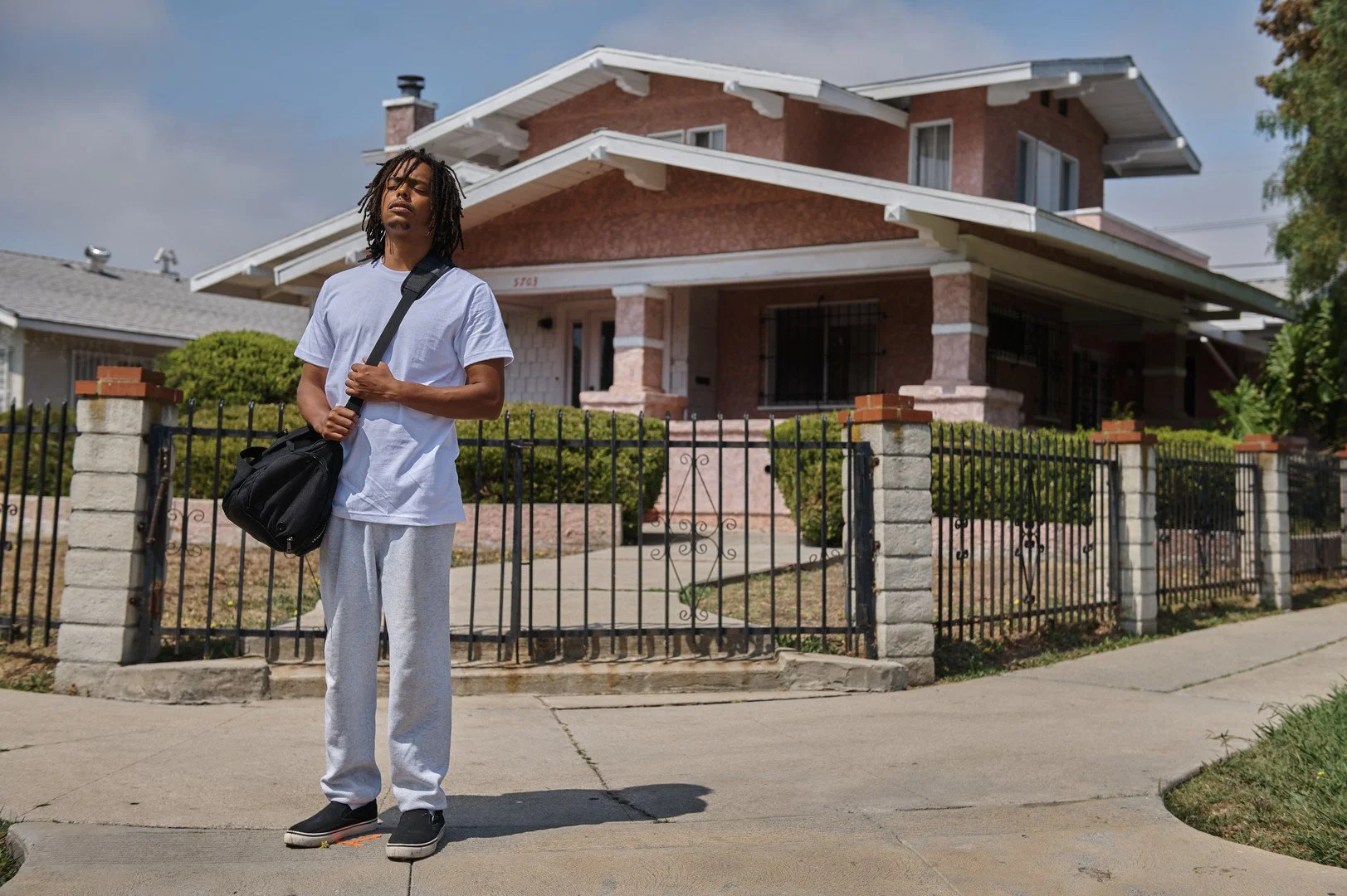
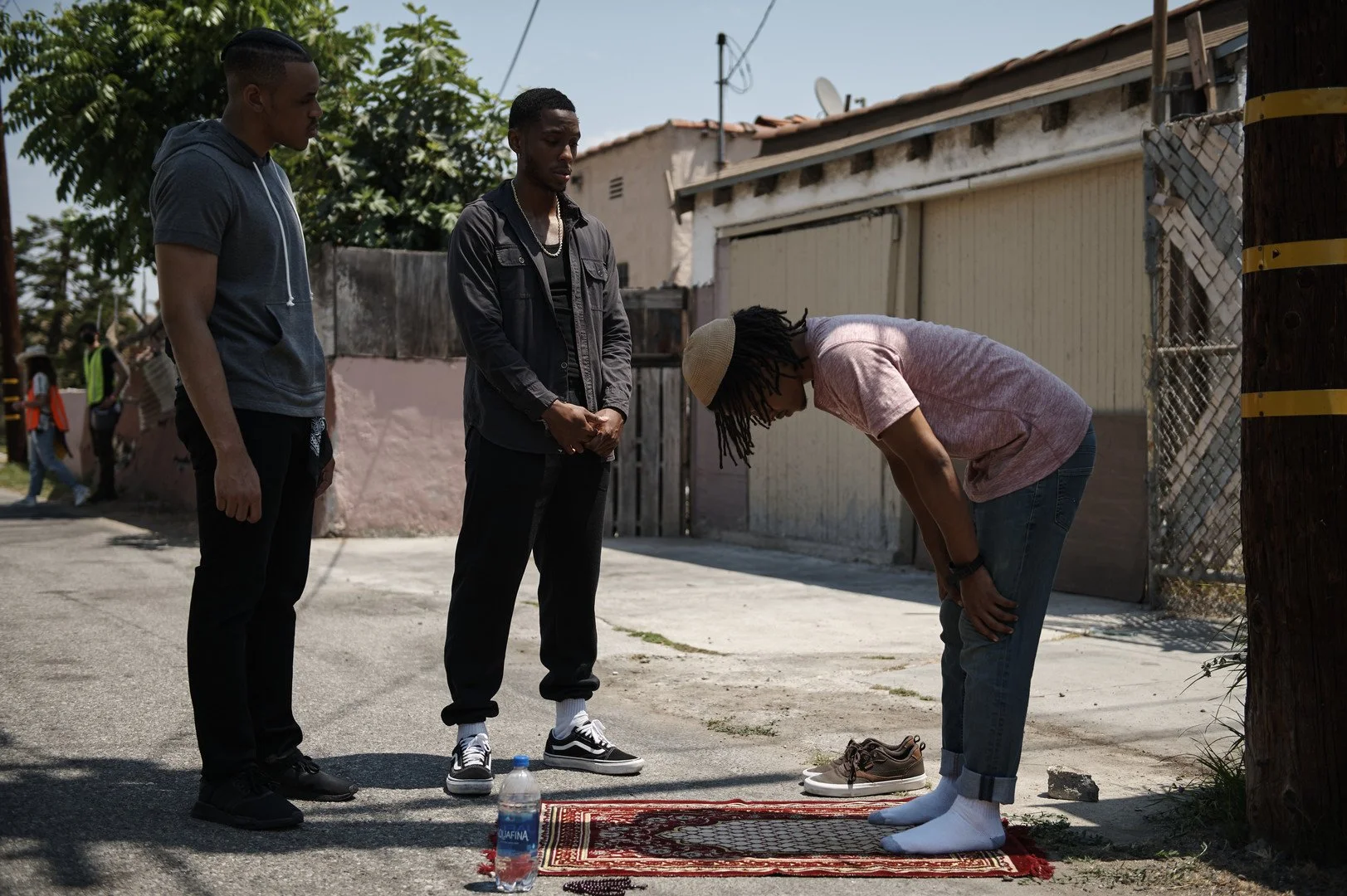
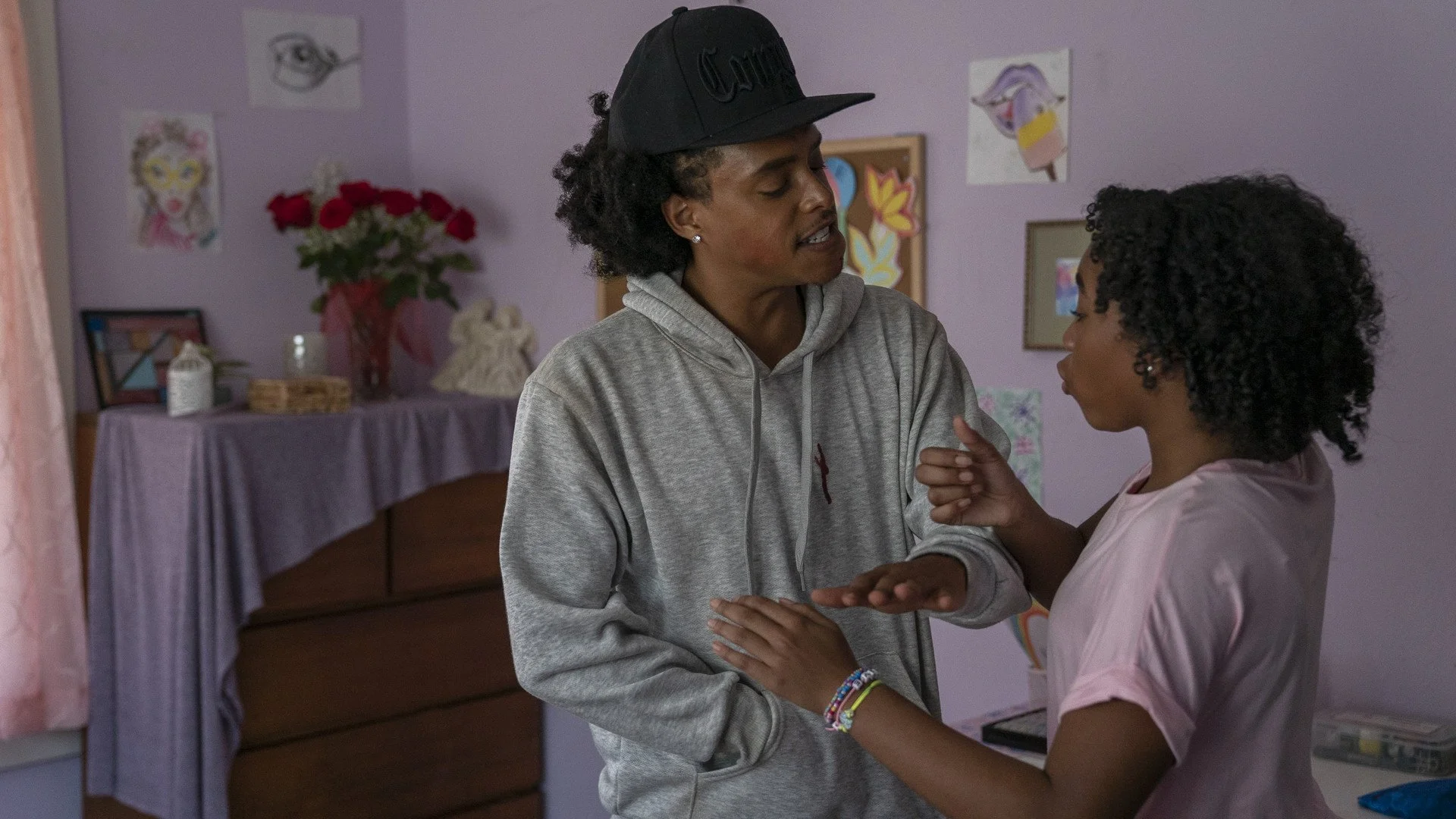
After spending 7 years in prison, Malcolm seeks to mend
his relationship with his mother while devoting himself as a
consistent and faithful new convert to Islam.

Interview with Writer/Producer Duran Jones

Congratulations! Why did you make your film?

Thank you! Our team had a very personal connection to this piece. I myself have a brother who is incarcerated and converted to Islam. The change I see in him now is one that I wish I saw when he was home. When my brother is released, we will both be in our 60's and I’ll be the only home he has to come to. At that time, regardless of his crimes, I will have to forgive--much like Malcolm’s mother in our story. I’ll have to decide if the person he has become deserves a second chance; that the debt our society demands through the prison industrial complex has been “paid." We are not often forgiving to our friends and family attempting to rebuild.

Imagine I’m a member of the audience. Why should I watch this film?

If our audience takes away anything after watching this film, it would be that the forgiveness you seek you have to first give to yourself. Forgiveness is a moment-to-moment journey requiring the discipline and compassion to continuously love yourself beyond your transgressions. We wanted to tell the story of Malcolm, a man who continues to show up for that task even when the world doesn’t see him, or who he has become.

Five

How do personal and universal themes work in your film?

Nothing more personal than a story inspired by my relationship with my incarcerated brother. In terms of universal themes, faith and forgiveness are things we all need. Not just in the religious sense, but in terms of having faith in one another. We all have had to ask for forgiveness at some point.

How have the script and film evolved over the course of their development?

This was the most rewarding collaborative experience I’ve ever had. We began this film with a story idea from my friend, Broadway playwright Keenan Scott II, and used my personal experience to ground the world and characters. With each collaborator we added, the more the importance of this story began to shine. Our director, David Orantes, gave radical empathy to every character. Dwait Adera, our cinematographer, used his eye to capture the beauty in even the ugliest of moments. Eric Osman, our editor, asked some of the most poignant questions to keep our intention in focus. Rashi Jain, our production designer, joined our team two weeks out from production and created magic. Don’t even get me started on the composition by Alexandra Kalinowski & Prateek Rajagopal! The biggest evolution was the amount of community that came out for this one story. We all saw and heard each other clearly.

What type of feedback have you received so far?

Feedback has been all positive from our faculty, donors, and audience. However, the feedback doesn’t matter to us. We did not sign on to tell this story for accolades or approval. We told it because it needed to be told. For every ex-incarcerated human being that struggles to get employment, can no longer vote, and often find themselves in debt upon release. For every victim or family member of these individuals forced to carry the burden of their crimes. Forgiveness has to happen on all sides, but it can only happen through understanding and empathy. That is the purpose of storytelling.

Has the feedback surprised or challenged your point of view?

I think if anything it reaffirmed it. During a Q&A at our private screening I asked how many people had a friend or family member who went to prison and 60% of the audience raised their hands. I followed up by asking how many of them treated that person the same way they always had, and no one raised their hand. We are all guilty of judging others based on situations we may not completely understand, but when we seek understanding we can often solve the real problem. Seek to understand, rather than to be understood.

Five

What are you looking to achieve by having your film more visible on www.wearemovingstories.com?

We hope this film can be used to facilitate a larger conversation around our society's definition of justice. We want people to pay their debt to society, but even after that debt is paid they continue to be punished by our system and us. Some will say “If you can’t do the time, don’t do the crime,” but even that ignores the circumstances surrounding the crime to begin with. We have to respond to the cause of the action, not just the action itself.

Who do you need to come on board (producers, sales agents, buyers, distributors, film festival directors, journalists) to amplify this film’s message?

All of the above! It took a community to make this film and it will take an even bigger community to amplify it. We did not start out with a feature in mind for this film, but our team does believe there is one to create from this material. So, we will be working on that. And donors: we still welcome donors. Find out how here: https://www.fivethestory.com

What type of impact and/or reception would you like this film to have?

We hope it will be well received, but more importantly we hope it will be discussed. Talk about it, debate it, take action if you are moved to.

What’s a key question that will help spark a debate or begin a conversation about this film?

If you were Malcolm, could you forgive yourself? Why?

Would you like to add anything else?

Go see this film and support this talented team of filmmakers www.fivethestory.com

Five

What other projects are the key creatives developing or working on now?

David Orantes (Director) is writing a short film called Ximena about two sisters reuniting over a lie their mother has stirred. He is set to direct that in March. Rashi Jain (Production Designer) has recently worked on commercials for TikTok, Instagram, Facebook and Callaway. She is set to design her first feature this year. Eric Osman (Editor) is editing a short film psychological thriller called “The Portrait,” an adaptation of the Oscar Wilde novel The Portrait of Dorian Gray (1890). Dawit Adera (Cinematographer) is in the process of shooting a Viking period film titled “Frelse” and is pre production on an upcoming music video. Duran Jones (Writer/Producer) is actively pitching a television series he created to networks for development and a short film he Produced titled Hallelujah that premieres at the 2022 Sundance Film Festival. Lead actor Jacob Romero Gibson (Malcolm), is set to star in the Netflix live-action adaptation of the anime series One Piece.


Interview: January 2022


We Are Moving Stories embraces new voices in drama, documentary, animation, TV, web series, music video, women's films, LGBTQIA+, POC, First Nations, scifi, supernatural, horror, world cinema. If you have just made a film - we'd love to hear from you. Or if you know a filmmaker - can you recommend us? More info: Carmela


Five

Length:

23:14

Director

DAVID ORANTES director's statement: History doesn't dictate who we are today, but we must choose how we respond to it. At the core of my being, there is a wound from childhood that I contend with daily. This wound says that I’m worth nothing. Nothing because my father drank himself to death and failed to let my four half-siblings know that their lonely brother exists. Because, I was left alone by my single, immigrant mother trying to keep the roof over her sons. Because, a school therapist couldn’t see that I was screaming for help inside my self-imposed stoicism.

Today, I know that wound is an illusion. Although it feels real because for a
long period of time I behaved as it if were real. I didn’t care about my education nor did I care about having ambitions. Like Malcolm, I was caught up in short- term satisfactions— whatever could keep me from facing the worthlessness I felt at my core. I ate poorly, fed my mind junk, and numbed myself with pot. Eventually, I understood something was wrong, and it turned out that I had completely abandoned myself, the way I felt the world had abandoned me.

With this understanding, I sought help to build myself back up and to challenge this false notion of worthlessness. This challenge meant changing what I ate. It meant showing up for myself and understanding what I desire as a person and accepting that I deserve it. It meant designing a higher power that I could believe in to restore me to sanity. Most importantly, it meant waking every morning—no matter how silly it felt—to get on my knees and speak to that higher power. I am Malcolm; a child forced to grow up quickly seeking to cope with trauma through faith and consistency

Producer/Writer

DURAN JONES is a 2007 graduate of Hampton University, with a BA in
Broadcast Journalism. He is an accomplished independent rapper and
songwriter with a keen sense of storytelling. In 2017, he completed his first short film titled BLKMGC, an urban musical based on the shooting death of Tamir Rice at the hands of police. Duran is also known for his 2011 tribute to Trayvon Martin and his subsequent interview on CNN.

Now a graduate of The American Film Institute Conservatory, his goal is to tell stories for people of color that are truthful and impact the global community.

While studying at AFI he graduated from the 2020 PGA Power of Diversity workshop, where his pilot “Daywalker” received interest from Mary Parent, Gary Lucchesi and Prentice Penny.

Duran was also selected as a 2021 Sundance Feature Film Producers Lab Fellow with the script "The Incredible Heist of Hallelujah Jones" written by Victor Gabriel.

Key cast:

Malcolm: Jacob Gibson; Jeanine: Hilary Ward; Waleed: J.D. Hall; DeeDee: Sydney Thomas; Jason: Charles Lamont Smith

Looking for

distributors, film festival directors, sales agents


Made in association with:

AFI Conservatory


March 17, 2022 /Carmela Baranowska
Comment

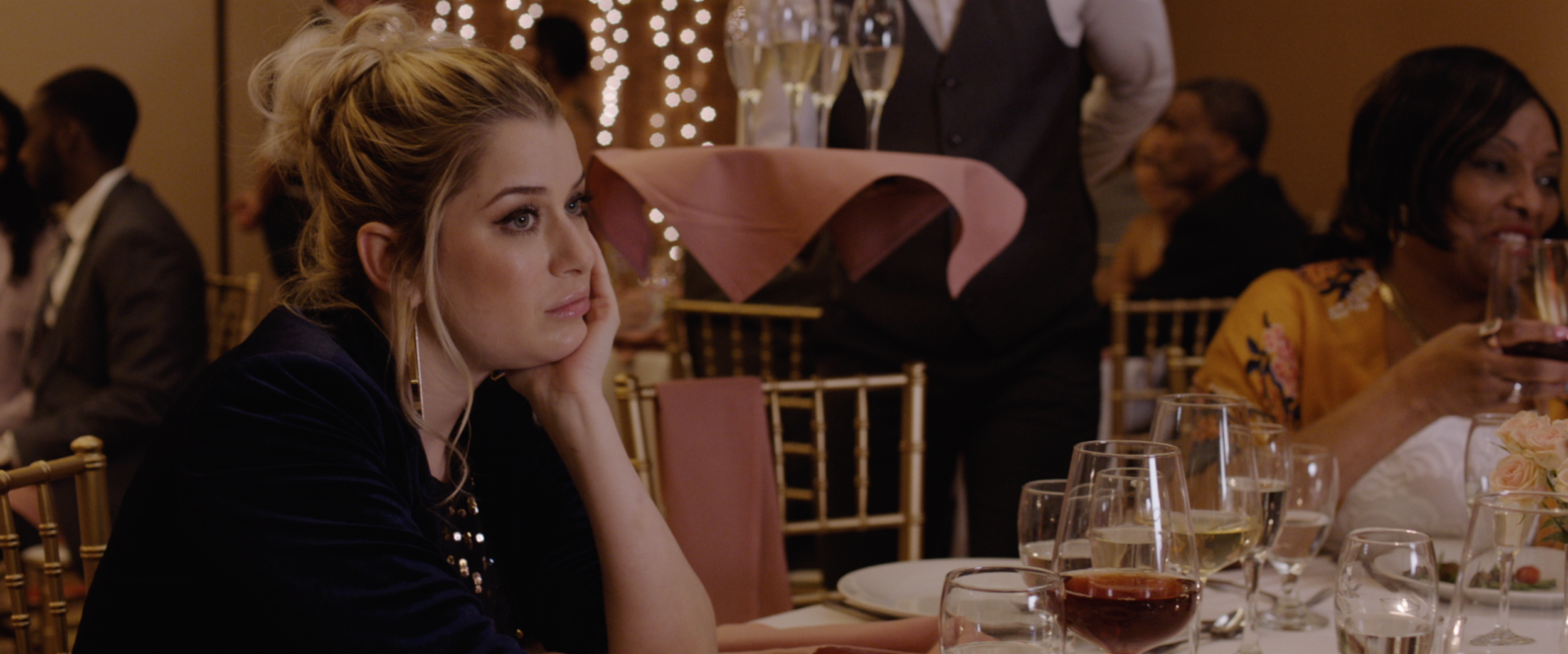
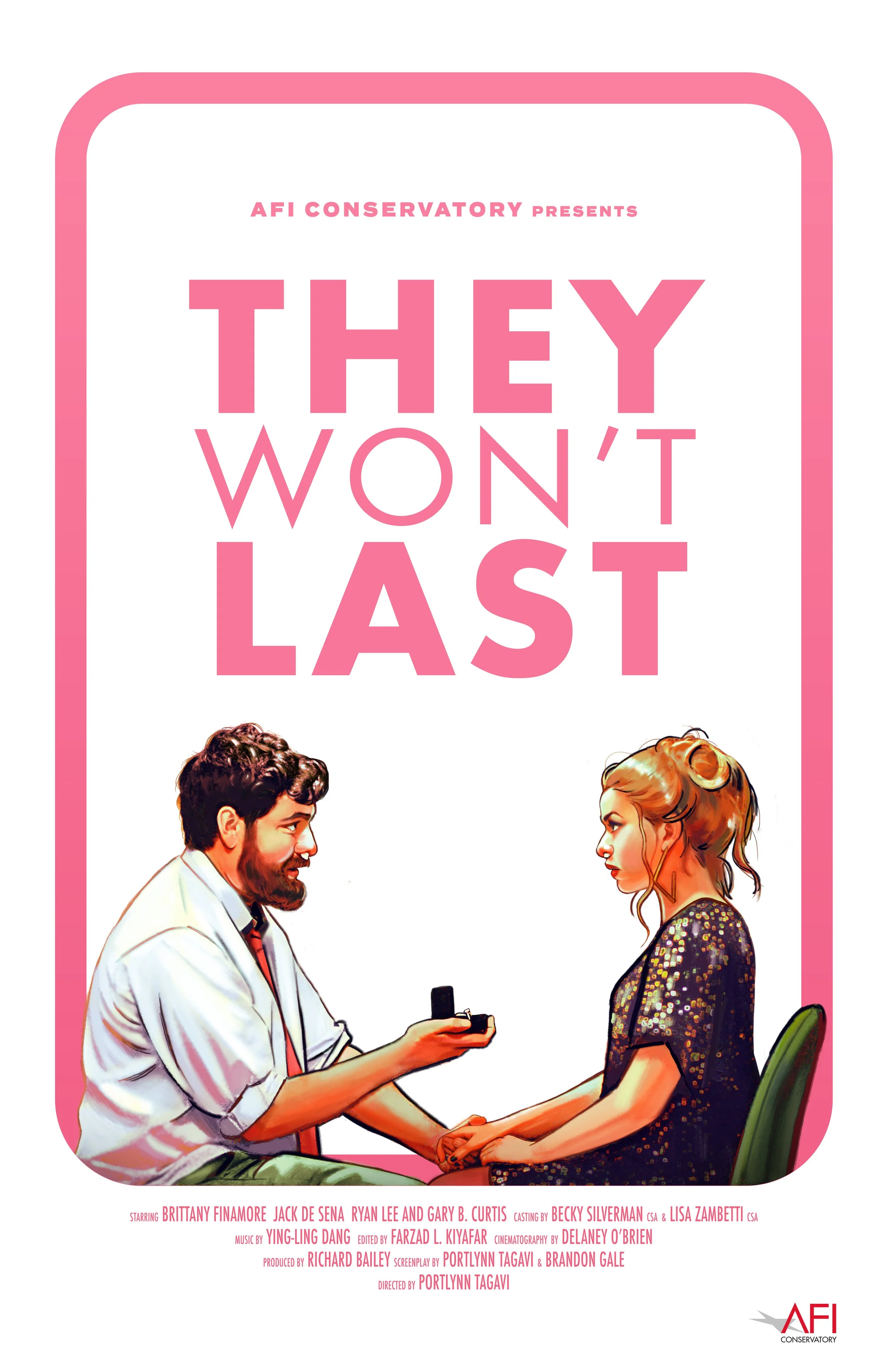
They Won’t Last

January 18, 2022 by Carmela Baranowska

After attending a friend's perfect wedding, commitment-averse Christine is forced to make a life-changing decision when her boyfriend Alex proposes to her.

Interview with Director Portlynn Tagavi


Congratulations! Why did you make your film?

I made this film as a result of an obsession I had with the couple who lived next door to me a few years back. I was living on my own for the first time and had gone through my first break up. It was one of the loneliest times of my life. I would go home every night from work and as I was trying to go to sleep all I could hear were my neighbors having sex. They would have loud, earth shattering sex for hours and then, just when you thought they were done, they would begin to argue for twice as long. I realized over the six months I lived next to them that they would rather be in a toxic and unhappy relationship, than be like me… alone. So I made a film about it.

Imagine I’m a member of the audience. Why should I watch this film?

You should watch this film because it’s honest and funny and full of relatable characters who go through things we all understand, especially if you’re having a quarter life crisis. It’s a fun ride and made by an incredibly passionate and committed crew. The actors are amazing, hysterical, and the cinematography is lush and fun!

They Won’t Last

How do personal and universal themes work in your film?

I’m not the best with themes, but I feel that the theme of this film “People will knowingly stay in a flawed relationships if it means not being alone.” It works at the core of this film. Everything stems from that. The character’s motivations are all steeped in this idea of flawed situations that you choose to continue within. Christine and Alex don’t truly understand each other but they want to delude themselves into thinking they do. When they are faced with the option of being apart due to their incompatibility they choose to stay together. The flip side is that the married couple depicted in the film seem like the picture of happiness and the symbol of a successful relationship, but are even worse than the main couple. It’s about the deluded continuance of something harmful, because you are afraid of the uncertainty being without that harmful thing entails.

have the script and film evolved over the course of their development?

It was originally based on a conversation I overheard my neighbors having after a dinner party. They were talking about how a couple they just had dinner with were not good together. All I could think was that they were just describing themselves. I had just watched Who’s Afraid of Virginia Woolf that month, and had loved it and wanted to do something contained and character-driven like that. When developing this film at AFI, I thought that setting it at an apartment after a party wasn’t very cinematic and didn’t hit home on the themes I wanted. I decided to make it a wedding and I, over time, worked in Alex’s desire to propose that night. I was so happy to discover that dramatic pin. It added more stakes and drove home the characters wants, as opposed to just it being a conversation in a room. It was a slow-burn over time, inspired by many life events and constant feedback from my co-writer Brandon and the rest of the team.

They Won’t Last

What type of feedback have you received so far?

It’s been overwhelmingly positive. I think a lot of people relate to this film and since I’m around Christine and Alex’s age I can see a lot of my peers feeling similar pressures to participate in the mating game. We have been fortunate to have won the College Television Award for “Best Comedy Short” and we have been included in over fifty festivals.

Has the feedback surprised or challenged your point of view?

Not at all. Other than the positive (albeit limited) feedback from audiences and festival teams, we’ve unfortunately not had much access to broad feedback due to the pandemic. I wish I could go to these festivals and hear what people think in person, but I just haven’t had the option to at this time.

What are you looking to achieve by having your film more visible on www.wearemovingstories.com?

We worked incredibly hard on this film, and would be so happy to be able to share it with a much wider audience. I am very excited by the platform’s variety of filmmakers and professionals who I hope to meet and build a collaborative network with. I hope to grow and help others grow through this exposure.

Who do you need to come on board (producers, sales agents, buyers, distributors, film festival directors, journalists) to amplify this film’s message?

I would love for more film festival directors and journalists to see this film! It would be great to make those relationships happen and to start a dialogue. Since covid, it’s been hard to have that social element to screening your film. I would love more conversations happening about it.

What type of impact and/or reception would you like this film to have?

While my films do carry strong themes that I hope will resonate with people, my main driving force is to give people a great entertaining experience with interesting characters.

What’s a key question that will help spark a debate or begin a conversation about this film?

I think it’s funny. A lot of people see this film and think that this couple, Alex and Christine, are perfect for each other and that in the end they stay together because that’s what’s supposed to happen. I never felt that way. They are, on the surface, fine, but if you really pay attention to how Alex talks to Christine and how he talks about her and how she looks at him… they don’t really love or get each other. So I find myself, the filmmaker, having had arguments with people about whether or not they love each other.

They Won’t Last

Would you like to add anything else?

The team put so much passion into making They Won’t Last, and I am so proud to have worked with such an outstanding cast and crew. It’s been an amazing experience, and we have been blown away by the positive response we have received. My hope is to get as many people to see it and feel the love we poured into making this film.

What other projects are the key creatives developing or working on now?

I’m currently writing a feature-length, coming of age dramady based on my own personal experience growing up in a difficult, albeit funny situation. While that simmers on the stove, I’ve also been in pre-production on a short about two codependent best friends who are forced to assess the nature of their friendship when one is asked to move in with her boyfriend and the other’s just been dumped. So keep your eyes peeled for my next project soon!

Interview: January 2022


We Are Moving Stories embraces new voices in drama, documentary, animation, TV, web series, music video, women's films, LGBTQIA+, POC, First Nations, scifi, supernatural, horror, world cinema. If you have just made a film - we'd love to hear from you. Or if you know a filmmaker - can you recommend us? More info: Carmela


They Won’t Last

Length:

15:42

Writer

BRANDON GALE is a screenwriter who writes comedy across history.
He recently graduated from AFI with a Master of Fine Arts in Screenwriting, and has had experience working with Skybound Entertainment (THE WALKING DEAD), Esmail Corp. (MR. ROBOT), and was the assistant for Jason Cahill (THE SOPRANOS, LORD OF THE RINGS).

Director

PORTLYNN TAGAVI is a Persian Creole writer/director. Originally working as a story artist in animation for Paramount, Psyop, the Jim Henson Company, and DreamWorks, PORTLYNN then went on to develop herself as a live-action director at AFI (2019) where she received her MFA. Her award-winning short film THEY WON’T LAST has been recognized by festivals such as Bentonville Film Festival, Martha's Vineyard African American Film Festival, HollyShorts Film Festival, Prague International Indie Film Festival, the BAFTA Shortlist, and College Television Awards - (Best Comedy Short Winner). Currently, PORTLYNN is working on her feature as well as numerous shorts.

Producer

RICHARD BAILEY is a graduate of the American Film Institute (AFI) with a Master of Fine Arts (MFA) degree in Producing. He also holds a Bachelor of Arts (BA) degree in Communication Studies, Screen Arts & Culture from the University of Michigan. Bailey produced three cycle projects (Ghosts, That Far, and Baked), and one MOS (My Man) at the American Film Institute (AFI). BAILEY interned in feature development at Blumhouse Productions, and 42 Management and Productions (2018-2019). He also interned in post-production at Intersport, a sports media company in Chicago. BAILEY also worked at the University of Michigan's WOLV-TV as a producer & director for the sports comedy show ULTIMATE SPORTS SHOW, which won best show of the year (2017). He also produced & performed in a documentary parody, 17 For 38: The Dorm Basketball Duel.

Key cast:

BRITTANY RENEE FINAMORE (Christine), JACK DE SENA (Alex), Gary Curtis (Jonathan), Ryan Lee (Thalia)

Looking for:

journalists, film festival directors

Facebook:

https://www.facebook.com/theywontlast/

Instagram:

https://www.instagram.com/theywontlast/?hl=en

Hashtags used:

#theywontlast

More info:
https://www.theywontlast.com/

Made in association with:

AFI Conservatory

January 18, 2022 /Carmela Baranowska
Comment

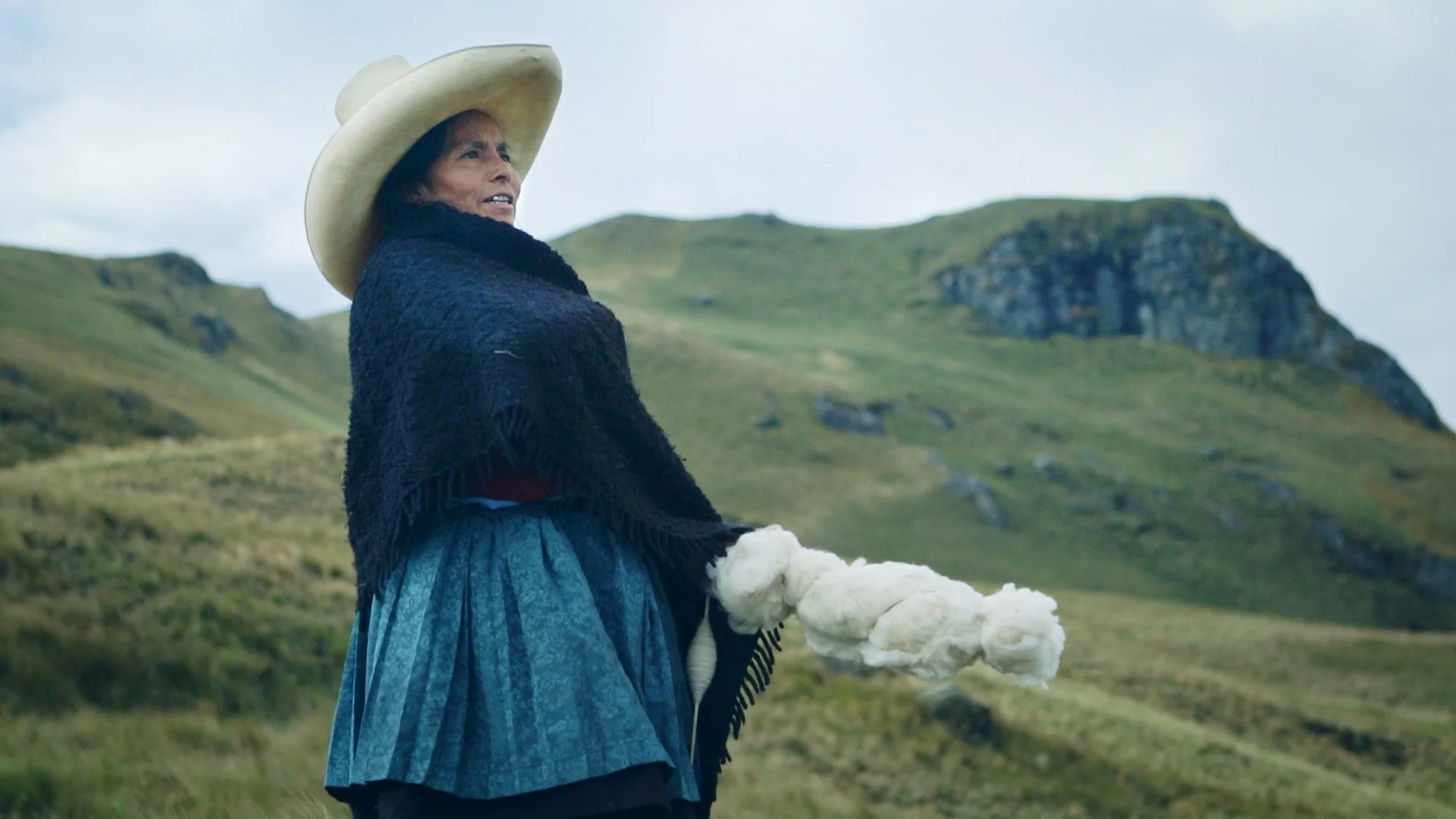
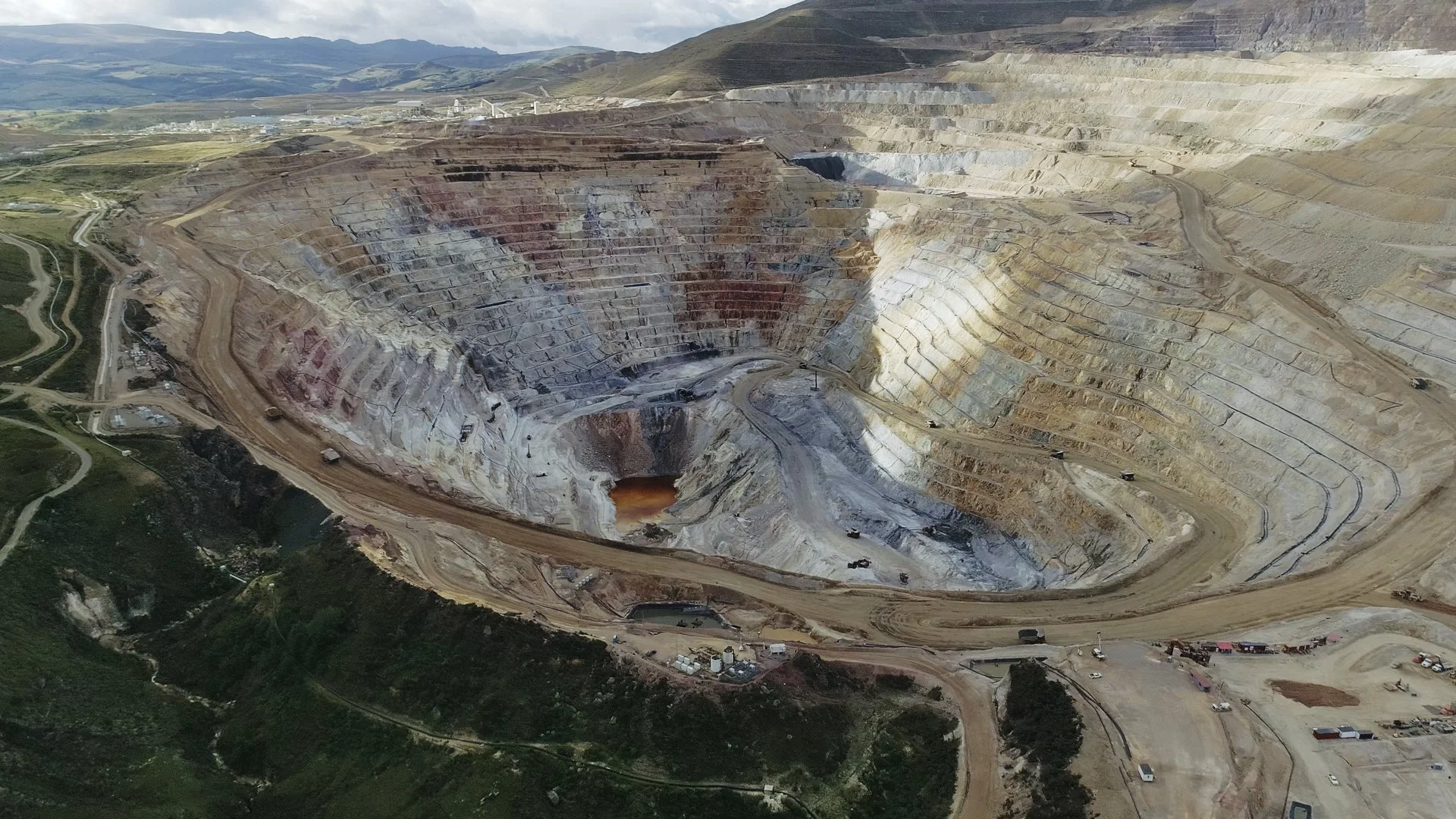
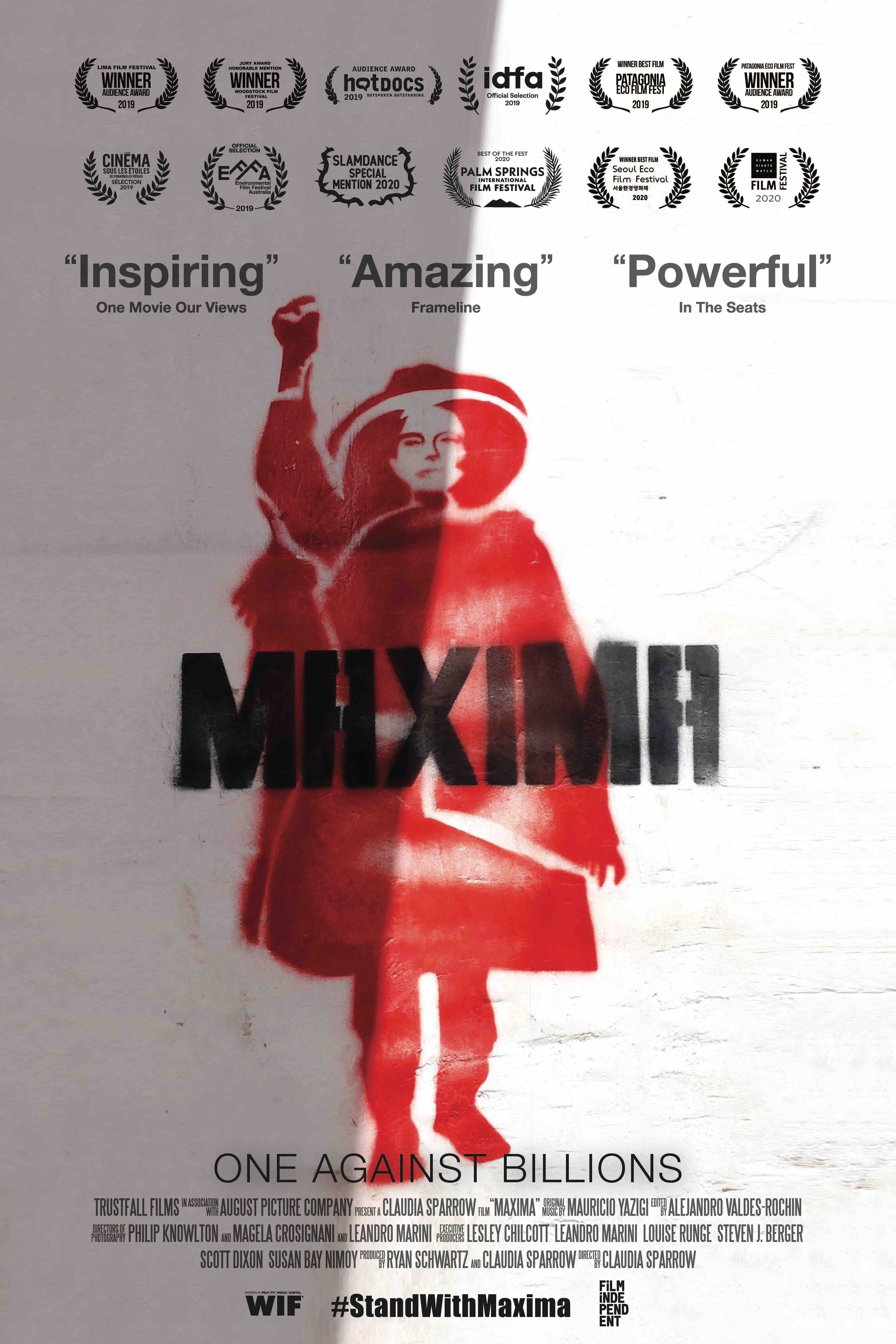
Maxima

January 07, 2022 by Carmela Baranowska

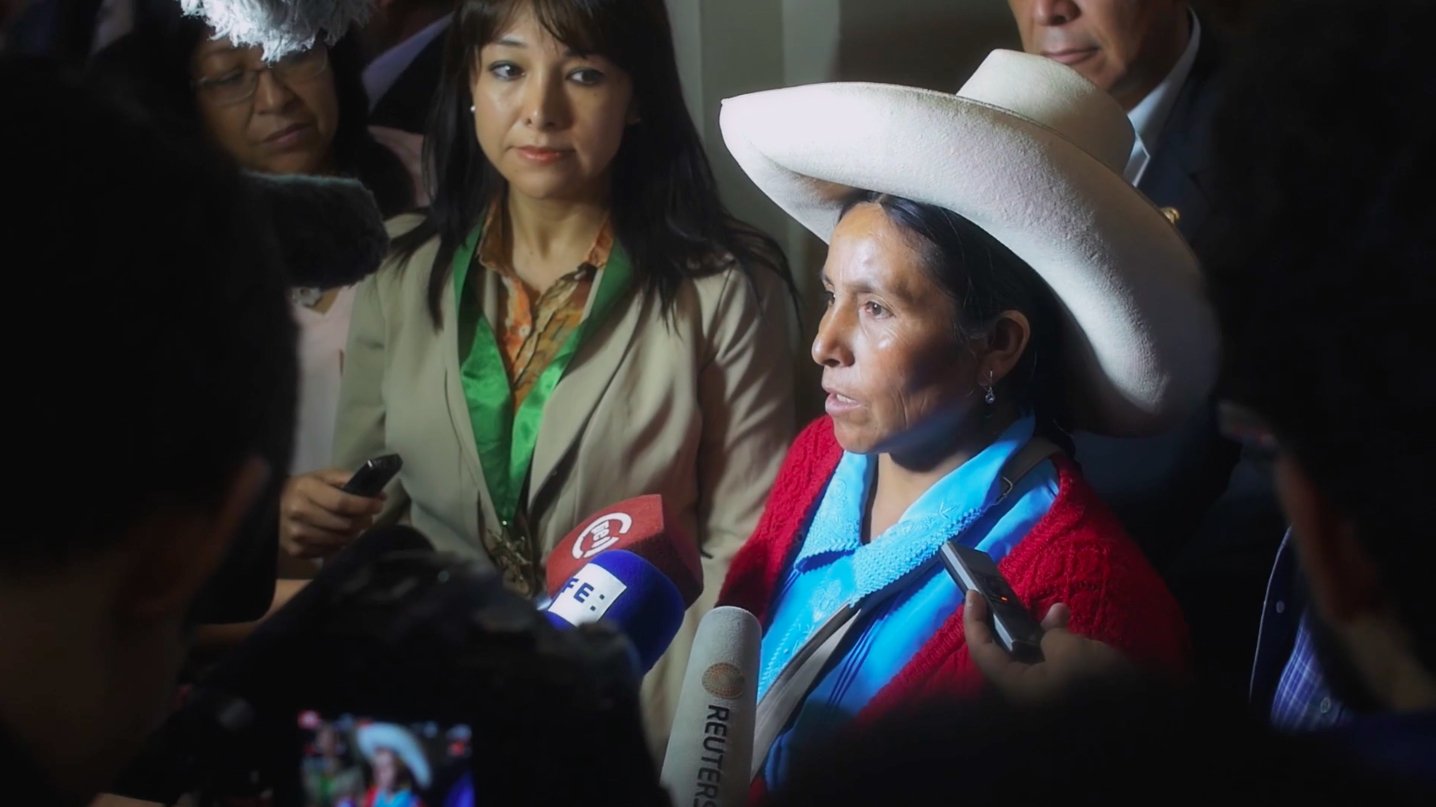
A multi-billion-dollar corporation meets their match in a fearless Indigenous woman who remains uncowed after years of violent intimidation.

Interview with Director/Producer Claudia Sparrow


Congratulations! Why did you make your film?

I came across the story of an extraordinary woman and I couldn't stay silent. I first heard of activist Máxima Acuña on 2016, shortly after she won the Goldman Environmental Prize. Her story shook me to my core, and I couldn’t stop thinking about her and her fight for justice, so I decided to do what I could to give her voice a larger platform.

Imagine I’m a member of the audience. Why should I watch this film?

MAXIMA represents the fight that environmental activists face all over the world. These people are heroes who are fighting for resources that we all need to survive. And yet, we don’t hear about them and the issues they are risking their lives for on mainstream media. Whether we know it or not, we all play a major role in it.

How do personal and universal themes work in your film?

By telling the personal journey of activist Máxima Acuña, we show how a land dispute quickly turns into a landmark case of human rights abuse. Throughout Máxima’s fight for justice, we reveal the mechanics of how a transnational corporation manages to get away with human rights and environmental crimes, The World Bank role in this, and the resilience of one woman who refuses to back down.

Maxima

How have the script and film evolved over the course of their development?

We never really had a script, the main goal was always to document Máxima’s journey and tell her side of the story. That said, we never expected to be able to cover as much of her legal fight as we did since that just happened to unfold shortly after we started filming her story.

What type of feedback have you received so far?

The positive feedback has been overwhelming so far and audiences seem to really connect with Máxima’s story and love the film. In addition to winning the Hot Docs Audience Award, MAXIMA has continued to gather audience and critical praise, as well as accolades in the festival circuit both in the U.S and internationally. It currently has a 90% rotten tomatoes score. We could not have asked for a better response for the film.

Has the feedback surprised or challenged your point of view?

The overwhelmingly positive response did surprise me because a large portion of the film takes place in a remote location, and I had no idea if audiences were going to connect with Máxima’s story and support her fight for justice. The film also addresses controversial themes so hearing how much people were moved by the film and inspired by Máxima was the most rewarding feeling in the world.

Maxima

What are you looking to achieve by having your film more visible on www.wearemovingstories.com?

The film is going to have its theatrical and digital release on January 7th and January 11th respectively, so we would like to reach the largest audience possible.

Who do you need to come on board (producers, sales agents, buyers, distributors, film festival directors, journalists) to amplify this film’s message?

We welcome anyone who want to join us in our efforts to create real impact so that could be anyone from individuals to non-profits and organizations.

What type of impact and/or reception would you like this film to have?

We would love for MAXIMA to serve as a much-needed reminder that we the people have the power to make a difference. We want to reach a global audience and offer them the opportunity to engage and contribute in different ways to protect human rights, the environment, support clean gold and hold corporations accountable for their actions.

What’s a key question that will help spark a debate or begin a conversation about this film?

Is gold worth its human and environmental cost?

Maxima

Would you like to add anything else?

To learn more about the film and support Máxima’s fight, please visit: www.standwithmaxima.com

What other projects are the key creatives developing or working on now?

Fiction and documentary films as well as a TV series.


Interview: January 2022


We Are Moving Stories embraces new voices in drama, documentary, animation, TV, web series, music video, women's films, LGBTQIA+, POC, First Nations, scifi, supernatural, horror, world cinema. If you have just made a film - we'd love to hear from you. Or if you know a filmmaker - can you recommend us? More info: Carmela

Maxima

Length:

1:27:56

Director

Born and raised in Lima, CLAUDIA is an Emmy-award-winning filmmaker who has been recognized as one of the ten most prominent directors in Peru. Prior to MAXIMA, she wrote and directed I REMEMBER YOU which is available on all major digital platforms. CLAUDIA is the recipient of the Franklin J. Schaffner Fellow Award for directing her film EL AMERICANO.

Producer

Under his Los Angeles-based production company, TrustFall Films, RYAN is producing three feature length documentaries, and a biopic based on the largest black orphanage in US history. RYAN SCHWARTZ’s first feature as writer/director, Summer of 8, was acquired by FilmBuff in 2016 and released theatrically by MGM/Orion. Starring Matt Shively (The Real O’Neals) and Shelley Hennig (Teen Wolf), Summer of 8 was named one of the top ten films of 2016.

Key cast:

Máxima Acuña (activist), Mirtha Vásquez (Máxima Acuña's lawyer), Maryum Jordan (Earth Rights International lawyer), Jacqueline Fowks (El País newspaper journalist)

Looking for:

Social media

https://www.facebook.com/standwithmaxima

https://twitter.com/standwithmaxima

https://www.instagram.com/standwithmaxima

Hashtags used:

#standwithmaxima

More info:
Apple TV - January 11th, 2022
Google Play - January 11th, 2022
TubiTV - January 11th, 2022


January 07, 2022 /Carmela Baranowska
Comment

Smokescreens

December 30, 2021 by Carmela Baranowska

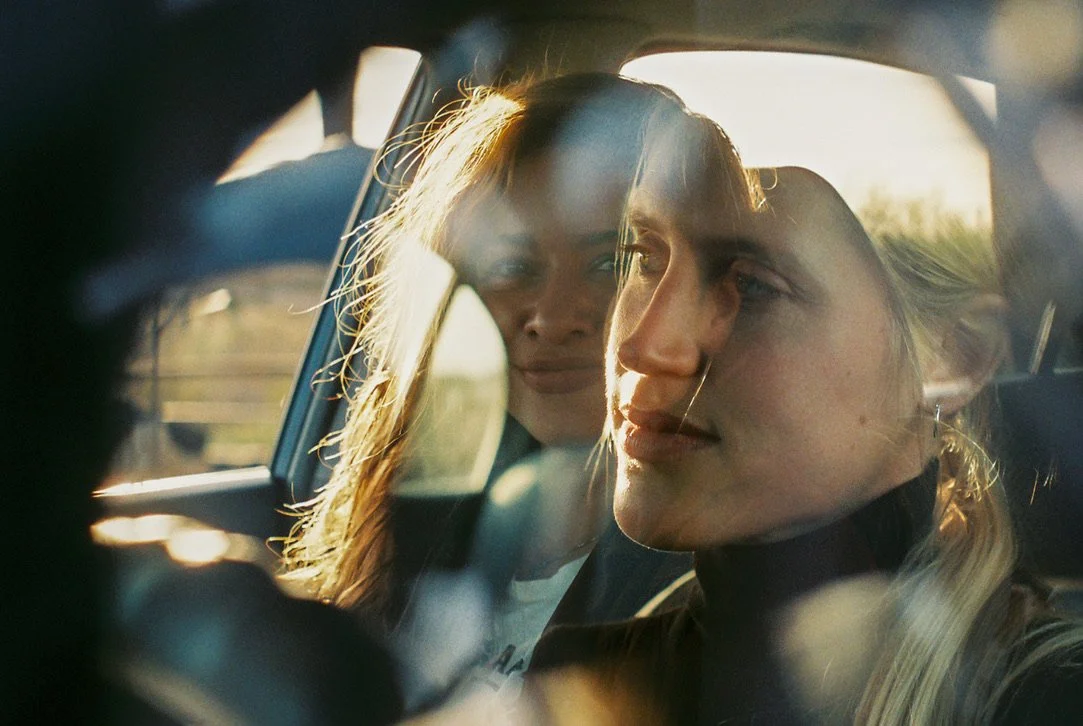
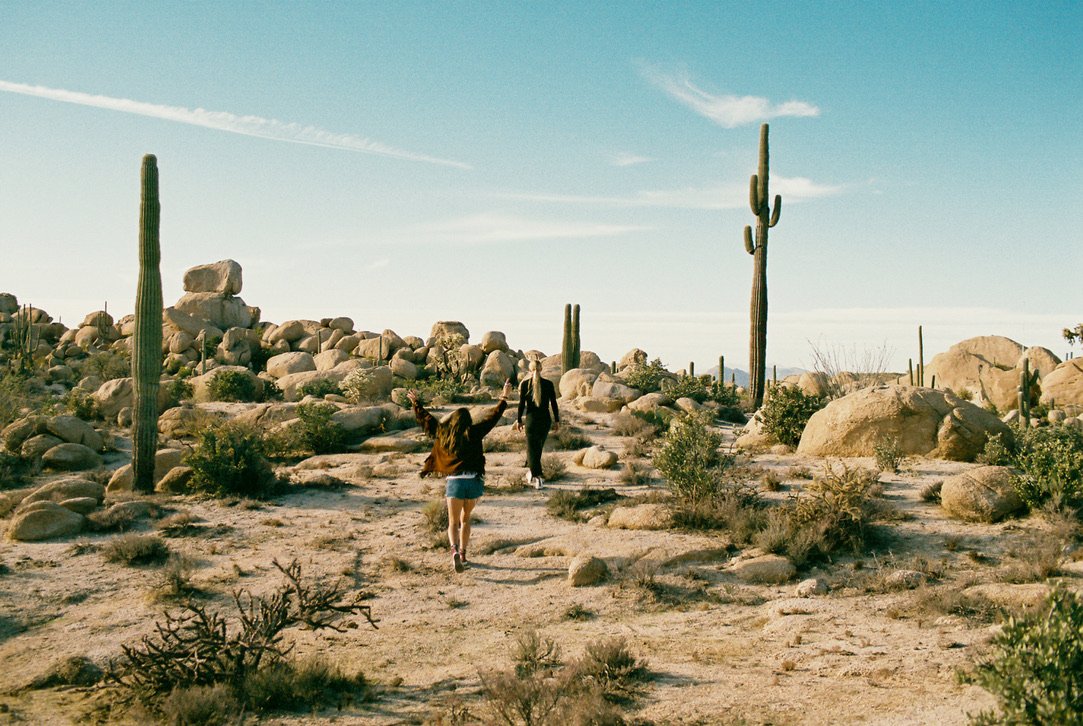
After escaping a secret rehab stint in the desert, Evan - more tightly wound than ever - must face her road to recovery, while driving her estranged, chaotic friend to a funeral.

Interview with Actor/Writer/Director E.C. Timmer


Congratulations! Why did you make your film?

This film is about the painful grace of being seen: that vulnerable moment our flaws are on display, and another flawed person sees us, then embraces us. Vulnerability like that is a human craving, and (honestly) it's a great fear too.

This era felt like the right moment to make a film not just for entertainment, but for connection. I entrusted my brilliant team with a personal story, nearly haunting, and the way they embraced it, transformed it, the way it all went down in our Arizona film-bubble, mid-Pandemic, living the thread together then and now: it’s the soul of Smokescreens.

Imagine I’m a member of the audience. Why should I watch this film?

Ok: so there are lots of films in the world. Lots. And myriad reasons to watch films: for entertainment, distraction, escapism. If you're open though: I offer this little film for another purpose: for patient connection - with ourselves, with others.

We glimpse two estranged friends - both running, caught in their private shame. Two smokescreens to mask their pain. And when the truth settles them like dust:

"I see you. You see me, a mess. And I’ll love you this way."

I offer these 18 minutes toward being seen as you are. As I am.
In a loud world: just this one intimate, broken moment - unfolding into Grace.

Smokescreens

How do personal and universal themes work in your film?

I wrote this script from raw personal experiences of rehab, breakdown, and the restorative love of friendship. Honoring a long tradition of artists (whom I admire), I tried to be specific with the experiences here, so that it might just touch the universality within each of us of shame, fear, connection, and ultimately: healing.

How have the script and film evolved over the course of their development?

This is the wildest, best part of "Smokescreens." The script began as a personal expression, and by entrusting it to my remarkable collaborators, it became so much richer, more textured, and more poignant than anything I could have created on my own. Visual motifs were added, the "fat" was trimmed, streamlined, scenes were cut, sound design motifs brought depths of emotion... On-set improvisation enriched the characters and their dialogue. The story doesn't belong to me anymore. From the Cinematography (Miguel Tafich), to the Sound Design (Kevin Khor), to the performance of Zara Michales as Stefanie, to the editing (Kristina Fabela), I was humbled and inspired watching this personal narrative transform and elevate in the hands of the artists around me.

What type of feedback have you received so far?

I'm incredibly grateful to have received excellent feedback. Thanks to my crew and team! Honestly: they made this film more than I could have. From Industry respected Directors, to The Hollywood Reporter's former Executive Editor, to audiences thus far, the feedback centers on powerful connection with the emotions and characters in the film. For some, it's a little too emotionally immersive, and I respect that. For others, there's not quite enough "story," and I likewise respect that feedback.

Smokescreens

Has the feedback surprised or challenged your point of view?

The "lack of narrative" feedback, has been particularly helpful to ponder. I intentionally set out to create a film more centered on emotional experience, rather than being "plot-driven." But this feedback has catalyzed me to dig into how I might've offered a little more "plot" for some audiences, how that might've changed the film, and how to craft my stories moving forward.

What are you looking to achieve by having your film more visible on www.wearemovingstories.com?

Community! I want to connect to a thriving, diverse, brilliant community of filmmakers. I mean... it takes a village, right? And mutual inspiration and collaboration is the secret sauce for filmmakers, for creatives. I love this about the vision of We Are Moving Stories!

Who do you need to come on board (producers, sales agents, buyers, distributors, film festival directors, journalists) to amplify this film’s message?

I'd love for "Smokescreens" to resonate with Film Festival Directors, Producers (more films like this to come!).

What type of impact and/or reception would you like this film to have?

Connection! (My favorite word right now.) I don't mean "connection" as a buzz word. I mean that I'd love to see this film inspire real conversations, reflection, and healthy vulnerability.

What’s a key question that will help spark a debate or begin a conversation about this film?

What shadow are we running from?

Smokescreens - BTS

Would you like to add anything else?

I'm grateful for this little space to share, and for this community of filmmakers! Happy to create alongside you all!

What other projects are the key creatives developing or working on now?

I'm developing a feature film, as well as two more short films, and an immersive installation for poetry and music! Here's to giving it all my best shot!

Interview: December 2021


We Are Moving Stories embraces new voices in drama, documentary, animation, TV, web series, music video, women's films, LGBTQIA+, POC, First Nations, scifi, supernatural, horror, world cinema. If you have just made a film - we'd love to hear from you. Or if you know a filmmaker - can you recommend us? More info: Carmela

Smokescreens

Length:

17:48

Writer/Director

E.C. TIMMER grew up amongst evergreens in Washington State. After a decade of travel through Asia, Europe, the Middle East, and Africa - filming documentaries - she now writes and directs films in Southern California. Emily is fascinated with the natural poetry of life, and she hopes to create enlivening art all across our planet until she's much older, wiser, and wears dentures. She’s an avid runner, and she'd like to make it to the moon. Someday. She's still fond of evergreens.

Producer

GOIRICK DAS enjoys observing a multitude of untamed and
developed scenery and interacting with all kinds of people
from various backgrounds to gain perspective and gain a
better idea of what the world around us is like. Goirick
enjoys investing his knowledge and resources to help
talented and motivated individuals achieve their full
potential and see their dreams come alive, whatever they
may be.


Key cast:

Zara Michales (Stefanie), E.C. Timmer (Evan)

Looking for:

film festival directors, distributors

Facebook:

https://www.facebook.com/emilychristina

Instagram:

https://www.instagram.com/smokescreensfilm/

Hashtags used:

#smokescreensfilm


December 30, 2021 /Carmela Baranowska
Comment

PAWS

December 16, 2021 by Carmela Baranowska

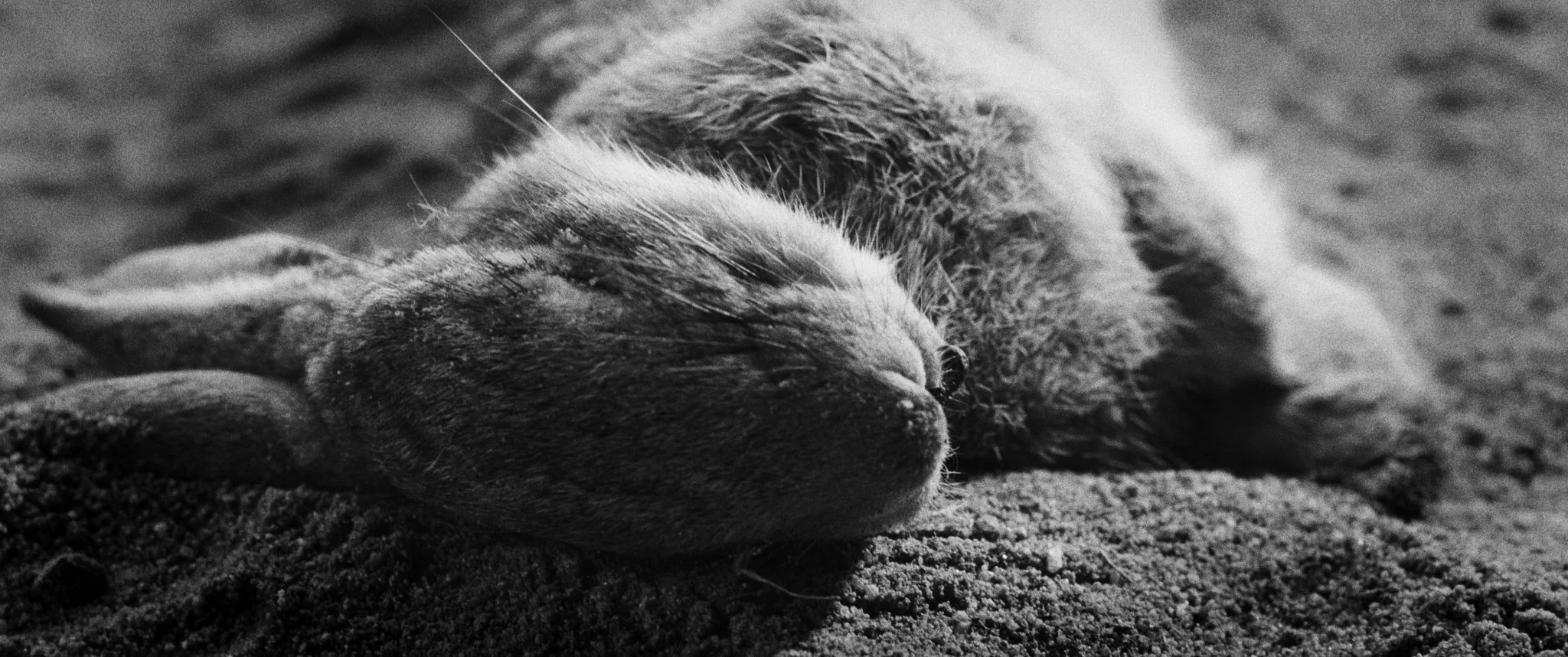
A woman's encounter with roadkill triggers memories of her late dog.

Interview with Writer/Producer/Cinematographer Meg White and Director Rayne Harris


Congratulations! Why did you make your film?

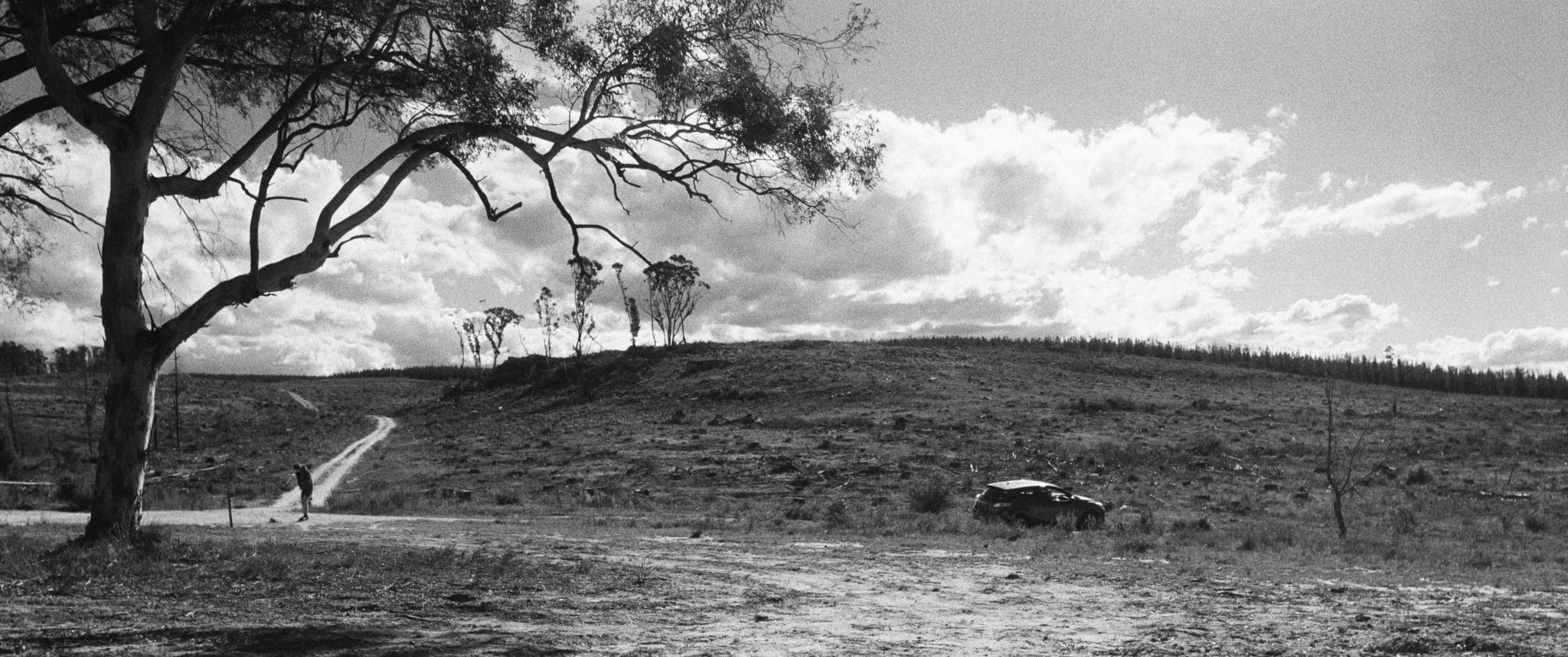
PAWS was made as part of the 2nd year AFI visual essay program. I wanted to tell this specific story as it was inspired by my relationship with my dog and experience of being along in isolated Australian landscapes. I wanted to create empathetic parallels between the death of road kill and that of a pet, but in all create a universal narrative of loss. I am fascinated by the zoological world and think beauty exists in death and wanted to show this through the empathetic response of Sarah( main character) and how she lets go of the past by showing care for roadkill. I am also fascinated by how the impact of isolation and being alone on country can have in restoring one's self. PAWS was filmed on on the land of the Gundungurra, Tharawal and Dharug people of Australia.

Imagine I’m a member of the audience. Why should I watch this film?

To see a of both tale of loss and letting go.

How do personal and universal themes work in your film?

The personal is the loss of a best friend, in this instance a dog. For me it would be if I had lost my dog Otis, whom in all honestly is the creature whom I spend most of my time with, something which became further pronounced during the lock downs. This film is ultimately a poem about the loneliness of loss and how it can haunt you no matter how far you try to run away.

PAWS

How have the script and film evolved over the course of their development?

The pandemic understandably through a few curve balls. This project was originally about two strangers who meet at an isolated road stop and was to be shot in LA. I have a thing for outback remote isolated settings, inspired by my solo travels around the Australian outback. The extended lock downs in LA and border closures in Australia meant I ended up shifting my production to Australia and adapting my story. It became a much insular film structured around memory, loss and isolation in an outback Australian landscape. The initial car setting was also born from pandemic restrictions. Both scripts always had hope and connection at the end. For me it was important PAWS had closure and release for main character Sarah as she was finally able to say goodbye/ let go of the past.

What type of feedback have you received so far?

I have received much feedback about there being a consistent emotional through line, there is an arc that builds through the piece. Sometimes there was confusion about the dog and what had happened as I tried to parallel the two past and present settings at the car.

Has the feedback surprised or challenged your point of view?

I wish I could have been a little more challenged - the feedback I received was expected but I believe it could be much more critical. I think I always want people to be as critical as I am of myself.

What are you looking to achieve by having your film more visible on www.wearemovingstories.com?

To share a story that explores loss through the desolate and macro landscapes of nature, whilst also display an aesthetic and sentiment towards this tone and subject matter. I wish to be more visible within the US / OS film industry and I believe being part of We Are Moving Stories will assist in that. I also think its a great platform to share and express unique stories which otherwise may be missed. It's a privilege to be a part of it of this collection.

PAWS

Who do you need to come on board (producers, sales agents, buyers, distributors, film festival directors, journalists) to amplify this film’s message?

Sales agents, distributors and journalists that could help sell the message of the film.

What type of impact and/or reception would you like this film to have?

I hope PAWS can be received as a film that psychically shows and emotionally conveys the loneliness of loss, and how memories can haunt us no matter how far we try to run away. But also as a film that imbues empathy for the natural world.

What’s a key question that will help spark a debate or begin a conversation about this film?

Why did even Sarah stop for the rabbit?


Interview: December 2021


We Are Moving Stories embraces new voices in drama, documentary, animation, TV, web series, music video, women's films, LGBTQIA+, POC, First Nations, scifi, supernatural, horror, world cinema. If you have just made a film - we'd love to hear from you. Or if you know a filmmaker - can you recommend us? More info: Carmela
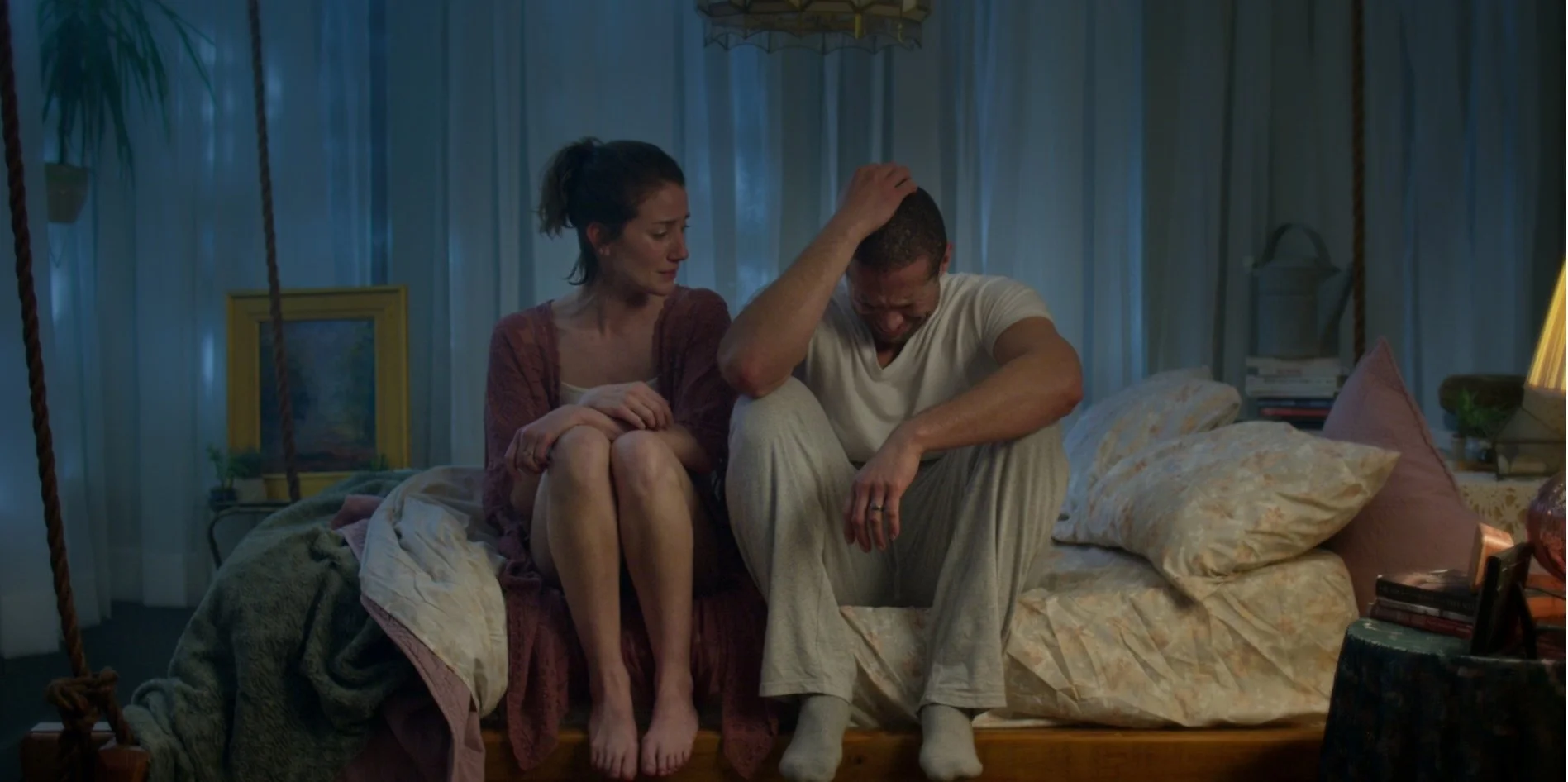

PAWS

Length:

Writer/Cinematographer

MEG WHITE is an Australian cinematographer / filmmaker /fine art photographer who works across features, tv, commercials and documentaries. Inspired by the natural world and she seeks to create empathetic and evocative imagery. MEG is an alum of UTS and AFI and has shot Emmy and Rose d’Or award winning drama. She has won multiple ACS awards and is the inaugural recipient of Screen Australia Onbass Fellowship.

Director

GIA_RAYNE B. HARRIS is a Mississippi Native, UPenn alum, and recent AFI graduate. She has been producing, writing, and directing for film and advertisement since 2018. She has 10 produced short films under her belt and three more on the horizon. The through line of all of her work is adversity, empathy, and resilience. She seeks to keep womxn and BIPOC individuals at the center of her narratives. She loves to learn and sees each new project as an opportunity to grow as a filmmaker and person.

Producer

Joss Utting, Alex Oger, Meg White

Key cast:

Alex Stammel, Otis White

3:00

Instagram:

https://www.instagram.com/the_other_meg_white/?hl=en

Made in association with:

AFI Conservatory


December 16, 2021 /Carmela Baranowska
Comment

Pretenders

December 11, 2021 by Carmela Baranowska

Losers in their hometown and losers on vacation, Jasper, Hannah, and Nick lie, scheme, and steal their way to bull-shittery and debauchery on their not-so-idyllic beach vacation.

Interview with Editor/Writer/Director Tristen Stafford

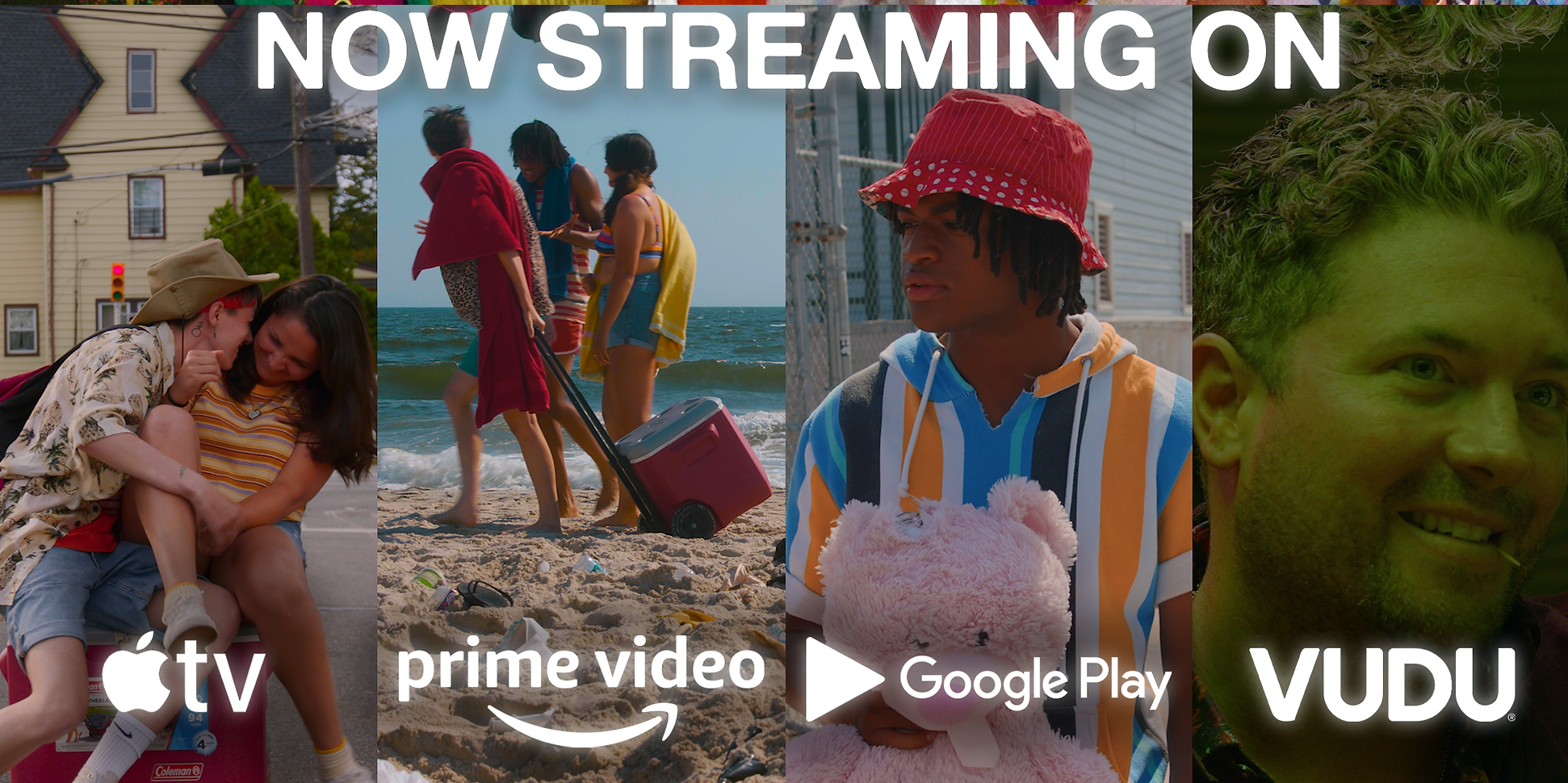
Watch on Prime Video, iTunes and Goggle Play


Congratulations! Why did you make your film?

There are far too many lesbians in cinema history without electricity. Queer struggle and trauma is more often than not fetishized in movies and/or put in some far off place in time. I wanted to write a movie that rebelled against that with goofy stoner characters taking a road trip to a beach town. It's a lot more simple than a victorian era star-crossed lovers rehash.

Imagine I’m a member of the audience. Why should I watch this film?

If you're a member of the audience it's probably because you paid to get in. Who wants to waste their money by getting up and leaving? Hopefully you won't want to. It's a cartoonishly witty movie about both growing with and growing apart from your closest, most intimate friends: the earworms and phrases you had with only them, the support lengths you'll go through to keep the glue of the group together, and the heartbreak that comes along with it. It's arguably the most heartfelt lowbrow comedy of all time, let's say it that way.

How do personal and universal themes work in your film?

My own experience with queerness comes from soft discovery when I was young, and then rediscovery at a post-college age. I spent most of my time doing absurd things with my friends and talking about our feelings, not really having the world beat me down for my queerness. I suppose it comes from privilege as a straight-passing white guy with fondness for privately crossdressing. Who knows. But I wanted to make a film reflective of that and those sensibilities. It's almost like I didn't know the extent of my gayness until making Pretenders. Once I saw characters that looked like me exercising their queerness in the same way I do (obviously), I felt I could express myself further. I don't know. I hope someone who thinks they're cis and straight sees this movie and goes "hey wait am I gay? They're just like me! These gays have electricity!"

How have the script and film evolved over the course of their development?

Tons. The earlier drafts had this cool tone of like a noir mystery in the middle of it that totally got scrapped(saving for later). And then the edit of the film is where so much of the playful attitude of the film came from.

What type of feedback have you received so far?

It's been great! The recognition for doing this film this way feels really nice. It's like on one hand it's a movie, they never come out the way you want. On the other, I love it. I love the way it makes people think and all the conversations surrounding it.

Has the feedback surprised or challenged your point of view?

It's made me realize that there are even gatekeepers to the queer community. One piece of feedback I got from a notable festival (which will remain anonymous until I make enough money to afford a fantastic lawyer) is that it's just "not gay enough to be an lgbtq film." What does that mean? There are so many shades of queerness, discovery, and self identity. I suppose I chose the off-color shade.

What are you looking to achieve by having your film more visible on www.wearemovingstories.com?

The more people that can see and be seen, the more we continue to learn about ourselves and what we want. If this exposes someone to queerness in a way where they see themselves reflected through all the crass-yet-sweet humor, then congratulations & welcome to the club. We have membership fees that can be paid directly to me.

Who do you need to come on board (producers, sales agents, buyers, distributors, film festival directors, journalists) to amplify this film’s message?

Sales agents, buys, distributors, and journalists. We are still in the market to sell our International rights and our Theatrical rights. If we continue doing well on our reviews and write ups, I believe this will help greatly.

Pretenders

What type of impact and/or reception would you like this film to have?

Less queer trauma-fetishization, more fun.

What’s a key question that will help spark a debate or begin a conversation about this film?

"Is this film 'gay enough' to you? What does 'gay enough' mean?"

Would you like to add anything else?

Thank you for having the space for us to talk about our movie!

What other projects are the key creatives developing or working on now?

Tristen is currently shooting a short film titled "Blunt Civility," writing and developing his next feature, and will debut his new work in 2022 through his New York City based art collective.


Interview: December 2021


We Are Moving Stories embraces new voices in drama, documentary, animation, TV, web series, music video, women's films, LGBTQIA+, POC, First Nations, scifi, supernatural, horror, world cinema. If you have just made a film - we'd love to hear from you. Or if you know a filmmaker - can you recommend us? More info: Carmela
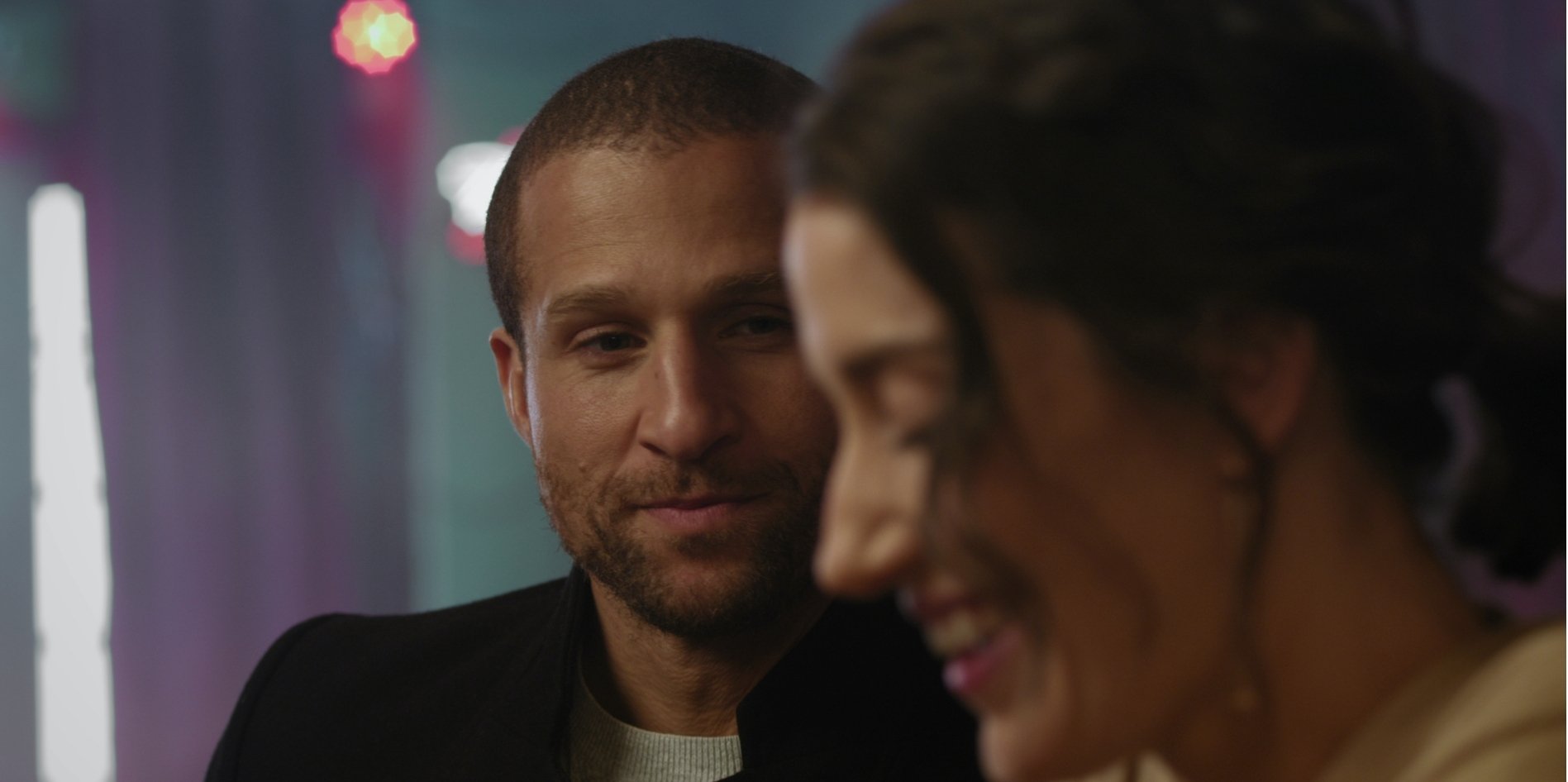

Pretenders

Length:

1:26:00

Writer/Director

Tristen Stafford is a queer Queens based artist, writer, and filmmaker. In 2021, his first film "Pretenders" won Best Feature at the Cinequest Film Festival and earned domestic distribution through Gravitas Ventures. He is currently in production for the new short film "Blunt Civility," and is in early development for his next feature film. Stafford's New York based interdisciplinary art collective will be debuting their first works in 2022.

Producer

James Canellos is a freelance producer and production coordinator. James has worked in various Tribeca Film Institute programs. His produced shorts have been featured in the Bushwick Film Festival, 30 Under 30 Film Festival, Cannes Short Film Corner, Tribeca Film Institute, and CAA Moebius.

Key cast:

Libby Larkin (Jasper), Diata Coleman (Nick), Emma Grace Myers (Hannah)

Looking for:

distributors, buyers, journalists

Instagram:

https://www.instagram.com/hahayeahsure/

Hashtags used:

#pretendersthemovie

More info:
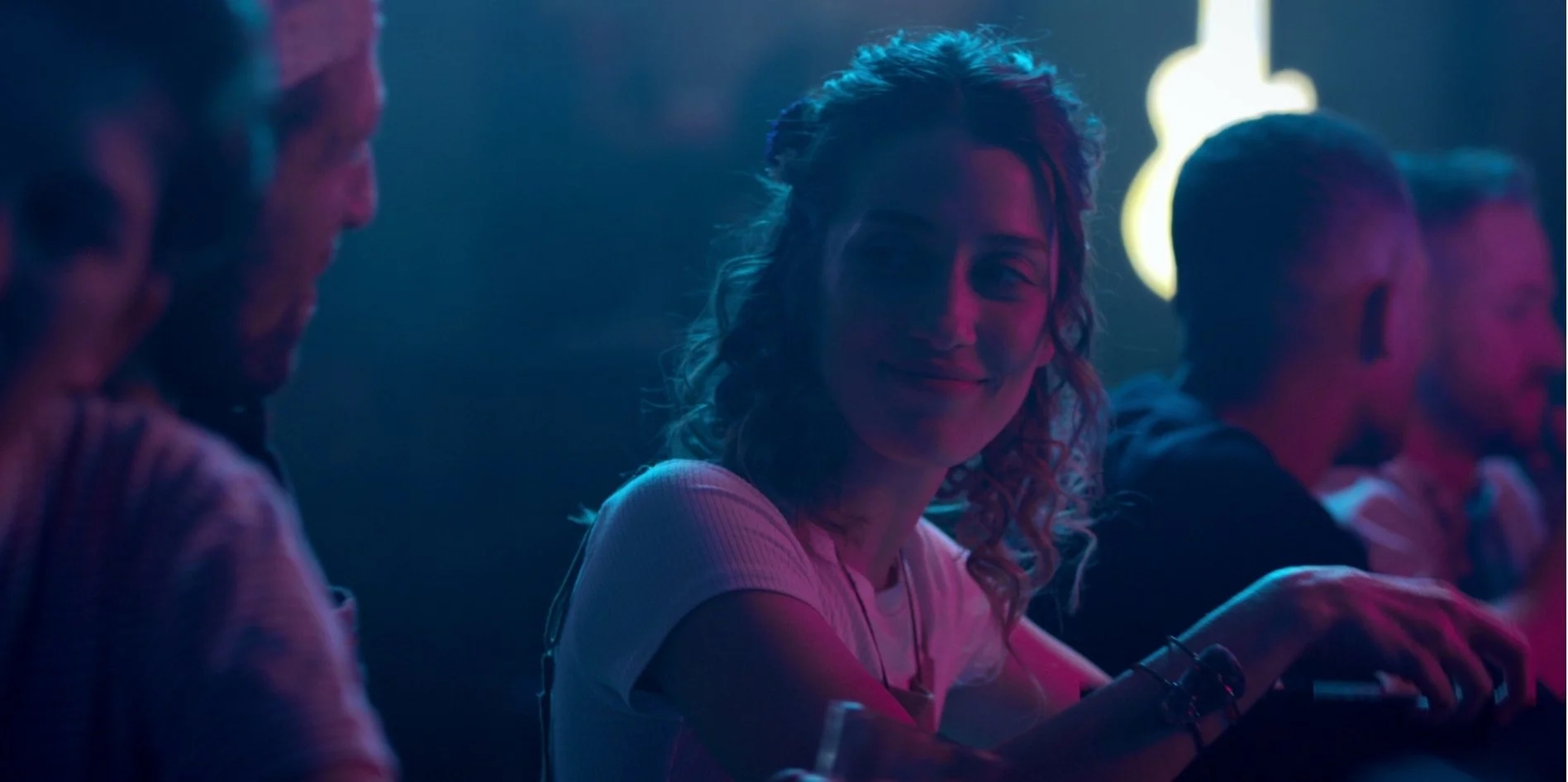
Where can I watch it now?

Apple TV, Amazon Prime, Vudu, YouTube TV


December 11, 2021 /Carmela Baranowska
Comment

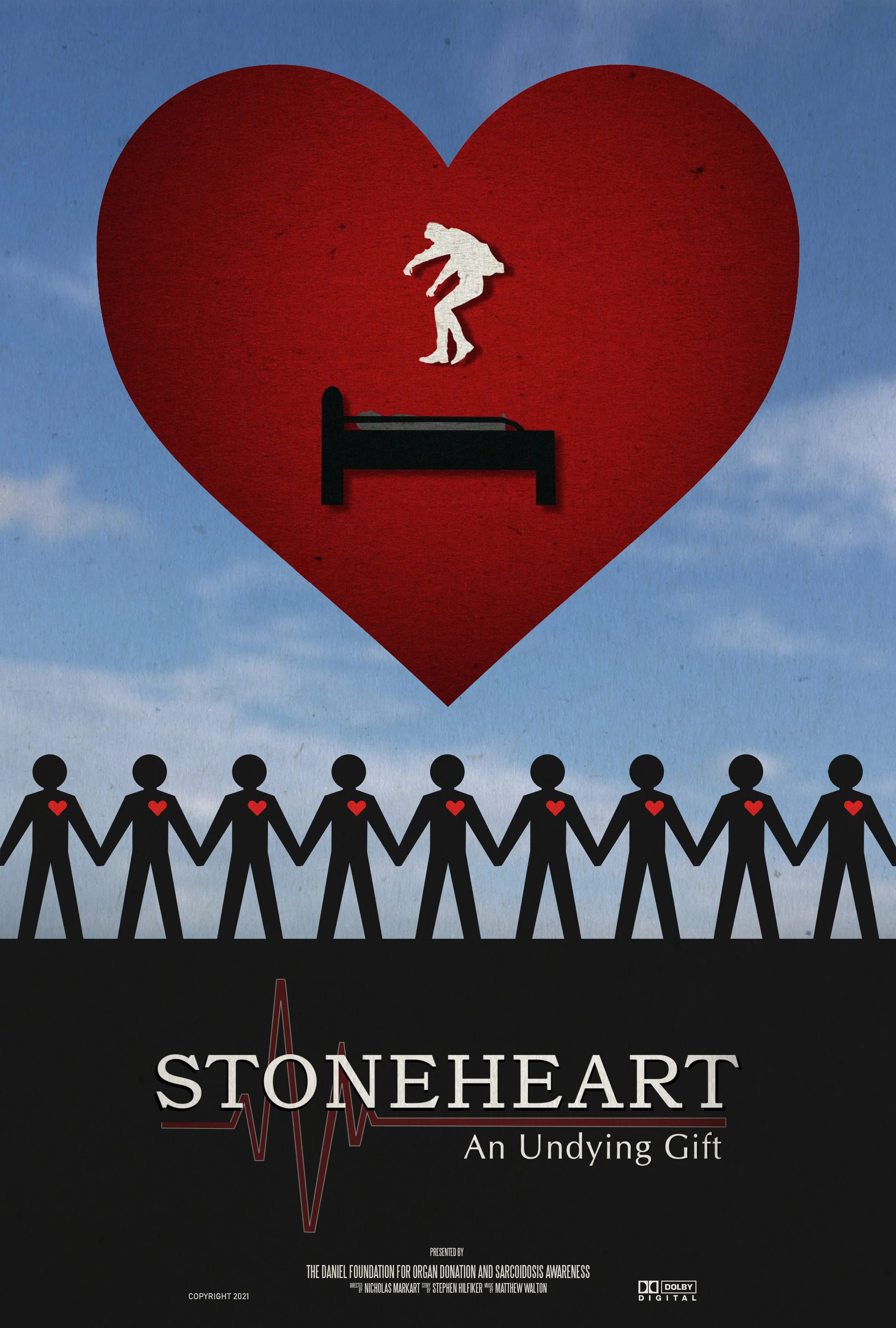
Stoneheart: An Undying Gift

December 09, 2021 by Carmela Baranowska

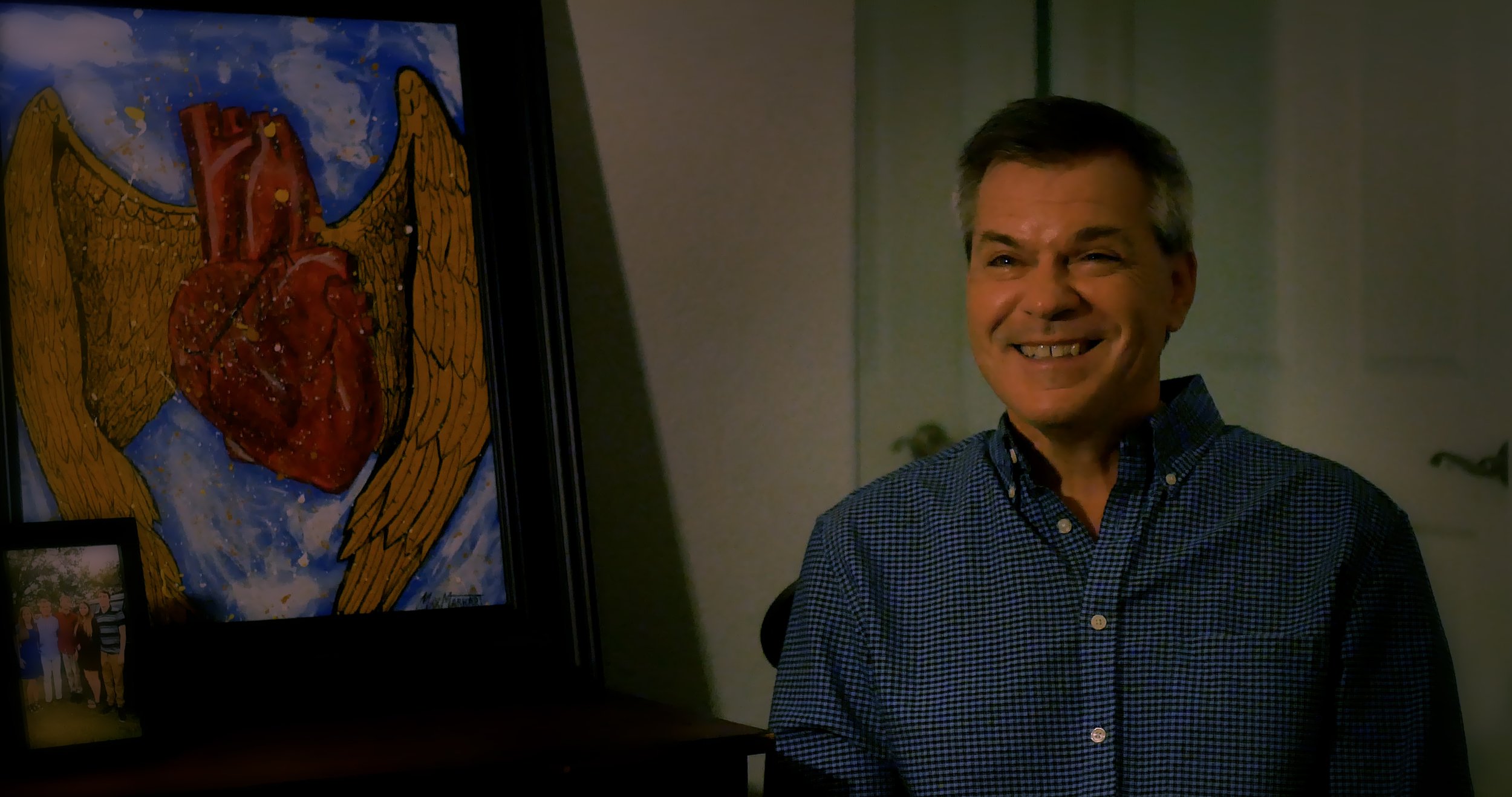
Steve Hilfiker, a heart transplant survivor and father of four, describes his experience facing death, and how his perspective on life has forever changed following the fateful operation.

Interview with Editor, Director, Producer Nicholas Markart


Congratulations! Why did you make your film?

This film is very personal to me, as the subject of the documentary is my own uncle, Steve Hilfiker. My mission was to capture his experience facing death in a way that is emotionally immersive for the audience, as well as informative. His journey leading up to and following his heart transplant is a story that is both relatable and inspiring. Ultimately, we hope to raise awareness about Cardiac Sarcoidosis, find a method of early detection, and support organ donation.

Imagine I’m a member of the audience. Why should I watch this film?

At some point, everyone has wondered to themselves what will happen after they die. This film offers insight not only into that curiosity, but also into what makes life so special to begin with.

How do personal and universal themes work in your film?

On a personal level, this film deals with Steve's role as a single father of four. As his health declined in the years leading up to his transplant, he had to accept the fact that he was running out of time with his family. On a universal note, we touch on the connection that he feels now toward his donor, who tragically passed away, and the duality between his miraculous recovery and the life that was lost. The main takeaway of this story is that life is beautiful, and that we should cherish every moment that we have with our loved ones.

How have the script and film evolved over the course of their development?

The film originally began as a promotional video for Steve's non-profit foundation, but as production began, we realized that this is a story worth telling on a grander scale. That's how this short documentary came to exist, and we are working now to expand even further in order to tell this story in a feature-length project. Additionally, Steve is drafting a novel based on his experiences for future release.

Stoneheart: An Undying Gift

What type of feedback have you received so far?

So far, there have been tears shed at every screening we've had. It's amazing to see people so moved by this story and cause.

Has the feedback surprised or challenged your point of view?

The biggest surprise has been the amount of follow-up questions that we receive after the screenings. Many people want to know more about the science behind sarcoidosis and the ways in which we can develop a method of early detection. Cardiac sarcoidosis is a treatable disease, but it often goes undiagnosed until things are too late. We plan on releasing follow-up content in the near future that goes into the fine details of the how the illness takes effect.

What are you looking to achieve by having your film more visible on www.wearemovingstories.com?

We would love to find opportunities for more exposure and screenings. Since this film is tied to a non-profit cause, spreading the word is our number one goal!

Who do you need to come on board (producers, sales agents, buyers, distributors, film festival directors, journalists) to amplify this film’s message?

Festival directors and journalists would be great in helping us spread awareness. Thank you!

What type of impact and/or reception would you like this film to have?

We hope to remind audiences to cherish the little things in life and to inspire them to help us in the fight against sarcoidosis. Sarcoidosis appears in autopsies far too often, and our goal is to help turn that phenomenon into a thing of the past.

What’s a key question that will help spark a debate or begin a conversation about this film?

What can we learn from near-death experiences?

Would you like to add anything else?

I'd like to thank you for the opportunity to share this film. If there is anyone out there who would like to donate to the foundation, please use the following method:

Collaboratory.org/donate
(Enter FODASA on the ‘Donation Purpose’ line)

Stoneheart: An Undying Gift

What other projects are the key creatives developing or working on now?

screenplays for an independent publishing company, as well as releasing an animated web-series in the first quarter of 2022.

Together, Nicholas Markart and Steve Hilfiker are working to expand Steve's life story into a narrative feature film. There is more to this story to tell, and they are seeking the platform to do so. Additionally, Steve is drafting a novel based on his experiences for future release.


Interview: December 2021


We Are Moving Stories embraces new voices in drama, documentary, animation, TV, web series, music video, women's films, LGBTQIA+, POC, First Nations, scifi, supernatural, horror, world cinema. If you have just made a film - we'd love to hear from you. Or if you know a filmmaker - can you recommend us? More info: Carmela
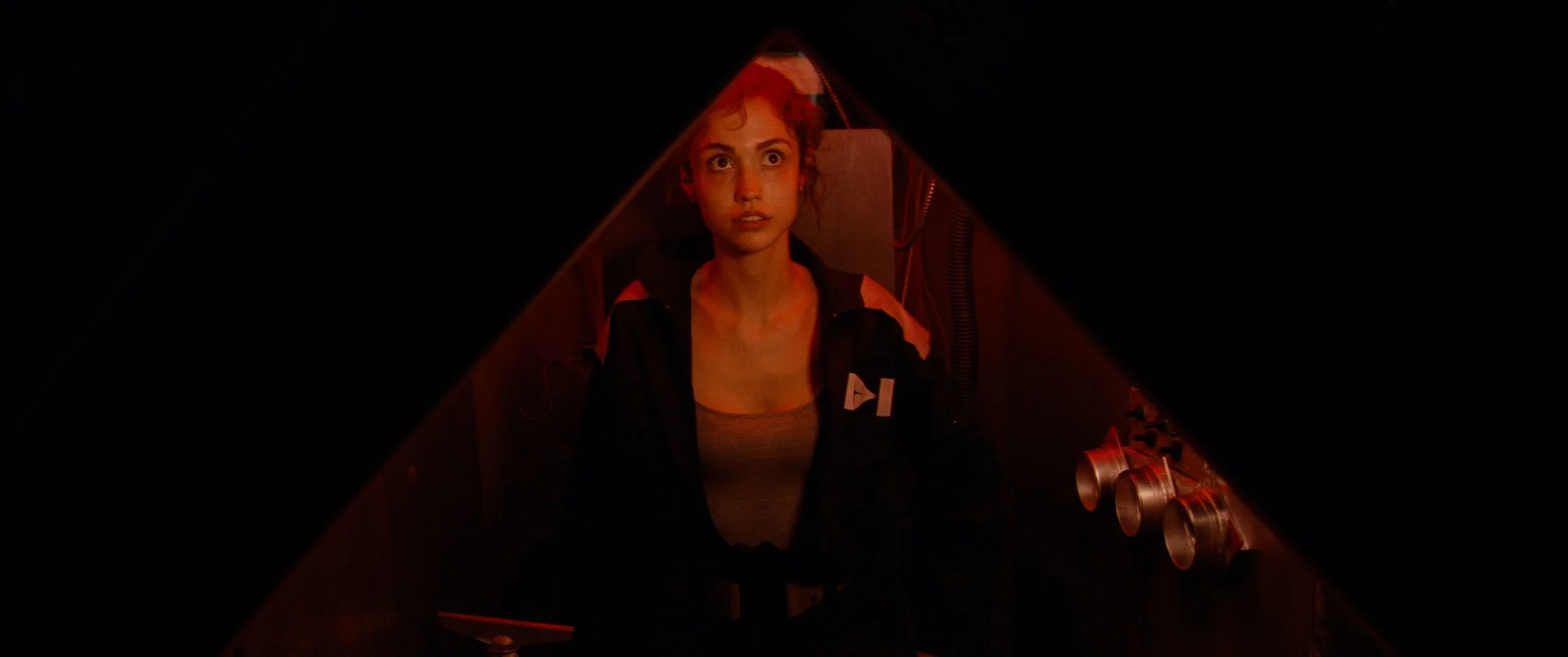

Stoneheart: An Undying Gift

Length:

6:20

Writer/Director

NICHOLAS MARKART'S filmography lives somewhere between human rights activism and genre-bending absurdity. He is known for his short documentary, "Peacekeeper", which screened at Cannes International Film Festival, and his horror-comedy, "AV Club", which was featured in 7 Comic Cons across the United States. His education at the Florida State University College of Motion Picture Arts included formal training in all positions on a film set, but his focus lies in writing and directing. After graduating, NICHOLAS worked on Season 5 of "DC's Legends of Tomorrow", as well as many other film and music video productions.

Producer

STEVE HILFIKER is president of Environmental Risk Management, Inc. (ERMI), based in Fort Myers, Florida. MR. HILFIKER'S expertise is in site assessment, risk management, and environmental forensics. After surviving a heart transplant, STEVE founded The Daniel Foundation for Organ Donation and Sarcoidosis Awareness (FODASA) in order to raise awareness about the rare disease that nearly took his life and support organ donation accessibility.

Key cast:

Steve Hilfiker (Himself)

Looking for:

film festival directors, journalists

Facebook:

https://www.facebook.com/DanielFoundationFODASA

Instagram:

https://instagram.com/danielfoundationfodasa

Hashtags used:

#Sarcoidosis #SarcoidosisAwareness #TransplantSurvivor #TransplantAwareness

More info:
http://bit.ly/2ZIM86n


December 09, 2021 /Carmela Baranowska
Comment

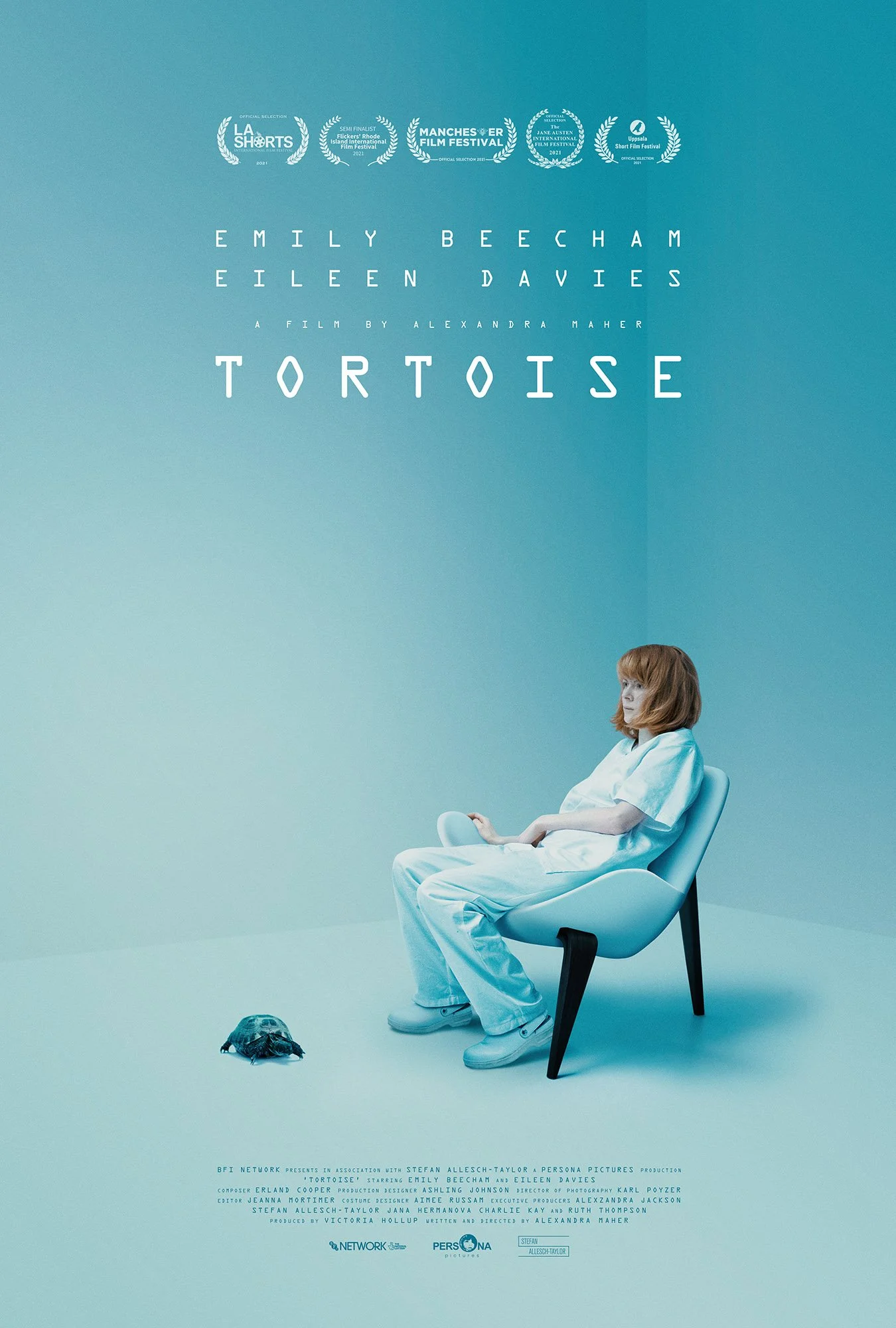
Tortoise

November 30, 2021 by Carmela Baranowska

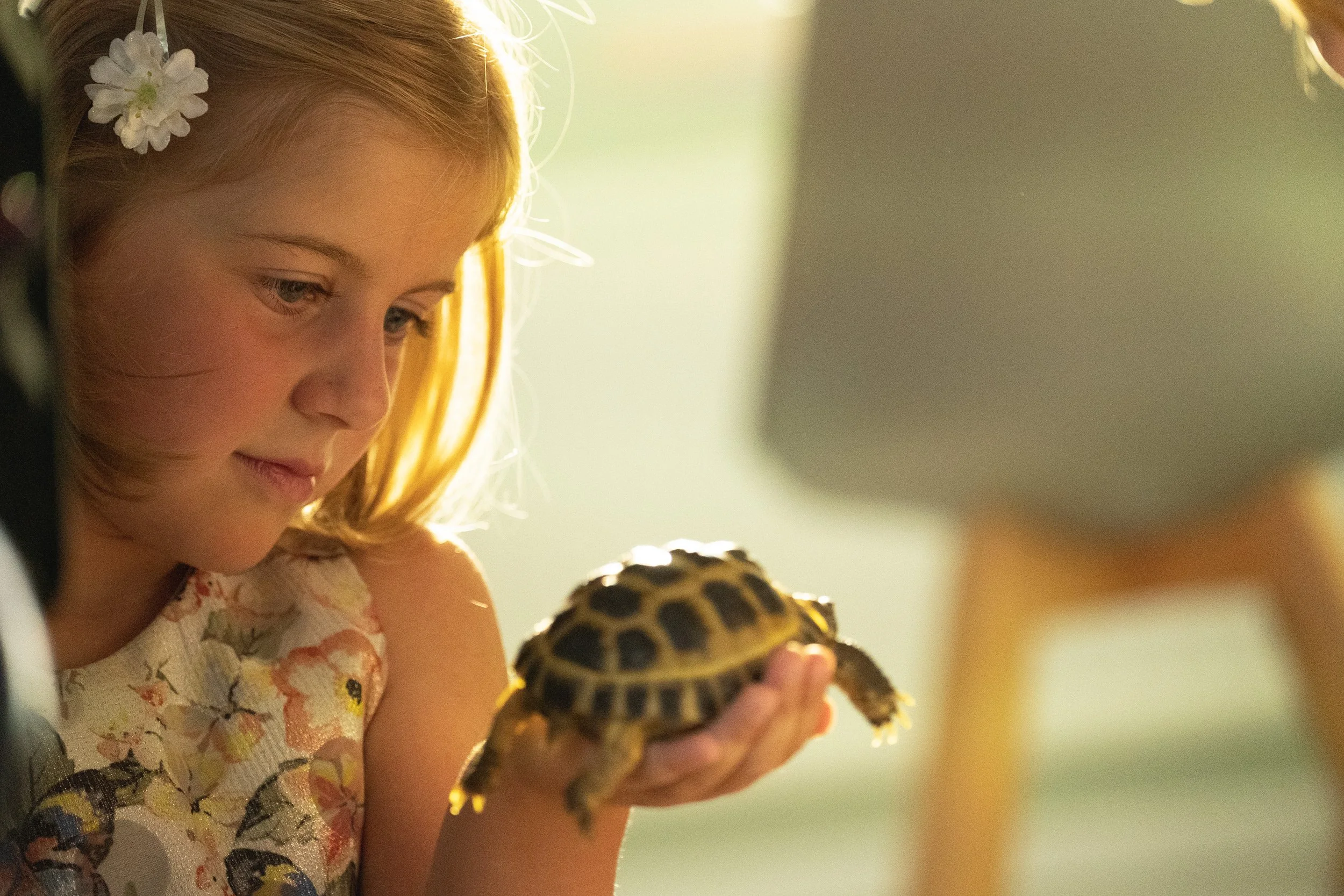
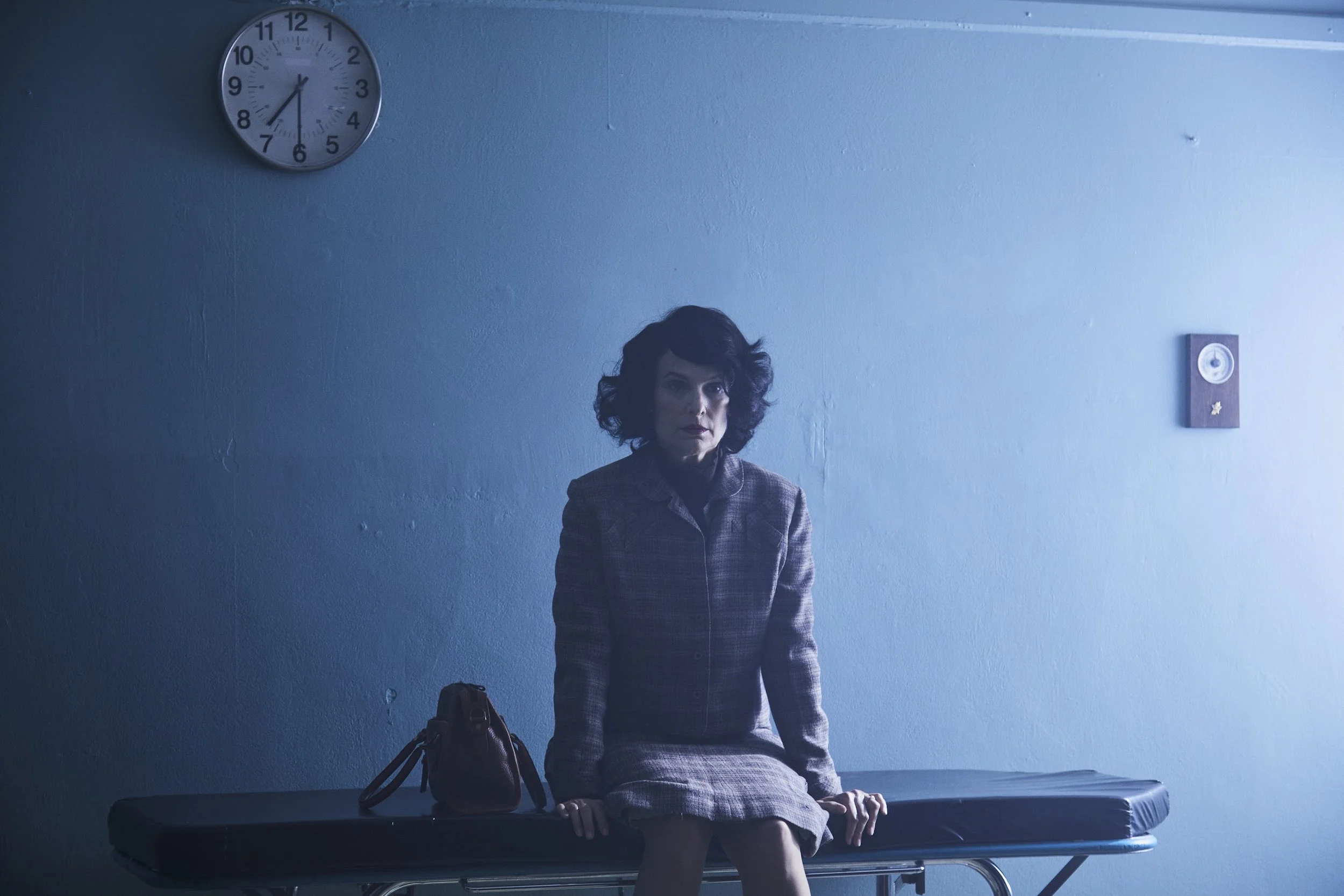
A desperate young woman must overcome amnesia in order to understand her strange surroundings and finally be reunited with her daughter.

Interview with Writer/Director Alexandra Maher


Congratulations! Why did you make your film?

Thank you! Since reading Mary Rose by JM Barrie as a teenager, I have been fascinated by ideas of ageing, existence and role-reversal. Tortoise was inspired by a 2016 high court battle in which a 14 year-old cancer patient won the right to be cryogenically frozen upon her death.

Imagine I’m a member of the audience. Why should I watch this film?

Tortoise takes the audience on a strange and moving journey, during which preconceptions of what to expect from life, and when, are challenged. It has fantastic performances from Emily Beecham, Eileen Davies and Freya Jones, plus some beautiful cinematography from Karl Poyzer.

How do personal and universal themes work in your film?

The mother/ daughter relationship at the heart of this film encompasses themes of maternal love and unbreakable bonds. The sci-fi aspect explores ideas around life, death and scientific intervention.

Tortoise

How have the script and film evolved over the course of their development?

I started working on the script in 2016. In its first iteration, it was a caper-comedy called Lola. Over the course of 3 years, it evolved enormously through a process of workshopping with actors, the BFI team and my wonderful script editors, Abee McAllum and Jessica Jones. The core premise stayed the same but the script changed almost beyond recognition. In production and post-production, the input of the whole team, who came with all of their talents, brought the script to life, leading to the finished product we have today. The magical score by Erland Cooper came in near the end of the process and really took the film to the next level.

What type of feedback have you received so far?

The film has played at Manchester International Film Festival, LA Shorts International Film Festival, Jane Austen International Film Festival, Uppsala International Short Film Festival and Flickers Rhode Island International Film Festival. It has won a 'Best Original Concept' award and is awaiting response from a number of further festival applications. People I know who have seen the film often comment that they found it to be a very emotional experience; this response is especially common amongst those who are parents to young children.

Has the feedback surprised or challenged your point of view?

I can't say that it has, to be honest!

What are you looking to achieve by having your film more visible on www.wearemovingstories.com?

I'd love for the film to play at more festivals and to open up conversations with industry professionals who find the work interesting.

Tortoise

Who do you need to come on board (producers, sales agents, buyers, distributors, film festival directors, journalists) to amplify this film’s message?

Now that the film is complete, it's all about reaching an audience and sharing the work as widely as possible. Distributors, festival directors and journalists could all help to make that happen.

What type of impact and/or reception would you like this film to have?

I'd like this film to provoke thoughts on the topic of cryogenics. I believe the film can remind us to value our loved ones and savour the time we spend together. I'd like the reception to include plaudits for all the actors, especially Emily Beecham, who gives an award-worthy performance in a very challenging role.

What’s a key question that will help spark a debate or begin a conversation about this film?

There are two: 1. Would you consider being cryogenically frozen upon your death? 2. Can you imagine a situation in which your unconditional love for your own child would be put to the test?

Tortoise

Would you like to add anything else?

Thank you so much for the opportunity to be seen on your platform! It’s all because of our producer, Victoria Hollup, that we’re here and, indeed, at any of the festivals. The hard work of the producer is never-ending, it seems, and takes enormous energy, so hats off to that. Huge thanks, also, to our funders BFI Network, Film Hub Midlands and Stefan Allesch Taylor; without their generous support, we could not have made the film.

What other projects are the key creatives developing or working on now?

I think everyone is busy. We were lucky to have an excellent team across the board, so they're all in hot demand! Post-pandemic has been a very active time for film and TV. I shot my second short, The Cunning, this summer. It is about a young woman with Downs syndrome who is accused of witchcraft in 1724. It stars Gemma Arterton and Bethany Asher. My third short, Arias, has a wonderful BAFTA-winning actress attached and will shoot next summer. Meanwhile, I am developing a comedy-drama for TV and working on the second draft of my first feature.

Interview: November 2021


We Are Moving Stories embraces new voices in drama, documentary, animation, TV, web series, music video, women's films, LGBTQIA+, POC, First Nations, scifi, supernatural, horror, world cinema. If you have just made a film - we'd love to hear from you. Or if you know a filmmaker - can you recommend us? More info: Carmela
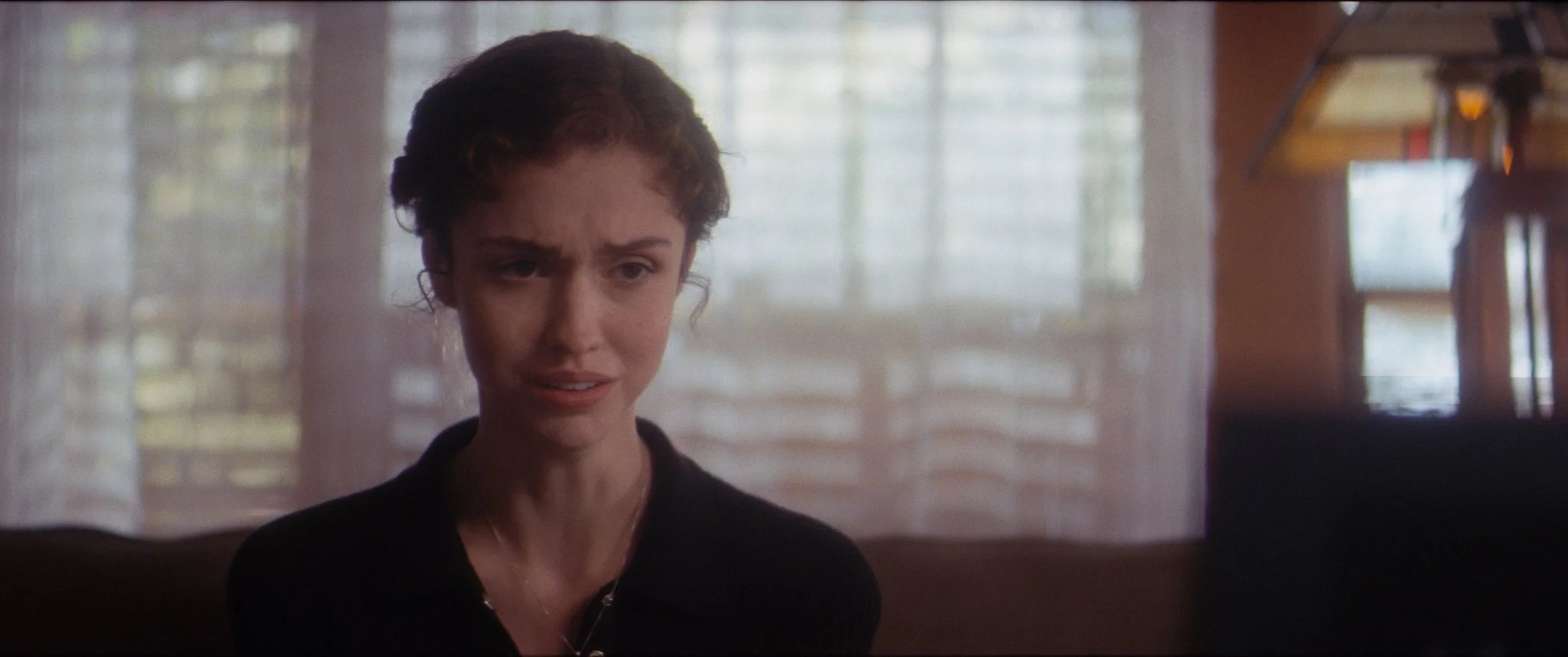

Tortoise

Length:

0:13

Writer/Director

Alexandra Maher

ALEXANDRA trained as an actress at RADA and played various roles on stage at theatres including The Lyric Hammersmith, Regent’s Park Open Air Theatre and The National Theatre.

She has been writing professionally since 2013 when she won ‘Best Show’ in the Funny Women Awards at the Edinburgh Festival. This, for her debut stand-up hour, HOPE & GLORIA. Her self-produced spec television pilot, PREMATURE, was shortlisted for the Test Card Award at the 2018 Edinburgh Television Festival.

TORTOISE is her first short film as writer/ director. Her second, THE CUNNING, starring Gemma Arterton, is currently in post-production. A third and final short, ARIAS, will follow.

Producer

Victoria Hollup

VICTORIA's 2018 directorial debut GERRY starring Joan Collins screened at several BAFTA and Academy qualifying festivals worldwide. The film secured Joan the Best Actress award at LA Int. Short Film Festival, won Best UK Short at Manchester Int. Film Festival and was long listed for a BAFTA.

GERRY was picked up for sales representation by SND Films and was recently selected by Amazon Prime for their Shortz Collection.

TORTOISE is the first film from her new production company Persona Pictures. Victoria’s debut feature, based on her first short GERRY, is currently in development.


Key cast:

Emily Beecham (Anna), Eileen Davies (Mim)

Looking for:

sales agents, distributors, journalists, buyers

Twitter:

https://twitter.com/tortoise_film


November 30, 2021 /Carmela Baranowska
Comment

Bound

November 25, 2021 by Carmela Baranowska

An oppressed gay man transcends the horrors of his reality. His acceptance of who he is, his resilience and the love he’s experienced empowers him to resist his oppressors.

Interview with Oli Cohen, Nicolas Blanco


Congratulations! Why did you make your film?

While working in documentary with organisations such as Human Rights Watch I met victims of torture face to face. Being drawn to social realism I wanted to tell a story grounded in truth that involved tragedy, injustice and suffering yet countered with beauty, love and resilience.

The film was also inspired by the recent horrific anti-gay purges in Chechnya.

Imagine I’m a member of the audience. Why should I watch this film?

The film will hopefully not only give the audience an experience but it'll also help them feel something and empathise with the characters on the screen.

Whilst the subject of the film is heavy and dramatic which is reflected in the imagery, the dark elements are countered with beauty and the empowerment of the individual.

Bound

How do personal and universal themes work in your film?

In the west we're often in a state of complacency about how progressive the world is yet we need to take a step back to realise that there is still progress to be made and that the progress we've attained is more fragile than we believe.

How have the script and film evolved over the course of their development?

Initially the film was going to be about a man on death row. We became more and more interested in the back story of the main character. The concept of a man being in imprisoned for his sexuality resonated with us especially after we came across the testimonials of survivors of the gay purge in Chechnya in 2017.

Bound

What type of feedback have you received so far?

We've received some great feedback. A number of people responded well to the film saying it was incredibly affective and concise and that the story and it's clarity stayed with them afterwards. Comments also included an appreciation of the beautiful imagery and how the different tones were used to seperate time periods and emotions.

Has the feedback surprised or challenged your point of view?

We weren't particularly surprised by the feedback overall. We were happy though that people connected to the film and were moved by it.

What are you looking to achieve by having your film more visible on www.wearemovingstories.com?

We're keen for the film to connect with a larger audience particularly. The fact that www.wearemovingstories.com specialize in films about inclusion is very much aligned with us.

Who do you need to come on board (producers, sales agents, buyers, distributors, film festival directors, journalists) to amplify this film’s message?

Film Festival Directors and distributors.

Bound

What type of impact and/or reception would you like this film to have?

Ultimately we'd like the audience to be moved by the film and for the film to also spark the conversation about queer rights and how unfortunately they very much still need to be protected around the world.

What’s a key question that will help spark a debate or begin a conversation about this film?

Where could this film take place?

What other projects are the key creatives developing or working on now?

A gay true crime docu-series, a sci-fi relationship drama, a coming of age environmental drama and a NGO documentary out in Kenya.

Interview: November 2021


We Are Moving Stories embraces new voices in drama, documentary, animation, TV, web series, music video, women's films, LGBTQIA+, POC, First Nations, scifi, supernatural, horror, world cinema. If you have just made a film - we'd love to hear from you. Or if you know a filmmaker - can you recommend us? More info: Carmela
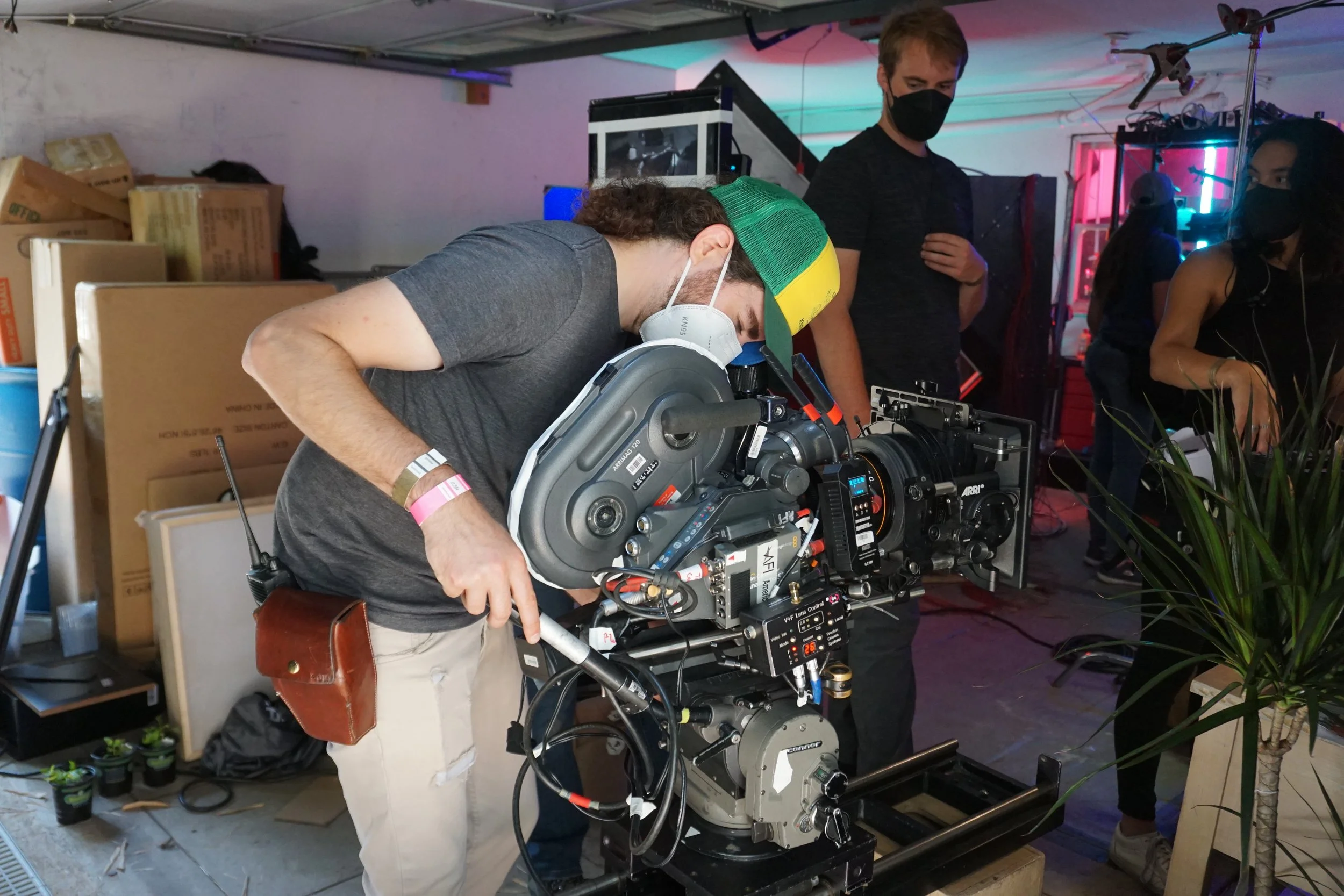

Bound

Length:
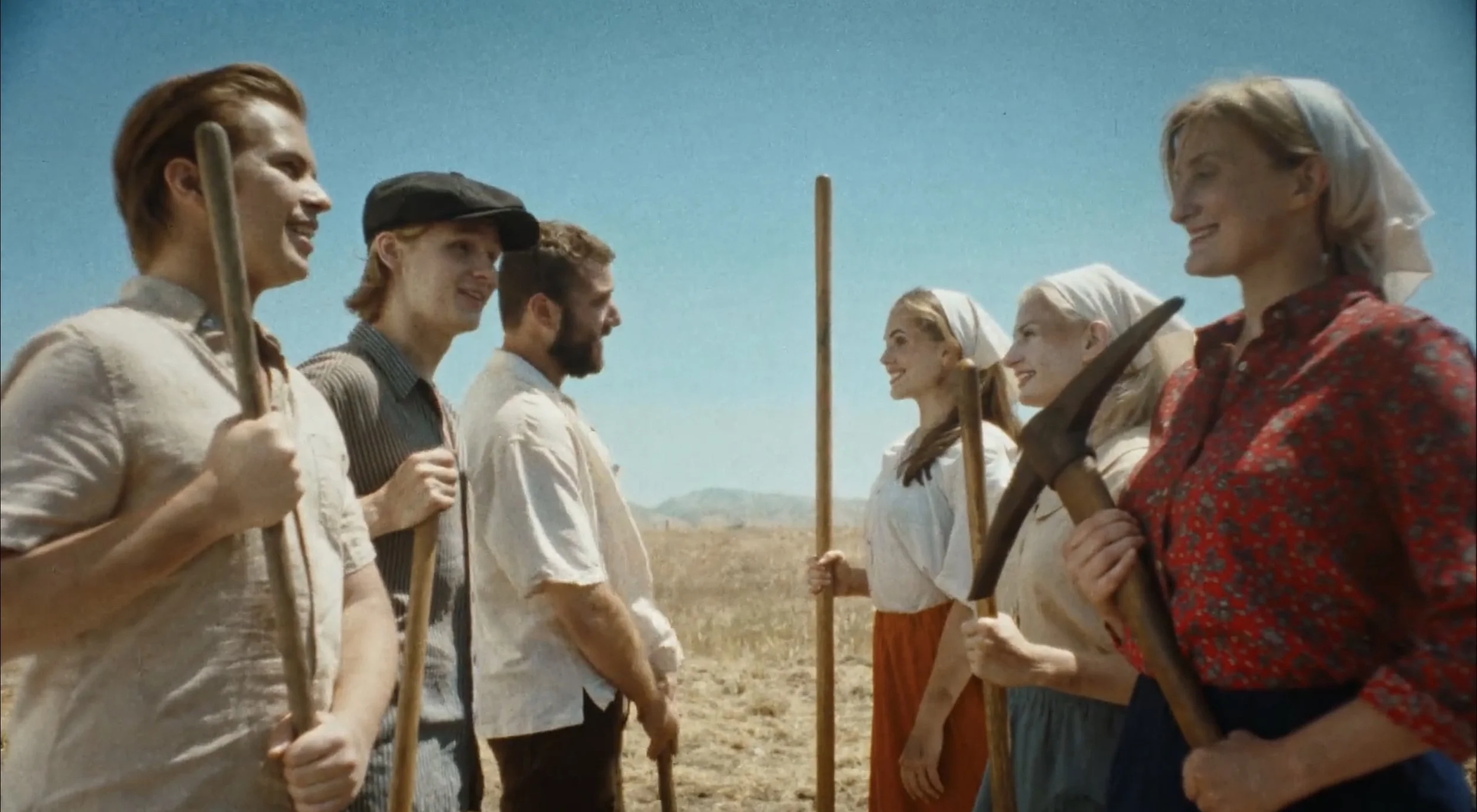
3:00

Writer

Cinematographer / Director

Nicolas Blanco & Oli Cohen

Oli Cohen is a Los Angeles and London based cinematographer. He's filmed all around the world on documentaries, short films and commercials, as well as on projects for NGOs, such as UNHCR and Save the Children. His documentary work has been broadcast on TV channels such as ARTE and the BBC and his narrative projects have been screened at festivals internationally.

Producer

Nicolas Blanco

Nicolas Blanco is a queer filmmaker from Bogota, Colombia. He worked on the feature ACCIDENTAL BLESSING, which can be found on Amazon before getting an MFA from the American Film Institute. His work has been featured in several film festivals around the world. Nicolas’ passion lies in highlighting new voices that add to the cultural conversation and in pushing the boundaries of the medium.

Key cast:

Mac Goodspeed - Alek, Trevor Hudson - Zelim

Looking for:

film festival directors, buyers

Facebook:

https://www.facebook.com/olicohen/

https://www.facebook.com/nicolas.bonillablanco/

Instagram:

https://www.instagram.com/olicohen/

https://www.instagram.com/thisisnotnico/

Hashtags used:

#Bound #loveisnotacrime #humanrights #lgbtfilm #queerfilm

More info:

www.olicohen.com

Made in association with:

AFI Conservatory


November 25, 2021 /Carmela Baranowska
Comment

Nice To Meet You

November 24, 2021 by Carmela Baranowska

A recently separated couple meets up to discuss the husband's "coming out" and the subsequent end of their marriage. This reunion awakens feelings of bitterness, remorse, and love.

Interview with Writer/Director/Editor Michael Landry and Writer/Producer Brandon Haynes


Congratulations! Why did you make your film?

BRANDON - Upon meeting Michael, hearing his story, and understanding that he wanted to share it, I felt compelled to make this film with him. He’s always wanted to direct films, and I believed strongly that this story, his story, would resonate with audiences. So I said “Great! We’re going to make this movie,” and we started writing immediately.

MICHAEL - A friend of mine encouraged me to always tell stories that I know, that are personal, and that have something to say. I knew that telling this particular story was a bold decision and there was some fear at the beginning of the journey for sure. But quite often in life, fear can be a good sign that you are headed in the right direction.

Imagine I’m a member of the audience. Why should I watch this film?

BRANDON - Well I’m biased, but the film is beautiful! The acting, the music, the cinematography— everything was crafted with so much love. I could not be more thrilled with the finished project. You should watch the film because it’s real. It’s a true story, and I believe that it’s an important one.

Nice To Meet You

How do personal and universal themes work in your film?

BRANDON - The themes are personal because the film reflects Michael’s life as it was just before he and I met. Although there is a “coming-out” story within Nice To Meet You, it is not focused on that specific experience. At the core of the movie are the universal themes of love, loss, regret, and hope. It examines what it means to love someone fully, and the painful reality that sometimes love is not enough to keep two people together.

MICHAEL - I really wanted to explore the nuanced duality of a relationship ending. Things are not always good-guy-bad-guy, it’s often way more complicated than that. We wanted to go beyond that typical breakup film, and find a way to tell the story in which people understand and feel for both characters.

How have the script and film evolved over the course of their development?

MICHAEL - The film started out as Grayson’s story, and very much from his perspective. During the writing process, we decided to move towards giving both Grayson and Sarah equal representation in the script. However, in the editing room, it became clear to us that their story was actually best told from Sarah’s perspective. I love this part of filmmaking, the constant evolution of a story that wants to be told.

BRANDON -I think that the film is stronger from Sarah’s perspective. The exercise of compassionately telling a break-up story from your partner's perspective is brave. I feel like there’s an honesty and vulnerability there that may have been missed if Michael chose to focus on his story without highlighting hers.

Nice To Meet You

What type of feedback have you received so far?

BRANDON — It’s been overwhelmingly positive. My favorite feedback is when people tell me that the film made them emotional which is not easy to do in 10 minutes.

MICHAEL — The first time someone told me they cried while watching it, I was over-the-moon! I felt this was quite the compliment for a first-time filmmaker. I’ve had people reach out to me after seeing the film to let me know that the story spawned deep discussion amongst their partners and friends. I’ve also been told by audience members that they want to see more of Grayson and Sarah’s story. They are always happy to hear that we are tinkering around with a feature-length version of the film.

Has the feedback surprised or challenged your point of view?

Because of the pandemic, we haven’t really had the ‘normal’ festival experience where we get to speak with audience members face to face after seeing the film. Therefore, the feedback we get is from people who have reached out to use through email or on social media. Luckily, it has all been pretty positive. We are so proud of this film and everyone who helped bring it to life, and can’t wait for more people to see it.

What are you looking to achieve by having your film more visible on www.wearemovingstories.com?

We are interested in finding our audience to connect with now that our film is finally available online for all to see. This is our first film project, and we are committed to telling more stories like this. Our newest project, a series called When We Grow Up was also recently featured here on wearemovingstories.com.

Who do you need to come on board (producers, sales agents, buyers, distributors, film festival directors, journalists) to amplify this film’s message?

We would love to get this film in the hands of more film festival directors, journalists, and anyone else who can help get the word out. As a creative duo, we have big plans and many more stories to tell so we are interested in finding representation to help us find the right avenues and connections to continue creating.

What type of impact and/or reception would you like this film to have?

MICHAEL: I believe we are so far behind in queer representation in film, that we are honored to be a part of closing that gap. I would hope that anyone who may be in a similar situation or in a relationship that is ending for one reason or another sees a bit of themselves in this film. I hope they see that being honest is important, even when that honesty comes at a cost.

BRANDON: I am drawn to stories exploring masculine vulnerability. Despite socialization towards a monolithic “show no emotion” approach to manhood, I want to give men permission to be their complete selves. Let’s normalize men opening up to their partners, friends, and family. Let’s accept that male sexuality exists on a spectrum. Let’s reject the notion that men don’t cry. I believe that this film showcases an aspirational depiction of that kind of masculinity.

Nice To Meet You

What’s a key question that will help spark a debate or begin a conversation about this film?

How do you tell the person that you love the most a truth that has potential to hurt them or end the relationship? How do you end a relationship with love for each other? Is it ever too late to figure out your true authentic self?

What other projects are the key creatives developing or working on now?

We are currently developing an exciting new series called When We Grow Up with filmmaker Madeline Mack (Director - Sweet Heart, Six Pack) and Alvaro Valente (Producer - Night Comes On). When We Grow Up is an intimate and progressive short-form drama series following an ensemble cast of six ambitious creatives navigating their thirties in Los Angeles. It is a story of major life transitions, jaded hope, friendship, and the search for radical authenticity. We are currently crowdfunding as well as prepping to shoot our first episode in January. To learn more please visit wwguseries.com or follow us at instagram.com/wwguseries.


Interview: November 2021


We Are Moving Stories embraces new voices in drama, documentary, animation, TV, web series, music video, women's films, LGBTQIA+, POC, First Nations, scifi, supernatural, horror, world cinema. If you have just made a film - we'd love to hear from you. Or if you know a filmmaker - can you recommend us? More info: Carmela


Nice To Meet You

Length:

11:06

Writer

Kyle Russell Clements, Brandon Haynes, Michael Landry

KYLE RUSSELL CLEMENTS is an actor, writer, and director known for his role as John Bowers in DC's Doom Patrol. He is also the writer and director of the award-winning short films Silo and My Father's Son. He wrote Nice To Meet You with first-time writers BRANDON HAYNES and MICHAEL LANDRY.

Director

Michael Landry

Nice To Meet You, MICHAEL LANDRY's directorial debut, is based on true conversations and events surrounding his own coming out experience and the subsequent close of his 6-year marriage. Michael currently lives in Los Angeles with his partner BRANDON HAYNES. Together they are currently developing a new series with filmmakers Madeline Mack and Alvaro Valente called When We Grow Up.

Producer

Brandon Haynes, Elena Greenberg

ELENA GREENBERG has worked as a coordinator on shows like Will & Grace and Call Your Mother. She worked together with first-time producer BRANDON HAYNES to pull together this three-day shoot in Shreveport, LA.
Key cast:

Teri Wyble (Sarah), Mike King (Grayson)

Looking for:

journalists, film festival directors, distributors

Facebook:

https://www.facebook.com/michael.landry.5036

Instagram:

https://www.instagram.com/nicetomeetyou_film/

More info:
https://www.nicetomeetyoufilm.com

You can watch Nice To Meet You on Vimeo; Online Premiere via Film Shortage - 11/22

November 24, 2021 /Carmela Baranowska
Comment

Father Time

November 23, 2021 by Carmela Baranowska

A young girl who can’t let go of the past invents a time machine to see her father again after he dies, but things don’t go quite the way she planned.

Interview with Writer/Director/Cinematographer Steven J Mangurten


Congratulations! Why did you make your film?

I was interested in trying to capture the idea of loneliness and isolation on camera and to juxtapose it with a sense of love and human connection to see how the conflicting themes would play off each other. I really wanted to explore conveying a wild emotional arc that takes a character through excitement, joy, mystery, depression, loneliness, and isolation purely visually. I wanted to achieve that through composition as well as lighting and color. I also wanted to try to create and combine multiple time periods and visual styles. I was really excited to try pushing boundaries and see how the film stock could handle everything I wanted to throw at it.

Imagine I’m a member of the audience. Why should I watch this film?

Personally, I think it's just an enjoyable film to experience. It's a wild ride that will make you feel something in a short amount of time.

Father Time

How do personal and universal themes work in your film?

The most personal themes are also the most universal. Everyone has felt love and loss. Everyone has wanted something so badly but just couldn't have it. Everyone has felt lonely or isolated at some point in their lives. While the plot might not be a common experience, the story certainly is.

How have the script and film evolved over the course of their development?

The film evolved immensely over the course of development through the final edit. It started with just an idea about shooting loneliness and turned into a relatively straightforward and linear version of the current plot. I cycled through a lot of ideas with my team about how to show what Casey really wants in an elegant way as well as how to connect her and her father effectively. I wrote something like eight drafts of this four page script. Then during the edit, it really took on this high energy, anxiety inducing experience that it currently is.

What type of feedback have you received so far?

It's been pretty well received by most people who have seen it. It's a little unusual in style and a lot of people find it fascinating.

Has the feedback surprised or challenged your point of view?

What surprised me was that more people than I anticipated seem to get it. I think some of the creative choices could have potentially not worked for a lot of people but that didn't end up being the case.

What are you looking to achieve by having your film more visible on www.wearemovingstories.com?

I would just love for as many people as possible to see the film. Perhaps there is a possibility of adapting this into a longer form. I would love the opportunity to really explore these ideas in much more depth.

Father Time

Who do you need to come on board (producers, sales agents, buyers, distributors, film festival directors, journalists) to amplify this film’s message?

I would love to show it at festivals so getting festival directors on board would be great. Distributors would be great too. If we were to expand this into a larger piece, I think producers and financiers would be needed to really push the boundaries to the next level and make it something bigger and more accessable for people.

What type of impact and/or reception would you like this film to have?

I would really like for people to love these characters and this world. I hope that people just want to see more of them and experience more of this story.

What’s a key question that will help spark a debate or begin a conversation about this film?

What have you lost that you can never get back and what would you do to get it again?

Father Time - BTS

Would you like to add anything else?

This is the first film of any kind that I directed since about ten years ago. It was a long, grueling, and sometimes painful process. It was also an incredibly rewarding experience. None of it would have been possible without the incredible people on my team keeping me sane and putting everything they had into making this happen. My producer Laze, production designer Zane Stein, and editor Patrick Devaney were all incredible through the entire process. Additionally, I felt incredibly fortunate to have everyone that showed up on set and contribute their amazing talent to the film to really make this happen.

What other projects are the key creatives developing or working on now?

Laze is currently in preproduction on his AFI thesis film, Cairn, which is still taking donations. Patrick is finishing post on a couple AFI thesis films, Before You and The Erl King, which will be premiering soon. Zane has been working as production designer or art director on a number of features and shows recently. My AFI thesis film, The Cowboy Pecan Pie, is currently in post and will be done in the next couple months. I also have a feature that just finished a festival run, For the Hits, as well as another feature that is still in post and should be released next year, Bits.


Interview: November 2021


We Are Moving Stories embraces new voices in drama, documentary, animation, TV, web series, music video, women's films, LGBTQIA+, POC, First Nations, scifi, supernatural, horror, world cinema. If you have just made a film - we'd love to hear from you. Or if you know a filmmaker - can you recommend us? More info: Carmela


Father Time

Length:

3:10 minutes

Writer/Director/Cinematographer

Born and raised in Chicago, STEVE MANGURTEN moved out to LA after high school to pursue a career in film and subsequently graduated from Columbia College Hollywood with a BFA in film production. He spent the last decade working as a cinematographer shooting various projects including feature films, branded content, documentaries and short films, before deciding to take his passion for visual storytelling further by pursuing his MFA in cinematography at the AFI Conservatory. His most recently released feature film, RING RING (starring Lou Ferrigno, Malcolm Goodwin, Kirby Bliss Blanton), had a limited theatrical run and is currently available on Amazon Prime along with his earlier film, PAINT IT RED (starring Martin Kove, Sally Kirkland, Cassie Steele, Jack McGee). He also shot the feature documentary A FATHERLESS GENERATION which screened at multiple international film festivals. His third feature film, FOR THE HITS, is currently enjoying success on a strong festival run and will be released later this year.

Producer

LAZE HUANG, born and raised in China, originally studied Electrical and Computer Engineering at UCLA before discovering a love for film. Self-taught in the art of filmmaking, he directed and produced multiple short films prior attending AFI to study independent producing. SLUG WATCHING, his short film about disability, received second place in the college division at the 2nd Grand Foundation Student Film Festival.

Key cast:

Nemi Brooks (Casey), Patrick Randolph (Dad)

Looking for:

film festival directors, journalists, distributors, buyers

Facebook:

https://www.facebook.com/steven.j.mangurten

Instagram:

https://www.instagram.com/dirt_mangurt/

Hashtags used:

#KodakShootFilm #ShotOnFilm

Made in association with:

AFI Conservatory

November 23, 2021 /Carmela Baranowska
Comment

Magdalena

November 20, 2021 by Carmela Baranowska

Czechoslovakia, 1971. A Slovakian woman cannot shake the demons of her horrific past as they come back to haunt her and threaten to destroy the life she’s tirelessly trying to build.

Interview with Writer/Director Michael Lazovsky


Congratulations! Why did you make your film?

My grandmother was experimented on in Auschwitz during WW2– but what has always haunted me, are the lesser known stories of the trauma and physical effects she and many like her had to deal with after being freed. For this film, I wanted to use the horror genre to externalize her internal trauma.

Imagine I’m a member of the audience. Why should I watch this film?

I think this story is a fresh take on the horror genre and introduces the audience to a lesser known internal battle many survivors had to deal with.

How do personal and universal themes work in your film?

There are universal themes of overcoming trauma and how it can have such a lasting effect.

Magdalena

How have the script and film evolved over the course of their development?

I think the script kept moving in a darker direction. We always wanted to give the audience a peak into Magdalena’s mind— and as the script evolved we went in the direction of horror to truly show her internal headspace.

What type of feedback have you received so far?

The feedback has been overwhelmingly positive! It warms my heart that this film is resonating with so many young audiences and people of all faiths and marginalized groups.

Has the feedback surprised or challenged your point of view?

There is no shortage of Holocaust films out there. This is something that my team and I were hyper aware of during development. We wanted to make sure that if we were going to make a film like this, we would do it in a unique way and speak to a younger, broader audience. Judging from the feedback, I believe we accomplished that goal.

Magdalena

What are you looking to achieve by having your film more visible on www.wearemovingstories.com?

We would love to reach as many people as possible!

What type of impact and/or reception would you like this film to have?

I hope this film speaks to a younger generation and shines a light on how any tragedy never ends with just physical survival. The mental battle that starts immediately afterwards can be just as horrifying and dangerous.

Would you like to add anything else?

Thank you so much for considering to spotlight our film and story!

Magdalena

What other projects are the key creatives developing or working on now?

I’m currently working on another short film (a horror-comedy) and on writing my first feature (with Max Hersh) that lives in the same world as “Magdalena”.


Interview: November 2021


We Are Moving Stories embraces new voices in drama, documentary, animation, TV, web series, music video, women's films, LGBTQIA+, POC, First Nations, scifi, supernatural, horror, world cinema. If you have just made a film - we'd love to hear from you. Or if you know a filmmaker - can you recommend us? More info: Carmela


Magdalena

Length:

25:10

Writer

Michael Lazovsky, Max Hersh (Story Editor)

MAX is a recent graduate of the American Film Institute Conservatory with an MFA in screenwriting, where he has written or co-written four short films. He worked in film development as an assistant and script-reader, and most recently as a copywriter for Hasbro Inc. In 2017 he placed as a quarterfinalist in the Nicholl Fellowship for his screenplay THE NET, and then again in 2018 for LIGHT.

Director

Michael Lazovsky

Michael is a writer, director, and Los Angeles native of Czechoslovakian and Peruvian descent. Michael completed the SMC film program and is a current directing fellow at the American Film Institute Conservatory.

Producer

Pablo Zamorano, Yuky Shen

PABLO: PABLO GRADUATED IN ECONOMICS AND BUSINESS ADMINISTRATION AND WORKED AS A MANAGEMENT CONSULTANT FOR THREE YEARS BEFORE DECIDING TO CHANGE CAREERS AND WORK IN THE ENTERTAINMENT INDUSTRY IN 2018. THIS YEAR HE PRODUCED HIS FIRST PROFESSIONAL SHORT FILM, EVA, IN COLLABORATION WITH THE CHILEAN FILM SCHOOL ESCUELA DE CINE DE CHILE, WHICH WAS SCREENED IN FESTIVALS IN CHILE,
ASIA AND EUROPE. AT AFI PABLO HAS PRODUCED 3 NARRATIVE SHORT FILMS AND HAS 3 OTHER PROJECTS IN DEVELOPMENT.

YUKY: BORN AND RAISED IN SHANGHAI, YUKY WENT TO BOSTON UNIVERSITY TO STUDY FILM AND TELEVISION. AFTER GRADUATION, SHE SERVED AS A DEVELOPMENT INTERN AND WORKED IN BOTH THE AMERICAN FILM MARKET AND SHANGHAI INTERNATIONAL FILM FESTIVAL FILM MARKET. AT AFI, SHE PRODUCED 2 NARRATIVE SHORT FILMS IN LOS ANGELES AND 2 IN SHANGHAI RANGING FROM WWII PERIOD DRAMA TO MAGICAL REALISM.


Key cast:

Susan Angelo (Magdalena), Michael Matthys (Ladi), Asher Combs (Josko), Michael Edelstein (Dr. Antonin), Marissa Van Den Borre (Mrs. Kveta), Bries Vannon (Nazi Doctor)

Looking for:

journalists, distributors, sales agents, film festival directors

Instagram:

https://www.instagram.com/magdalenathefilm/?hl=en

More info:

magdalenafilm.com

Made in association with:

AFI Conservatory


November 20, 2021 /Carmela Baranowska
Comment

Minutes In The World

November 19, 2021 by Carmela Baranowska

In a post-apocalyptic world, a man spends a lot to get a bottle of alcohol. He tries to re-experience a wonderful and faithful life through this.

Interview with Writer/Cinematographer Yuk Hong Law


Congratulations! Why did you make your film?

It is the pandemic lock-down life that inspired me. When the whole world changes, even the most common life of the past becomes the best time ever. Humans only cherish something when they lose it… I just wanted to make something about this idea.

Imagine I’m a member of the audience. Why should I watch this film?

We all lived through some difficult time together. You may find some mental company in this film.

Minutes In The World

How do personal and universal themes work in your film?

Based on the time this film was made, (Nov. 2020) and the content (metaphorically talking about the pandemic world), I think the theme of the film is already personal and universal.

How have the script and film evolved over the course of their development?

It actually didn't get evolved many times during the development. It starts with a small prose, and then I changed it into script format. My director DK helped me edit it. We had to reduce characters to two, (originally we had 3), so that it could be made easier during the strict time caused by pandemic. The protagonist was going to have a friend come by his home and drink together, but eventually he had to be alone. It's a bit disappointed, because human interaction could make emotion express easier, and audience might be easier to engage.

What are you looking to achieve by having your film more visible on www.wearemovingstories.com?

As long as there is one person wanting to watch it, I am satisfied.

Minutes In The World

What’s a key question that will help spark a debate or begin a conversation about this film?

Can you understand that this film is made inspired by our pandemic life?


Interview: November 2021


We Are Moving Stories embraces new voices in drama, documentary, animation, TV, web series, music video, women's films, LGBTQIA+, POC, First Nations, scifi, supernatural, horror, world cinema. If you have just made a film - we'd love to hear from you. Or if you know a filmmaker - can you recommend us? More info: Carmela


Minutes In The World

Length:

3:10

Writer/Cinematographer

Yuk Hong Law

Director

DEKANG LIU is a Chinese filmmaker who has always believed in the power of storytelling. He finished his BA in Media Arts and Production during his years in Australia. He wrote, produced and directed his thesis film THE GOLDEN CAGE (2017), which expresses his thoughts on seeking freedom and passion for creative visual storytelling. After college, he started work as an assistant director and producer in Beijing for films and web series. Being exposed to both Eastern and Western cultures provides Dekang with a specific perspective to understand the cultural interactions as an outsider as well as an insider. Dekang pays special attention to subjects like cultural differences, minorities and social isolation. He believes that in a gentle way we can shake the world, and filmmaking is the gentle way for him.

Producer

YICHEN MA is a recent graduate of UC San Diego, with a BA in Visual Art (media), emphasizing filmmaking. She served as a producer of two independent short films, DEATH PLAY and SUPPRESSION, which were well-received. This summer, the television program she produced will be broadcast on HTTV USA. She also serves as additional assistant to the executive producer of an upcoming independent film shot in Savannah.

Key cast:

Jonathan Fisherman, Zeke Alton

Looking for:

film festival directors, distributors

Made in association with:

AFI Conservatory


November 19, 2021 /Carmela Baranowska
Comment

Birthday

November 18, 2021 by Carmela Baranowska


An alcoholic father returns from rehab determined to give his young daughter a gift.

Interview with Cinematographer/Producer Harry Lipnick


Congratulations! Why did you make your film?

"There is unwavering love from family waiting for you when you can overcome addiction and conquer fear."

Unwavering love - it's the foundational place from which everything stemmed while making "Birthday". We wanted to tell a story of an imperfect protagonist. Walt is coming home from rehab - not for the first time and, probably, not the last. We refused to be reductive of Walt's humanity. He's got his challenges, but he wants what we all want - love from his family and another chance to do right by them.

Imagine I’m a member of the audience. Why should I watch this film?

Whether we've got addicted people in our own lives or not, we all know what it is to strive towards overcoming stubborn challenges. I hope everyone can see themselves one way or another in Walt.

How have the script and film evolved over the course of their development?

The script for "Birthday" only got stronger as more voices from the team came on board. Post was a reflection of script development - we honed this small, simple story to inch ever-closer to the truth of Walt's experience.

Birthday

What type of feedback have you received so far?

I don't generally like to make people cry - but the the film has brought so many people to tears. Catharsis is important for all of us - and I think a wide swath of audiences can see themselves, or someone they love, in Walt or May; in a family full of struggles that is, nevertheless, full of love

What are you looking to achieve by having your film more visible on www.wearemovingstories.com?

I'd love to get more audiences a chance to see our little film by playing in more festivals around the country.

Birthday

What’s a key question that will help spark a debate or begin a conversation about this film?

Should a person be judged by their worst traits? How can we see beyond someone's chief struggle to see the whole version of them?

What other projects are the key creatives developing or working on now?

Each core member of this team of AFI filmmakers has wrapped production on their thesis films at the conservatory and are excited to share those projects over the next year!


Interview: November 2021


We Are Moving Stories embraces new voices in drama, documentary, animation, TV, web series, music video, women's films, LGBTQIA+, POC, First Nations, scifi, supernatural, horror, world cinema. If you have just made a film - we'd love to hear from you. Or if you know a filmmaker - can you recommend us? More info: Carmela


Birthday

Length:

2:53

Writer

Harry Lipnick & Daniel J. Egbert

Director

Daniel J. Egbert

Producer

Céline Bava-Helms

Key cast:

Michael Mahon (Walt), Zoe McLane (May)

Instagram:

https://www.instagram.com/hlipnick/

More info:

http://harrylipnick.com/projects/birthday

Made in association with:

AFI Conservatory


November 18, 2021 /Carmela Baranowska
Comment

One Woman Hamlet

November 17, 2021 by Carmela Baranowska

One Woman Hamlet explores the mind of Kate, as she helps break the stigma on mental illness using her own story, Shakespeare, puppetry, and music.

Interview with Kate Marie Smith (Creator/Producer/Writer/Actor), Ayesha Abouelazm (co-director), Kseni Avonavi (co-director), Brian Naughton (editor/DP/VFX & sound designer)


Congratulations! Why did you make your film?

KATE: I made it for my younger self. I made it so that people might feel less alone. I deal with PTSD, depression, anxiety, and I’m also an HSP (highly sensitive person). I was brought up in a conservative environment, and while it was loving, it was not supportive of my bisexuality or my mental health struggles. I had no idea what I was dealing with until I was 25 years old, and by that time I had come close to suicide twice. I'm not alone, more than 700,000 people a year die due to suicide, and currently, that number is thought to be even higher. We are in a real global health crisis and the stigma, the mark of shame that exists in our culture around mental health, mental illness, and (let's be real) emotions in general is keeping us from finding healing and help. My mental illness is quite treatable (as most are), and my hope is that by making this film folks will watch it and feel less alone and inspired to learn and love more about themselves and about those around them. Maybe it will even help folks find support and lower the number of suicides in our community each year. I also hope that it will inspire other creators to make art that connects with them, without limitations. I had always wanted to play Hamlet as a young person, and now I can! It is inspiring to share my story, my truth, to make Hamlet a woman, and to create alongside a strong female team. I have worked at some of the best theaters in Chicago and had the pleasure to be on set with inspiring creatives, but I rarely felt empowered to tell my own story or to step outside the traditional box. But now, I am living that dream, and it is possible.

AYESHA: Thank you! When Kate pitched this project to both me and Kseni, I couldn't say no. For one, this meant that I'll have the opportunity to work with these strong, talented female artists again and also that this was a topic that needed to be explored. I gravitate towards films that challenge the "norm" and create a participation in a dialogue and One Woman Hamlet does just that. This piece is a unique take on Hamlet where Hamlet is a woman and it explores the stigma behind suicide. This is an important topic that is brushed over and I was excited to take on the role of co-director and open up that conversation, along with Kseni and Kate through the making of this film.

KSENI: I have known Kate Smith (the main creator of One Woman Hamlet) since our collaboration on my short film Jack and Anna where she was cast as the lead. She is a rare talent and we have stayed in touch since then. In spring 2020 when the pandemic hit, Kate and I have met, and we discussed the possibility of making a screen adaptation of her show. Not only I wanted to support her and the theater community, but I was so excited about this project. The topic of mental health resonates with me, and I wanted to bring this important project to the screen that more people would have access to it. Moreover, the show is so original, fresh, and bold that I started thinking of the next production steps right away. Ayesha, my co-director, has joined this project immediately as she also found it fascinating, and our journey has begun.

BRIAN: For me I was super excited to work with Kseni, Ayesha, and Kate because I was familiar with their previous film work. They are all so talented and when the opportunity presented itself to join them creatively I jumped at the chance.

One Woman Hamlet

Imagine I’m a member of the audience. Why should I watch this film?

KATE: If you are curious to learn more about the mental health crisis in our community through a deeply vulnerable story told with puppets, music, Shakespeare, tears, and laughter, presented by an amazing female lead team, then this is your jam.

AYESHA: You should watch this film because "it's okay not to be okay". I think we live in a world where we constantly put on masks around people to fit in. Not to say that it's absurd, it makes sense. We're sort of like actors. We display different personas. How we act in front of our parents is different compared to how we would act in front of a significant other and so on. However, there's a limit to the facade we hide behind. We're always told to be happy and to put on a brave face, when in fact it's more than normal to cry and to feel. I want people to watch this film so that they understand that their feelings are justified whether they are authentically sad or happy and it's okay not to be okay.

KSENI: As a viewer, I want to see more unique projects on screen, and One Woman Hamlet is definitely one of them. A solo show where Shakespeare’s Hamlet we all know is actually a woman fighting her own demons, breaks the fourth wall and where Denmark’s residents are colorful puppets is a project that hasn’t been seen before.

BRIAN: This is unlike any other film out there. It speaks to issues that are universally relatable through humor, personal storytelling, animation, and amazing puppetry.

How do personal and universal themes work in your film?

KATE: My personal dealings with mental illness and the stigma that exists around them are told in this story, and I connect them to the larger global mental health crisis we are facing today. On an even deeper level, I feel that to be stigmatized is to feel alone and we all know what it is to feel alone at some point in our lives. The themes of death and mourning are also touched upon with levity within the story of Hamlet.

AYESHA: I think every work an artist makes is personal. Whether it's subconscious or not, our directorial POV speaks through our work. I resonated with Kate's piece because I saw myself in her and that's beautiful. I strongly believe that art brings people together and breaks down barriers. And if I'm a part of a piece that helps people become more active in their communication with others, then that's good enough for me.

KSENI: I am sure that each of us have had a dark moment in our life when it felt so lonely and pointless. In moments like this I wish people had someone close they could talk to. Sometimes, there is nobody to listen. Through One Woman Hamlet Kate speaks directly to you and it creates the feeling that you are not alone anymore. Not only this show “heals”, it also shares helpful resources on mental health education and suicide prevention.

BRIAN: For me the biggest theme working in this film is breaking the stigma associated with mental health. What we really wanted to convey in the piece is that it’s okay not to be okay.

How have the script and film evolved over the course of their development?

KATE: There have been over 100 iterations of this script. The film was a theatrical production first before it became a film. We had three shows to great success in January/February of 2020 with the intention of touring in Chicago Public Schools through our partner Hope For The Day. However, when the pandemic hit things were put on hold. I had already planned on making a filmed production, then with the isolation and suicide numbers rising during the pandemic it seemed like the right time. I was beyond honored that Ayesha Abouelazm and Ksenia Avonavi, these amazing, strong, and inspiring women agreed to be on my team and bring their talent and creativity to the project. Previously, we had created another stigma-breaking piece called Jack and Anna, so we were familiar with working together. They also introduced me to Brian Naughton who was an incredible asset to our team, we filmed the entire show together just the four of us after being tested and socially distanced. I rehearsed and re-wrote in isolation to create the filmed version, keeping true to the original intimacy of the play, but also collaborating with the creativity and talent of my team to make the filmed version where the audience feels spoken to directly and engaged the whole time.

AYESHA: Kate developed this powerful script and has been working on it for quite some time. Again I was so honored when she pitched this to me and Kseni. The story was so authentic and visually unique. Kseni and I both had a theater past so we were immediately drawn to this piece, but a challenge for us was that we wanted to have this film keep it's theatrical look, but to also bring some new film elements into the mix. I was telling Kseni, “I am so excited to co-direct this, but how are we going to take the power of this stage play and also add elements for the film?” That was a struggle for me thinking ahead. But with huge help from Brian who killed it and looking at the piece now, I’m so happy with it and again so proud to be working with this crew.

KSENI: Since Kate is the author of this project, she had a ready script. The challenging part was that this was a screenplay for the theater, and as filmmakers, we had to figure out how to make it work on screen.
Ayesha, Brian, and I are very visual, we watch a lot and we wanted to make sure that the screen version of One Woman Hamlet keeps its original message and is engaging at the same time. When our production was over, we had a very intense but fun post-production flow – Kate, Ayesha, Brian and I were trying to figure out how we could make it even more dazzling, and it was a collaboration that is one of the Kind.

BRIAN: One Woman Hamlet actually began as a live stage performance. With the onset of the Covid-19 pandemic, however, the show had to be suspended. Rather than have the important message of the play be halted, Kate reached out to filmmakers Kseni and Ayesha about bringing the stage play to the world of film. I was then brought on board as the cinematographer to help craft their vision for the screen.

One Woman Hamlet

What type of feedback have you received so far?

KATE: We were able to receive one review of the staged version found here: https://columbiachronicle.com/review-to-be-or-not-to-be-aware-of-mental-health-struggles-one-woman-hamlet-answers-that-question. The stage version had such a great personal response, and those audiences completely funded the filming of One Woman Hamlet. Several humans, many we didn't even know, shared stories of their children who had gone through similar struggles or mentioned how they wished they had seen this as a younger person. One person handed me cash and said, “Please, keep doing this". Recently, Cinema Femme hosted us for an amazing preview of the film to great success! You can read a bit more about us through the article here: https://cinemafemme.com/2021/05/25/kate-marie-smith-and-team-bring-her-solo-show-to-the-screen-with-one-woman-hamlet/. Since that screening, I have had over 50+ people reach out to me directly, offering stories they wished to share and expressing how much the film helped them. It’s been very moving and fulfilling.

AYESHA: I was honored to have Cinema Femme premiere our film and the response was great! A lot of people were happy to see that we were opening a conversation on such a tough topic, but also that we added sort of a light heartedness to the film with the puppets. It made them feel more comfortable and less scared to open up. Most importantly, they left the film feeling less alone.

KSENI: We premiered though Cinema Femme in the end of May and we had a great response from the audience. Not only we were amazed by the amount of people who watched One Woman Hamlet, but through the Q&;A session it was obvious that people really liked our project.

BRIAN: The feedback has been incredibly positive. People seem to really respond to Kate’s honest performance as well as how we updated the format from the stage play to film.

Has the feedback surprised or challenged your point of view?

KATE: It has definitely surprised me. Several stories of folks losing loved ones to suicide, or that they themselves are going on anti-depressants for the first time or going to a therapist for the first time due to the show. Even people telling me that they are taking more time for their mental health now. I don't advocate for any particular kind of treatment, everyone is different. It strikes me that folks all seemed to know what they needed, but felt brave enough to reach for it once they felt they were not alone. This has been what is most surprising and rewarding to me.

AYESHA: It surprised me in a great way! I think more and more people are feeling comfortable communicating on this topic because they realize that they're not alone and they have so much support. It's an honor in itself to know that this film can spark a dialogue and help, even if it's a little, beat the stigma behind suicide.

KSENI: As any director, I was hoping that people would like One Woman Hamlet. I was truly touched by this positive reaction we received during the screening. To me, that was a moment of happiness for our team – we all contributed so much into this project, so it was the biggest reward for us.

BRIAN: If anything the feedback has only strengthened my resolve to pursue and tell meaningful stories that can reach and make an impact with an audience.

What are you looking to achieve by having your film more visible on www.wearemovingstories.com?

KATE: I created this show over four years in partnership with many amazing people. I collaborated with therapists, body workers, the non-profit Hope For The Day, who achieve suicide prevention through mental health education and outreach, and I worked with the artists I respect most in my community. However, through the pandemic all of the school connections and performance connections the film was tied to have either dissolved or are not functioning at this time. It is my hope to find screening opportunities and funding for the film to continue reaching new audiences.

AYESHA: First of all, I’m honored to be a part of an online platform that not only embraces women’s films, but “new voices” in any genre as well. I’m looking to gain more awareness on this subject and to spread the word. We're still not giving mental health the appropriate amount of attention and I hope that this film will acknowledge the importance of it.

KSENI: It’s always great to share your professional experience. Some people can be inspired by our project. I’m also hoping to attract a larger audience for One Woman Hamlet because this project is unique, creative and important for the community as it brings a positive change.

BRIAN: Just that: visibility. I believe this film deals with an important subject matter that a lot of people can relate to. However, due to the stigma that is attached to the topic, it isn’t openly discussed. By having the film be more visible it can help spark those conversations that people aren’t having.

Who do you need to come on board (producers, sales agents, buyers, distributors, film festival directors, journalists) to amplify this film’s message?

KATE: We would be open to sales agents, buyers, distributors, festival directors, and journalists.

AYESHA: I want to work with fearless producers, distributors, and journalists who gravitate towards controversial stories.

KSENI: It would be great to receive more attention to our project in the press as well as find a potential Distributor.

BRIAN: The biggest thing for us is reaching the largest audience possible. For that reason film festival directors and journalists would be the number one amplifier. These two paths are the best way for the film's message to be received.

What type of impact and/or reception would you like this film to have?

KATE: Ideally, I would love for the film to be a conversation starter for the community at large, to help break the stigma that exists on mental illness and suicide. This can be done through festivals and theaters with talk backs, but it also works really well in educational settings, especially with the suicide rates being so high amongst our young people. I would love to travel with the film and facilitate conversations post show, to host ticketed and free events, but we need connections to do this.

AYESHA: I just want to bring awareness. I think this subject is just something that is thrown under the rug. I think this is important for every culture to talk about and to learn. And I believe that once we open up that conversation, change will come. I want people to walk out of the film thinking this could be them, their friend, their sister or their brother. The beauty of this piece is it could be you. The problem with mental illness is when people talk about it, they talk about it like it is its own entity. ‘That’s not you, so you’re good.’ And I hate that. This could be any of us and I’m just hoping to bring that awareness.

KSENI: There are so many people who struggle with mental health that need professional help, but they don’t have access to the resources.

BRIAN: If this film can reach even one person who is struggling with mental health and they can get an answer they had been searching for it will make the entire experience worthwhile.

One Woman Hamlet

What’s a key question that will help spark a debate or begin a conversation about this film?

KATE: What are your thoughts on suicide? What are your thoughts on mental health and mental illness in our community?

AYESHA: Is it okay not to be okay?

KSENI: To be or not to be?

BRIAN: Why do we feel that it makes us weak to admit we are struggling with mental health? As I mentioned earlier, it’s okay to not be okay. There is strength in facing these issues and dealing with them properly rather than avoiding them and hoping they’ll just magically disappear.

Would you like to add anything else?

KATE: Thank you so much for your time and all the beautiful work you do!

AYESHA: Thank you so much for this wonderful opportunity, Carmela!

KSENI: I am very grateful for the opportunity to spread the word about One Woman Hamlet through www.wearemovingstories.com.

BRIAN: I am just so happy to have had the chance to work on this project with such amazing collaborators. Kseni, Ayesha, and Kate helped to foster such a wonderful and creative working environment and I would do it all again in a heartbeat.

What other projects are the key creatives developing or working on now?

KATE: I’m currently working on a new podcast that will explore the correlation between mental health and creativity. To be released in August of 2021. I’m also in the beginning stages of my next script which reclaims the freedom of the old west through today's lens, a love story with a mental health twist. In my free time I share trauma sensitive yoga for free to the community, for those behind bars, as well as survivors of human trafficking.


AYESHA: That's a great question and as artists we're constantly working on something as a means to communicate. I have a couple of short films in development, but my main project is a feature length version of my short, The Girl in the Blue Bra. Super excited to move forward with this project and to be working alongside my producer, Richard Song!

KSENI: My feature screenplay, working title Seam Line, that I am developing with my co-writer, Savannah Oakes is a primary project I am working on now. Our collaboration started with Jack and Anna, and we decided to keep going together as collaborators.

BRIAN: I am currently finishing up sound design for my MFA thesis film, Making Beethoven Proud. The film tells the story of a high school music prodigy who loses his hearing after a violent assault by his classmates and is forced to face the world without his most trusted sense.


Interview: November 2021


We Are Moving Stories embraces new voices in drama, documentary, animation, TV, web series, music video, women's films, LGBTQIA+, POC, First Nations, scifi, supernatural, horror, world cinema. If you have just made a film - we'd love to hear from you. Or if you know a filmmaker - can you recommend us? More info: Carmela


One Woman Hamlet

Length:

Writer / Producer

KATE MARIE SMITH

Kate is an award-winning performer and producer in Chicago. You may have seen her most recently in Chicago Shakespeare’s The Taming Of The Shrew, or in the acclaimed indie film Jack and Anna. For five years, Kate also acted as the community outreach coordinator and ensemble member for the theater company One Year Chekhov. Outside of her life as a creative though, Kate is also a trauma-sensitive trained yoga teacher.

Director

AYESHA ABOUELAZM (co-director), KSENI AVONAVI (co-director)

Ayesha Abouelazm is a 2017 Columbia College Graduate in Cinema Directing and an award-winning filmmaker. Currently, she teaches film production and directing courses at Loyola University Chicago. Her award-winning short film, The Girl in the Blue Bra has appeared in over 25 film festivals worldwide. She is currently working on a feature length version of her short.

Kseni is an award-winning film director, originally from Russia. She is best known for her thesis film Jack and Anna. She has dreamed of being a filmmaker since her childhood. Kseni has finished The Gerasimov Institute of Cinematography a.k.a. VGIK, and later earned her master’s degree in Cinema Directing from Columbia College Chicago. Her works cover social justice, mental illness, women rights and LGBTQ rights.

Key cast:

Kate Marie Smith (Hamlet)

Looking for:

sales agents, distributors, film festival directors, buyers, producers, journalists

Instagram:

https://www.instagram.com/onewomanhamlet/?hl=en

Hashtags used:

#mentalhealthawareness #womeninfilm #Shakespeare

More info:

https://onewomanhamlet.com/events/

November 17, 2021 /Carmela Baranowska
Comment

Focus on AFI Conservatory - Ashes

November 13, 2021 by Carmela Baranowska

A brief and unlikely connection in war complicates a young solider’s understanding of freedom.

Interview with Cinematographer Siwei Li and Director Daniel J. Egbert

Watch Ashes here:


Congratulations! Why did you make your film?

Siwei: It came out of my inner fear, seeing how nationalism and despotism growing for the past years in my homeland, as well as the divisions we had world-widely. We were taught to hate and fight the people we don't know, but in essence the same as us.

Daniel: After fighting through two wars with the Marine Corps Infantry, I entered a soul-shaking downward spiral I barely survived.

There’s a term in the Chinese language, 炮灰, which translates to, “Cannon ashes.” It’s used to comment on the real remnants of war—young men and women who sacrifice everything for a machine that will never cease to burn them as fuel. Youth left behind by country and by time to examine, make sense of, and hopefully make peace with their place in it all as they watch it continue to consume generation after generation.

Siwei Li introduced this phrase to me when he asked me to help write and direct his film, and it crippled me. I knew I had to be part of telling this story. This was a cinematography driven project where Siwei initiated every aspect, from building our incredible team, to co-writing, executive producing, and beautifully photographing every frame. It was an honor and a privilege to collaborate with him in this way. One I will treasure forever.

ASHES is a story about freedom, a story about a brief connection against all odds, a story about taking the power back. It’s our commentary on war, on being left behind, on imaginary lines in the dirt confusing our sameness. But mostly, hopefully, it’s a story that can make a difference.

Ashes

Imagine I’m a member of the audience. Why should I watch this film?

Siwei & Daniel: ASHES is a fine example of what's possible when incredible constraints are placed on a production, why dialogue is truly unnecessary in most cases, and how to reduce a story down to its most potent state.

How have the script and film evolved over the course of their development?

Siwei & Daniel: Compared to the first script we had, though it was a completely different set of characters and circumstances, the core of what you see in ASHES was always a constant. We just needed to figure out the most effective way to communicate it. The collaboration with between us beautiful. We agreed to never settle. To always question every single choice and to never move on unless it was fully examined and proven to be consistent with the premise and with character. The development was honestly maddening, but in the finest way.

What type of feedback have you received so far?

Siwei & Daniel: So far the feedback has been phenomenal. We've won the first few film festivals we've been in, and are waiting for a handful more. Audiences are really kind with their critique, and very enthusiastic about the story and the craft that made its way onto the screen.

What are you looking to achieve by having your film more visible on www.wearemovingstories.com?

Siwei & Daniel: We know that ASHES is an important story. And the more people that get to see it and ponder it, hopefully the more of a chance it can make some sort of difference.

What’s a key question that will help spark a debate or begin a conversation about this film?

Siwei & Daniel: Who should be the keepers of war?

Ashes

Would you like to add anything else?

Siwei: Technically, Shooting the beautiful 5222 35mm b&w film stock was an amazing experience. It was challenging to shoot night interiors on it and to light for the latitude, but it turns out to be great limitations. It made us to light more precisely and have the actors walk into the spot, just like in the old days. The grain, the glows in the highlights, the contrast and fall-offs are unbelievable to watch. It helped us build up the world of this period piece and hide the imperfections on our set.

What other projects are the key creatives developing or working on now?

Siwei: I am currently in development for another two short films that I will DP scheduled for production in 2022.

Daniel: I am currently in post production for my AFI thesis CHORUS, and in development for another short film scheduled for production in early 2022 as well as developing 2 feature scripts with a producing team/production company.


Interview: November 2021


We Are Moving Stories embraces new voices in drama, documentary, animation, TV, web series, music video, women's films, LGBTQIA+, POC, First Nations, scifi, supernatural, horror, world cinema. If you have just made a film - we'd love to hear from you. Or if you know a filmmaker - can you recommend us? More info: Carmela


Ashes

Length:

4:20

Writer

Siwei Li; Daniel J. Egbert

Director

Daniel J. Egbert

Producer

Xue Sophie Hou

Key cast:

Levi Bernhart; Riley Polanski

Looking for:

film festival directors, journalists, producers, distributors

Facebook:

https://www.facebook.com/siwei.li.773/

Instagram:

https://www.instagram.com/vic_lee12/

Hashtags used:

#35mm; #shootfilm; #kodak; #panavision; # fotokem; #b&w

More info:

lisiweifilm.com

Made in association with:

AFI Conservatory

November 13, 2021 /Carmela Baranowska
Comment

Focus on AFI Conservatory - Kanavu

November 12, 2021 by Carmela Baranowska

A young woman connects to her ancestry and culture through discovering a garment belonging to her grandmother.

Interview with Writer/Cinematographer S. Lakmé Iyengar


Congratulations! Why did you make your film?

This story touches on the idea that tangible objects from the past reconnect us to history and where we come from. I’m a first generation Indian-Australian, and like anyone that has grown up between two cultures, I have spent much of my life trying to bridge this cultural gap and find where I belong.

A way that I have connected to my heritage is through wearing the sari, a garment that is a rite of passage for the women in my family. It's a one size fits all piece of clothing that can be passed through generations. That positive association with my culture was what I wanted to evoke with this film.

Imagine I’m a member of the audience. Why should I watch this film?

This film is about wanting to reconnect back to one's roots and history. I've witnessed people who grew up in a cross cultural environment like myself rejecting their heritage or viewing it as alien because Western rhetoric and values are so dominant in our society. I want that negative association to go away. I wanted to craft something that shows how beautiful it is to accept all aspects of your identity, and that is an idea that we can all relate to.

Writer/Cinematographer S. Lakmé Iyengar

How do personal and universal themes work in your film?

Even though this story is very personal to my own experience, there is universality in the idea of identity and beginning the journey to becoming one's true self. We are all on a path to find out who we are, no matter what background or circumstances you come from. I also wanted to touch on the idea of reconciliation; this film is a reconciliation of two different cultures and I hope it resonates with others that have also gone through this experience or can empathize with it.

How have the script and film evolved over the course of their development?

This project was in development for over a year due to the pandemic. The original story I wrote only had two characters (the mother and daughter) with the suggestion of another woman's presence, but I was encouraged by the cinematography faculty at AFI and my director Duran Jones to try write a version which had three characters. I'm glad we went that route; the film would be very different otherwise.

Since we shot this project on 35mm film, we were very meticulous about shotlisting and being as practical as possible. At the end of our last shoot day, we actually had leftover film and decided to shoot a fun dance scene with our actors. It ended up becoming a part of the final film, so it goes to show that sometimes the most unexpected and impromptu ideas that happen on set end up being the best ones.

What type of feedback have you received so far?

The feedback so far has been very positive. People are resonating with the themes of the film and are really enjoying the use of color in the design and costuming. I've also had multiple people tell me how much they loved the music; our composer Aks did an amazing job and his contribution really added to the experience.

Has the feedback surprised or challenged your point of view?

I'm very critical of my own work, so I made this project knowing that other interpretations of the story could be different to mine. I've had conversations about how others have perceived the relationship between the three women in this film, and I find it very fascinating when they bring a completely different perspective to the table. Everyone's interpretation is valid.

What are you looking to achieve by having your film more visible on www.wearemovingstories.com?

I would love more people to get to hear about this project and hopefully watch it soon. We are Moving Stories champions women in film and diverse stories, so this feels like a great platform for people to learn more about Kanavu.

Who do you need to come on board (producers, sales agents, buyers, distributors, film festival directors, journalists) to amplify this film’s message?

Festival directors, distributors, buyers and journalists are incredibly helpful when it comes to helping a film gain a wider audience. The opportunity to connect with people on the festival and distribution side of things who believe in this project and its message is definitely my hope.

Kanavu

What type of impact and/or reception would you like this film to have?

I hope people watch this film and are either smiling or crying by the end (or maybe both). My wish is for it to be seen by people who have first hand knowledge of the complexities of the immigrant experience but I also welcome people who may not have that experience to also share in its universal themes of identity and family.

In terms of impact, I hope that by having more people from minority backgrounds behind and in front of the camera, we can continue sharing our stories and our diverse array of experiences. This film is representative of my story, but there are so many more untold stories that I hope make it to the screen in the future.

What’s a key question that will help spark a debate or begin a conversation about this film?

What does it mean to connect to your culture?

Would you like to add anything else?

This project could not have been made without the incredible work of all our collaborators who helped us from pre production all the way to post. I'm very grateful to every person whose hands touched this film (both literally and figuratively!).


Interview: November 2021


We Are Moving Stories embraces new voices in drama, documentary, animation, TV, web series, music video, women's films, LGBTQIA+, POC, First Nations, scifi, supernatural, horror, world cinema. If you have just made a film - we'd love to hear from you. Or if you know a filmmaker - can you recommend us? More info: Carmela


Kanavu

Length:

3:09

Writer/Cinematographer

From Sydney, Australia, LAKME IYENGAR is a cinematographer whose passion for film started with still photography. She completed her BA in Media and Communication at the University of Technology Sydney and moved to Los Angeles in 2019 to pursue her MFA at the American Film Institute, where she shot numerous short films and further honed her skills. Lakmé is passionate about telling stories about people from diverse communities and backgrounds with an honest and truthful approach.

Director

Duran Jones

Producer

Venk Potula, Nagee Brown

Key cast:
Anika Kokatay (Vidya), Sharayu Mahale (Indra), Mita Vyas (Malini)

Looking for:

distributors, film festival directors

Instagram:

www.instagram.com/sliyengar

Hashtags used:

More info:

www.lakmeiyengar.com

Made in association with:

AFI Conservatory


November 12, 2021 /Carmela Baranowska
Comment
  • Newer
  • Older
 
No results found
 

© We Are Moving Stories 2016.